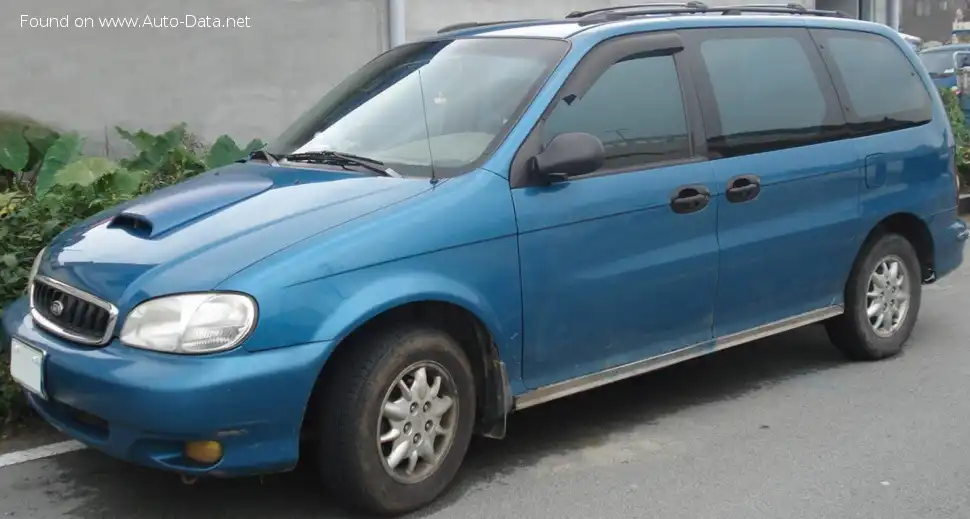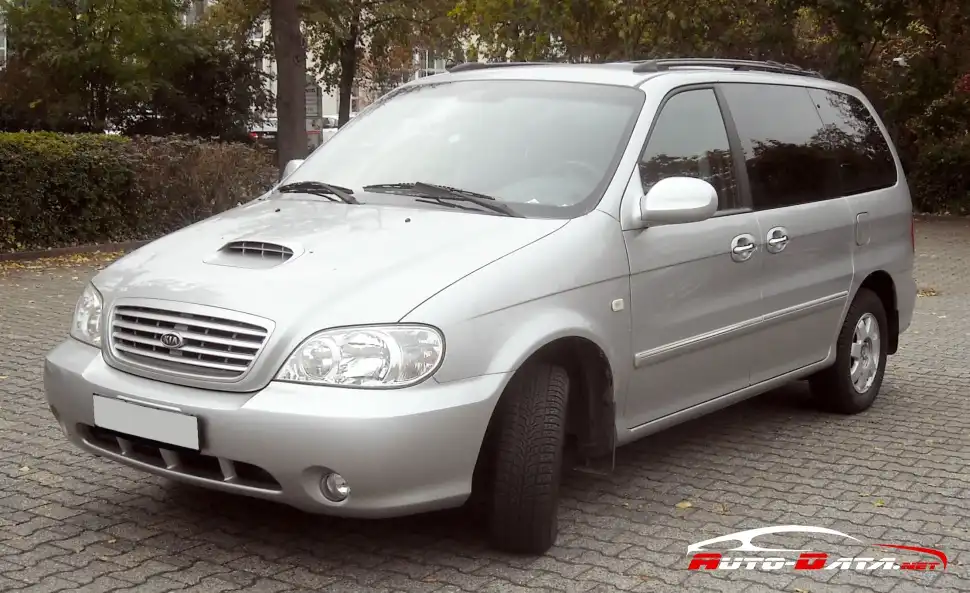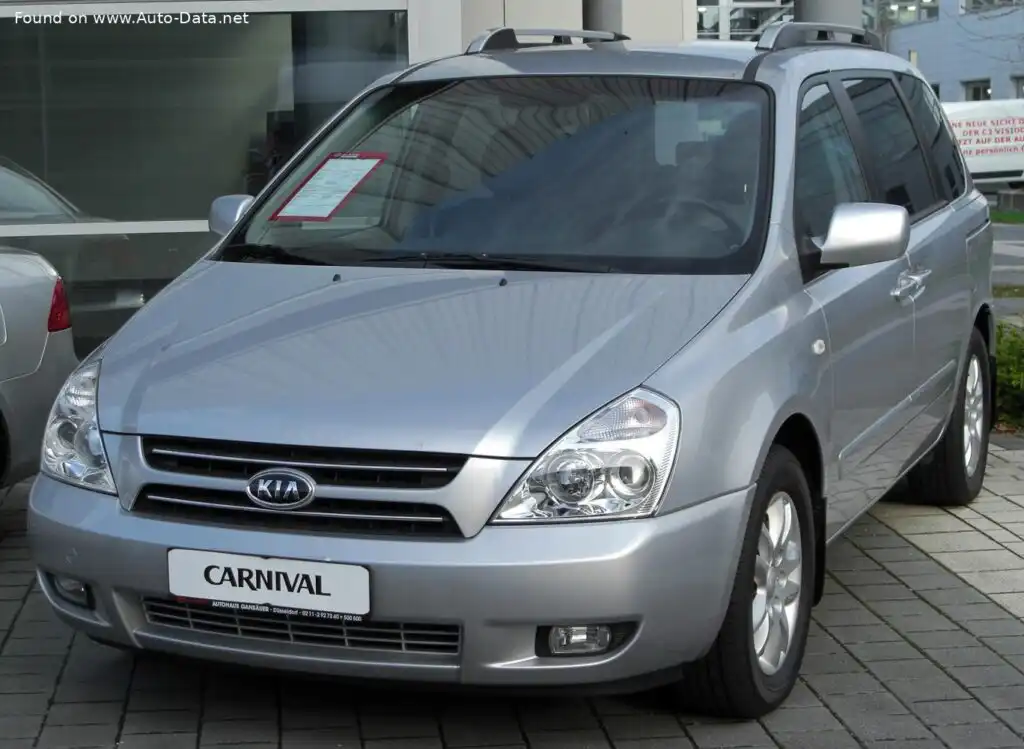
The Kia Carnival II (VQ), specifically the 2.9 CRDi variant with an automatic transmission, was produced from 2006 to 2010. This iteration of the Carnival, Kia’s minivan offering, aimed to provide a more refined and powerful option within the increasingly competitive multi-purpose vehicle (MPV) segment. Positioned as a mid-range to upper-mid-range trim, it offered a balance between performance, features, and price, appealing to families seeking a spacious and comfortable vehicle. The VQ generation represented a significant step forward for Kia in terms of design, build quality, and technological sophistication, particularly in European and Asian markets where MPVs were highly popular.
Technical Specifications
| Brand | Kia |
| Model | Carnival |
| Generation | Carnival II (VQ) |
| Type (Engine) | 2.9 CRDi (185 Hp) Automatic |
| Start of production | 2006 |
| End of production | 2010 |
| Powertrain Architecture | Internal Combustion engine |
| Body type | Minivan |
| Seats | 7 |
| Doors | 5 |
| Fuel consumption (urban) | 10.2 l/100 km (23.1 US mpg) |
| Fuel consumption (extra urban) | 6.4 l/100 km (36.8 US mpg) |
| Fuel consumption (combined) | 7.8 l/100 km (30.2 US mpg) |
| Fuel Type | Diesel |
| Maximum speed | 194 km/h (120.55 mph) |
| Weight-to-power ratio | 11.4 kg/Hp |
| Weight-to-torque ratio | 6.2 kg/Nm |
| Power | 185 Hp @ 3800 rpm |
| Torque | 343 Nm @ 1750-3500 rpm (252.98 lb.-ft.) |
| Engine layout | Front, Transverse |
| Engine Model/Code | J3 |
| Engine displacement | 2902 cm3 (177.09 cu. in.) |
| Number of cylinders | 4 |
| Engine configuration | Inline |
| Cylinder Bore | 97.1 mm (3.82 in.) |
| Piston Stroke | 98 mm (3.86 in.) |
| Compression ratio | 18:1 |
| Number of valves per cylinder | 4 |
| Fuel injection system | Diesel Commonrail |
| Engine aspiration | Turbocharger, Intercooler |
| Valvetrain | DOHC |
| Engine oil capacity | 6.6 l (6.97 US qt | 5.81 UK qt) |
| Coolant capacity | 10 l (10.57 US qt | 8.8 UK qt) |
| Kerb Weight | 2114 kg (4660.57 lbs.) |
| Max. weight | 2920 kg (6437.5 lbs.) |
| Max load | 806 kg (1776.93 lbs.) |
| Trunk (boot) space – minimum | 241 l (8.51 cu. ft.) |
| Trunk (boot) space – maximum | 1666 l (58.83 cu. ft.) |
| Fuel tank capacity | 80 l (21.13 US gal | 17.6 UK gal) |
| Length | 4810 mm (189.37 in.) |
| Width | 1985 mm (78.15 in.) |
| Height | 1815 mm (71.46 in.) |
| Wheelbase | 2890 mm (113.78 in.) |
| Front track | 1685 mm (66.34 in.) |
| Rear track | 1685 mm (66.34 in.) |
| Drag coefficient (Cd) | 0.34 |
| Minimum turning circle | 11.64 m (38.19 ft.) |
| Drivetrain | Front wheel drive |
| Number of gears | 5 |
| Gearbox type | Automatic transmission |
| Front suspension | Independent type McPherson |
| Rear suspension | Dependent spring suspension with transverse stabilizer |
| Front brakes | Ventilated discs |
| Rear brakes | Drum |
| Assisting systems | ABS (Anti-lock braking system) |
| Steering type | Steering rack and pinion |
| Tires size | 225/70 R16 |
| Wheel rims size | 16 |
Powertrain & Engine Architecture
The heart of the 2.9 CRDi Carnival is the J3 engine, a 2.9-liter inline-four cylinder diesel. This engine utilizes a common rail direct injection system, delivering fuel at extremely high pressure for improved combustion efficiency and reduced emissions. The engine is turbocharged and intercooled, boosting power output to 185 horsepower at 3800 rpm and 343 Nm (253 lb-ft) of torque between 1750 and 3500 rpm. The DOHC (Double Overhead Camshaft) valvetrain, with four valves per cylinder, further enhances breathing and contributes to the engine’s overall performance. The engine’s 18:1 compression ratio is typical for a diesel engine, maximizing efficiency. The automatic transmission is a conventional five-speed unit, designed to provide smooth shifts and ease of driving, particularly in urban environments.
Driving Characteristics
The 2.9 CRDi automatic Carnival offered a noticeable step up in performance compared to lower-powered variants. While not a sports car, the engine provided ample torque for comfortable highway cruising and effortless overtaking. The automatic transmission, while smooth, wasn’t particularly quick to downshift, meaning drivers sometimes needed to anticipate acceleration needs. Compared to the manual transmission versions, the automatic sacrificed some responsiveness, but gained in convenience. The relatively high kerb weight of the Carnival (2114 kg / 4660.57 lbs) meant that acceleration wasn’t brisk, but the engine’s torque compensated for this to a degree. The gear ratios were tuned for fuel efficiency and relaxed cruising, rather than outright performance.
Equipment & Trim Levels
The 2.9 CRDi automatic trim typically included features such as air conditioning, power windows and locks, a CD player with radio, and basic safety equipment like ABS and airbags. Higher trim levels, often available as optional packages, added features like leather upholstery, alloy wheels, a sunroof, and upgraded audio systems. Interior materials were generally durable and practical, reflecting the vehicle’s family-oriented purpose. The Carnival’s spacious interior was a key selling point, offering comfortable seating for seven passengers and ample cargo space, especially with the rear seats folded down.
Chassis & Braking
The Carnival II utilized a front-engine, front-wheel-drive layout. The front suspension employed an independent McPherson strut setup, providing a reasonable level of ride comfort and handling. The rear suspension was a more traditional dependent spring setup with a transverse stabilizer bar, which helped to reduce body roll. Braking duties were handled by ventilated discs at the front and drum brakes at the rear. While adequate for everyday driving, the braking system wasn’t particularly powerful, and drivers needed to allow for a longer stopping distance, especially when the vehicle was fully loaded. The steering was a rack and pinion system, offering reasonable precision and feedback.
Market Reception & Comparison
The 2.9 CRDi automatic Carnival was generally well-received by critics as a practical and comfortable family vehicle. It offered a good balance of space, features, and performance, although some reviewers noted the automatic transmission could feel sluggish at times. Fuel economy was respectable for a vehicle of its size, averaging around 30.2 US mpg in combined driving. Compared to other MPVs in its class, such as the Honda Odyssey or Toyota Sienna (in North American markets), the Carnival offered a more affordable price point, but often lacked the same level of refinement and brand recognition. Against its European rivals, like the Renault Espace or Volkswagen Sharan, it provided a competitive package with a strong diesel engine option.
Legacy
The Kia Carnival II (VQ) 2.9 CRDi automatic has proven to be a relatively reliable vehicle in the used car market. The J3 engine, while not without its potential issues (such as turbocharger wear and common rail injector problems), is generally durable if properly maintained. The automatic transmission is also reasonably robust. Today, these vehicles can be found at affordable prices, making them an attractive option for budget-conscious buyers seeking a spacious and practical family vehicle. However, potential buyers should be aware of the age-related wear and tear and ensure a thorough inspection is conducted before purchase, paying particular attention to the engine and transmission.