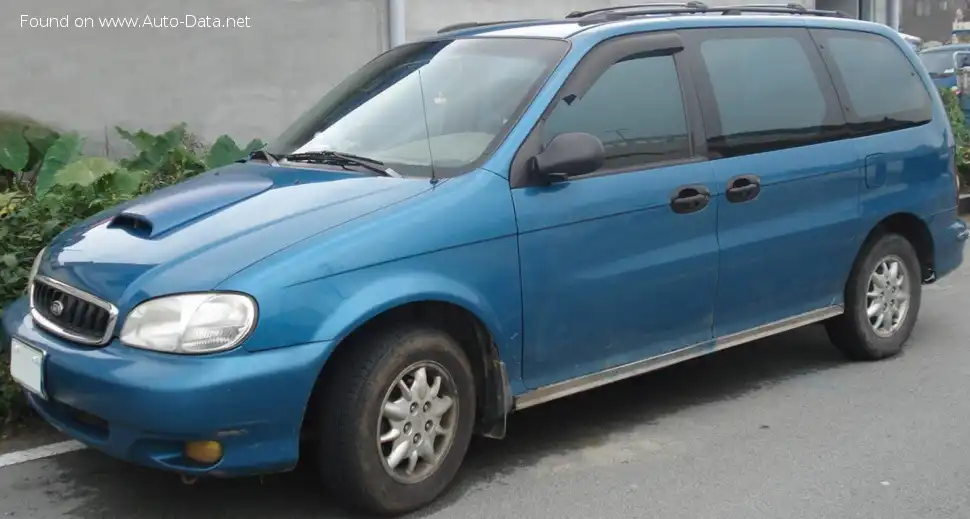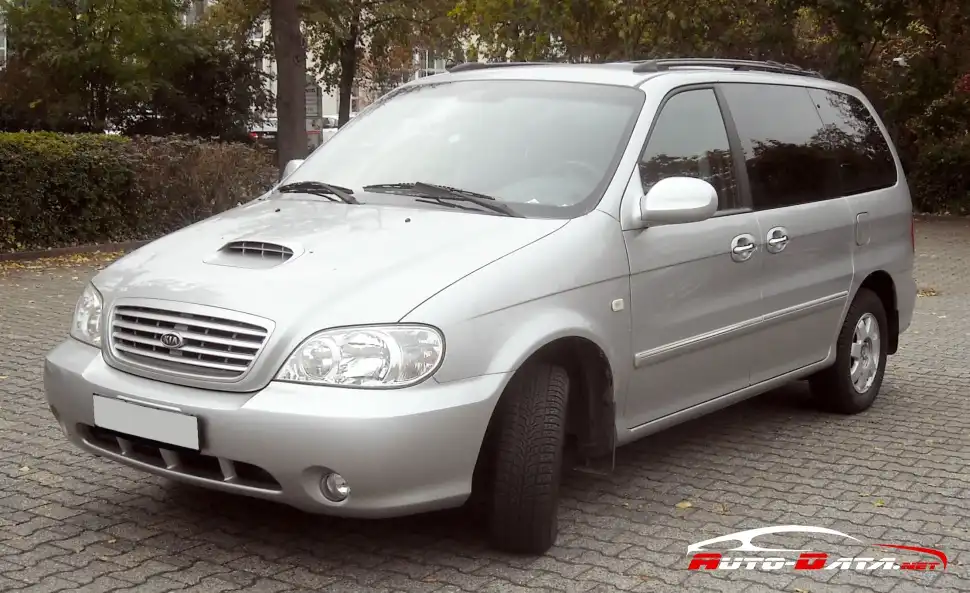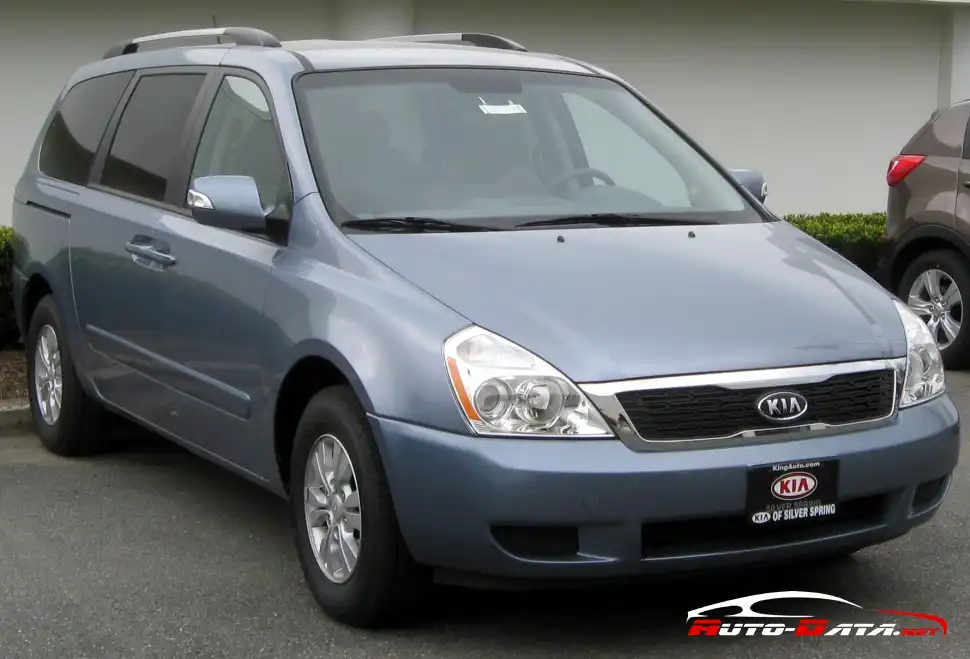
The Kia Carnival II, specifically the facelifted VQ model produced from 2010 to 2014, represented a significant step forward for Kia in the competitive minivan segment. This iteration of the Carnival, sold globally under various names including the Sedona in North America, aimed to provide a compelling blend of practicality, comfort, and value. The 2.2 E-VGT (197 Hp) Automatic variant occupied a mid-range position within the Carnival II lineup, offering a balance between fuel efficiency and performance for families and larger groups. It was a key offering in markets where diesel engines were favored for their torque and economy, particularly in Europe and Asia.
Technical Specifications
| Brand | Kia |
| Model | Carnival |
| Generation | Carnival II (VQ, facelift 2010) |
| Type (Engine) | 2.2 E-VGT (197 Hp) Automatic |
| Start of production | 2010 |
| End of production | 2014 |
| Powertrain Architecture | Internal Combustion engine |
| Body type | Minivan |
| Seats | 7 |
| Doors | 5 |
| Fuel Type | Diesel |
| Weight-to-power ratio | 10.3 kg/Hp, 97 Hp/tonne |
| Weight-to-torque ratio | 4.7 kg/Nm, 214.8 Nm/tonne |
| Power | 197 Hp @ 3800 rpm |
| Power per litre | 89.6 Hp/l |
| Torque | 436 Nm @ 2000 rpm, 321.58 lb.-ft. @ 2000 rpm |
| Engine layout | Front, Transverse |
| Engine displacement | 2199 cm3, 134.19 cu. in. |
| Number of cylinders | 4 |
| Engine configuration | Inline |
| Cylinder Bore | 85.4 mm, 3.36 in. |
| Piston Stroke | 96 mm, 3.78 in. |
| Compression ratio | 16:1 |
| Number of valves per cylinder | 4 |
| Fuel injection system | Diesel Commonrail |
| Engine aspiration | Turbocharger, Intercooler |
| Valvetrain | DOHC |
| Engine oil capacity | 6.7 l, 7.08 US qt | 5.9 UK qt |
| Coolant | 9.8 l, 10.36 US qt | 8.62 UK qt |
| Kerb Weight | 2030 kg, 4475.38 lbs |
| Trunk (boot) space – minimum | 364 l, 12.85 cu. ft |
| Trunk (boot) space – maximum | 3440 l, 121.48 cu. ft |
| Fuel tank capacity | 80 l, 21.13 US gal | 17.6 UK gal |
| Length | 4810 mm, 189.37 in |
| Width | 1985 mm, 78.15 in |
| Height | 1760 mm, 69.29 in |
| Wheelbase | 2890 mm, 113.78 in |
| Front track | 1685 mm, 66.34 in |
| Rear (Back) track | 1685 mm, 66.34 in |
| Drag coefficient (Cd) | 0.34 |
| Minimum turning circle | 11 m, 36.09 ft |
| Drivetrain Architecture | The Internal combustion engine (ICE) drives the front wheels of the vehicle. |
| Drive wheel | Front wheel drive |
| Number of gears | 6 |
| Gearbox type | automatic transmission |
| Front suspension | Independent type McPherson |
| Rear suspension | Dependent spring suspension with transverse stabilizer |
| Front brakes | Ventilated discs |
| Rear brakes | Drum |
| Assisting systems | ABS (Anti-lock braking system) |
| Steering type | Steering rack and pinion |
| Tires size | 235/60 R17 |
| Wheel rims size | 17 |
Powertrain & Engine Architecture
The heart of the 2.2 E-VGT variant is the Kia-developed 2.2-liter inline-four diesel engine. This engine, internally designated with various codes depending on the specific market, utilizes a common-rail direct injection system for optimized fuel delivery and combustion efficiency. The ‘E-VGT’ designation signifies the use of a Variable Geometry Turbocharger (VGT), which adjusts the turbine vanes to optimize boost pressure across the engine’s rev range, improving both low-end torque and high-end power. The engine features a double overhead camshaft (DOHC) valvetrain with four valves per cylinder, contributing to its breathing efficiency. The six-speed automatic transmission, sourced from various suppliers depending on the production year and market, was chosen for its smooth operation and ease of use, catering to drivers prioritizing comfort over outright performance.
Driving Characteristics
The 197 horsepower and 321 lb-ft of torque delivered by the 2.2 E-VGT engine provided the Carnival II with adequate, though not exhilarating, performance. The automatic transmission, while smooth, did result in some power loss compared to the available manual transmission options. Acceleration was respectable for a large minivan, but the focus was clearly on providing effortless cruising and strong pulling power for hauling passengers and cargo. The gear ratios were tuned for fuel efficiency and relaxed driving, meaning the engine didn’t feel particularly stressed at highway speeds. Compared to the higher-output gasoline engines available in some markets, the diesel offered superior fuel economy and a more relaxed driving experience, albeit with a slightly more noticeable engine note.
Equipment & Trim Levels
The 2.2 E-VGT Automatic trim typically included features such as air conditioning, power windows and locks, a basic audio system, and standard safety equipment like ABS and airbags. Higher trim levels added features like leather upholstery, a sunroof, upgraded audio systems, and parking sensors. Interior upholstery was generally cloth in the base trims, with leather options available as upgrades. Dashboard configurations were relatively straightforward, prioritizing functionality and ease of use. Optional extras often included a navigation system, rear entertainment system, and alloy wheels.
Chassis & Braking
The Carnival II utilized a McPherson strut front suspension and a dependent spring rear suspension with a transverse stabilizer bar. This setup provided a comfortable ride quality, although it wasn’t particularly sporty. The front brakes were ventilated discs, offering good stopping power, while the rear brakes were drums, a cost-saving measure common in this class of vehicle. The suspension was tuned to prioritize ride comfort and stability when fully loaded, making it well-suited for family duties. Steering was rack and pinion, providing reasonable precision and feedback.
Market Reception & Comparison
The 2.2 E-VGT Automatic variant of the Kia Carnival II was generally well-received by critics and consumers alike. It was praised for its spacious interior, comfortable ride, and fuel-efficient diesel engine. However, some reviewers noted that the automatic transmission could feel sluggish at times, and the overall driving experience wasn’t as engaging as some of its competitors. Compared to the gasoline-powered versions, the diesel offered significantly better fuel economy, making it a popular choice for those who drove long distances. Reliability was generally good, although diesel engines can be more complex and potentially more expensive to maintain than their gasoline counterparts.
Legacy
The Kia Carnival II 2.2 E-VGT Automatic powertrain has proven to be relatively durable and reliable in the long term, provided it has been properly maintained. These vehicles are now commonly found on the used car market, offering a practical and affordable option for families. While diesel engines may face increasing scrutiny due to emissions regulations, the 2.2 E-VGT remains a capable and efficient powerplant. Its legacy lies in demonstrating Kia’s growing competence in the minivan segment and its ability to offer a compelling alternative to established players in the market. The engine’s robust construction and readily available parts contribute to its continued viability as a used vehicle option.