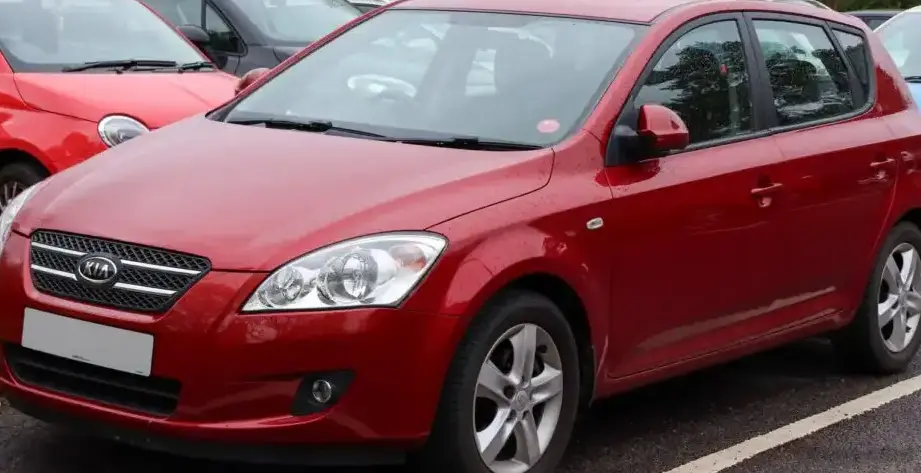
The Kia Cee’d, launched in 2006, represented Kia’s first foray into the European compact hatchback market designed specifically for European tastes. The first generation (JD) underwent a significant facelift in 2009, bringing revised styling, improved interior materials, and updated engine options. The 1.6D 16V variant, producing 128 horsepower, was a key part of the facelifted range from 2009 to 2012. This model aimed to provide a balance of fuel efficiency, reasonable performance, and affordability within the competitive C-segment.
Technical Specifications
| Brand | Kia |
| Model | Cee’d |
| Generation | Cee’d I (facelift 2009) |
| Type (Engine) | 1.6D 16V (128 Hp) |
| Start of production | 2009 |
| End of production | 2012 |
| Powertrain Architecture | Internal Combustion engine |
| Body type | Hatchback |
| Seats | 5 |
| Doors | 5 |
| Fuel consumption (urban) | 5.2 l/100 km (45.2 US mpg, 54.3 UK mpg, 19.2 km/l) |
| Fuel consumption (extra urban) | 4.1 l/100 km (57.4 US mpg, 68.9 UK mpg, 24.4 km/l) |
| Fuel consumption (combined) | 4.5 l/100 km (52.3 US mpg, 62.8 UK mpg, 22.2 km/l) |
| Fuel Type | Diesel |
| Acceleration 0 – 100 km/h | 11 sec |
| Acceleration 0 – 62 mph | 11 sec |
| Acceleration 0 – 60 mph | 10.5 sec |
| Maximum speed | 197 km/h (122.41 mph) |
| Emission standard | Euro 5 |
| Weight-to-power ratio | 10.7 kg/Hp |
| Weight-to-torque ratio | 5.4 kg/Nm |
| Power | 128 Hp |
| Power per litre | 80.9 Hp/l |
| Torque | 255 Nm @ 1900 rpm (188.08 lb.-ft. @ 1900 rpm) |
| Engine layout | Front, Transverse |
| Engine Model/Code | D4FB |
| Engine displacement | 1582 cm3 (96.54 cu. in.) |
| Number of cylinders | 4 |
| Engine configuration | Inline |
| Number of valves per cylinder | 4 |
| Fuel injection system | Diesel Commonrail |
| Engine aspiration | Turbocharger, Intercooler |
| Valvetrain | DOHC |
| Engine oil capacity | 5.3 l (5.6 US qt | 4.66 UK qt) |
| Coolant capacity | 6.3 l (6.66 US qt | 5.54 UK qt) |
| Kerb Weight | 1374 kg (3029.15 lbs.) |
| Max. weight | 1840 kg (4056.51 lbs.) |
| Max load | 466 kg (1027.35 lbs.) |
| Trunk (boot) space – minimum | 340 l (12.01 cu. ft.) |
| Trunk (boot) space – maximum | 1300 l (45.91 cu. ft.) |
| Fuel tank capacity | 53 l (14 US gal | 11.66 UK gal) |
| Length | 4235 mm (166.73 in.) |
| Width | 1790 mm (70.47 in.) |
| Height | 1480 mm (58.27 in.) |
| Wheelbase | 2650 mm (104.33 in.) |
| Front track | 1538 mm (60.55 in.) |
| Rear track | 1536 mm (60.47 in.) |
| Minimum turning circle | 10.34 m (33.92 ft.) |
| Drivetrain Architecture | Front wheel drive |
| Drive wheel | Front wheel drive |
| Number of gears | 6 gears, manual transmission |
| Front brakes | Ventilated discs |
| Rear brakes | Disc |
| Tires size | 205/55 R16 |
| Wheel rims size | 16 |
INTRODUCTION
The 2009 facelift of the Kia Cee’d brought a refreshed look and a more refined driving experience to Kia’s European hatchback. The 1.6D 16V model, producing 128 horsepower, was positioned as a practical and economical choice for buyers prioritizing fuel efficiency and everyday usability. It sat in the middle of the diesel range, offering a step up in power from the lower-output 90 hp version, but remaining more affordable and fuel-efficient than the higher-spec 1.6 CRDi variants. Built on the 1HX0/A3 platform, shared with the Hyundai i30, the Cee’d aimed to challenge established European rivals like the Ford Focus and Volkswagen Golf.
Powertrain & Engine Architecture
The heart of the Cee’d 1.6D is the D4FB engine, a 1.6-liter inline-four cylinder diesel. This engine utilizes a second-generation common rail direct injection system, delivering fuel at extremely high pressure for improved combustion efficiency and reduced emissions. The engine features a turbocharger with an intercooler, boosting power output and providing a broader torque curve. The 16-valve DOHC (Double Overhead Camshaft) configuration optimizes airflow into and out of the cylinders. The engine’s design focused on minimizing noise, vibration, and harshness (NVH) – a key consideration for European buyers. The 6-speed manual transmission was standard, offering precise shifts and contributing to the car’s overall fuel economy. The transmission’s gear ratios were tuned to maximize efficiency at highway speeds while still providing adequate acceleration in urban environments.
Driving Characteristics
The 128 hp 1.6D Cee’d offered a respectable, if not exhilarating, driving experience. Acceleration from 0-60 mph took around 10.5 seconds, making it suitable for everyday commuting and occasional highway journeys. The 255 Nm (188 lb-ft) of torque, available from 1900 rpm, provided good low-end grunt, making it easy to navigate city traffic and overtake slower vehicles. Compared to the lower-powered 90 hp diesel, the 1.6D felt noticeably more responsive. However, it lacked the outright performance of higher-output diesel variants or the petrol engines in the range. The manual transmission was well-matched to the engine, offering smooth and precise gear changes. The suspension provided a comfortable ride, absorbing bumps and imperfections in the road surface effectively. Steering was light and accurate, making the car easy to maneuver.
Equipment & Trim Levels
The Cee’d 1.6D typically came equipped with a reasonable level of standard equipment. This included air conditioning, electric front windows, central locking, a CD stereo with MP3 compatibility, and ABS brakes with Electronic Stability Control (ESC). Higher trim levels, such as the ‘2’ or ‘3’ variants, added features like alloy wheels, a trip computer, climate control, and upgraded interior trim. Optional extras included a sunroof, parking sensors, and a more advanced audio system. Interior upholstery was typically cloth, with a focus on durability and practicality. The dashboard layout was functional and user-friendly, with clearly labeled controls.
Chassis & Braking
The Cee’d’s chassis was designed to provide a balance of comfort and handling. It utilized a MacPherson strut front suspension and a coupled torsion beam rear suspension. The front brakes were ventilated discs, providing good stopping power, while the rear brakes were solid discs. ABS (Anti-lock Braking System) and ESC (Electronic Stability Control) were standard features, enhancing safety and stability. The steering system employed a rack and pinion setup, offering precise and responsive steering feel. The suspension was tuned to provide a comfortable ride without sacrificing handling. Stabilizer bars were fitted to both the front and rear axles to reduce body roll during cornering.
Market Reception & Comparison
The Kia Cee’d 1.6D was generally well-received by automotive critics as a practical and affordable family hatchback. It was praised for its fuel efficiency, comfortable ride, and generous warranty. However, some critics noted that the engine lacked refinement compared to some of its rivals and that the interior materials were not as premium as those found in some European competitors. Compared to the 90 hp diesel, the 1.6D offered a noticeable improvement in performance, making it a more appealing option for drivers who frequently travel on motorways or carry passengers. Fuel economy was comparable to other diesel hatchbacks in its class, and reliability proved to be generally good.
Legacy
The Kia Cee’d 1.6D has proven to be a reliable and durable vehicle in the used car market. The D4FB engine is known for its longevity, provided it has been properly maintained. Common issues are relatively minor, often relating to the turbocharger or fuel injection system. The Cee’d’s affordable price and low running costs make it an attractive option for budget-conscious buyers. While it may not offer the same level of performance or refinement as some of its rivals, it represents a solid and dependable choice in the compact hatchback segment. The Cee’d played a significant role in establishing Kia as a credible player in the European automotive market, paving the way for future models and continued growth.