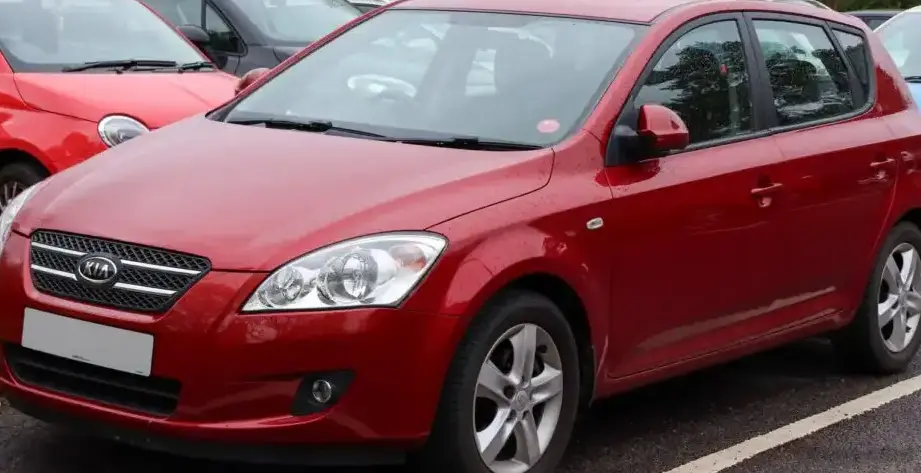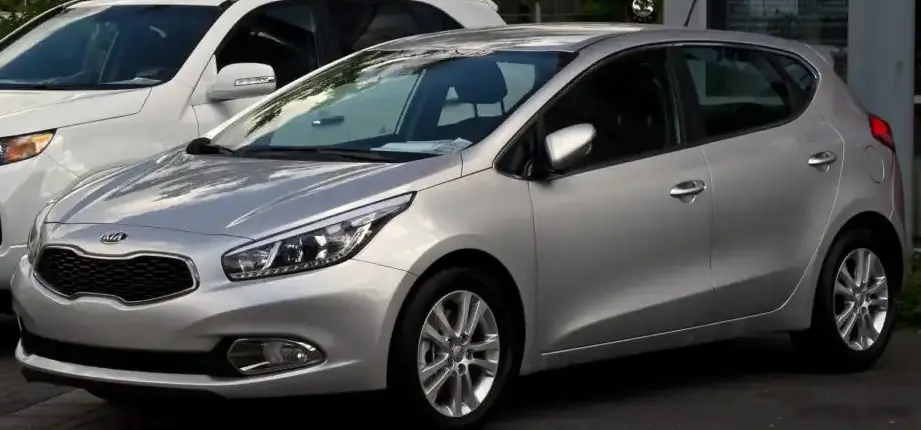
The Kia Cee’d II 1.4 CVVT 16V, producing 100 horsepower, was a key variant in Kia’s European lineup from April 2012 to June 2015. Positioned as an entry-level offering within the second generation Cee’d (JD) range – built on the 1HX0 platform – it aimed to provide affordable and efficient transportation for the compact hatchback market. This model represented Kia’s continued efforts to establish itself as a mainstream competitor in Europe, offering a compelling package of value, warranty, and increasingly, design. The 1.4L engine was a cornerstone of the Cee’d II’s appeal, offering a balance between fuel economy and acceptable performance for everyday driving.
Technical Specifications
| Brand | Kia |
| Model | Cee’d |
| Generation | Cee’d II |
| Type (Engine) | 1.4 CVVT 16V (100 Hp) |
| Start of production | April, 2012 |
| End of production | June, 2015 |
| Powertrain Architecture | Internal Combustion engine |
| Body type | Hatchback |
| Seats | 5 |
| Doors | 5 |
| Fuel consumption (urban) | 8.4 l/100 km (28 US mpg, 33.6 UK mpg, 11.9 km/l) |
| Fuel consumption (extra urban) | 4.8 l/100 km (49 US mpg, 58.9 UK mpg, 20.8 km/l) |
| Fuel consumption (combined) | 6.1 l/100 km (38.6 US mpg, 46.3 UK mpg, 16.4 km/l) |
| Fuel Type | Petrol (Gasoline) |
| Acceleration 0 – 100 km/h | 12.8 sec |
| Acceleration 0 – 62 mph | 12.8 sec |
| Acceleration 0 – 60 mph | 12.2 sec |
| Maximum speed | 182 km/h (113.09 mph) |
| Emission standard | Euro 5 |
| Weight-to-power ratio | 12.6 kg/Hp, 79.5 Hp/tonne |
| Weight-to-torque ratio | 9.2 kg/Nm, 108.9 Nm/tonne |
| Power | 100 Hp |
| Power per litre | 71.6 Hp/l |
| Torque | 137 Nm @ 4200 rpm (101.05 lb.-ft. @ 4200 rpm) |
| Engine layout | Front, Transverse |
| Engine Model/Code | G4FA |
| Engine displacement | 1396 cm3 (85.19 cu. in.) |
| Number of cylinders | 4 |
| Engine configuration | Inline |
| Number of valves per cylinder | 4 |
| Fuel injection system | Multi-port manifold injection |
| Engine aspiration | Naturally aspirated engine |
| Valvetrain | DOHC |
| Engine oil capacity | 3.6 l (3.8 US qt | 3.17 UK qt) |
| Coolant capacity | 5.8 l (6.13 US qt | 5.1 UK qt) |
| Kerb Weight | 1258 kg (2773.42 lbs.) |
| Max. weight | 1820 kg (4012.41 lbs.) |
| Max load | 562 kg (1239 lbs.) |
| Trunk (boot) space – minimum | 380 l (13.42 cu. ft.) |
| Trunk (boot) space – maximum | 1318 l (46.54 cu. ft.) |
| Fuel tank capacity | 53 l (14 US gal | 11.66 UK gal) |
| Length | 4310 mm (169.69 in.) |
| Width | 1780 mm (70.08 in.) |
| Height | 1470 mm (57.87 in.) |
| Wheelbase | 2650 mm (104.33 in.) |
| Minimum turning circle | 10.6 m (34.78 ft.) |
| Drivetrain Architecture | The Internal combustion engine (ICE) drives the front wheels of the vehicle. |
| Drive wheel | Front wheel drive |
| Number of gears | 6 gears, manual transmission |
| Assisting systems | ABS (Anti-lock braking system) |
| Steering type | Steering rack and pinion |
| Tires size | 195/65 R15; 205/55 R16; 225/45 R17 |
| Wheel rims size | 15; 16; 17 |
Powertrain & Engine Architecture
The heart of the Cee’d II 1.4 CVVT was the G4FA engine, a 1.4-liter inline-four cylinder gasoline engine. This engine featured a dual continuously variable valve timing (CVVT) system on both intake and exhaust camshafts, designed to optimize engine breathing across the rev range for improved fuel efficiency and power delivery. The engine utilized a multi-point fuel injection system, delivering fuel directly into the intake ports. With a displacement of 1396cc, the G4FA produced 100 horsepower and 137 Nm (101 lb-ft) of torque at 4200 rpm. The engine’s relatively modest output was paired with a six-speed manual transmission, the standard offering for this trim level. While an automatic transmission was available on other Cee’d II models, it wasn’t offered with the base 1.4L engine.
Driving Characteristics
The 1.4L Cee’d II offered a predictable and economical driving experience. Acceleration from 0-60 mph took around 12.2 seconds, and top speed was limited to 182 km/h (113 mph). The six-speed manual transmission helped to keep the engine in its optimal power band, but drivers often needed to downshift for quicker overtaking maneuvers. Compared to the more powerful 1.6L gasoline or 1.6L diesel variants, the 1.4L felt noticeably less responsive. However, the trade-off was significantly improved fuel economy, making it a popular choice for urban commuters and drivers prioritizing efficiency. The gear ratios were tuned for fuel economy, with a relatively long final drive.
Equipment & Trim Levels
The 1.4 CVVT typically represented the entry point to the Cee’d II range. Standard equipment generally included air conditioning, electric front windows, a basic audio system with USB connectivity, and ABS brakes. Safety features like airbags were also standard. Higher trim levels, such as the ‘2’ or ‘3’ trims, added features like alloy wheels, rear electric windows, a more sophisticated audio system, cruise control, and fog lights. Interior upholstery was typically cloth, with a functional but not luxurious design. Optional extras included a sunroof, parking sensors, and upgraded audio systems.
Chassis & Braking
The Cee’d II utilized a MacPherson strut front suspension and a coupled torsion beam rear suspension. This setup provided a comfortable ride quality, although it wasn’t particularly sporty. The front brakes were ventilated discs, while the rear brakes were typically drum brakes on the base 1.4L model. Stabilizer bars were fitted to both the front and rear axles to reduce body roll during cornering. The steering was a rack and pinion system, providing reasonable precision and feedback.
Market Reception & Comparison
The Kia Cee’d II 1.4 CVVT was generally well-received by automotive critics as a practical and affordable hatchback. It was praised for its value for money, generous warranty (Kia’s 7-year warranty was a significant selling point), and decent fuel economy. However, it was often criticized for its relatively uninspiring driving dynamics and the engine’s lack of outright power. Compared to rivals like the Volkswagen Golf, Ford Focus, and Peugeot 308, the Cee’d II 1.4L offered a more affordable price point but lacked the refinement and driving engagement of those established competitors. The 1.6L gasoline and diesel variants offered a noticeable performance upgrade, but at a higher cost.
Legacy
The G4FA 1.4L engine, while not known for being a powerhouse, proved to be a relatively reliable unit. Common issues were generally minor, such as occasional oil leaks or sensor failures. On the used car market, the Cee’d II 1.4 CVVT remains an attractive option for budget-conscious buyers seeking a practical and economical hatchback. Its affordability, combined with Kia’s strong warranty reputation, makes it a compelling choice for those looking for a dependable and low-cost vehicle. Parts availability is generally good, and maintenance costs are relatively low, contributing to its continued popularity in the used car sector.