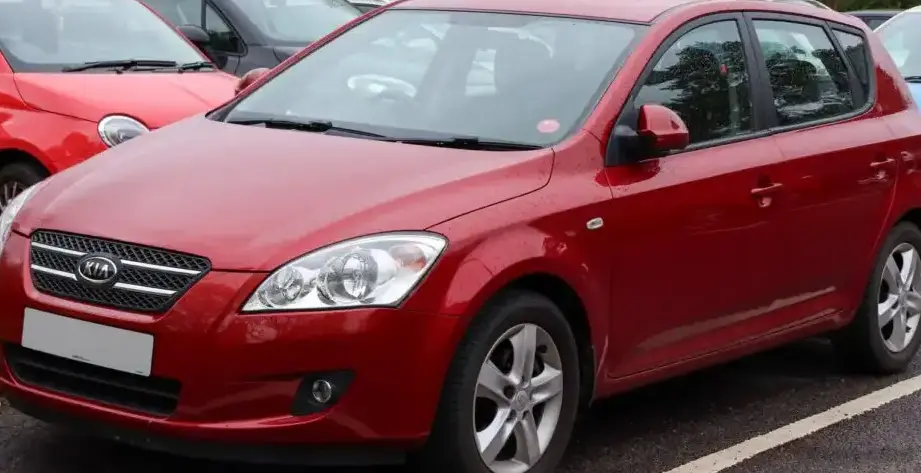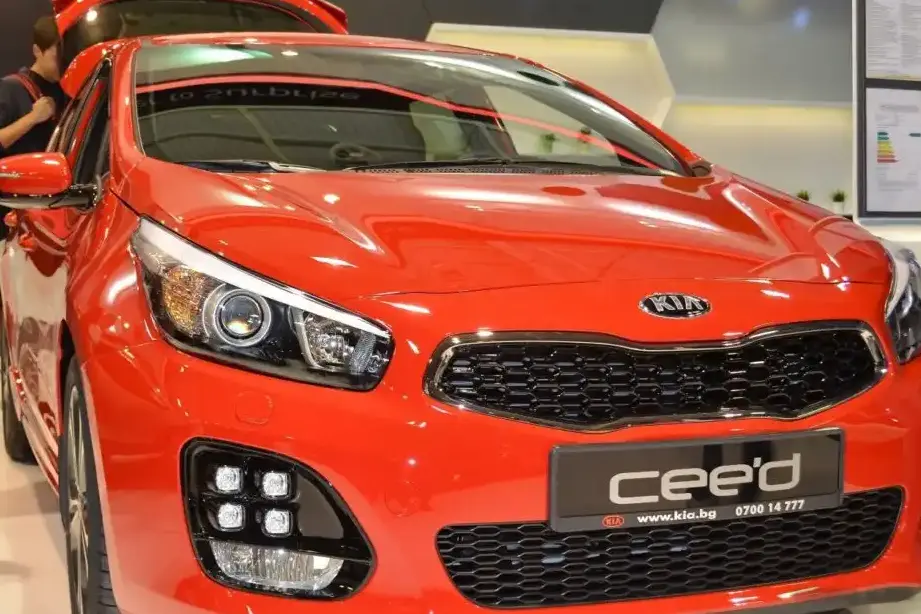
The Kia Cee’d II (facelift, introduced in June 2015) 1.0 T-GDI 100 hp ISG represents an entry-level offering within the second generation of Kia’s popular European-market compact hatchback. Positioned as a fuel-efficient and affordable option, this variant aimed to attract buyers prioritizing economy and practicality. Production continued through 2018. The Cee’d II, built primarily for the European market, was Kia’s attempt to establish a stronger foothold in the highly competitive C-segment, challenging established players like the Volkswagen Golf, Ford Focus, and Opel Astra. This facelift brought updated styling, improved interior materials, and the introduction of the new 1.0 T-GDI engine, marking a significant step in Kia’s powertrain development.
Technical Specifications
| Brand | Kia |
| Model | Cee’d |
| Generation | Cee’d II (facelift 2015) |
| Type (Engine) | 1.0 T-GDI (100 Hp) ISG |
| Start of production | June, 2015 |
| End of production | 2018 |
| Powertrain Architecture | Internal Combustion engine |
| Body type | Hatchback |
| Seats | 5 |
| Doors | 5 |
| Fuel consumption (urban) | 6.1-6.2 l/100 km (38.6 – 37.9 US mpg) |
| Fuel consumption (extra urban) | 3.9-4.1 l/100 km (60.3 – 57.4 US mpg) |
| Fuel consumption (combined) | 4.7-4.9 l/100 km (50 – 48 US mpg) |
| CO2 emissions | 109-113 g/km |
| Fuel Type | Petrol (Gasoline) |
| Acceleration 0 – 100 km/h | 12.8 sec |
| Acceleration 0 – 62 mph | 12.8 sec |
| Acceleration 0 – 60 mph | 12.2 sec |
| Maximum speed | 185 km/h (114.95 mph) |
| Emission standard | Euro 6 |
| Weight-to-power ratio | 12 kg/Hp |
| Weight-to-torque ratio | 7 kg/Nm |
| Power | 100 Hp @ 6000 rpm |
| Torque | 171 Nm @ 1500-4000 rpm (126.12 lb.-ft. @ 1500-4000 rpm) |
| Engine layout | Front, Transverse |
| Engine Model/Code | Kappa II / G3LC |
| Engine displacement | 998 cm3 (60.9 cu. in.) |
| Number of cylinders | 3 |
| Engine configuration | Inline |
| Cylinder Bore | 71 mm (2.8 in.) |
| Piston Stroke | 84 mm (3.31 in.) |
| Compression ratio | 10:1 |
| Number of valves per cylinder | 4 |
| Fuel injection system | Direct injection |
| Engine aspiration | Turbocharger, Intercooler |
| Engine oil capacity | 3.6 l (3.8 US qt | 3.17 UK qt) |
| Coolant capacity | 6 l (6.34 US qt | 5.28 UK qt) |
| Kerb Weight | 1204-1327 kg (2654.37 – 2925.53 lbs.) |
| Max. weight | 1820 kg (4012.41 lbs.) |
| Max load | 493-616 kg (1086.88 – 1358.05 lbs.) |
| Trunk (boot) space – minimum | 380 l (13.42 cu. ft.) |
| Trunk (boot) space – maximum | 1318 l (46.54 cu. ft.) |
| Fuel tank capacity | 53 l (14 US gal | 11.66 UK gal) |
| Max. roof load | 80 kg (176.37 lbs.) |
| Permitted trailer load with brakes (12%) | 1000 kg (2204.62 lbs.) |
| Permitted trailer load without brakes | 500 kg (1102.31 lbs.) |
| Permitted towbar download | 60 kg (132.28 lbs.) |
| Length | 4310 mm (169.69 in.) |
| Width | 1780 mm (70.08 in.) |
| Width including mirrors | 2035 mm (80.12 in.) |
| Height | 1470 mm (57.87 in.) |
| Wheelbase | 2650 mm (104.33 in.) |
| Front track | 1555-1563 mm (61.22 – 61.54 in.) |
| Rear (Back) track | 1563-1571 mm (61.54 – 61.85 in.) |
| Front overhang | 900 mm (35.43 in.) |
| Rear overhang | 760 mm (29.92 in.) |
| Minimum turning circle | 10.6 m (34.78 ft.) |
| Drivetrain Architecture | Front wheel drive |
| Number of gears and type of gearbox | 6 gears, manual transmission |
| Front suspension | Independent type McPherson |
| Rear suspension | Independent multi-link suspension |
| Front brakes | Ventilated discs, 280-300 mm |
| Rear brakes | Disc, 262-284 mm |
| Assisting systems | ABS (Anti-lock braking system) |
| Steering type | Steering rack and pinion |
| Tires size | 195/65 R15 91H; 205/55 R16 91H |
| Wheel rims size | 6; 0J x 15 ET46; 6; 5J x 16 ET50 |
Powertrain & Engine Architecture
The heart of this Cee’d variant is the Kappa II 1.0 T-GDI (Gasoline Direct Injection) engine, designated G3LC. This is a three-cylinder, 998cc engine producing 100 horsepower at 6000 rpm and 171 Nm (126 lb-ft) of torque between 1500 and 4000 rpm. The engine utilizes a single-scroll turbocharger with an intercooler to enhance performance and efficiency. Direct injection is a key feature, allowing for precise fuel delivery and improved combustion. The engine also incorporates Kia’s continuously variable valve timing (CVVT) technology. The engine is transversely mounted at the front of the vehicle. The 6-speed manual transmission was standard, offering a relatively long gearing aimed at maximizing fuel economy. The ISG (Idle Stop & Go) system automatically shuts off the engine when the vehicle is stopped, further contributing to fuel savings.
Driving Characteristics
The 1.0 T-GDI with the manual transmission delivers adequate, though not exhilarating, performance. Acceleration from 0-60 mph takes around 12.2 seconds, and the top speed is 185 km/h (115 mph). The engine feels responsive at lower RPMs thanks to the turbocharger, providing sufficient torque for everyday driving situations. However, it can feel strained when pushed hard, particularly when fully loaded or climbing hills. The long gearing of the manual transmission prioritizes fuel efficiency over rapid acceleration. Compared to the more powerful 1.6 GDI engine options, this variant offers a more economical but less dynamic driving experience. The manual gearbox is generally smooth and precise, but the clutch pedal can feel slightly heavy.
Equipment & Trim Levels
The 1.0 T-GDI ISG typically came in base or mid-level trim configurations. Standard equipment generally included air conditioning, electric front windows, a basic audio system with USB connectivity, and stability control. Higher trim levels added features like alloy wheels, a touchscreen infotainment system with navigation, rear parking sensors, and cruise control. Interior upholstery was typically cloth, with a functional but not luxurious design. Safety features included multiple airbags, ABS, and electronic stability control.
Chassis & Braking
The Cee’d II utilizes a McPherson strut front suspension and a multi-link rear suspension, providing a comfortable and controlled ride. The front brakes are ventilated discs, while the rear brakes are solid discs. The steering is a rack-and-pinion system with electric power assistance. The suspension is tuned for comfort rather than outright sportiness, offering a good balance between ride quality and handling. Stabilizer bars are fitted to both the front and rear axles to reduce body roll.
Market Reception & Comparison
The 1.0 T-GDI variant was well-received by critics for its fuel efficiency and affordability. It was seen as a practical choice for urban commuters and those prioritizing low running costs. However, some reviewers noted the engine’s lack of outright power and its tendency to feel strained at higher speeds. Compared to the 1.6 GDI and diesel options, the 1.0 T-GDI offered the best fuel economy but the lowest performance. Reliability has generally been good, with few reported issues specific to this powertrain.
Legacy
The 1.0 T-GDI engine proved to be a successful addition to Kia’s lineup, offering a compelling blend of efficiency and affordability. While not known for blistering performance, this powertrain has proven to be relatively reliable in the long term. On the used car market, the Cee’d II 1.0 T-GDI ISG represents a good value proposition for buyers seeking a practical and economical compact hatchback. Its fuel efficiency and relatively low maintenance costs make it an attractive option for those on a budget. The engine’s small displacement and turbocharging technology paved the way for Kia’s continued development of downsized, turbocharged engines.