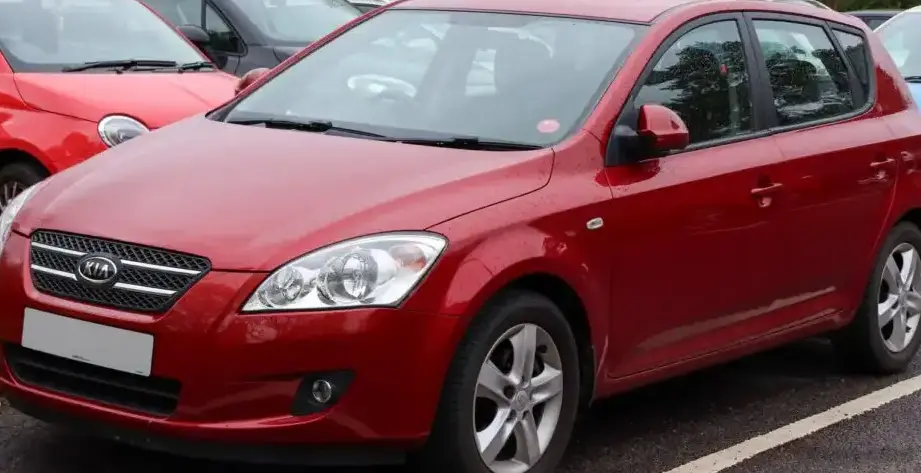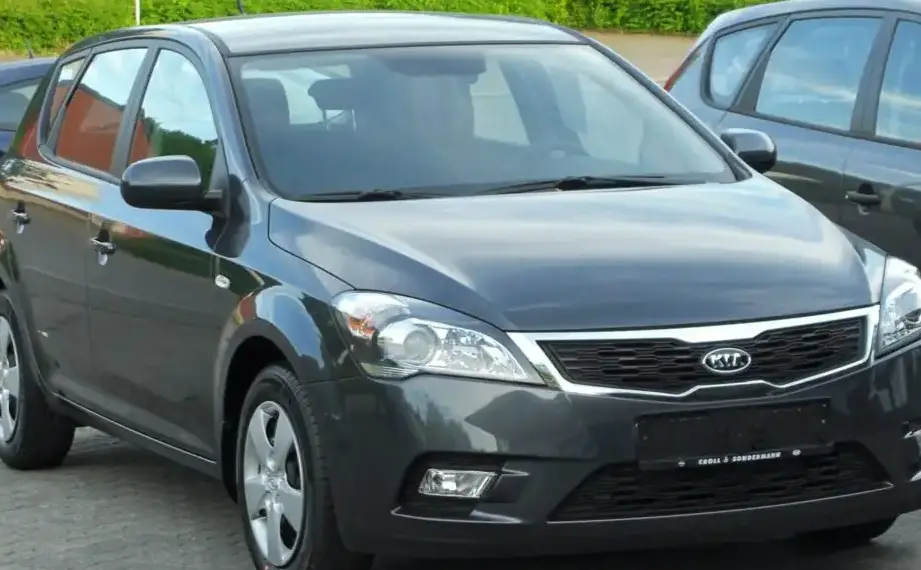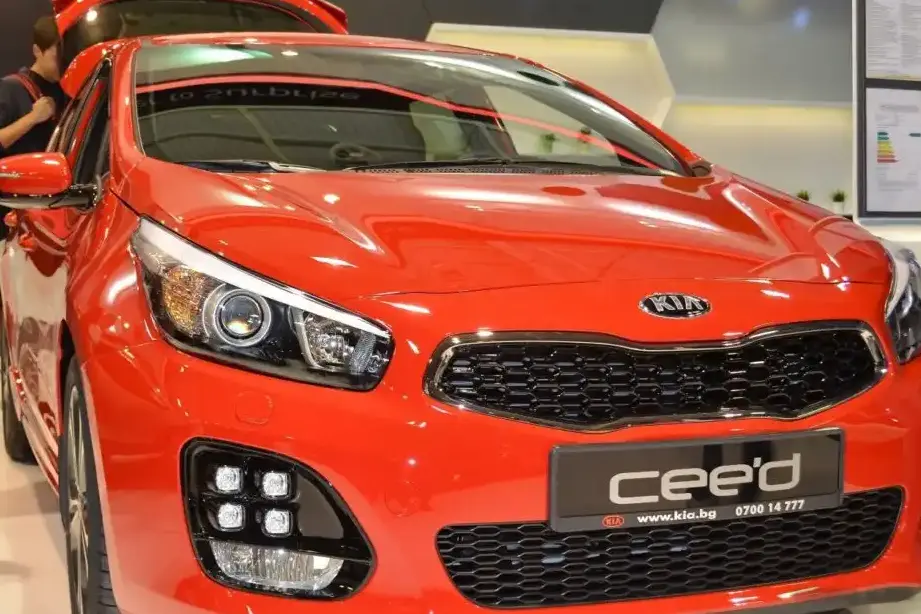
The Kia Cee’d II (facelift, introduced in June 2015) 1.0 T-GDI 120 hp ISG represents a significant step in Kia’s efforts to offer a compelling and fuel-efficient compact hatchback in the European market. Positioned as an entry-level to mid-range offering within the Cee’d lineup, this variant aimed to attract buyers seeking a balance between affordability, practicality, and modern technology. Production continued through 2018, solidifying its place as a popular choice in the competitive C-segment. The “ISG” designation denotes the inclusion of Kia’s Idle Stop & Go system, further enhancing fuel economy.
Technical Specifications
| Brand | Kia |
| Model | Cee’d |
| Generation | Cee’d II (facelift 2015) |
| Type (Engine) | 1.0 T-GDI (120 Hp) ISG |
| Start of production | June, 2015 |
| End of production | 2018 |
| Powertrain Architecture | Internal Combustion engine |
| Body type | Hatchback |
| Seats | 5 |
| Doors | 5 |
| Fuel consumption (urban) | 6.2 l/100 km (37.9 US mpg, 45.6 UK mpg, 16.1 km/l) |
| Fuel consumption (extra urban) | 4.2 l/100 km (56 US mpg, 67.3 UK mpg, 23.8 km/l) |
| Fuel consumption (combined) | 4.9 l/100 km (48 US mpg, 57.6 UK mpg, 20.4 km/l) |
| CO2 emissions | 115 g/km |
| Fuel Type | Petrol (Gasoline) |
| Acceleration 0 – 100 km/h | 11.1 sec |
| Acceleration 0 – 62 mph | 11.1 sec |
| Acceleration 0 – 60 mph | 10.5 sec |
| Maximum speed | 190 km/h (118.06 mph) |
| Emission standard | Euro 6 |
| Weight-to-power ratio | 10 kg/Hp, 99.7 Hp/tonne |
| Weight-to-torque ratio | 7 kg/Nm, 142 Nm/tonne |
| Power | 120 Hp @ 6000 rpm |
| Power per litre | 120.2 Hp/l |
| Torque | 171 Nm @ 1500-4000 rpm (126.12 lb.-ft. @ 1500-4000 rpm) |
| Engine layout | Front, Transverse |
| Engine Model/Code | Kappa II / G3LC |
| Engine displacement | 998 cm3 (60.9 cu. in.) |
| Number of cylinders | 3 |
| Engine configuration | Inline |
| Cylinder Bore | 71 mm (2.8 in.) |
| Piston Stroke | 84 mm (3.31 in.) |
| Compression ratio | 10:1 |
| Number of valves per cylinder | 4 |
| Fuel injection system | Direct injection |
| Engine aspiration | Turbocharger, Intercooler |
| Engine oil capacity | 3.6 l (3.8 US qt | 3.17 UK qt) |
| Coolant | 6 l (6.34 US qt | 5.28 UK qt) |
| Kerb Weight | 1204-1327 kg (2654.37 – 2925.53 lbs.) |
| Max. weight | 1820 kg (4012.41 lbs.) |
| Max load | 493-616 kg (1086.88 – 1358.05 lbs.) |
| Trunk (boot) space – minimum | 380 l (13.42 cu. ft.) |
| Trunk (boot) space – maximum | 1318 l (46.54 cu. ft.) |
| Fuel tank capacity | 53 l (14 US gal | 11.66 UK gal) |
| Max. roof load | 80 kg (176.37 lbs.) |
| Permitted trailer load with brakes (12%) | 1200 kg (2645.55 lbs.) |
| Permitted trailer load without brakes | 600 kg (1322.77 lbs.) |
| Permitted towbar download | 60 kg (132.28 lbs.) |
| Length | 4310 mm (169.69 in.) |
| Width | 1780 mm (70.08 in.) |
| Width including mirrors | 2035 mm (80.12 in.) |
| Height | 1470 mm (57.87 in.) |
| Wheelbase | 2650 mm (104.33 in.) |
| Front track | 1549-1555 mm (60.98 – 61.22 in.) |
| Rear (Back) track | 1557-1563 mm (61.3 – 61.54 in.) |
| Front overhang | 900 mm (35.43 in.) |
| Rear overhang | 760 mm (29.92 in.) |
| Minimum turning circle (turning diameter) | 10.6 m (34.78 ft.) |
| Drivetrain Architecture | The Internal combustion engine (ICE) drives the front wheels of the vehicle. |
| Drive wheel | Front wheel drive |
| Number of gears and type of gearbox | 6 gears, manual transmission |
| Front suspension | Independent type McPherson |
| Rear suspension | Independent multi-link suspension |
| Front brakes | Ventilated discs, 280-300 mm |
| Rear brakes | Disc, 262-284 mm |
| Assisting systems | ABS (Anti-lock braking system) |
| Steering type | Steering rack and pinion |
| Tires size | 205/55 R16 91H; 225/45 R17 91V |
| Wheel rims size | 6; 5J x 16 ET50; 7; 0J x 17 ET53 |
Powertrain & Engine Architecture
The heart of this Cee’d variant is the Kappa II 1.0 T-GDI (Turbocharged Gasoline Direct Injection) engine, designated G3LC. This three-cylinder engine represents a move towards downsizing and turbocharging for improved efficiency. The 998cc displacement belies its output, thanks to direct injection and a single scroll turbocharger. The engine utilizes a timing chain for durability and features four valves per cylinder. The direct injection system, coupled with the turbocharger, allows for precise fuel control and increased power density. The engine’s control unit (ECU) manages fuel delivery, ignition timing, and turbocharger boost to optimize performance and emissions. The engine is transversely mounted at the front of the vehicle. The 6-speed manual transmission was the standard offering, chosen for its efficiency and driver engagement.
Driving Characteristics
The 1.0 T-GDI 120 hp engine delivers a surprisingly lively driving experience for a compact hatchback. While not offering the outright acceleration of larger-displacement engines, the turbocharger provides a noticeable boost in torque from around 1500 rpm, making it feel responsive in everyday driving situations. The 0-60 mph time of around 10.5 seconds is respectable, and the engine pulls adequately for highway merging and overtaking. The six-speed manual transmission is well-matched to the engine’s characteristics, allowing drivers to keep the engine in its optimal power band. Compared to the more powerful 1.6 GDI engine, the 1.0 T-GDI prioritizes fuel economy over outright performance. The lighter weight of the three-cylinder engine also contributes to improved handling and agility.
Equipment & Trim Levels
The 1.0 T-GDI 120 hp ISG typically came equipped as a mid-range trim level, offering a good balance of features and affordability. Standard equipment generally included air conditioning, a touchscreen infotainment system with Bluetooth connectivity, power windows and mirrors, and remote central locking. Safety features such as ABS, ESC (Electronic Stability Control), and multiple airbags were also standard. Optional extras included alloy wheels, a rear parking sensor, a reversing camera, and a panoramic sunroof. Interior upholstery was typically cloth, with a focus on durability and practicality. The dashboard layout was functional and user-friendly, with a clear instrument cluster and logically arranged controls.
Chassis & Braking
The Cee’d II utilized a McPherson strut front suspension and a multi-link rear suspension, providing a comfortable and controlled ride. The suspension was tuned to balance ride comfort with handling agility. Braking duties were handled by ventilated discs at the front and solid discs at the rear. ABS (Anti-lock Braking System) was standard, enhancing braking performance and stability. The steering system employed a rack and pinion setup, providing precise and responsive steering feel. Stabilizer bars were fitted to both the front and rear axles to reduce body roll during cornering.
Market Reception & Comparison
The Kia Cee’d II 1.0 T-GDI 120 hp ISG was generally well-received by automotive critics. It was praised for its fuel efficiency, responsive engine, and comfortable ride. Critics noted that while the engine wasn’t the most powerful in its class, it provided adequate performance for most drivers. Compared to other engines in the Cee’d lineup, such as the 1.6 GDI, the 1.0 T-GDI offered significantly better fuel economy, making it an attractive option for budget-conscious buyers. The ISG system further enhanced fuel savings, particularly in urban driving conditions. Reliability reports have been generally positive, with few major issues reported with the 1.0 T-GDI engine.
Legacy
The Kia Cee’d II 1.0 T-GDI 120 hp ISG represents a pivotal moment in Kia’s development as a mainstream automotive manufacturer. It demonstrated the brand’s ability to produce a fuel-efficient, well-equipped, and reliable compact hatchback that could compete with established European rivals. On the used car market, these models continue to offer good value for money, with reasonable running costs and a reputation for dependability. The Kappa engine family has proven to be robust, and with regular maintenance, these vehicles can provide many years of reliable service. The success of this variant paved the way for Kia to further expand its range of turbocharged engines and continue its growth in the European market.