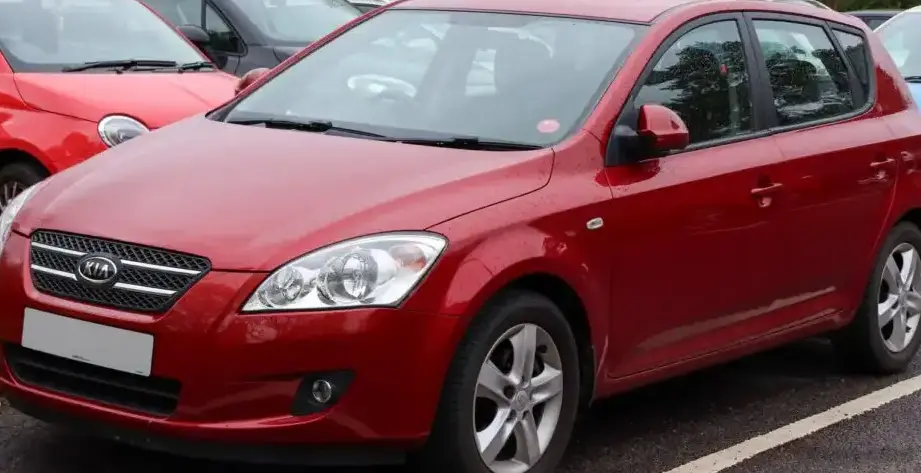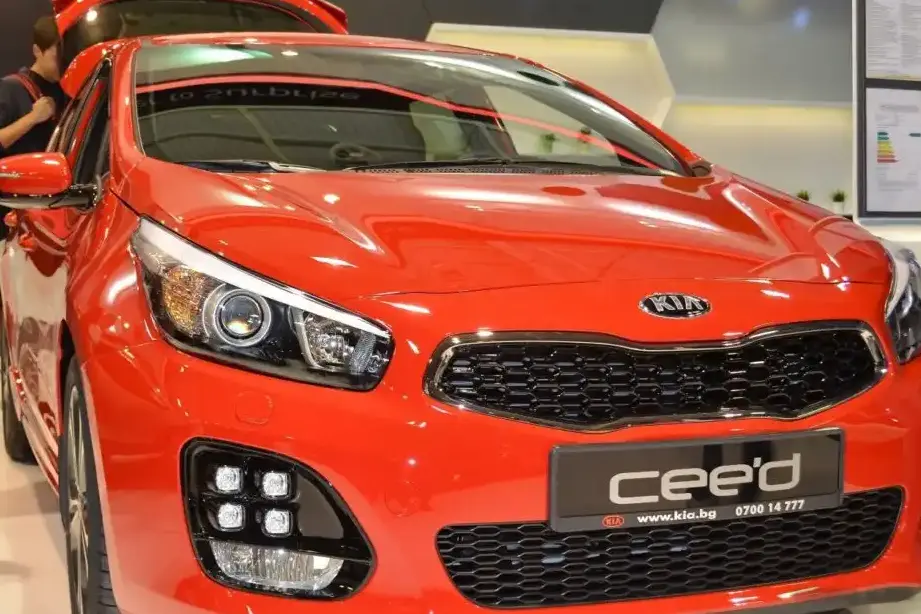
The Kia Cee’d II (facelift, introduced in June 2015) 1.6 GDI, producing 135 horsepower, represented a significant step forward for Kia in the European compact hatchback market. This variant, part of the JD generation (internally known as the BD), aimed to offer a blend of efficiency, practicality, and modern styling. Positioned as a mid-range offering within the Cee’d lineup, it slotted between the lower-powered 1.4L engine and the more performance-oriented 1.6 Turbo variants. Production continued through 2018, with the facelift bringing revised styling, updated technology, and refinements to the existing powertrain options.
Technical Specifications
| Brand | Kia |
| Model | Cee’d |
| Generation | Cee’d II (facelift 2015) |
| Type (Engine) | 1.6 GDI (135 Hp) |
| Start of production | June, 2015 |
| End of production | 2018 |
| Powertrain Architecture | Internal Combustion engine |
| Body type | Hatchback |
| Seats | 5 |
| Doors | 5 |
| Fuel consumption (urban) | 7.8 l/100 km (30.2 US mpg, 36.2 UK mpg, 12.8 km/l) |
| Fuel consumption (extra urban) | 4.7 l/100 km (50 US mpg, 60.1 UK mpg, 21.3 km/l) |
| Fuel consumption (combined) | 5.8 l/100 km (40.6 US mpg, 48.7 UK mpg, 17.2 km/l) |
| CO2 emissions | 135 g/km |
| Fuel Type | Petrol (Gasoline) |
| Acceleration 0 – 100 km/h | 9.9 sec |
| Acceleration 0 – 62 mph | 9.9 sec |
| Acceleration 0 – 60 mph | 9.4 sec |
| Maximum speed | 195 km/h (121.17 mph) |
| Emission standard | Euro 6 |
| Weight-to-power ratio | 8.9 kg/Hp, 112.9 Hp/tonne |
| Weight-to-torque ratio | 7.2 kg/Nm, 138 Nm/tonne |
| Power | 135 Hp @ 6300 rpm |
| Power per litre | 84.9 Hp/l |
| Torque | 165 Nm @ 4850 rpm (121.7 lb.-ft. @ 4850 rpm) |
| Engine layout | Front, Transverse |
| Engine Model/Code | G4FD |
| Engine displacement | 1591 cm3 (97.09 cu. in.) |
| Number of cylinders | 4 |
| Engine configuration | Inline |
| Cylinder Bore | 77 mm (3.03 in.) |
| Piston Stroke | 85.44 mm (3.36 in.) |
| Compression ratio | 11:1 |
| Number of valves per cylinder | 4 |
| Fuel injection system | Direct injection |
| Engine aspiration | Naturally aspirated engine |
| Engine oil capacity | 4 l (4.23 US qt | 3.52 UK qt) |
| Coolant | 5.8 l (6.13 US qt | 5.1 UK qt) |
| Kerb Weight | 1196-1330 kg (2636.73 – 2932.15 lbs.) |
| Max. weight | 1820 kg (4012.41 lbs.) |
| Max load | 490-624 kg (1080.27 – 1375.68 lbs.) |
| Trunk (boot) space – minimum | 380 l (13.42 cu. ft.) |
| Trunk (boot) space – maximum | 1318 l (46.54 cu. ft.) |
| Fuel tank capacity | 53 l (14 US gal | 11.66 UK gal) |
| Max. roof load | 80 kg (176.37 lbs.) |
| Permitted trailer load with brakes (12%) | 1400 kg (3086.47 lbs.) |
| Permitted trailer load without brakes | 600 kg (1322.77 lbs.) |
| Permitted towbar download | 60 kg (132.28 lbs.) |
| Length | 4310 mm (169.69 in.) |
| Width | 1780 mm (70.08 in.) |
| Width including mirrors | 2035 mm (80.12 in.) |
| Height | 1470 mm (57.87 in.) |
| Wheelbase | 2650 mm (104.33 in.) |
| Front track | 1549-1563 mm (60.98 – 61.54 in.) |
| Rear (Back) track | 1557-1571 mm (61.3 – 61.85 in.) |
| Front overhang | 900 mm (35.43 in.) |
| Rear overhang | 760 mm (29.92 in.) |
| Minimum turning circle (turning diameter) | 10.6 m (34.78 ft.) |
| Drivetrain Architecture | The Internal combustion engine (ICE) drives the front wheels of the vehicle. |
| Drive wheel | Front wheel drive |
| Number of gears and type of gearbox | 6 gears, manual transmission |
| Front suspension | Independent type McPherson |
| Rear suspension | Independent multi-link suspension |
| Front brakes | Ventilated discs, 280-300 mm |
| Rear brakes | Disc, 262-284 mm |
| Assisting systems | ABS (Anti-lock braking system) |
| Steering type | Steering rack and pinion |
| Tires size | 195/65 R15 91H; 205/55 R16 91H; 225/45 R17 91V |
| Wheel rims size | 6; 0J x 15 ET46; 6; 5J x 16 ET50; 7; 0J x 17 ET53 |
Powertrain & Engine Architecture
The heart of this Cee’d variant is the G4FD 1.6-liter inline-four cylinder gasoline engine. This engine utilizes Gasoline Direct Injection (GDI) technology, which improves combustion efficiency and power output compared to traditional port fuel injection. The GDI system injects fuel directly into the combustion chamber, allowing for more precise fuel control and a higher compression ratio of 11:1. The engine features a dual continuously variable valve timing (CVVT) system, optimizing valve timing for both intake and exhaust to enhance performance and fuel economy across the rev range. The engine produces 135 horsepower at 6,300 rpm and 165 Nm (121.7 lb-ft) of torque at 4,850 rpm. The engine is transversely mounted at the front of the vehicle. The standard transmission for this model was a six-speed manual, although a six-speed automatic transmission was also available as an option.
Driving Characteristics
The 1.6 GDI with the manual transmission offered a reasonably engaging driving experience for a compact hatchback. Acceleration from 0-60 mph took approximately 9.4 seconds, and top speed was rated at 195 km/h (121.17 mph). While not a particularly sporty setup, the engine provided adequate power for everyday driving and highway cruising. The automatic transmission, while offering convenience, did slightly diminish performance and responsiveness compared to the manual. Gear changes were generally smooth, but the transmission could sometimes feel hesitant during quick acceleration. The Cee’d’s suspension provided a comfortable ride, absorbing bumps and imperfections in the road well. Steering was light and precise, making it easy to maneuver in urban environments.
Equipment & Trim Levels
The 1.6 GDI typically came equipped with a respectable level of standard features. These included air conditioning, power windows, power door locks, a USB audio input, and Bluetooth connectivity. Higher trim levels added features such as alloy wheels, a touchscreen infotainment system, rear parking sensors, and a reversing camera. Interior upholstery was typically cloth, with options for leather available on higher-spec models. The dashboard layout was functional and well-designed, with intuitive controls and a clear instrument cluster.
Chassis & Braking
The Cee’d II utilized a McPherson strut front suspension and a multi-link rear suspension, providing a good balance of ride comfort and handling. Front brakes were ventilated discs, ranging from 280-300mm in size depending on the trim level, while rear brakes were solid discs, measuring 262-284mm. Anti-lock Braking System (ABS) was standard. The chassis was designed to provide good rigidity and stability, contributing to the car’s overall handling characteristics. Stabilizer bars were fitted to both the front and rear axles to reduce body roll during cornering.
Market Reception & Comparison
The Kia Cee’d II 1.6 GDI was generally well-received by automotive critics. It was praised for its stylish design, spacious interior, and competitive price point. The engine was considered to be a good all-rounder, offering a decent balance of performance and fuel economy. Compared to other engines in the Cee’d lineup, the 1.6 GDI offered a more refined driving experience than the base 1.4L engine, but lacked the outright performance of the 1.6 Turbo. Fuel economy was competitive, with combined figures around 5.8 l/100 km (40.6 US mpg). Reliability was generally good, although some owners reported minor issues with the GDI system over time.
Legacy
The Kia Cee’d II 1.6 GDI has proven to be a relatively reliable and durable vehicle in the used car market. The G4FD engine, while not without its potential issues (like carbon buildup common to direct injection engines), has generally held up well over time with proper maintenance. The Cee’d’s overall build quality and practicality have contributed to its continued popularity as a used car. Parts availability is generally good, and maintenance costs are reasonable. Today, these models represent a good value proposition for buyers seeking an affordable and reliable compact hatchback.