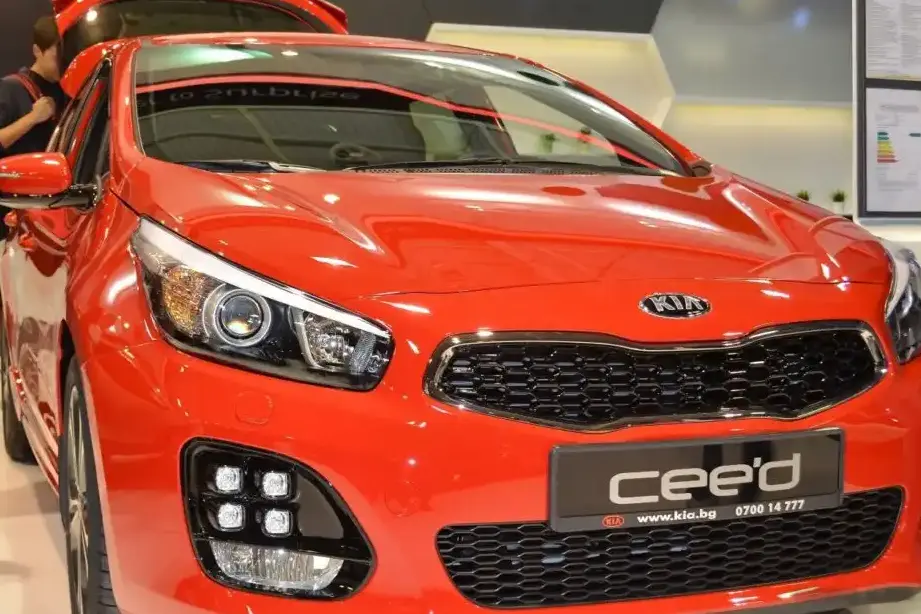
The Kia Cee’d II (facelift, produced from June 2015 to 2018) 1.6 GDI (135 hp) with a Dual Clutch Transmission (DCT) represented a significant step forward for Kia in the European compact hatchback market. Positioned as a mid-range offering within the Cee’d lineup, it aimed to provide a balance between fuel efficiency, performance, and modern technology. This variant was specifically tailored to appeal to drivers seeking a comfortable and refined driving experience with the convenience of an automatic transmission, while still offering respectable power and handling. The Cee’d II, built on the 1HX0 platform (shared with the Hyundai i30), was Kia’s attempt to establish itself as a serious competitor to established European brands like Volkswagen, Ford, and Opel.
Technical Specifications
| Brand | Kia |
| Model | Cee’d |
| Generation | Cee’d II (facelift 2015) |
| Type (Engine) | 1.6 GDI (135 Hp) DCT |
| Start of production | June, 2015 |
| End of production | 2018 |
| Powertrain Architecture | Internal Combustion engine |
| Body type | Hatchback |
| Seats | 5 |
| Doors | 5 |
| Fuel consumption (urban) | 7.5 l/100 km (31.4 US mpg, 37.7 UK mpg, 13.3 km/l) |
| Fuel consumption (extra urban) | 4.9 l/100 km (48 US mpg, 57.6 UK mpg, 20.4 km/l) |
| Fuel consumption (combined) | 5.9 l/100 km (39.9 US mpg, 47.9 UK mpg, 16.9 km/l) |
| CO2 emissions | 136 g/km |
| Fuel Type | Petrol (Gasoline) |
| Acceleration 0 – 100 km/h | 10.8 sec |
| Acceleration 0 – 62 mph | 10.8 sec |
| Acceleration 0 – 60 mph | 10.3 sec |
| Maximum speed | 195 km/h (121.17 mph) |
| Emission standard | Euro 6 |
| Weight-to-power ratio | 9.1 kg/Hp, 110 Hp/tonne |
| Weight-to-torque ratio | 7.4 kg/Nm, 134.5 Nm/tonne |
| Power | 135 Hp @ 6300 rpm |
| Power per litre | 84.9 Hp/l |
| Torque | 165 Nm @ 4850 rpm (121.7 lb.-ft. @ 4850 rpm) |
| Engine layout | Front, Transverse |
| Engine Model/Code | G4FD |
| Engine displacement | 1591 cm3 (97.09 cu. in.) |
| Number of cylinders | 4 |
| Engine configuration | Inline |
| Cylinder Bore | 77 mm (3.03 in.) |
| Piston Stroke | 85.44 mm (3.36 in.) |
| Compression ratio | 11:1 |
| Number of valves per cylinder | 4 |
| Fuel injection system | Direct injection |
| Engine aspiration | Naturally aspirated engine |
| Engine oil capacity | 4 l (4.23 US qt | 3.52 UK qt) |
| Coolant | 5.7 l (6.02 US qt | 5.02 UK qt) |
| Kerb Weight | 1227-1353 kg (2705.07 – 2982.85 lbs.) |
| Max. weight | 1840 kg (4056.51 lbs.) |
| Max load | 487-613 kg (1073.65 – 1351.43 lbs.) |
| Trunk (boot) space – minimum | 380 l (13.42 cu. ft.) |
| Trunk (boot) space – maximum | 1318 l (46.54 cu. ft.) |
| Fuel tank capacity | 53 l (14 US gal | 11.66 UK gal) |
| Max. roof load | 80 kg (176.37 lbs.) |
| Permitted trailer load with brakes (12%) | 1300 kg (2866.01 lbs.) |
| Permitted trailer load without brakes | 600 kg (1322.77 lbs.) |
| Permitted towbar download | 60 kg (132.28 lbs.) |
| Length | 4310 mm (169.69 in.) |
| Width | 1780 mm (70.08 in.) |
| Width including mirrors | 2035 mm (80.12 in.) |
| Height | 1470 mm (57.87 in.) |
| Wheelbase | 2650 mm (104.33 in.) |
| Front track | 1549-1555 mm (60.98 – 61.22 in.) |
| Rear (Back) track | 1557-1563 mm (61.3 – 61.54 in.) |
| Front overhang | 900 mm (35.43 in.) |
| Rear overhang | 760 mm (29.92 in.) |
| Minimum turning circle (turning diameter) | 10.6 m (34.78 ft.) |
| Drivetrain Architecture | The Internal combustion engine (ICE) drives the front wheels of the vehicle. |
| Drive wheel | Front wheel drive |
| Number of gears and type of gearbox | 6 gears, automatic transmission DCT |
| Front suspension | Independent type McPherson |
| Rear suspension | Independent multi-link suspension |
| Front brakes | Ventilated discs, 280-300 mm |
| Rear brakes | Disc, 262-284 mm |
| Assisting systems | ABS (Anti-lock braking system) |
| Steering type | Steering rack and pinion |
| Tires size | 205/55 R16 91H; 225/45 R17 91V |
| Wheel rims size | 6; 5J x 16 ET50; 7; 0J x 17 ET53 |
Powertrain & Engine Architecture
The heart of this Cee’d variant is the 1.6-liter (1591 cc) G4FD inline-four cylinder gasoline engine. This engine belongs to Kia’s Gamma family and features Gasoline Direct Injection (GDI) technology. GDI allows for more precise fuel delivery, resulting in improved fuel efficiency and increased power output compared to traditional port fuel injection systems. The engine produces 135 horsepower at 6,300 rpm and 165 Nm (121.7 lb-ft) of torque at 4,850 rpm. It boasts a compression ratio of 11:1 and utilizes a dual continuously variable valve timing (DCVVT) system to optimize engine performance across the rev range. The engine is transversely mounted at the front of the vehicle.
Paired with the 1.6 GDI engine is a 6-speed Dual Clutch Transmission (DCT). This DCT provides quicker and smoother gear changes compared to a traditional automatic transmission, contributing to a more engaging driving experience. The DCT operates by utilizing two separate clutches for odd and even gears, allowing for pre-selection of the next gear and minimizing interruption in power delivery.
Driving Characteristics
The 1.6 GDI DCT Cee’d offers a comfortable and refined driving experience. While not a performance-oriented model, the 135 hp engine provides adequate power for everyday driving situations. Acceleration from 0 to 100 km/h (0-62 mph) takes approximately 10.8 seconds. The DCT transmission contributes to a responsive feel, with quick shifts and minimal hesitation. Compared to the manual transmission version of the same engine, the DCT offers greater convenience, particularly in urban traffic. However, some drivers may find the DCT slightly less engaging than a traditional manual gearbox. Compared to higher-output engines in the Cee’d range, such as the 1.6 T-GDI, this variant prioritizes fuel economy and ease of use over outright performance.
Equipment & Trim Levels
The 1.6 GDI DCT trim typically included standard features such as air conditioning, power windows, power mirrors, a touchscreen infotainment system with Bluetooth connectivity, and a suite of safety features including ABS, ESC (Electronic Stability Control), and multiple airbags. Higher trim levels offered additional features like alloy wheels, a rearview camera, parking sensors, and a more advanced infotainment system with navigation. Interior upholstery was typically cloth, with options for leather upgrades on higher trims. Dashboard design was modern and functional, with a focus on ergonomics and ease of use.
Chassis & Braking
The Cee’d II utilizes an independent McPherson strut suspension at the front and an independent multi-link suspension at the rear, providing a comfortable ride and good handling characteristics. The front brakes are ventilated discs, ranging from 280-300mm in size, while the rear brakes are solid discs, measuring 262-284mm. ABS (Anti-lock Braking System) is standard, enhancing braking performance and stability. Stabilizer bars are fitted to both the front and rear axles to reduce body roll during cornering.
Market Reception & Comparison
The Kia Cee’d II 1.6 GDI DCT was generally well-received by automotive critics. It was praised for its fuel efficiency, comfortable ride, and well-equipped interior. However, some reviewers noted that the engine could feel slightly underpowered, particularly when fully loaded or driving uphill. Compared to competitors like the Volkswagen Golf and Ford Focus, the Cee’d offered a compelling value proposition, with a similar level of equipment at a lower price point. The DCT transmission was also seen as a positive feature, enhancing the overall driving experience.
Legacy
The 1.6 GDI engine and DCT transmission combination proved to be relatively reliable in the Kia Cee’d II. While some owners have reported minor issues with the DCT, such as occasional jerky shifts, these are generally not widespread. The engine itself is known for its durability and fuel efficiency. On the used car market, the Cee’d II 1.6 GDI DCT remains a popular choice for buyers seeking a practical and affordable compact hatchback. Its combination of fuel economy, comfort, and features makes it a compelling option in its price range. Regular maintenance, including timely oil changes and DCT fluid replacements, is crucial to ensure the long-term reliability of this powertrain.