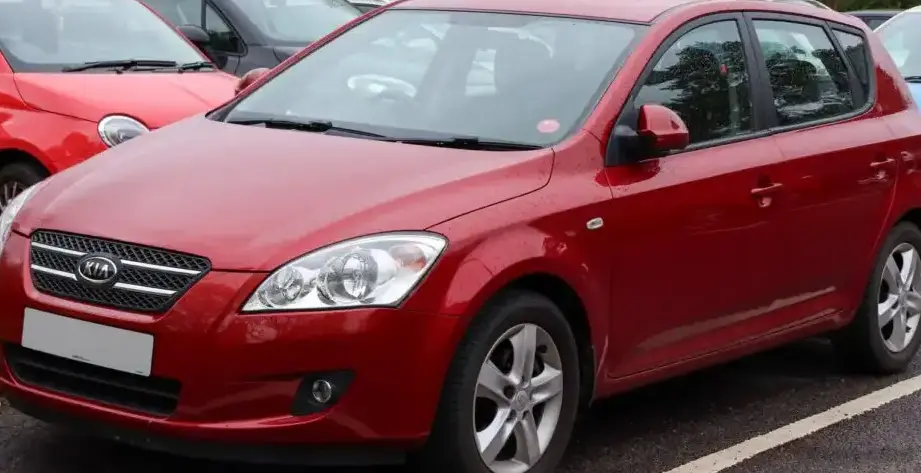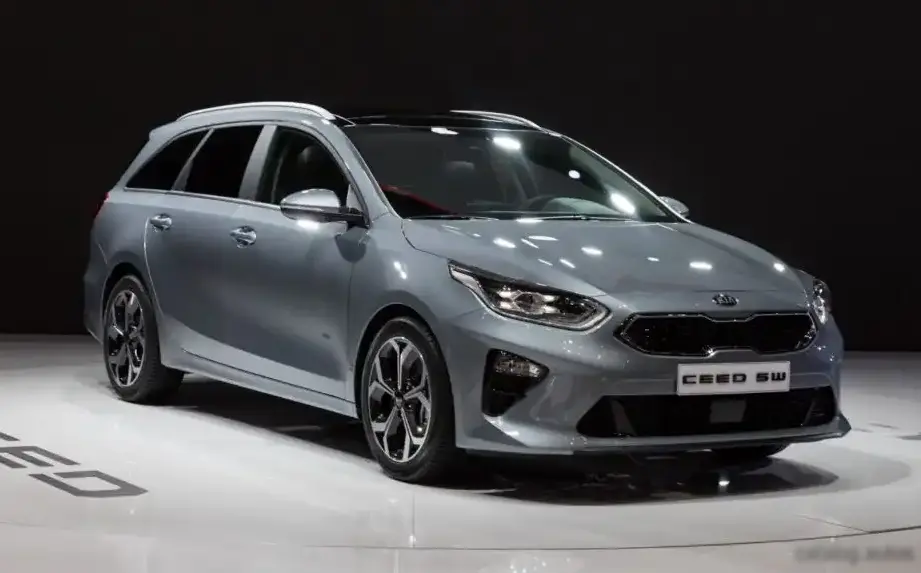
The Kia Ceed III Sportswagon 1.0 T-GDI, producing 100 horsepower, was a variant of the third-generation Ceed (JD) series of compact wagons produced by the South Korean manufacturer Kia between September 2019 and September 2021. Positioned as an entry-level offering within the Sportswagon range, it aimed to provide a fuel-efficient and affordable option for buyers prioritizing practicality and economy over outright performance. This model was primarily marketed in Europe, where the compact wagon segment remained popular, offering a compelling alternative to traditional hatchbacks and sedans.
Technical Specifications
| Brand | Kia |
| Model | Ceed |
| Generation | Ceed III Sportswagon |
| Type (Engine) | 1.0 T-GDI (100 Hp) |
| Start of production | September, 2019 |
| End of production | September, 2021 |
| Powertrain Architecture | Internal Combustion engine |
| Body type | Station wagon (estate) |
| Seats | 5 |
| Doors | 5 |
| Combined fuel consumption (WLTP) | 5.2-6.4 l/100 km (45.2 – 36.8 US mpg, 54.3 – 44.1 UK mpg, 19.2 – 15.6 km/l) |
| CO2 emissions (WLTP) | 119-145 g/km |
| Fuel consumption (economy) – urban (NEDC, WLTP equivalent) | 6.3-7.2 l/100 km (37.3 – 32.7 US mpg, 44.8 – 39.2 UK mpg, 15.9 – 13.9 km/l) |
| Fuel consumption (economy) – extra urban (NEDC, WLTP equivalent) | 4.3-5 l/100 km (54.7 – 47 US mpg, 65.7 – 56.5 UK mpg, 23.3 – 20 km/l) |
| Fuel consumption (economy) – combined (NEDC, WLTP equivalent) | 5.1-5.8 l/100 km (46.1 – 40.6 US mpg, 55.4 – 48.7 UK mpg, 19.6 – 17.2 km/l) |
| CO2 emissions (NEDC, WLTP equivalent) | 116-133 g/km |
| Fuel Type | Petrol (Gasoline) |
| Acceleration 0 – 100 km/h | 12 sec |
| Acceleration 0 – 62 mph | 12 sec |
| Acceleration 0 – 60 mph | 11.4 sec |
| Maximum speed | 183 km/h (113.71 mph) |
| Emission standard | Euro 6d |
| Weight-to-power ratio | 12.6 kg/Hp, 79.4 Hp/tonne |
| Weight-to-torque ratio | 7.3 kg/Nm, 136.6 Nm/tonne |
| Power | 100 Hp @ 4500 rpm |
| Power per litre | 100.2 Hp/l |
| Torque | 172 Nm @ 1500-4000 rpm (126.86 lb.-ft. @ 1500-4000 rpm) |
| Engine layout | Front, Transverse |
| Engine Model/Code | Kappa II / G3LC |
| Engine displacement | 998 cm3 (60.9 cu. in.) |
| Number of cylinders | 3 |
| Engine configuration | Inline |
| Cylinder Bore | 71 mm (2.8 in.) |
| Piston Stroke | 84 mm (3.31 in.) |
| Compression ratio | 10.5:1 |
| Number of valves per cylinder | 4 |
| Fuel injection system | Direct injection |
| Engine aspiration | Turbocharger, Intercooler |
| Valvetrain | DOHC |
| Engine oil capacity | 3.6 l (3.8 US qt | 3.17 UK qt) |
| Coolant | 5.5 l (5.81 US qt | 4.84 UK qt) |
| Kerb Weight | 1259-1390 kg (2775.62 – 3064.43 lbs.) |
| Max. weight | 1820-1840 kg (4012.41 – 4056.51 lbs.) |
| Max load | 450-561 kg (992.08 – 1236.79 lbs.) |
| Trunk (boot) space – minimum | 625 l (22.07 cu. ft.) |
| Trunk (boot) space – maximum | 1694 l (59.82 cu. ft.) |
| Fuel tank capacity | 50 l (13.21 US gal | 11 UK gal) |
| Max. roof load | 80 kg (176.37 lbs.) |
| Permitted trailer load with brakes (12%) | 1000 kg (2204.62 lbs.) |
| Permitted trailer load without brakes | 500 kg (1102.31 lbs.) |
| Permitted towbar download | 75 kg (165.35 lbs.) |
| Length | 4600 mm (181.1 in.) |
| Width | 1800 mm (70.87 in.) |
| Width including mirrors | 2055 mm (80.91 in.) |
| Height | 1465 mm (57.68 in.) |
| Wheelbase | 2650 mm (104.33 in.) |
| Front track | 1559-1573 mm (61.38 – 61.93 in.) |
| Rear (Back) track | 1567-1581 mm (61.69 – 62.24 in.) |
| Front overhang | 880 mm (34.65 in.) |
| Rear overhang | 1070 mm (42.13 in.) |
| Minimum turning circle (turning diameter) | 10.6 m (34.78 ft.) |
| Drivetrain Architecture | The Internal combustion engine (ICE) drives the front wheels of the vehicle. |
| Drive wheel | Front wheel drive |
| Number of gears and type of gearbox | 6 gears, manual transmission |
| Front suspension | Independent, type McPherson with coil spring and anti-roll bar |
| Rear suspension | Independent multi-link spring suspension with stabilizer |
| Front brakes | Ventilated discs, 280×23 mm |
| Rear brakes | Disc, 272×10 mm |
| Assisting systems | ABS (Anti-lock braking system) |
| Steering type | Steering rack and pinion |
| Power steering | Electric Steering |
| Tires size | 195/65 R15; 205/55 R16; 225/45 R17 |
| Wheel rims size | 6J x 15; 6.5J x 16; 7J x 17 |
INTRODUCTION
The Kia Ceed III Sportswagon 1.0 T-GDI represented a key offering in Kia’s European lineup. Introduced as part of the JD generation Ceed, launched in 2018, the Sportswagon body style provided increased cargo capacity compared to the five-door hatchback. The 1.0 T-GDI engine, a three-cylinder turbocharged unit, was designed to balance fuel efficiency with acceptable performance for everyday driving. This variant specifically targeted buyers seeking a practical and economical estate car, competing with models like the Volkswagen Golf Estate and Skoda Octavia Combi.
Powertrain & Engine Architecture
At the heart of the Ceed Sportswagon 1.0 T-GDI lies the Kappa II engine family, specifically the G3LC code. This 998cc, inline-three cylinder engine utilizes direct fuel injection and a single scroll turbocharger with an intercooler. The engine produces 100 horsepower at 4500 rpm and 172 Nm (126.86 lb.-ft.) of torque between 1500 and 4000 rpm. The engine features a dual continuous variable valve timing (D-CVVT) system for optimized efficiency and responsiveness. The engine is transversely mounted in the front of the vehicle. The 6-speed manual transmission was standard, delivering power to the front wheels. The transmission’s gear ratios were tuned for fuel economy, with a relatively long final drive.
Driving Characteristics
The 1.0 T-GDI Sportswagon offered a comfortable, if not particularly exhilarating, driving experience. Acceleration from 0 to 100 km/h (0-62 mph) took approximately 12 seconds, and top speed was rated at 183 km/h (113.71 mph). The turbocharger provided a noticeable boost in power during mid-range acceleration, but the engine could feel strained at higher speeds or when fully loaded. The manual transmission was generally smooth, although the shift linkage wasn’t as precise as some competitors. Compared to higher-output Ceed variants, such as the 1.4 T-GDI, the 1.0 T-GDI prioritized fuel economy over outright performance. The suspension provided a comfortable ride, absorbing most road imperfections effectively.
Equipment & Trim Levels
The 1.0 T-GDI Sportswagon typically came equipped with a reasonable level of standard features. These included air conditioning, a touchscreen infotainment system with Apple CarPlay and Android Auto compatibility, Bluetooth connectivity, and a suite of safety features such as ABS, ESC (Electronic Stability Control), and multiple airbags. Higher trim levels offered additional features like automatic climate control, a larger touchscreen display, rear parking sensors, and a reversing camera. Interior upholstery was typically cloth, with options for partial leather trim on higher grades. The dashboard layout was functional and modern, with a focus on ease of use.
Chassis & Braking
The Ceed Sportswagon utilized a McPherson strut front suspension with a coil spring and anti-roll bar, providing a good balance of comfort and handling. The rear suspension employed an independent multi-link setup, further enhancing ride quality and stability. Front brakes were ventilated discs measuring 280x23mm, while rear brakes were solid discs measuring 272x10mm. The braking system was assisted by ABS and ESC, providing confident stopping power in various conditions. Steering was electrically assisted, offering a light and responsive feel.
Market Reception & Comparison
The Kia Ceed III Sportswagon 1.0 T-GDI was generally well-received by automotive critics for its practicality, fuel efficiency, and value for money. However, some reviewers noted that the engine could feel underpowered, particularly when carrying a full load or tackling steep hills. Compared to other trims in the Ceed lineup, the 1.0 T-GDI offered the lowest price point, making it an attractive option for budget-conscious buyers. Fuel economy was a strong point, with combined WLTP figures ranging from 5.2 to 6.4 l/100 km (45.2 to 36.8 US mpg). Reliability reports suggested that the Kappa engine family was generally dependable, although regular maintenance was essential.
Legacy
The Kia Ceed III Sportswagon 1.0 T-GDI has established itself as a reliable and affordable used car option. The Kappa engine, while not known for its blistering performance, has proven to be relatively durable with proper maintenance. The Sportswagon body style continues to be popular among buyers seeking a practical and versatile vehicle. As of 2024, these models can be found on the used car market at competitive prices, offering a compelling value proposition for those seeking a fuel-efficient and spacious estate car.