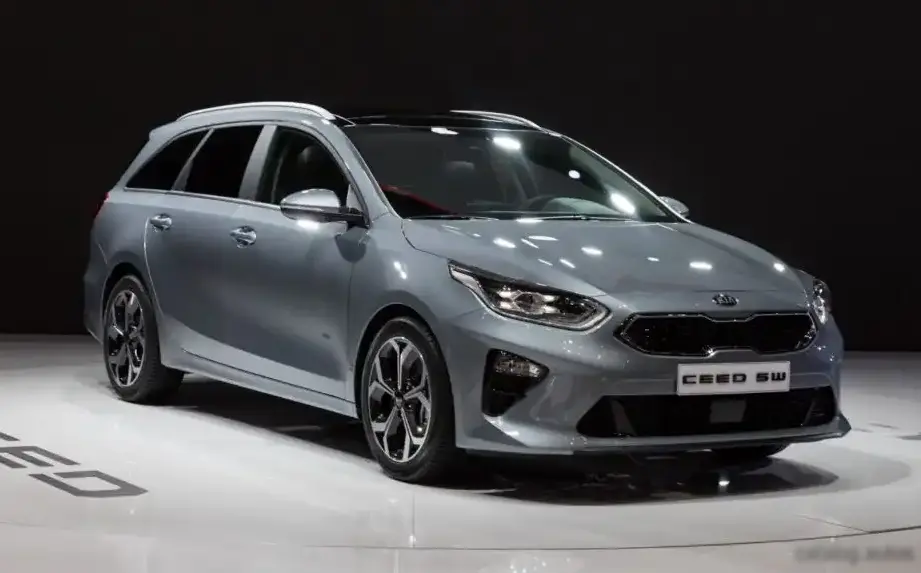
The Kia Ceed III Sportswagon 1.0 T-GDI (120 hp) represents a key variant within the third generation of Kia’s popular compact estate car, produced from June 2018 to September 2021. Positioned as an entry-level to mid-range offering, this model aimed to provide a balance of fuel efficiency, practicality, and affordability within the Ceed Sportswagon lineup. It was primarily marketed in Europe, where the demand for compact wagons remained strong, offering a compelling alternative to hatchbacks with increased cargo capacity. This variant played a significant role in bolstering Kia’s presence in the European market, showcasing the brand’s commitment to offering a diverse range of vehicles tailored to regional preferences.
Technical Specifications
| Brand | Kia |
| Model | Ceed |
| Generation | Ceed III Sportswagon |
| Type (Engine) | 1.0 T-GDI (120 Hp) |
| Start of production | June, 2018 |
| End of production | September, 2021 |
| Powertrain Architecture | Internal Combustion engine |
| Body type | Station wagon (estate) |
| Seats | 5 |
| Doors | 5 |
| Fuel consumption (urban) | 6.3-6.5 l/100 km (37.3 – 36.2 US mpg, 44.8 – 43.5 UK mpg, 15.9 – 15.4 km/l) |
| Fuel consumption (extra urban) | 4.5-4.9 l/100 km (52.3 – 48 US mpg, 62.8 – 57.6 UK mpg, 22.2 – 20.4 km/l) |
| Fuel consumption (combined) | 5.2-5.5 l/100 km (45.2 – 42.8 US mpg, 54.3 – 51.4 UK mpg, 19.2 – 18.2 km/l) |
| CO2 emissions | 118-126 g/km |
| Fuel Type | Petrol (Gasoline) |
| Acceleration 0 – 100 km/h | 11.3 sec |
| Acceleration 0 – 62 mph | 11.3 sec |
| Acceleration 0 – 60 mph | 10.7 sec |
| Maximum speed | 190 km/h (118.06 mph) |
| Emission standard | Euro 6d TEMP |
| Weight-to-power ratio | 10.5 kg/Hp, 95.3 Hp/tonne |
| Weight-to-torque ratio | 7.3 kg/Nm, 136.6 Nm/tonne |
| Power | 120 Hp @ 6000 rpm |
| Power per litre | 120.2 Hp/l |
| Torque | 172 Nm @ 1500-4000 rpm (126.86 lb.-ft. @ 1500-4000 rpm) |
| Engine layout | Front, Transverse |
| Engine Model/Code | Kappa II / G3LC |
| Engine displacement | 998 cm3 (60.9 cu. in.) |
| Number of cylinders | 3 |
| Engine configuration | Inline |
| Cylinder Bore | 71 mm (2.8 in.) |
| Piston Stroke | 84 mm (3.31 in.) |
| Compression ratio | 10:1 |
| Number of valves per cylinder | 4 |
| Fuel injection system | Direct injection |
| Engine aspiration | Turbocharger, Intercooler |
| Valvetrain | DOHC |
| Engine oil capacity | 3.6 l (3.8 US qt | 3.17 UK qt) |
| Coolant capacity | 5.5 l (5.81 US qt | 4.84 UK qt) |
| Kerb Weight | 1259-1390 kg (2775.62 – 3064.43 lbs.) |
| Max. weight | 1840 kg (4056.51 lbs.) |
| Max load | 450-581 kg (992.08 – 1280.89 lbs.) |
| Trunk (boot) space – minimum | 625 l (22.07 cu. ft.) |
| Trunk (boot) space – maximum | 1694 l (59.82 cu. ft.) |
| Fuel tank capacity | 50 l (13.21 US gal | 11 UK gal) |
| Max. roof load | 80 kg (176.37 lbs.) |
| Permitted trailer load with brakes (12%) | 1200 kg (2645.55 lbs.) |
| Permitted trailer load without brakes | 600 kg (1322.77 lbs.) |
| Permitted towbar download | 75 kg (165.35 lbs.) |
| Length | 4600 mm (181.1 in.) |
| Width | 1800 mm (70.87 in.) |
| Width including mirrors | 2055 mm (80.91 in.) |
| Height | 1465 mm (57.68 in.) |
| Wheelbase | 2650 mm (104.33 in.) |
| Front track | 1559-1573 mm (61.38 – 61.93 in.) |
| Rear track | 1567-1581 mm (61.69 – 62.24 in.) |
| Front overhang | 880 mm (34.65 in.) |
| Rear overhang | 1070 mm (42.13 in.) |
| Minimum turning circle | 10.6 m (34.78 ft.) |
| Drivetrain Architecture | Front wheel drive |
| Number of gears and type of gearbox | 6 gears, manual transmission |
| Front suspension | Independent, type McPherson with coil spring and anti-roll bar |
| Rear suspension | Independent multi-link spring suspension with stabilizer |
| Front brakes | Ventilated discs, 280×23 mm |
| Rear brakes | Disc, 272×10 mm |
| Assisting systems | ABS (Anti-lock braking system) |
| Steering type | Steering rack and pinion |
| Power steering | Electric Steering |
| Tires size | 195/65 R15; 205/55 R16; 225/45 R17; 225/40 R18 |
| Wheel rims size | 6J x 15; 6.5J x 16; 7J x 17; 7.5J x 18 |
INTRODUCTION
The Kia Ceed III Sportswagon 1.0 T-GDI (120 hp) was introduced as part of the third generation (JD) of the Ceed model, which debuted in 2018. Built on the 1HX0 platform (shared with the Hyundai i30), the Sportswagon body style offered increased practicality over the five-door hatchback. This particular variant, powered by Kia’s 1.0-liter turbocharged gasoline engine, was designed to appeal to buyers seeking a fuel-efficient and affordable estate car. It occupied a middle ground in the Ceed Sportswagon range, sitting below the more powerful 1.4 T-GDI and diesel options, and above the base 1.4 MPI engine.
Powertrain & Engine Architecture
At the heart of the Ceed Sportswagon 1.0 T-GDI is the Kappa II G3LC engine, a three-cylinder, 998cc turbocharged gasoline unit. This engine utilizes direct fuel injection and a twin-scroll turbocharger to deliver a respectable 120 horsepower at 6,000 rpm and 172 Nm (126.86 lb-ft) of torque between 1,500 and 4,000 rpm. The engine features a double overhead camshaft (DOHC) valvetrain with four valves per cylinder. The engine’s compact size and lightweight construction contribute to the vehicle’s overall efficiency. The engine is paired with a six-speed manual transmission as standard, delivering power to the front wheels. The engine also incorporates a Start & Stop system to further improve fuel economy and reduce emissions. A particulate filter was also included to meet stringent Euro 6d TEMP emission standards.
Driving Characteristics
The 1.0 T-GDI engine, while offering adequate performance for everyday driving, is not designed for outright speed. Acceleration from 0 to 100 km/h (0-62 mph) takes approximately 11.3 seconds. The engine’s strength lies in its responsiveness at lower and mid-range revs, making it suitable for urban and highway cruising. The six-speed manual transmission is well-matched to the engine’s characteristics, providing smooth gear changes and allowing the driver to keep the engine within its optimal torque band. Compared to the more powerful 1.4 T-GDI, the 1.0 T-GDI feels less eager to accelerate, but it offers a more relaxed and fuel-efficient driving experience. The manual transmission also provides a more engaging driving experience than the optional seven-speed dual-clutch transmission (DCT) available on other Ceed variants.
Equipment & Trim Levels
The Ceed Sportswagon 1.0 T-GDI typically came equipped with a reasonable level of standard features. These included air conditioning, a touchscreen infotainment system with Apple CarPlay and Android Auto compatibility, Bluetooth connectivity, and a suite of safety features such as ABS, ESC (Electronic Stability Control), and multiple airbags. Higher trim levels added features like automatic climate control, a larger touchscreen display, rear parking sensors, a reversing camera, and alloy wheels. Interior upholstery was typically cloth, with options for upgraded materials on higher trims. Optional extras included a panoramic sunroof, heated seats, and a premium audio system.
Chassis & Braking
The Ceed Sportswagon utilizes a McPherson strut front suspension and a multi-link rear suspension, providing a comfortable and controlled ride. The suspension is tuned to prioritize comfort over sporty handling, making it well-suited for long journeys. Braking duties are handled by ventilated discs at the front and solid discs at the rear. ABS (Anti-lock Braking System) is standard, providing enhanced braking performance in emergency situations. The steering is electrically assisted, offering a light and precise feel.
Market Reception & Comparison
The Kia Ceed III Sportswagon 1.0 T-GDI was generally well-received by automotive critics. It was praised for its fuel efficiency, practicality, and value for money. However, some reviewers noted that the engine could feel strained when fully loaded or driving uphill. Compared to the 1.4 T-GDI, the 1.0 T-GDI offered lower running costs but less performance. The diesel variants provided even better fuel economy but came with a higher purchase price and potential concerns about diesel emissions. The 1.0 T-GDI struck a good balance between these factors, making it a popular choice for buyers seeking a practical and economical estate car.
Legacy
The Kappa II 1.0 T-GDI engine has proven to be a relatively reliable unit, with few widespread issues reported. The Ceed Sportswagon 1.0 T-GDI remains a popular choice on the used car market, offering a compelling combination of practicality, fuel efficiency, and affordability. Its relatively simple engine design and readily available parts contribute to its low cost of ownership. While not a performance-oriented vehicle, the Ceed Sportswagon 1.0 T-GDI provides a comfortable and reliable transportation solution for families and individuals alike.