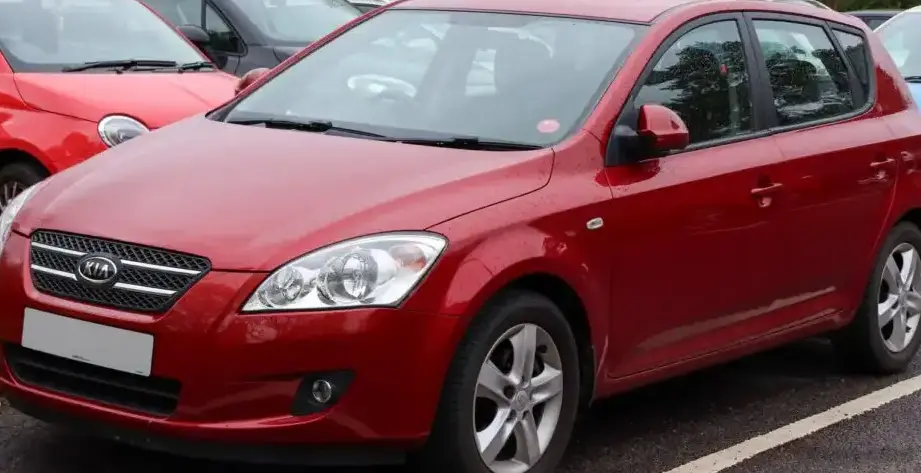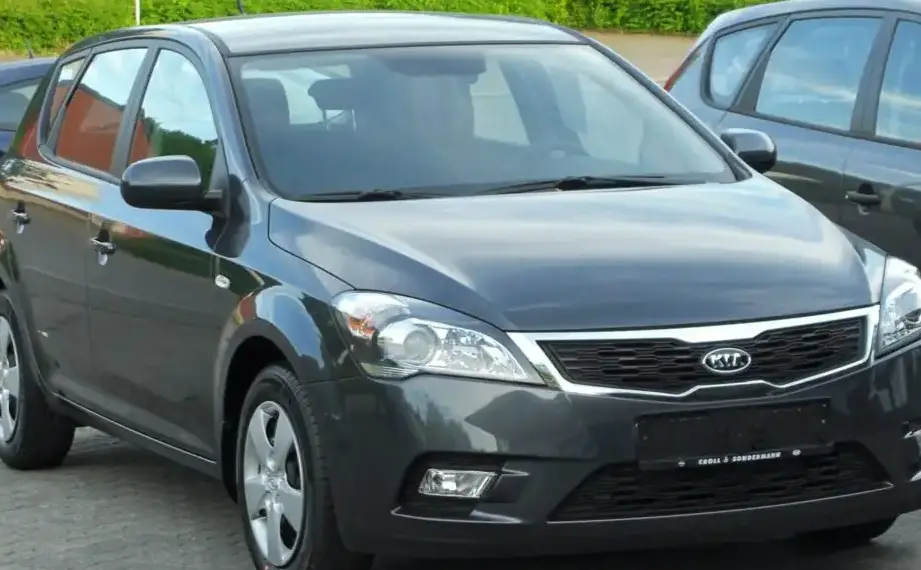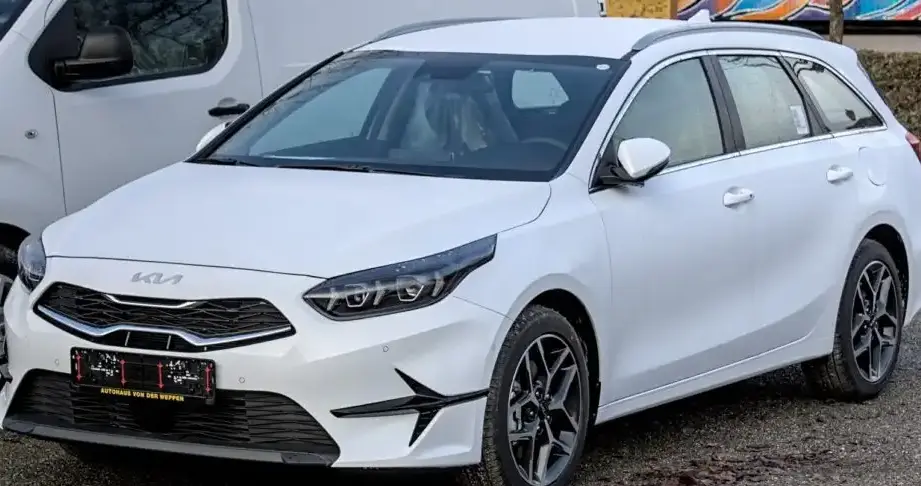
The Kia Ceed III Sportswagon, specifically the 1.0 T-GDI (100 hp) variant produced from October 2021 to April 2024, represents an entry-level offering within the third generation of Kia’s popular compact estate car. Positioned as a fuel-efficient and practical option, this version of the Ceed Sportswagon catered to buyers prioritizing economy and everyday usability over outright performance. It falls within the broader context of the CD (Ceed) platform, shared with the Hyundai i30, and was a key model in Kia’s European lineup, designed to compete with established rivals like the Volkswagen Golf Estate and Ford Focus Estate. This facelifted version, introduced in 2021, brought updated styling and technology to the Ceed range.
Technical Specifications
| Brand | Kia |
| Model | Ceed |
| Generation | Ceed III Sportswagon (facelift 2021) |
| Type (Engine) | 1.0 T-GDI (100 Hp) |
| Start of production | October, 2021 |
| End of production | April, 2024 |
| Powertrain Architecture | Internal Combustion engine |
| Body type | Station wagon (estate) |
| Seats | 5 |
| Doors | 5 |
| Combined fuel consumption (WLTP) | 5.2-6.4 l/100 km (45.2 – 36.8 US mpg, 54.3 – 44.1 UK mpg, 19.2 – 15.6 km/l) |
| CO2 emissions (WLTP) | 119-145 g/km |
| Fuel consumption (urban) | 6.3-7.2 l/100 km (37.3 – 32.7 US mpg, 44.8 – 39.2 UK mpg, 15.9 – 13.9 km/l) |
| Fuel consumption (extra urban) | 4.3-5.0 l/100 km (54.7 – 47 US mpg, 65.7 – 56.5 UK mpg, 23.3 – 20 km/l) |
| Fuel consumption (combined) | 5.1-5.8 l/100 km (46.1 – 40.6 US mpg, 55.4 – 48.7 UK mpg, 19.6 – 17.2 km/l) |
| CO2 emissions (NEDC) | 116-133 g/km |
| Fuel Type | Petrol (Gasoline) |
| Acceleration 0 – 100 km/h | 12 sec |
| Acceleration 0 – 62 mph | 12 sec |
| Acceleration 0 – 60 mph | 11.4 sec |
| Maximum speed | 183 km/h (113.71 mph) |
| Emission standard | Euro 6d |
| Weight-to-power ratio | 12.6 kg/Hp, 79.4 Hp/tonne |
| Weight-to-torque ratio | 7.3 kg/Nm, 136.5 Nm/tonne |
| Power | 100 Hp @ 4500 rpm |
| Torque | 172 Nm @ 1500-4000 rpm (126.86 lb.-ft. @ 1500-4000 rpm) |
| Engine layout | Front, Transverse |
| Engine Model/Code | Kappa II / G3LC |
| Engine displacement | 998 cm3 (60.9 cu. in.) |
| Number of cylinders | 3 |
| Engine configuration | Inline |
| Cylinder Bore | 71 mm (2.8 in.) |
| Piston Stroke | 84 mm (3.31 in.) |
| Compression ratio | 10.5:1 |
| Number of valves per cylinder | 4 |
| Fuel injection system | Direct injection |
| Engine aspiration | Turbocharger, Intercooler |
| Engine oil capacity | 3.6 l (3.8 US qt | 3.17 UK qt) |
| Coolant capacity | 5.5 l (5.81 US qt | 4.84 UK qt) |
| Kerb Weight | 1260-1386 kg (2777.82 – 3055.61 lbs.) |
| Max. weight | 1820 kg (4012.41 lbs.) |
| Max load | 434-560 kg (956.81 – 1234.59 lbs.) |
| Trunk (boot) space – minimum | 625 l (22.07 cu. ft.) |
| Trunk (boot) space – maximum | 1694 l (59.82 cu. ft.) |
| Fuel tank capacity | 50 l (13.21 US gal | 11 UK gal) |
| Max. roof load | 80 kg (176.37 lbs.) |
| Permitted trailer load (braked) | 1000 kg (2204.62 lbs.) |
| Permitted trailer load (unbraked) | 500 kg (1102.31 lbs.) |
| Permitted towbar download | 75 kg (165.35 lbs.) |
| Length | 4600 mm (181.1 in.) |
| Width | 1800 mm (70.87 in.) |
| Width (with mirrors) | 2055 mm (80.91 in.) |
| Height | 1465 mm (57.68 in.) |
| Wheelbase | 2650 mm (104.33 in.) |
| Front track | 1565 mm (61.61 in.) |
| Rear track | 1573 mm (61.93 in.) |
| Front overhang | 880 mm (34.65 in.) |
| Rear overhang | 1070 mm (42.13 in.) |
| Turning circle | 10.6 m (34.78 ft.) |
| Drivetrain | Front wheel drive |
| Gearbox | 6 gears, manual transmission |
| Front suspension | Independent type McPherson |
| Rear suspension | Independent multi-link spring suspension with stabilizer |
| Front brakes | Ventilated discs, 305×25 mm |
| Rear brakes | Disc, 284×10 mm |
| Safety systems | ABS (Anti-lock braking system) |
| Steering | Steering rack and pinion, Electric Power Steering |
| Tires size | 205/55 R16H |
| Wheel rims size | 6.5J x 16 ET50 |
Powertrain & Engine Architecture
The heart of this Ceed Sportswagon variant is the Kappa II 1.0 T-GDI engine, designated G3LC. This is a three-cylinder, 998cc turbocharged gasoline engine. It utilizes direct fuel injection, a key technology for maximizing fuel efficiency and reducing emissions. The engine features a single scroll turbocharger with an intercooler, helping to mitigate turbo lag and improve throttle response. The engine produces 100 horsepower at 4500 rpm and 172 Nm (126.86 lb-ft) of torque between 1500 and 4000 rpm. The engine’s relatively high compression ratio of 10.5:1 contributes to its efficiency. The engine is paired with a 6-speed manual transmission, delivering power to the front wheels. While an automatic transmission was available on other Ceed models, this specific 100 hp version was exclusively offered with a manual gearbox in many European markets.
Driving Characteristics
The 1.0 T-GDI engine, while providing adequate power for everyday driving, isn’t designed for rapid acceleration. The 0-100 km/h (0-62 mph) time of around 12 seconds reflects this. The engine’s strength lies in its responsiveness at lower and mid-range revs, thanks to the turbocharger. The manual transmission allows for precise control over gear selection, enabling drivers to optimize fuel economy or extract the most performance from the engine. Compared to higher-powered Ceed variants, such as those equipped with the 1.6 T-GDI engine, this version feels noticeably less energetic, particularly when fully loaded or tackling steep inclines. However, the lighter engine weight contributes to a more balanced feel in corners.
Equipment & Trim Levels
The 1.0 T-GDI Sportswagon typically came with a reasonable level of standard equipment, positioning it as a well-rounded offering. Features generally included air conditioning, a touchscreen infotainment system with Apple CarPlay and Android Auto compatibility, Bluetooth connectivity, and a suite of safety systems such as ABS, ESC (Electronic Stability Control), and multiple airbags. Higher trim levels added features like automatic climate control, a larger touchscreen display, rear parking sensors, a reversing camera, and alloy wheels. Interior upholstery was typically cloth, with options for upgraded materials on higher trims. The dashboard layout was functional and modern, with a focus on ease of use.
Chassis & Braking
The Ceed Sportswagon utilizes a McPherson strut front suspension and a multi-link rear suspension, providing a comfortable and controlled ride. Stabilizer bars are fitted to both axles to reduce body roll during cornering. The braking system consists of ventilated discs at the front and solid discs at the rear. ABS (Anti-lock Braking System) is standard, enhancing braking performance and stability. The suspension setup is tuned to prioritize comfort and ride quality, making it well-suited for long journeys. The steering is electrically assisted, providing a light and precise feel.
Market Reception & Comparison
The 1.0 T-GDI Ceed Sportswagon was generally well-received by critics for its fuel efficiency and practicality. It was praised for offering a good balance between running costs and usability. However, some reviewers noted that the engine could feel strained when pushed hard, particularly when carrying a full load. Compared to the more powerful Ceed variants, this version offered a more affordable entry point into the Sportswagon range, but at the expense of performance. Its fuel economy figures were competitive with other compact estate cars in its class, and its reliability proved to be generally good.
Legacy
The Kappa II 1.0 T-GDI engine has become a mainstay in Kia and Hyundai models, known for its fuel efficiency and relatively simple construction. While not a powerhouse, the engine has proven to be durable and reliable in real-world use. On the used car market, the 1.0 T-GDI Ceed Sportswagon represents a sensible and affordable option for buyers seeking a practical and economical estate car. Maintenance costs are generally reasonable, and parts availability is good. The combination of a spacious interior, good fuel economy, and a comfortable ride makes it a compelling choice for families and individuals alike.