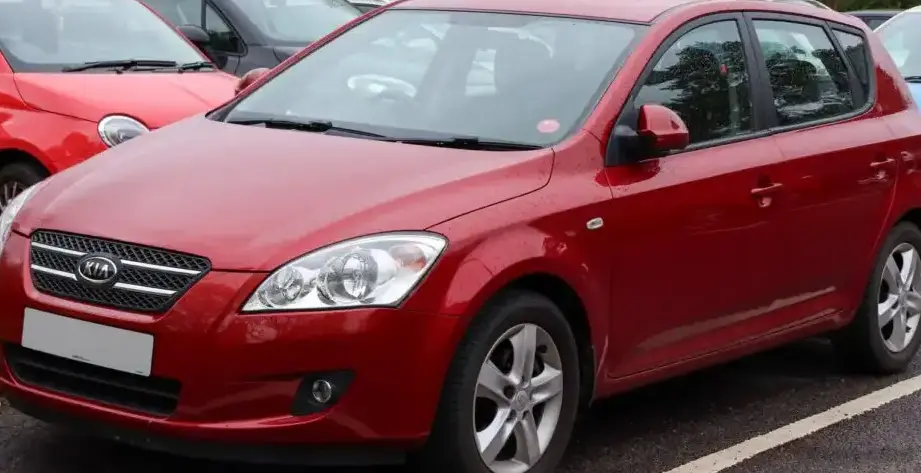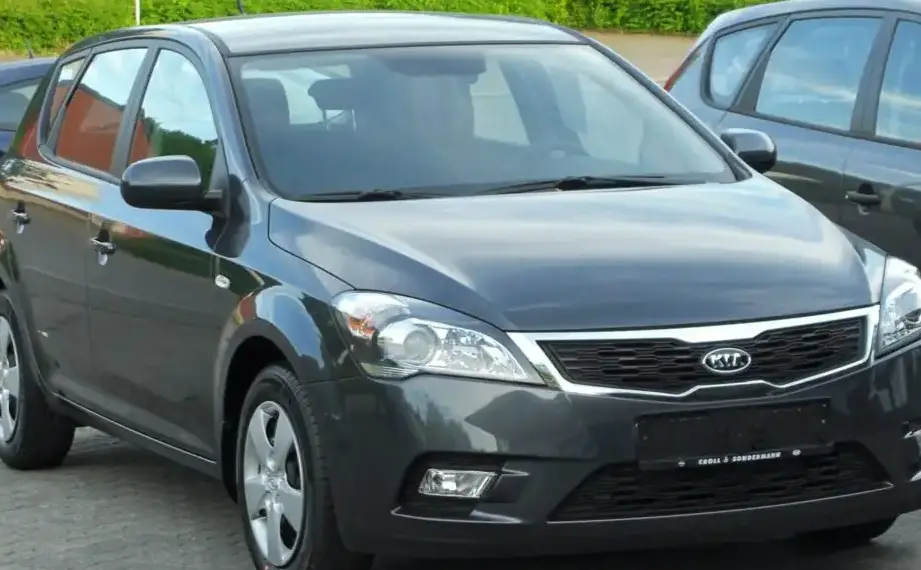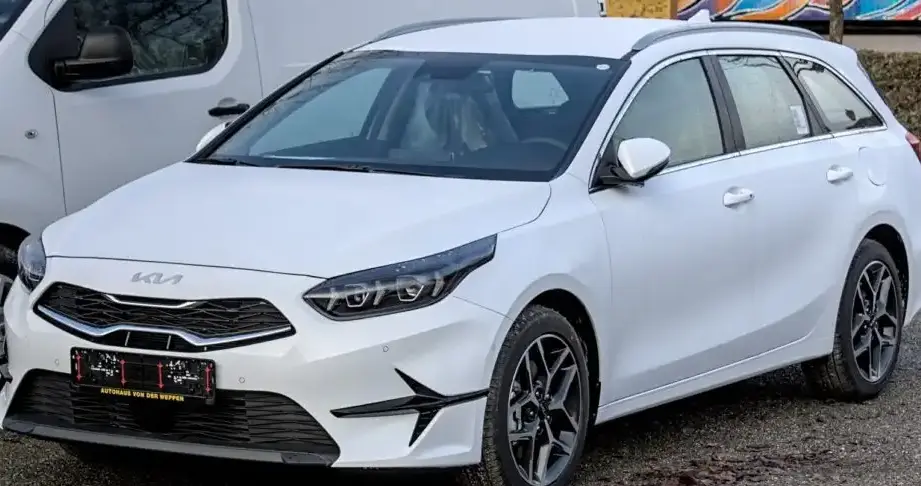
The Kia Ceed III Sportswagon (facelift 2021) 1.5 T-GDI, producing 140 horsepower, represents a significant offering within the third generation of Kia’s popular compact estate car. Introduced in May 2024, this variant builds upon the 2021 facelift of the Ceed Sportswagon (internally designated as the CD platform), aiming to balance fuel efficiency with practical performance for the European and global markets. It slots into the mid-range of the Ceed Sportswagon lineup, positioned above the lower-powered engine options and below the more performance-oriented trims. This model is designed to appeal to buyers seeking a versatile family vehicle with reasonable running costs.
Technical Specifications
| Brand | Kia |
| Model | Ceed |
| Generation | Ceed III Sportswagon (facelift 2021) |
| Type (Engine) | 1.5 T-GDI (140 Hp) |
| Start of production | May, 2024 |
| Powertrain Architecture | Internal Combustion engine |
| Body type | Station wagon (estate) |
| Seats | 5 |
| Doors | 5 |
| Fuel consumption at Low speed (WLTP) | 7.9 l/100 km (29.8 US mpg, 35.8 UK mpg, 12.7 km/l) |
| Fuel consumption at Medium speed (WLTP) | 6.3 l/100 km (37.3 US mpg, 44.8 UK mpg, 15.9 km/l) |
| Fuel consumption at high speed (WLTP) | 5.5 l/100 km (42.8 US mpg, 51.4 UK mpg, 18.2 km/l) |
| Fuel consumption at very high speed (WLTP) | 6.4 l/100 km (36.8 US mpg, 44.1 UK mpg, 15.6 km/l) |
| Combined fuel consumption (WLTP) | 6.3 l/100 km (37.3 US mpg, 44.8 UK mpg, 15.9 km/l) |
| CO2 emissions (WLTP) | 142 g/km |
| Fuel Type | Petrol (Gasoline) |
| Acceleration 0 – 100 km/h | 9.7 sec |
| Acceleration 0 – 62 mph | 9.7 sec |
| Acceleration 0 – 60 mph | 9.2 sec |
| Maximum speed | 197 km/h (122.41 mph) |
| Emission standard | Euro 6e |
| Weight-to-power ratio | 9.3 kg/Hp, 107.5 Hp/tonne |
| Weight-to-torque ratio | 5.1 kg/Nm, 194.3 Nm/tonne |
| Power | 140 Hp @ 5500 rpm |
| Power per litre | 94.5 Hp/l |
| Torque | 253 Nm @ 1500-3000 rpm (186.6 lb.-ft. @ 1500-3000 rpm) |
| Engine layout | Front, Transverse |
| Engine Model/Code | G4LH |
| Engine displacement | 1482 cm3 (90.44 cu. in.) |
| Number of cylinders | 4 |
| Engine configuration | Inline |
| Cylinder Bore | 71.6 mm (2.82 in.) |
| Piston Stroke | 92 mm (3.62 in.) |
| Compression ratio | 10.5:1 |
| Number of valves per cylinder | 4 |
| Fuel injection system | Direct injection |
| Engine aspiration | Turbocharger, Intercooler |
| Engine oil capacity | 4.2 l (4.44 US qt | 3.7 UK qt) |
| Coolant | 6.1 l (6.45 US qt | 5.37 UK qt) |
| Kerb Weight | 1302-1418 kg (2870.42 – 3126.15 lbs.) |
| Max. weight | 1850 kg (4078.55 lbs.) |
| Max load | 432-548 kg (952.4 – 1208.13 lbs.) |
| Trunk (boot) space – minimum | 625 l (22.07 cu. ft.) |
| Trunk (boot) space – maximum | 1694 l (59.82 cu. ft.) |
| Fuel tank capacity | 50 l (13.21 US gal | 11 UK gal) |
| Max. roof load | 80 kg (176.37 lbs.) |
| Permitted trailer load with brakes (12%) | 1210 kg (2667.59 lbs.) |
| Permitted trailer load without brakes | 610 kg (1344.82 lbs.) |
| Permitted towbar download | 75 kg (165.35 lbs.) |
| Length | 4605 mm (181.3 in.) |
| Width | 1800 mm (70.87 in.) |
| Width including mirrors | 2055 mm (80.91 in.) |
| Height | 1460-1465 mm (57.48 – 57.68 in.) |
| Wheelbase | 2650 mm (104.33 in.) |
| Front track | 1555-1565 mm (61.22 – 61.61 in.) |
| Rear (Back) track | 1563-1573 mm (61.54 – 61.93 in.) |
| Front overhang | 885 mm (34.84 in.) |
| Rear overhang | 1070 mm (42.13 in.) |
| Minimum turning circle (turning diameter) | 10.6 m (34.78 ft.) |
| Drivetrain Architecture | The Internal combustion engine (ICE) drives the front wheels of the vehicle. |
| Drive wheel | Front wheel drive |
| Number of gears and type of gearbox | 6 gears, manual transmission |
| Front suspension | Independent type McPherson |
| Rear suspension | Independent multi-link suspension, Transverse stabilizer |
| Front brakes | Ventilated discs, 305×25 mm |
| Rear brakes | Disc, 272-284×10 mm |
| Assisting systems | ABS (Anti-lock braking system) |
| Steering type | Steering rack and pinion |
| Power steering | Electric Steering |
| Wheel rims size | 6.5J x 16 ET50; 7.0J x 17 ET53; 7.5J x 18 ET55 |
Powertrain & Engine Architecture
The heart of this Ceed Sportswagon variant is the Hyundai-Kia Smartstream G4LH 1.5-liter turbocharged four-cylinder gasoline engine. This engine utilizes direct injection and a twin-scroll turbocharger to deliver a balance of power and efficiency. The engine code ‘G4LH’ signifies a relatively modern design, incorporating features like an integrated exhaust manifold to improve thermal efficiency. The engine produces 140 horsepower at 5500 rpm and 253 Nm (186.6 lb-ft) of torque between 1500 and 3000 rpm. This broad torque curve contributes to good drivability in everyday situations. The engine is paired with a 6-speed manual transmission, delivering power to the front wheels. The engine features a relatively high compression ratio of 10.5:1, contributing to its efficiency. It also incorporates a particulate filter to reduce emissions, meeting Euro 6e standards.
Driving Characteristics
The 1.5 T-GDI with the 6-speed manual transmission offers a responsive driving experience. Acceleration from 0 to 100 km/h (0-62 mph) takes approximately 9.7 seconds, and 0-60 mph is achieved in around 9.2 seconds. While not a performance-focused variant, the engine provides sufficient power for comfortable highway cruising and overtaking. The turbocharger provides a noticeable boost in power during acceleration, and the 6-speed gearbox allows for precise control. Compared to lower-powered Ceed Sportswagon models, this variant offers a more engaging driving experience. However, it doesn’t match the outright performance of higher-output trims. The gear ratios are tuned for a balance between fuel economy and responsiveness.
Equipment & Trim Levels
The 1.5 T-GDI trim typically includes standard features such as air conditioning, a touchscreen infotainment system with Apple CarPlay and Android Auto compatibility, Bluetooth connectivity, and a suite of safety features including lane keeping assist, forward collision avoidance assist, and automatic emergency braking. Interior upholstery is generally cloth, with options for partial leather available. Higher trim levels within the 1.5 T-GDI range may add features like a larger touchscreen, navigation system, heated seats, and a panoramic sunroof. Exterior features typically include alloy wheels, body-colored door handles and mirrors, and LED headlights.
Chassis & Braking
The Ceed Sportswagon utilizes a McPherson strut front suspension and a multi-link rear suspension, providing a comfortable and controlled ride. The suspension is tuned to balance handling and ride comfort. The braking system consists of ventilated discs at the front and solid discs at the rear. ABS (Anti-lock Braking System) is standard. Stabilizer bars are fitted to both the front and rear axles to reduce body roll during cornering. The steering is electric power-assisted, providing light and precise steering feel.
Market Reception & Comparison
The Kia Ceed Sportswagon 1.5 T-GDI has been generally well-received by automotive critics. It’s praised for its fuel efficiency, spacious interior, and practical estate car body style. Compared to other engines in the Ceed lineup, the 1.5 T-GDI offers a good balance between performance and economy. It’s more economical than the higher-powered gasoline engines but provides more performance than the base-level engines. Fuel economy figures of around 6.3 l/100 km (37.3 US mpg) are competitive within its class. Reliability has been generally good, with few reported issues specific to this powertrain.
Legacy
The 1.5 T-GDI engine has become a mainstay in the Kia and Hyundai lineups, known for its reliability and efficiency. The Ceed Sportswagon 1.5 T-GDI, while not a particularly rare or collectible vehicle, represents a practical and well-rounded option for buyers seeking a versatile family car. On the used car market, these models are generally considered to be a good value, offering a combination of features, fuel economy, and reliability. The engine’s relatively simple design and readily available parts contribute to its long-term durability.