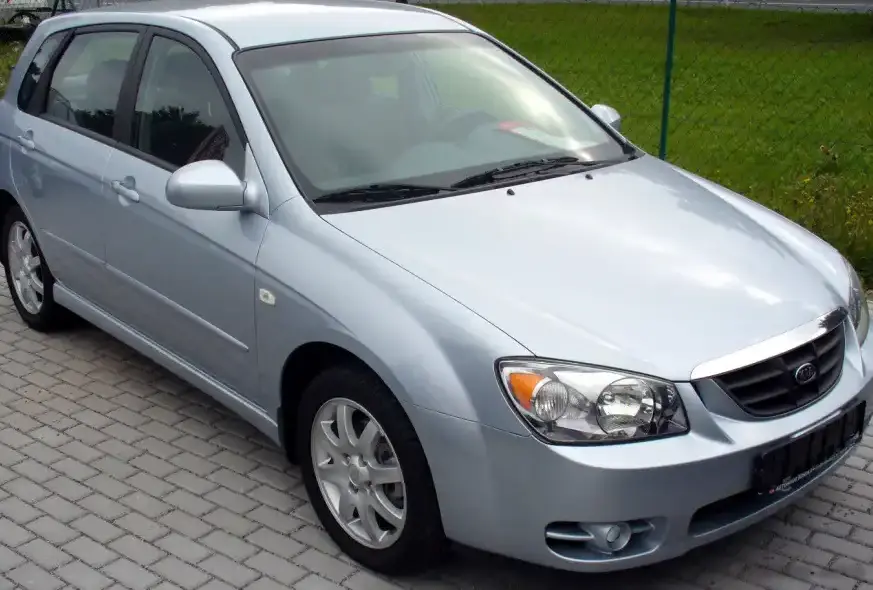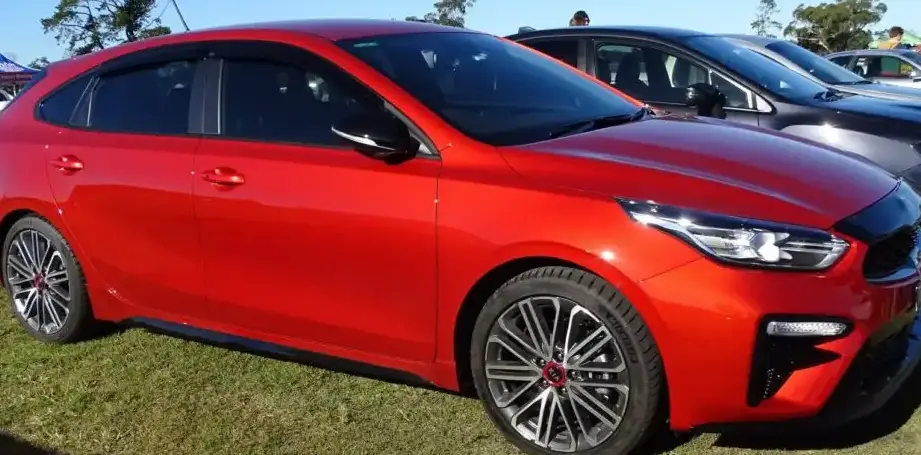
The Kia Cerato IV Hatchback 2.0 MPI (152 Hp) was a front-wheel-drive compact hatchback produced by the South Korean manufacturer Kia between January 2018 and May 2021. Positioned as a mainstream offering within the Cerato IV generation (BD platform), this variant aimed to provide a balance of practicality, fuel efficiency, and reasonable performance for the North American and global markets. It served as a step up from the base 1.6L engine option, offering more power for drivers needing additional capability, while remaining more affordable than potential future performance-oriented trims. The Cerato IV represented Kia’s continued efforts to improve quality and design, competing with established rivals like the Honda Civic, Toyota Corolla, and Hyundai Elantra.
Technical Specifications
| Brand | Kia |
| Model | Cerato |
| Generation | Cerato IV Hatchback |
| Type (Engine) | 2.0 MPI (152 Hp) |
| Start of production | January, 2018 |
| End of production | May, 2021 |
| Powertrain Architecture | Internal Combustion engine |
| Body type | Hatchback |
| Seats | 5 |
| Doors | 5 |
| Fuel consumption (urban) | 10 l/100 km (23.5 US mpg) |
| Fuel consumption (extra urban) | 5.9 l/100 km (39.9 US mpg) |
| Fuel consumption (combined) | 7.4 l/100 km (31.8 US mpg) |
| CO2 emissions | 173 g/km |
| Fuel Type | Petrol (Gasoline) |
| Emission standard | Euro 5 |
| Weight-to-power ratio | 8.2 kg/Hp |
| Weight-to-torque ratio | 6.5 kg/Nm |
| Power | 152 Hp @ 6200 rpm |
| Torque | 192 Nm @ 4000 rpm (141.61 lb.-ft. @ 4000 rpm) |
| Engine layout | Front, Transverse |
| Engine Model/Code | Nu / G4NH |
| Engine displacement | 1999 cm3 (121.99 cu. in.) |
| Number of cylinders | 4 |
| Engine configuration | Inline |
| Cylinder Bore | 81 mm (3.19 in.) |
| Piston Stroke | 97 mm (3.82 in.) |
| Compression ratio | 10.3:1 |
| Number of valves per cylinder | 4 |
| Fuel injection system | Multi-port manifold injection |
| Engine aspiration | Naturally aspirated engine |
| Valvetrain | DOHC, D-CVVT |
| Engine oil capacity | 4 l (4.23 US qt | 3.52 UK qt) |
| Coolant capacity | 5.6 l (5.92 US qt | 4.93 UK qt) |
| Kerb Weight | 1245 kg (2744.76 lbs.) |
| Trunk (boot) space (minimum) | 428 l (15.11 cu. ft.) |
| Fuel tank capacity | 50 l (13.21 US gal | 11 UK gal) |
| Permitted trailer load (with brakes) | 1200 kg (2645.55 lbs.) |
| Permitted trailer load (without brakes) | 610 kg (1344.82 lbs.) |
| Length | 4510 mm (177.56 in.) |
| Width | 1800 mm (70.87 in.) |
| Height | 1445 mm (56.89 in.) |
| Wheelbase | 2700 mm (106.3 in.) |
| Ride height (ground clearance) | 140 mm (5.51 in.) |
| Minimum turning circle | 10.6 m (34.78 ft.) |
| Drivetrain Architecture | Front wheel drive |
| Number of gears | 6 |
| Type of gearbox | Manual transmission |
| Front suspension | Independent type McPherson |
| Rear suspension | Torsion |
| Front brakes | Ventilated discs |
| Rear brakes | Disc |
| Steering type | Steering rack and pinion |
| Power steering | Electric Steering |
| Tires size | 205/55 R16 |
| Wheel rims size | 6.5J x 16 ET51 |
Powertrain & Engine Architecture
The heart of the Cerato IV Hatchback 2.0 MPI was the Kia-Hyundai Nu engine family, specifically the G4NH code. This 1.999-liter (2.0L) inline-four cylinder engine utilized a naturally aspirated configuration and multi-point fuel injection. The engine featured a double overhead camshaft (DOHC) valvetrain with Kia’s Dual Continuously Variable Valve Timing (D-CVVT) technology. D-CVVT optimized valve timing for both intake and exhaust, improving efficiency and power delivery across the rev range. The 6-speed manual transmission was standard, providing direct control over the engine’s output. The engine was designed for reliability and ease of maintenance, utilizing a conventional layout and readily available parts.
Driving Characteristics
The 152 horsepower and 192 Nm (141.61 lb-ft) of torque delivered by the 2.0L engine provided adequate performance for everyday driving. Acceleration was respectable, though not particularly sporty. The manual transmission allowed for a more engaging driving experience compared to an automatic, and drivers could effectively utilize the engine’s powerband. The gear ratios were tuned for a balance of fuel economy and usability, with a relatively tall final drive. Compared to the base 1.6L engine, the 2.0L offered noticeably more power for highway merging and overtaking. However, it didn’t possess the punch of potential higher-performance trims that might have been offered in other markets. The front-wheel-drive configuration provided predictable handling, but lacked the all-weather capability of an all-wheel-drive system.
Equipment & Trim Levels
The Cerato IV Hatchback 2.0 MPI typically came standard with features such as air conditioning, power windows and locks, a basic audio system with USB connectivity, and standard safety equipment including ABS, stability control, and multiple airbags. Higher trim levels, often designated as LX, EX, or GT-Line (depending on the market), added features like alloy wheels, a touchscreen infotainment system with Apple CarPlay and Android Auto compatibility, a rearview camera, and advanced driver-assistance systems (ADAS) such as lane departure warning and automatic emergency braking. Interior upholstery was typically cloth, with leather options available on higher trims. Optional extras included a sunroof, premium audio system, and heated seats.
Chassis & Braking
The Cerato IV Hatchback utilized a front independent McPherson strut suspension and a rear torsion beam suspension. This setup provided a comfortable ride quality suitable for daily commuting. The torsion beam rear suspension was a cost-effective solution, but didn’t offer the same level of sophistication as a fully independent rear suspension. Braking duties were handled by ventilated discs at the front and solid discs at the rear. The ABS system provided enhanced braking control in emergency situations. Steering was provided by an electric power steering system, offering light and precise steering feel.
Market Reception & Comparison
The Kia Cerato IV Hatchback 2.0 MPI was generally well-received by automotive critics as a practical and well-equipped compact hatchback. Reviewers praised its comfortable ride, spacious interior, and generous warranty. However, some criticized its somewhat bland styling and lack of a truly sporty driving experience. Compared to the base 1.6L engine, the 2.0L offered a significant improvement in performance, but at a slightly higher price point. Fuel economy was competitive within its class, averaging around 31.8 US mpg in combined driving. Reliability was generally good, with the Nu engine family proving to be durable and dependable.
Legacy
The Kia Cerato IV Hatchback 2.0 MPI has proven to be a reliable and affordable used car option. The Nu engine, while not known for exceptional performance, has a reputation for longevity when properly maintained. The availability of parts and relatively simple mechanical design make it a relatively easy vehicle to repair. As of today, these vehicles can be found in the used car market at attractive price points, making them a compelling choice for budget-conscious buyers seeking a practical and dependable compact hatchback. The Cerato IV generation helped solidify Kia’s reputation for producing vehicles that offer good value for money and a growing level of refinement.