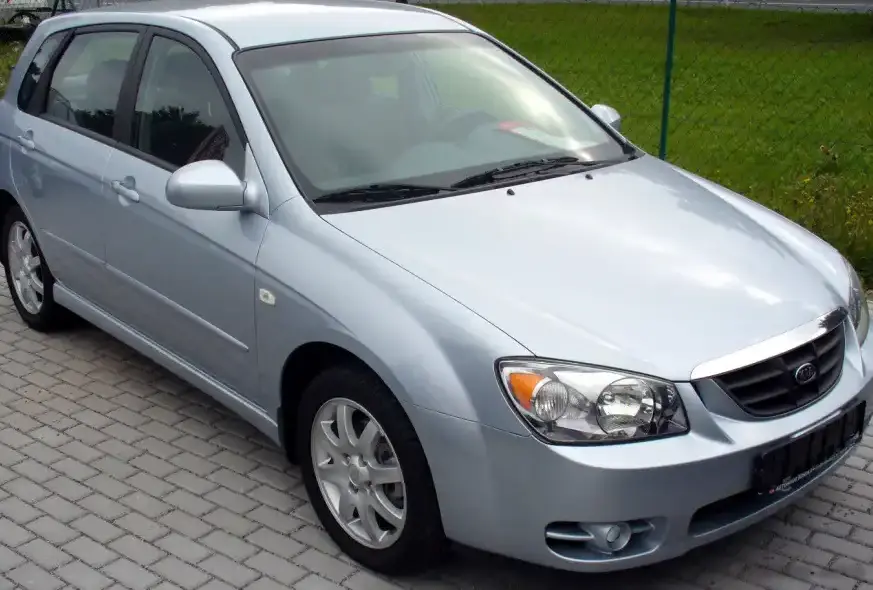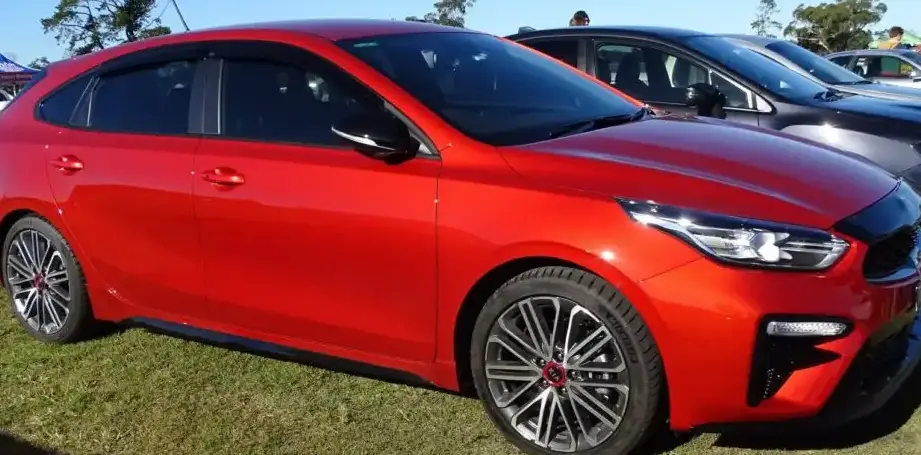
The Kia Cerato IV Hatchback GT 1.6 T-GDI, produced from January 2018 to May 2021, represents a performance-oriented variant within the fourth generation of Kia’s globally marketed Cerato (known as the K3 in some markets) compact hatchback. Positioned as the flagship trim level, the GT 1.6 T-GDI aimed to deliver a more engaging driving experience compared to the base models, appealing to buyers seeking a blend of practicality and sporty performance. It was primarily sold in markets outside of North America, where the Cerato sedan was the dominant offering. This variant is built on the Kia/Hyundai K2 platform, also known as the 1HX0 internally.
Technical Specifications
| Brand | Kia |
| Model | Cerato |
| Generation | Cerato IV Hatchback |
| Type (Engine) | GT 1.6 T-GDI (204 Hp) DCT |
| Start of production | January, 2018 |
| End of production | May, 2021 |
| Powertrain Architecture | Internal Combustion engine |
| Body type | Hatchback |
| Seats | 5 |
| Doors | 5 |
| Fuel consumption (urban) | 8.9 l/100 km (26.4 US mpg) |
| Fuel consumption (extra urban) | 5.5 l/100 km (42.8 US mpg) |
| Fuel consumption (combined) | 6.8 l/100 km (34.6 US mpg) |
| CO2 emissions | 158 g/km |
| Fuel Type | Petrol (Gasoline) |
| Emission standard | Euro 5 |
| Weight-to-power ratio | 6.5 kg/Hp |
| Weight-to-torque ratio | 5 kg/Nm |
| Power | 204 Hp @ 6000 rpm |
| Power per litre | 128.2 Hp/l |
| Torque | 265 Nm @ 1500-4500 rpm (195.45 lb.-ft. @ 1500-4500 rpm) |
| Engine layout | Front, Transverse |
| Engine Model/Code | Gamma II / G4FJ |
| Engine displacement | 1591 cm3 (97.09 cu. in.) |
| Number of cylinders | 4 |
| Engine configuration | Inline |
| Cylinder Bore | 77 mm (3.03 in.) |
| Piston Stroke | 85.4 mm (3.36 in.) |
| Compression ratio | 10:1 |
| Number of valves per cylinder | 4 |
| Fuel injection system | Direct injection |
| Engine aspiration | Turbocharger, Intercooler |
| Valvetrain | D-CVVT |
| Engine oil capacity | 4.5 l (4.76 US qt | 3.96 UK qt) |
| Coolant capacity | 6.9 l (7.29 US qt | 6.07 UK qt) |
| Kerb Weight | 1320 kg (2910.1 lbs.) |
| Trunk (boot) space (minimum) | 428 l (15.11 cu. ft.) |
| Fuel tank capacity | 50 l (13.21 US gal | 11 UK gal) |
| Permitted trailer load (with brakes) | 1100 kg (2425.08 lbs.) |
| Permitted trailer load (without brakes) | 610 kg (1344.82 lbs.) |
| Length | 4510 mm (177.56 in.) |
| Width | 1800 mm (70.87 in.) |
| Height | 1440 mm (56.69 in.) |
| Wheelbase | 2700 mm (106.3 in.) |
| Ride height (ground clearance) | 135 mm (5.31 in.) |
| Minimum turning circle | 10.6 m (34.78 ft.) |
| Drivetrain Architecture | Front wheel drive |
| Number of gears and type of gearbox | 7 gears, automatic transmission DCT |
| Front suspension | Independent type McPherson |
| Rear suspension | Independent multi-link suspension |
| Front brakes | Ventilated discs |
| Rear brakes | Disc |
| Tires size | 225/40 ZR18 |
| Wheel rims size | 7.5J x 18 ET55 |
Powertrain & Engine Architecture
The heart of the Cerato GT 1.6 T-GDI is the Gamma II engine, specifically the G4FJ code. This is a 1.6-liter, inline-four cylinder gasoline engine featuring direct injection and a single scroll turbocharger with an intercooler. Direct injection allows for precise fuel delivery, improving efficiency and power output. The engine utilizes Kia’s Dual Continuous Variable Valve Timing (D-CVVT) technology, optimizing valve timing for both intake and exhaust to enhance performance across the rev range. The engine produces 204 horsepower at 6000 rpm and 265 Nm (195 lb-ft) of torque between 1500 and 4500 rpm. This power is delivered through a seven-speed dual-clutch transmission (DCT), offering quick and smooth gear changes. The DCT was chosen for its efficiency and responsiveness, contributing to the GT’s sporty character.
Driving Characteristics
The 1.6 T-GDI engine paired with the seven-speed DCT provides a noticeable performance upgrade over the naturally aspirated engines available in lower Cerato trims. Acceleration is brisk, with the car feeling responsive in everyday driving situations. The DCT’s quick shifts contribute to a more engaging driving experience, particularly when utilizing the sport mode. While not a dedicated performance car, the GT offers a satisfying level of power for a compact hatchback. The DCT is tuned for a balance between fuel efficiency and performance, with gear ratios optimized for both city and highway driving. Compared to a manual transmission, the DCT offers convenience and ease of use, but some enthusiasts might prefer the greater control of a manual gearbox. The suspension is tuned to be firmer than the standard Cerato, providing better body control during cornering, but without sacrificing too much ride comfort.
Equipment & Trim Levels
The GT trim level came standard with a comprehensive list of features. Interior appointments included sport seats upholstered in a combination of cloth and leather, a leather-wrapped steering wheel, and aluminum pedal covers. Infotainment was typically handled by a 7-inch touchscreen display with Apple CarPlay and Android Auto compatibility. Standard safety features included ABS, Electronic Stability Control (ESC), Vehicle Stability Management (VSM), and multiple airbags. Optional extras often included a sunroof, upgraded audio system, and advanced driver-assistance systems (ADAS) such as lane departure warning and automatic emergency braking, depending on the specific market.
Chassis & Braking
The Cerato GT utilizes an independent McPherson strut suspension in the front and an independent multi-link suspension in the rear. This setup provides a good balance of ride comfort and handling. The GT trim typically featured larger diameter ventilated disc brakes on the front axle and solid disc brakes on the rear, providing adequate stopping power for the car’s performance capabilities. The steering system is an electric power-assisted rack and pinion system, offering precise and responsive steering feel. Compared to base models, the GT often featured a thicker front stabilizer bar to reduce body roll during cornering.
Market Reception & Comparison
The Cerato GT 1.6 T-GDI was generally well-received by automotive critics, who praised its sporty handling, responsive engine, and well-equipped interior. It was often compared to rivals such as the Hyundai i30 N-Line and the Volkswagen Golf. Fuel economy was considered competitive for its class, with combined fuel consumption figures around 6.8 l/100 km (34.6 US mpg). Reliability reports have been generally positive, with the Gamma II engine proving to be a durable and dependable unit. However, some owners have reported minor issues with the DCT, such as occasional jerky shifts at low speeds. Compared to the base 1.6L naturally aspirated engine, the GT offered a significant performance boost, but at a higher price point.
Legacy
The Kia Cerato IV Hatchback GT 1.6 T-GDI represents a significant step forward for Kia in terms of performance and driving dynamics. The Gamma II engine and DCT transmission proved to be a reliable and capable powertrain combination. On the used car market, these models hold their value relatively well, particularly those in good condition with low mileage. The GT trim remains a popular choice for buyers seeking a sporty and practical compact hatchback. The success of the GT variant paved the way for Kia to further expand its performance-oriented model lineup in subsequent years.