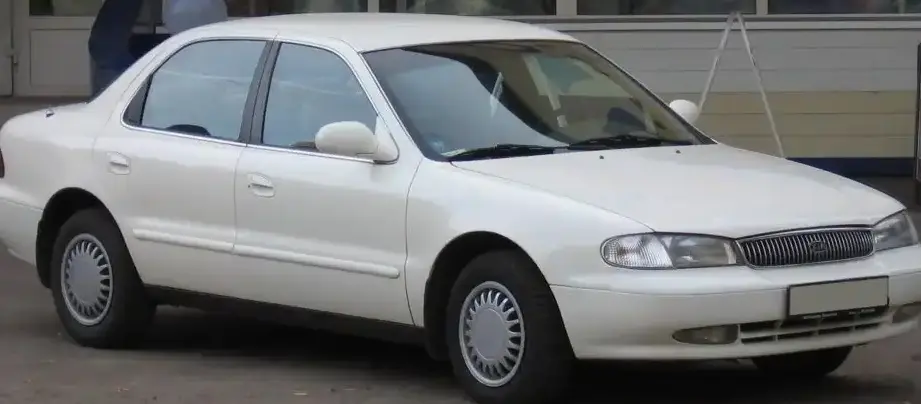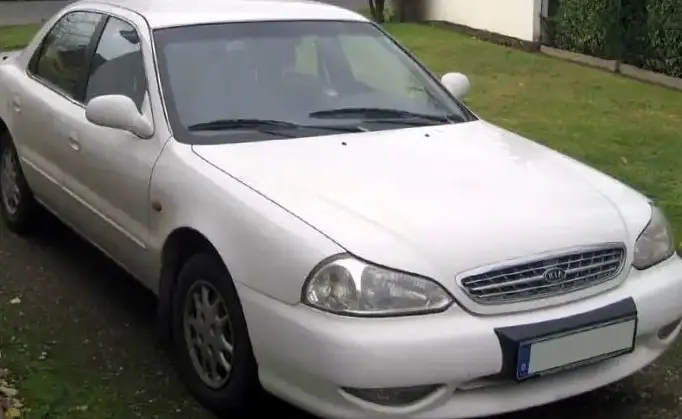
The Kia Clarus (GC) 2.0i 16V Automatic, produced between 1998 and 2001, represented Kia’s attempt to establish a foothold in the mid-size sedan segment, particularly in markets outside of North America. Positioned as a step up from the earlier Sephia, the Clarus aimed to offer a more refined and spacious alternative to established Japanese and European competitors. This specific 2.0-liter, 16-valve engine paired with a four-speed automatic transmission was a mid-range offering within the Clarus lineup, slotting between the base 1.8L engine and potentially higher-trim levels with manual transmission options depending on the region. The GC generation Clarus was built on Kia’s then-current platform, sharing some components with the Hyundai Sonata of the same era, reflecting the close relationship between the two Korean automakers.
Technical Specifications
| Brand | Kia |
| Model | Clarus |
| Generation | Clarus (GC) |
| Type (Engine) | 2.0i 16V (133 Hp) Automatic |
| Start of production | 1998 |
| End of production | 2001 |
| Powertrain Architecture | Internal Combustion engine |
| Body type | Sedan |
| Seats | 5 |
| Doors | 4 |
| Fuel consumption (urban) | 15.6 l/100 km (15.1 US mpg, 18.1 UK mpg, 6.4 km/l) |
| Fuel consumption (extra urban) | 8.6 l/100 km (27.4 US mpg, 32.8 UK mpg, 11.6 km/l) |
| Fuel consumption (combined) | 11.1 l/100 km (21.2 US mpg, 25.4 UK mpg, 9 km/l) |
| CO2 emissions | 258 g/km |
| Fuel Type | Petrol (Gasoline) |
| Acceleration 0 – 100 km/h | 13.8 sec |
| Acceleration 0 – 62 mph | 13.8 sec |
| Acceleration 0 – 60 mph | 13.1 sec |
| Maximum speed | 180 km/h (111.85 mph) |
| Emission standard | Euro 2 |
| Weight-to-power ratio | 9.5 kg/Hp, 105.6 Hp/tonne |
| Weight-to-torque ratio | 7.4 kg/Nm, 135.7 Nm/tonne |
| Power | 133 Hp @ 6000 rpm |
| Power per litre | 66.6 Hp/l |
| Torque | 171 Nm @ 4100 rpm (126.12 lb.-ft. @ 4100 rpm) |
| Engine layout | Front, Transverse |
| Engine Model/Code | FE |
| Engine displacement | 1998 cm3 (121.93 cu. in.) |
| Number of cylinders | 4 |
| Engine configuration | Inline |
| Cylinder Bore | 86 mm (3.39 in.) |
| Piston Stroke | 86 mm (3.39 in.) |
| Compression ratio | 9.5:1 |
| Number of valves per cylinder | 4 |
| Fuel injection system | Multi-port manifold injection |
| Engine aspiration | Naturally aspirated engine |
| Valvetrain | DOHC |
| Engine oil capacity | 4.3 l (4.54 US qt | 3.78 UK qt) |
| Kerb Weight | 1260 kg (2777.82 lbs.) |
| Max. weight | 1770 kg (3902.18 lbs.) |
| Max load | 510 kg (1124.36 lbs.) |
| Trunk (boot) space – minimum | 444 l (15.68 cu. ft.) |
| Trunk (boot) space – maximum | 784 l (27.69 cu. ft.) |
| Fuel tank capacity | 60 l (15.85 US gal | 13.2 UK gal) |
| Length | 4731 mm (186.26 in.) |
| Width | 1770 mm (69.69 in.) |
| Height | 1420 mm (55.91 in.) |
| Wheelbase | 2659 mm (104.69 in.) |
| Front track | 1500 mm (59.06 in.) |
| Rear (Back) track | 1500 mm (59.06 in.) |
| Minimum turning circle | 10.6 m (34.78 ft.) |
| Drivetrain Architecture | The Internal combustion engine (ICE) drives the front wheels of the vehicle. |
| Drive wheel | Front wheel drive |
| Number of gears and type of gearbox | 4 gears, automatic transmission |
| Front suspension | Wishbone |
| Rear suspension | Coil spring |
| Front brakes | Ventilated discs |
| Rear brakes | Disc |
| Assisting systems | ABS (Anti-lock braking system) |
| Steering type | Steering rack and pinion |
| Power steering | Hydraulic Steering |
| Tires size | 195/65 R14 |
| Wheel rims size | 14 |
Powertrain & Engine Architecture
The heart of this Clarus variant is the Kia FE engine, a 2.0-liter inline-four cylinder gasoline engine. The ‘FE’ designation signifies a family of engines developed by Kia, known for their relatively simple design and focus on durability. This engine utilizes a multi-port fuel injection (MPI) system, delivering fuel directly into the intake ports just before the intake valves. The engine features a double overhead camshaft (DOHC) valvetrain, operating 16 valves (four per cylinder) to optimize airflow and improve volumetric efficiency. The 9.5:1 compression ratio was a typical value for engines of this era, balancing performance and fuel economy. Paired with the engine is a four-speed automatic transmission. While not offering the responsiveness of a manual gearbox, this transmission provided smooth shifts and ease of use, appealing to a broader range of drivers. The transmission was designed for front-wheel drive applications, a common configuration for mid-size sedans.
Driving Characteristics
The 133 horsepower and 171 Nm (126 lb-ft) of torque produced by the 2.0L engine and automatic transmission combination resulted in adequate, but not particularly exhilarating, performance. Acceleration from 0-60 mph took around 13.1 seconds, and top speed was limited to 180 km/h (112 mph). The automatic transmission, while smooth, did contribute to some power loss compared to a manual transmission. Gear ratios were tuned for comfortable cruising rather than aggressive acceleration. In real-world driving, the Clarus 2.0i Automatic felt most at home on the highway, providing sufficient power for merging and overtaking. Compared to a hypothetical Clarus with a manual transmission or a higher-output engine, this variant prioritized comfort and ease of driving over outright performance.
Equipment & Trim Levels
The Clarus 2.0i Automatic typically came equipped with a reasonable level of standard features. These generally included power windows and locks, air conditioning, and a basic audio system. Interior upholstery was usually cloth, with options for upgraded materials available on higher trim levels. Dashboard configuration was fairly straightforward, with clearly labeled controls. Optional extras could include a sunroof, upgraded audio systems, and alloy wheels. The specific trim level and available options varied depending on the target market.
Chassis & Braking
The Clarus utilized a front-wheel-drive layout with a relatively conventional suspension setup. The front suspension employed a wishbone design, while the rear suspension utilized coil springs. Braking duties were handled by ventilated discs at the front and solid discs at the rear. An Anti-lock Braking System (ABS) was included as a standard safety feature. The suspension was tuned for a comfortable ride, prioritizing smoothness over sporty handling. Steering was rack-and-pinion with hydraulic power assistance.
Market Reception & Comparison
The Kia Clarus, in general, was viewed as a competent but unremarkable mid-size sedan. The 2.0i Automatic variant was often praised for its smooth ride and ease of use, but criticized for its relatively slow acceleration and modest fuel economy (around 21.2 US mpg combined). Compared to competitors like the Honda Accord or Toyota Camry, the Clarus offered a lower price point but lacked the same level of refinement and brand recognition. Within the Clarus lineup, the 2.0i Automatic was positioned as a balanced option, offering a step up in performance from the base 1.8L engine without the higher cost of potentially available higher-performance trims.
Legacy
The Kia Clarus, while not a groundbreaking vehicle, played a role in Kia’s efforts to improve its image and expand its market share. The FE engine proved to be relatively reliable, and many examples of the Clarus 2.0i Automatic are still on the road today. However, due to its age, finding well-maintained examples can be challenging. Common issues include wear and tear on suspension components, corrosion, and potential problems with the automatic transmission. In the used car market, the Clarus 2.0i Automatic represents an affordable and practical option for those seeking a basic, reliable mid-size sedan, but it’s important to thoroughly inspect any potential purchase for signs of neglect or mechanical issues.