
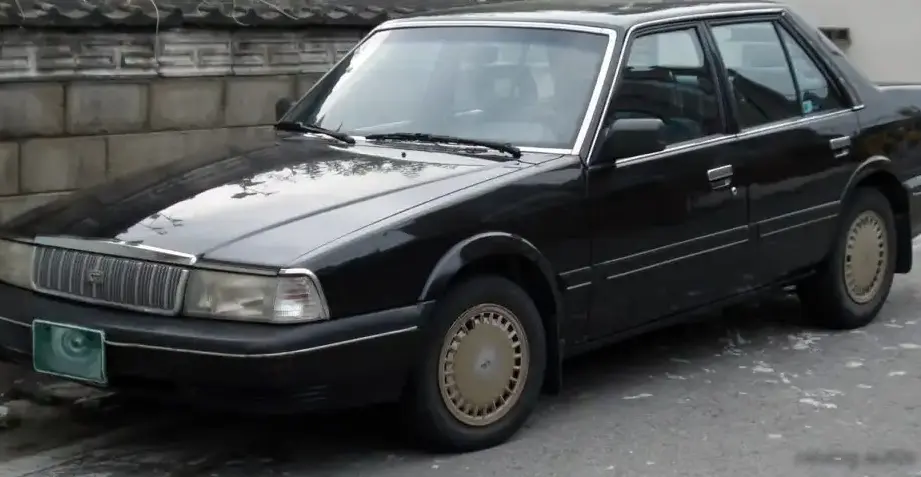
The Kia Concord 2.0 GTX (99 hp) was a variant of the first-generation Kia Concord, produced between 1987 and 1995. Positioned as a mid-range offering within the Concord lineup, it aimed to provide a balance of affordability, practicality, and reasonable performance for the burgeoning South Korean middle class. The Concord itself was a significant vehicle for Kia, representing a move towards independent design and manufacturing, and a key step in establishing the brand’s presence in both domestic and export markets. This particular 2.0 GTX trim, with its 99 horsepower engine, served as a popular choice for buyers seeking a comfortable and reliable family sedan.
Technical Specifications
| Brand | Kia |
| Model | Concord |
| Generation | Concord |
| Type (Engine) | 2.0 GTX (99 Hp) |
| Start of production | 1987 |
| End of production | 1995 |
| Powertrain Architecture | Internal Combustion engine |
| Body type | Sedan |
| Seats | 5 |
| Doors | 4 |
| Fuel Type | Petrol (Gasoline) |
| Weight-to-power ratio | 11.6 kg/Hp, 86.1 Hp/tonne |
| Weight-to-torque ratio | 6.9 kg/Nm, 145.2 Nm/tonne |
| Power | 99 Hp @ 5000 rpm |
| Power per litre | 49.5 Hp/l |
| Torque | 167 Nm @ 2500 rpm (123.17 lb.-ft. @ 2500 rpm) |
| Engine layout | Front, Transverse |
| Engine displacement | 1998 cm3 (121.93 cu. in.) |
| Number of cylinders | 4 |
| Engine configuration | Inline |
| Cylinder Bore | 86 mm (3.39 in.) |
| Piston Stroke | 86 mm (3.39 in.) |
| Compression ratio | 8.6:1 |
| Number of valves per cylinder | 2 |
| Fuel injection system | Carburettor |
| Engine aspiration | Naturally aspirated engine |
| Valvetrain | SOHC |
| Kerb Weight | 1150 kg (2535.32 lbs.) |
| Fuel tank capacity | 50 l (13.21 US gal | 11 UK gal) |
| Length | 4570 mm (179.92 in.) |
| Width | 1720 mm (67.72 in.) |
| Height | 1405 mm (55.31 in.) |
| Wheelbase | 2520 mm (99.21 in.) |
| Front track | 1440 mm (56.69 in.) |
| Rear (Back) track | 1430 mm (56.3 in.) |
| Drivetrain Architecture | The Internal combustion engine (ICE) drives the front wheels of the vehicle. |
| Drive wheel | Front wheel drive |
| Number of gears and type of gearbox | 5 gears, manual transmission |
| Front suspension | Wishbone |
| Rear suspension | Spring Strut |
| Front brakes | Ventilated discs |
| Rear brakes | Disc |
| Assisting systems | ABS (Anti-lock braking system) |
| Tires size | 185/70 R14 S |
Powertrain & Engine Architecture
The heart of the Concord 2.0 GTX was its 1998cc inline-four cylinder engine. This engine, internally designated with various codes depending on the specific year of manufacture, was a relatively simple design featuring a single overhead camshaft (SOHC) valvetrain and two valves per cylinder. The engine utilized a carburetor for fuel delivery, a common practice for vehicles of this era, particularly in markets where fuel injection technology was still relatively expensive. The carburetor system, while less precise than fuel injection, offered reasonable reliability and ease of maintenance. The 8.6:1 compression ratio was a compromise between performance and the quality of fuel available in South Korea at the time. The engine’s 99 horsepower output at 5000 rpm and 167 Nm (123.17 lb-ft) of torque at 2500 rpm provided adequate, though not exceptional, performance for everyday driving. The engine was transversely mounted in the front of the vehicle, driving the front wheels.
Driving Characteristics
The Concord 2.0 GTX, with its 99 hp and five-speed manual transmission, offered a driving experience that prioritized comfort and fuel economy over outright speed. Acceleration was adequate for merging onto highways and navigating city streets, but it wasn’t a particularly sporty vehicle. The five-speed manual transmission allowed drivers to keep the engine in its optimal power band, but the carburetor’s response could sometimes feel slightly sluggish compared to modern fuel-injected engines. Compared to potential higher-spec versions (if offered), the GTX’s power delivery was less aggressive, focusing on smooth and predictable operation. The front-wheel-drive configuration provided decent traction in most conditions, but could exhibit some understeer when pushed hard through corners.
Equipment & Trim Levels
The 2.0 GTX trim level represented a step up from the base Concord models. Standard features typically included cloth upholstery, a basic AM/FM radio, and manual windows and door locks. The dashboard layout was functional and straightforward, prioritizing usability over aesthetic flair. Optional extras available for the GTX could include a cassette player, upgraded speakers, and sometimes, air conditioning – a particularly desirable feature in the Korean climate. The GTX trim also often featured slightly upgraded interior trim details compared to the base models, such as a more comfortable steering wheel or improved door panel materials.
Chassis & Braking
The Concord 2.0 GTX utilized a relatively conventional chassis design for a front-wheel-drive sedan of its era. The front suspension employed a wishbone configuration, providing a reasonable balance of ride comfort and handling. The rear suspension utilized a spring strut setup, which was cost-effective and space-efficient. Braking duties were handled by ventilated discs at the front and solid discs at the rear, offering adequate stopping power for the vehicle’s weight and performance. An Anti-lock Braking System (ABS) was included as a standard safety feature, a relatively advanced inclusion for a vehicle in this class during the late 1980s and early 1990s. The vehicle rode on 185/70 R14 tires, which provided a comfortable ride and reasonable grip.
Market Reception & Comparison
The Kia Concord 2.0 GTX was generally well-received in the South Korean market. Critics praised its affordability, practicality, and relatively modern design compared to some of its domestic competitors. The 2.0 GTX offered a good balance of features and performance for its price point, making it a popular choice for families and commuters. Compared to other trims in the Concord lineup, the GTX provided a noticeable step up in performance and features without significantly increasing the price. Fuel economy was considered reasonable for a vehicle of its size and engine displacement. Reliability was also a strong point, contributing to the Concord’s positive reputation.
Legacy
The Kia Concord, and the 2.0 GTX variant specifically, played a crucial role in establishing Kia as a major automotive manufacturer. The engine, while not particularly sophisticated by modern standards, proved to be durable and relatively easy to maintain. Today, the Concord 2.0 GTX is a relatively rare sight on the roads, but it has gained a following among classic car enthusiasts in South Korea. Parts availability can be challenging, but the engine’s simplicity makes it relatively straightforward for experienced mechanics to repair. The Concord represents a significant chapter in Kia’s history, marking its transition from a small-scale manufacturer to a global automotive player.
