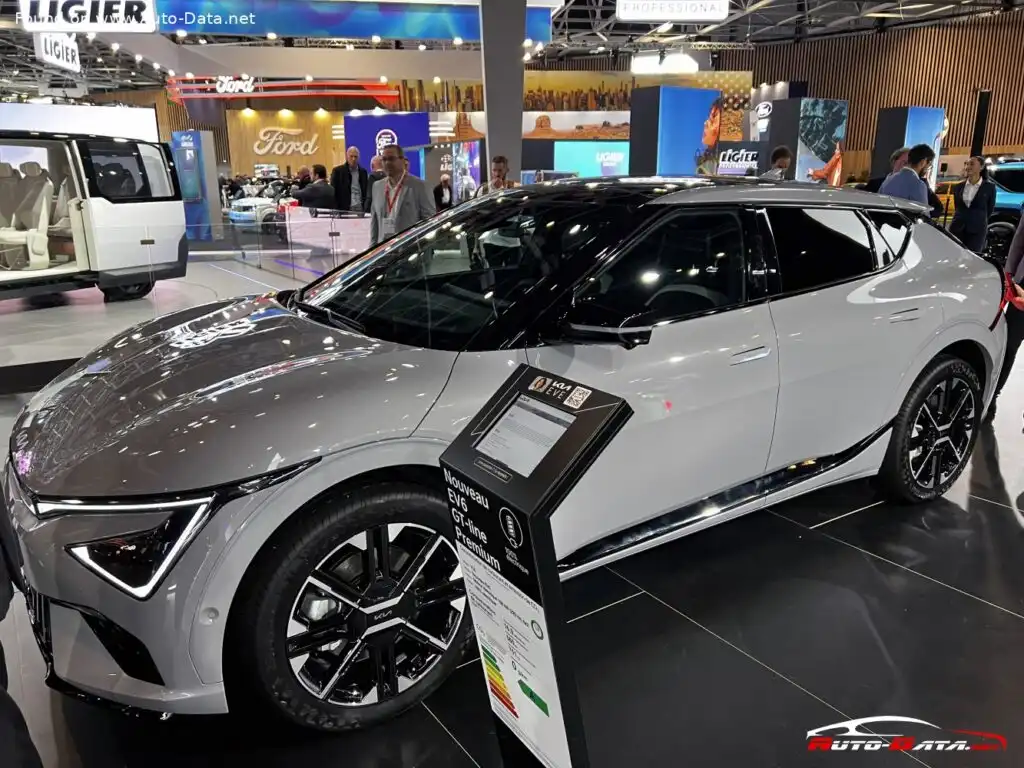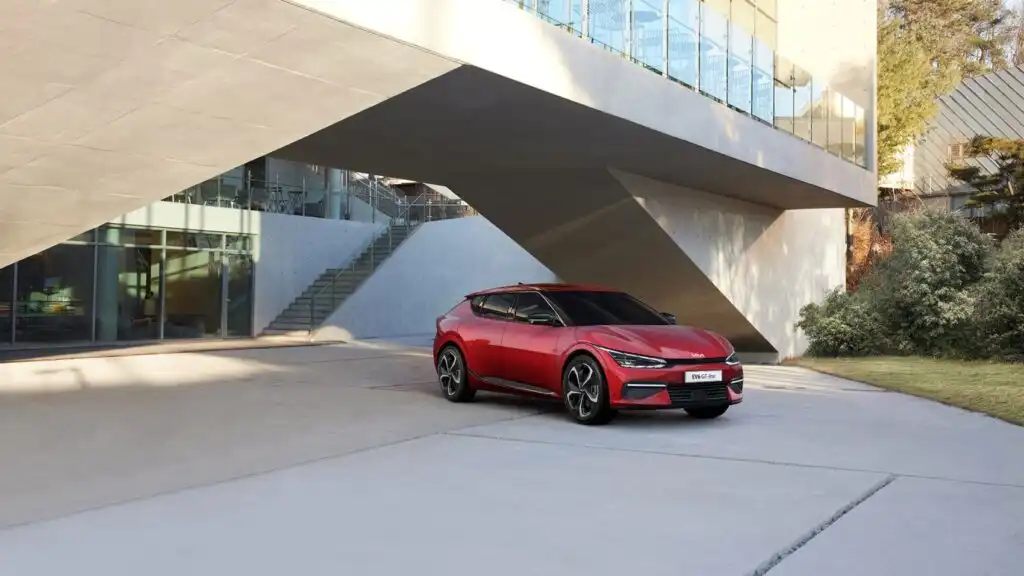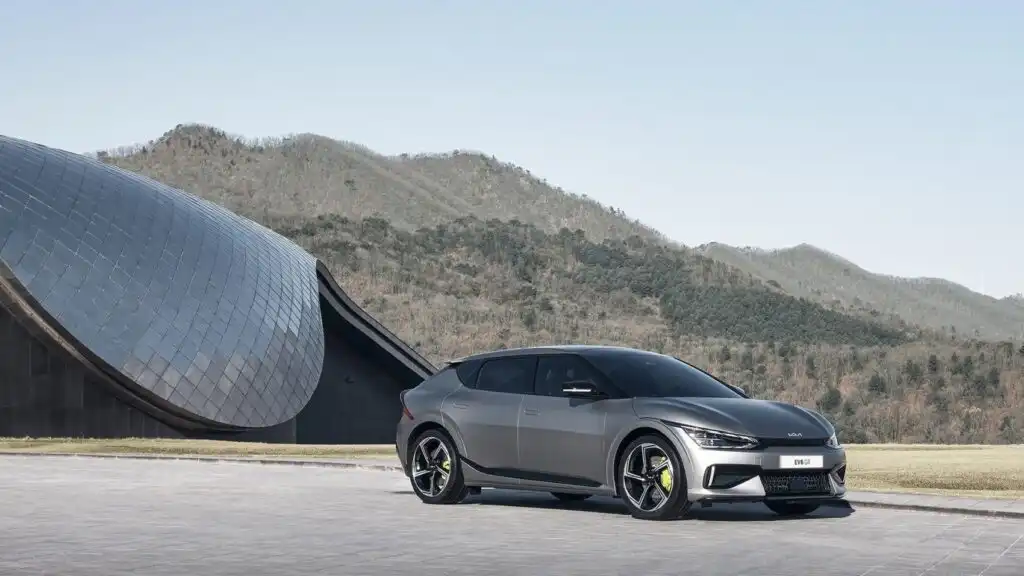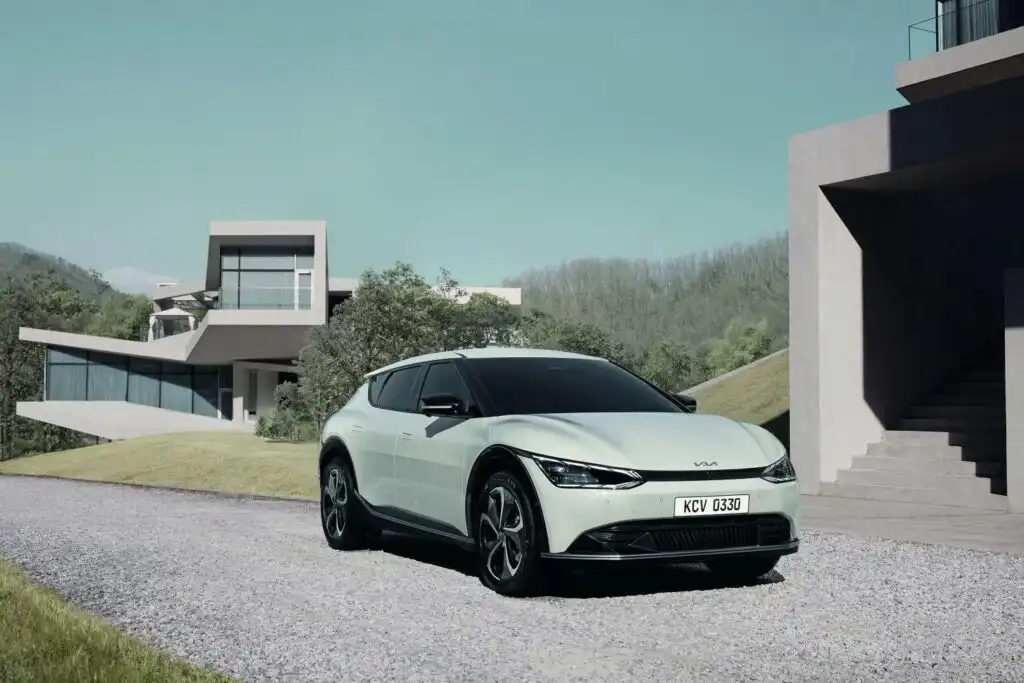
The Kia EV6 Long Range, equipped with the 77.4 kWh battery pack and a single-motor, rear-wheel drive configuration producing 229 horsepower, represents a significant entry in Kia’s push towards electric vehicles. Introduced in March 2021 and continuing through the 2024 model year, this variant occupied a key position in the EV6 lineup, offering a balance between range, performance, and price. It’s built on Kia’s Electric-Global Modular Platform (E-GMP), shared with the Hyundai IONIQ 5, and designed to maximize interior space and efficiency. The EV6, as a whole, marked Kia’s first dedicated battery electric vehicle, signaling a commitment to a future beyond internal combustion engines.
Technical Specifications
| Brand | Kia |
| Model | EV6 |
| Generation | EV6 |
| Type (Engine) | Long Range 77.4 kWh (229 Hp) |
| Start of production | March, 2021 |
| End of production | May, 2024 |
| Powertrain Architecture | BEV (Electric Vehicle) |
| Body type | SUV, Crossover |
| Seats | 5 |
| Doors | 5 |
| Fuel Type | Electricity |
| Acceleration 0 – 100 km/h | 7.3 sec |
| Acceleration 0 – 62 mph | 7.3 sec |
| Acceleration 0 – 60 mph | 6.9 sec |
| Maximum speed | 185 km/h (114.95 mph) |
| Weight-to-power ratio | 8.3 kg/Hp, 119.9 Hp/tonne |
| Weight-to-torque ratio | 5.5 kg/Nm, 183.2 Nm/tonne |
| Gross battery capacity | 77.4 kWh |
| Net (usable) battery capacity | 72.5 kWh |
| Battery technology | Lithium-polymer (LiPo) |
| Battery weight | 477 kg (1051.6 lbs) |
| Battery location | Below the floor |
| All-electric range | 528 km (328.08 mi) |
| Average Energy consumption | 16.5 kWh/100 km (26.55 kWh/100 mi) |
| MPGe | 127 |
| km/kWh | 6.1 |
| mi/kWh | 3.8 |
| Electric motor power | 229 Hp |
| Electric motor Torque | 350 Nm (258.15 lb.-ft.) |
| Electric motor location | Rear axle, Transverse |
| System power | 229 Hp |
| System torque | 350 Nm (258.15 lb.-ft.) |
| Kerb Weight | 1910-2000 kg (4210.83 – 4409.25 lbs) |
| Max. weight | 2425 kg (5346.21 lbs) |
| Max load | 425-515 kg (936.96 – 1135.38 lbs) |
| Trunk (boot) space – minimum | 490 l (17.3 cu. ft.) |
| Trunk (boot) space – maximum | 1300 l (45.91 cu. ft.) |
| Max. roof load | 80 kg (176.37 lbs) |
| Permitted trailer load with brakes (12%) | 1600 kg (3527.4 lbs) |
| Permitted trailer load without brakes | 750 kg (1653.47 lbs) |
| Permitted towbar download | 100 kg (220.46 lbs) |
| Length | 4680 mm (184.25 in) |
| Width | 1880 mm (74.02 in) |
| Height | 1550 mm (61.02 in) |
| Wheelbase | 2900 mm (114.17 in) |
| Front track | 1628 mm (64.09 in) |
| Rear (Back) track | 1637 mm (64.45 in) |
| Front overhang | 830 mm (32.68 in) |
| Rear overhang | 950 mm (37.4 in) |
| Ride height (ground clearance) | 160 mm (6.3 in) |
| Minimum turning circle | 11.6 m (38.06 ft) |
| Drivetrain Architecture | One electric motor drives the rear wheels |
| Drive wheel | Rear wheel drive |
| Number of gears | 1 |
| Gearbox type | Automatic transmission |
| Front suspension | Independent type McPherson |
| Rear suspension | Independent multi-link suspension |
| Front brakes | Ventilated discs, 345 mm |
| Rear brakes | Ventilated discs, 345 mm |
| Steering type | Steering rack and pinion |
| Power steering | Electric |
| Tires size | 235/55 R19 |
| Wheel rims size | 7.5J x 19 |
Powertrain & Engine Architecture
The Kia EV6 Long Range utilizes a permanent magnet synchronous motor located on the rear axle, delivering 229 horsepower and 350 Nm (258 lb-ft) of torque. This single-motor setup provides rear-wheel drive, contributing to a balanced driving experience. The 77.4 kWh lithium-polymer battery pack, positioned under the floor of the vehicle, provides a substantial energy reserve, enabling a range of up to 528 km (328 miles) on the WLTP cycle. The E-GMP platform allows for 800V charging capability, meaning the EV6 can be rapidly charged from 10% to 80% in approximately 18 minutes using a compatible DC fast charger. The powertrain doesn’t have a traditional multi-gear transmission; instead, it employs a single-speed reduction gear to efficiently transfer power from the motor to the wheels. The battery management system (BMS) is crucial for optimizing battery life, performance, and safety, constantly monitoring cell voltages, temperatures, and overall health.
Driving Characteristics
The EV6 Long Range with the single-motor, rear-wheel drive configuration offers a smooth and refined driving experience. Acceleration from 0 to 60 mph takes around 6.9 seconds. The instant torque delivery characteristic of electric motors provides brisk acceleration, particularly in the lower speed ranges. The rear-wheel drive layout contributes to a more engaging driving feel, although it doesn’t offer the all-weather confidence of an all-wheel drive system. The single-speed transmission means there are no gear changes, resulting in seamless acceleration. The EV6’s regenerative braking system allows for adjustable levels of deceleration when lifting off the throttle, enhancing efficiency and allowing for one-pedal driving in certain conditions. Compared to the dual-motor all-wheel drive versions, the Long Range offers slightly less outright performance but significantly improved efficiency.
Equipment & Trim Levels
The EV6 Long Range typically came well-equipped, even in its base trim. Standard features often included a 12.3-inch touchscreen infotainment system with Apple CarPlay and Android Auto compatibility, a digital instrument cluster, LED headlights, and a suite of advanced driver-assistance systems (ADAS) such as lane-keeping assist, forward collision avoidance assist, and adaptive cruise control. Interior upholstery was typically cloth or synthetic leather, with options for premium leather upgrades. Available options included a panoramic sunroof, ventilated and heated front seats, a premium sound system, and a head-up display. Trim levels varied slightly by market, but generally progressed from a base model to a more luxurious GT-Line trim, adding cosmetic enhancements and additional features.
Chassis & Braking
The EV6 utilizes an independent suspension system, with a McPherson strut setup at the front and a multi-link suspension at the rear. This configuration provides a comfortable ride and good handling characteristics. The vehicle’s low center of gravity, thanks to the underfloor battery pack, contributes to stability and reduced body roll. Braking duties are handled by ventilated disc brakes on all four wheels, providing ample stopping power. The EV6 incorporates ABS (Anti-lock Braking System) and electronic stability control (ESC) as standard safety features. Steering is provided by an electric power steering system, offering a responsive and precise feel.
Market Reception & Comparison
The Kia EV6 Long Range was generally well-received by automotive critics, praised for its spacious interior, long range, fast charging capabilities, and attractive styling. It was often compared favorably to competitors such as the Tesla Model 3, Hyundai IONIQ 5, and Ford Mustang Mach-E. While the Tesla Model 3 offered a more established charging network, the EV6’s 800V charging capability provided a significant advantage in terms of charging speed. Compared to the dual-motor EV6 variants, the Long Range offered a more affordable entry point and better fuel economy (measured in MPGe), making it an attractive option for buyers prioritizing range and efficiency over outright performance.
Legacy
The Kia EV6 Long Range has established itself as a reliable and capable electric vehicle in the used car market. The powertrain, being fully electric, benefits from fewer moving parts compared to internal combustion engines, potentially leading to lower maintenance costs over the long term. The longevity of the battery pack remains a key consideration for potential buyers, but Kia offers a comprehensive warranty on the battery, providing peace of mind. As the EV market continues to evolve, the EV6 Long Range represents an important milestone in Kia’s transition to electric mobility, demonstrating the brand’s commitment to innovation and sustainability.