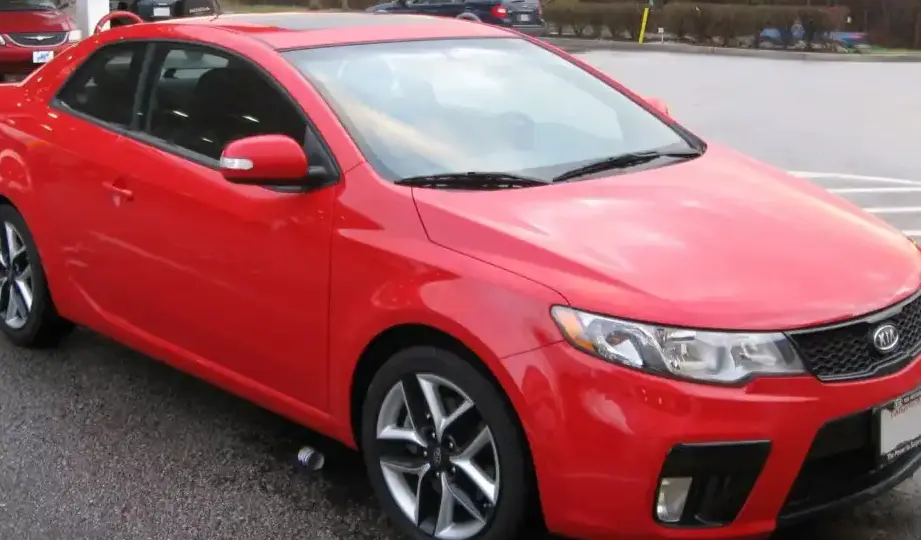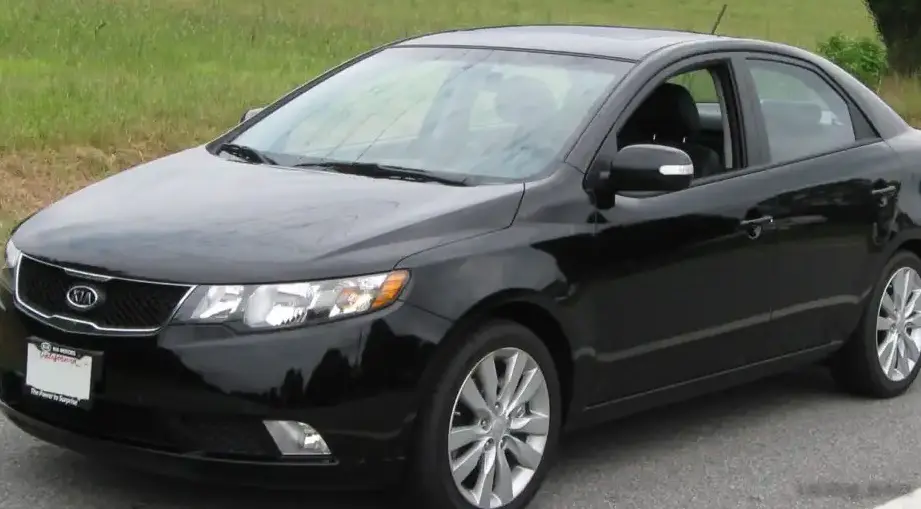
The Kia Forte, launched in 2010 as a replacement for the Spectra, represented a significant step forward for the Korean automaker in the competitive compact sedan segment. The first generation, designated TD, aimed to offer a compelling blend of style, features, and value. Within the TD range, the 2.0-liter engine paired with a 6-speed manual transmission – producing 154 horsepower – occupied a sweet spot, appealing to drivers seeking a more engaging experience than the base engine offered, without the added cost of higher trim levels. Production of this specific configuration ran from 2010 to 2012, establishing a foothold for the Forte in the North American market.
Technical Specifications
| Brand | Kia |
| Model | Forte |
| Generation | Forte I (TD) |
| Type (Engine) | 2.0 (154 Hp) Manual 6-speed |
| Start of production | 2010 |
| End of production | 2012 |
| Powertrain Architecture | Internal Combustion engine |
| Body type | Sedan |
| Seats | 5 |
| Doors | 4 |
| Fuel consumption (economy) – urban (EPA) | 9.4 l/100 km (25 US mpg) |
| Fuel consumption (economy) – extra urban (EPA) | 6.9 l/100 km (34.1 US mpg) |
| Fuel Type | Petrol (Gasoline) |
| Emission standard | SULEV |
| Weight-to-power ratio | 8 kg/Hp, 124.4 Hp/tonne |
| Weight-to-torque ratio | 6.6 kg/Nm, 151.9 Nm/tonne |
| Power | 154 Hp @ 6200 rpm |
| Power per litre | 77.1 Hp/l |
| Torque | 188 Nm @ 4600 rpm (138.66 lb.-ft. @ 4600 rpm) |
| Engine layout | Front, Transverse |
| Engine Model/Code | Theta II / G4KD |
| Engine displacement | 1998 cm3 (121.93 cu. in.) |
| Number of cylinders | 4 |
| Engine configuration | Inline |
| Cylinder Bore | 86 mm (3.39 in.) |
| Piston Stroke | 86 mm (3.39 in.) |
| Compression ratio | 10.5:1 |
| Number of valves per cylinder | 4 |
| Fuel injection system | Multi-port manifold injection |
| Engine aspiration | Naturally aspirated engine |
| Valvetrain | DOHC, CVVT |
| Engine oil capacity | 3.9 l (4.12 US qt | 3.43 UK qt) |
| Coolant | 6 l (6.34 US qt | 5.28 UK qt) |
| Kerb Weight | 1238 kg (2729.32 lbs.) |
| Trunk (boot) space – minimum | 416 l (14.69 cu. ft.) |
| Fuel tank capacity | 52 l (13.74 US gal | 11.44 UK gal) |
| Length | 4530 mm (178.35 in.) |
| Width | 1775 mm (69.88 in.) |
| Height | 1460 mm (57.48 in.) |
| Wheelbase | 2650 mm (104.33 in.) |
| Front track | 1543-1557 mm (60.75 – 61.3 in.) |
| Rear (Back) track | 1550-1564 mm (61.02 – 61.57 in.) |
| Ride height (ground clearance) | 150 mm (5.91 in.) |
| Minimum turning circle (turning diameter) | 10.3 m (33.79 ft.) |
| Drivetrain Architecture | The Internal combustion engine (ICE) drives the front wheels of the vehicle. |
| Drive wheel | Front wheel drive |
| Number of gears and type of gearbox | 6 gears, manual transmission |
| Front suspension | Independent, type McPherson with coil spring and anti-roll bar |
| Rear suspension | Transverse stabilizer, Coil spring, Torsion |
| Front brakes | Ventilated discs, 280 mm |
| Rear brakes | Disc, 262 mm |
| Assisting systems | ABS (Anti-lock braking system) |
| Steering type | Steering rack and pinion |
| Power steering | Hydraulic Steering |
| Tires size | 195/65 R15; 205/55 R16 |
| Wheel rims size | 5.5J x 15; 6J x 16 |
Powertrain & Engine Architecture
At the heart of this Forte variant lies the Kia Theta II 2.0-liter inline-four cylinder engine, internally designated G4KD. This engine represented a significant upgrade over the base 1.6-liter offering, providing a noticeable boost in performance. The Theta II featured multi-port fuel injection and a double overhead camshaft (DOHC) valvetrain with continuously variable valve timing (CVVT) on both intake and exhaust camshafts. This CVVT system optimized engine breathing across the rev range, improving both power and fuel efficiency. The engine produced 154 horsepower at 6200 rpm and 188 Nm (138.66 lb-ft) of torque at 4600 rpm. The 6-speed manual transmission offered precise shifts and allowed drivers to fully utilize the engine’s power band. This transmission was chosen to provide a more engaging driving experience compared to the available automatic option.
Driving Characteristics
The 2.0-liter manual Forte offered a noticeably more spirited driving experience than its base engine counterpart. While not a performance car, the engine provided adequate power for everyday driving and highway merging. The 6-speed manual transmission allowed for precise control and helped keep the engine in its optimal power range. The gear ratios were well-matched, providing good acceleration in each gear. Compared to the automatic transmission version, the manual offered better fuel economy and a more direct connection to the powertrain. The suspension, tuned for comfort, provided a reasonably compliant ride, although it wasn’t particularly sporty. Steering feel was adequate, providing sufficient feedback for most driving situations.
Equipment & Trim Levels
The 2.0-liter manual Forte typically came equipped as a mid-range trim level, offering a good balance of features and affordability. Standard equipment generally included air conditioning, power windows and locks, a basic audio system with MP3 compatibility, and anti-lock brakes (ABS). Higher trim levels added features such as alloy wheels, a sunroof, upgraded audio systems, and keyless entry. Interior upholstery was typically cloth, with a straightforward and functional dashboard layout. Optional extras included a premium audio package and various cosmetic enhancements.
Chassis & Braking
The Forte TD utilized a front-wheel-drive chassis with an independent McPherson strut suspension in the front and a torsion beam rear suspension. This setup provided a comfortable ride and predictable handling. The front brakes were ventilated discs, providing good stopping power, while the rear brakes were solid discs. ABS was standard, enhancing safety by preventing wheel lockup during hard braking. The chassis was designed to balance ride comfort with handling stability, making it suitable for everyday driving conditions.
Market Reception & Comparison
The 2.0-liter manual Forte was generally well-received by automotive critics. It was praised for its value, spacious interior, and improved performance compared to the base model. Critics noted that the manual transmission enhanced the driving experience, making it more engaging. Compared to competitors like the Honda Civic and Toyota Corolla, the Forte offered a similar level of features at a lower price point. Fuel economy was competitive, and the SULEV emission standard demonstrated Kia’s commitment to environmental responsibility. However, some critics noted that the interior materials weren’t as refined as those found in some of its rivals.
Legacy
The Kia Forte TD 2.0-liter manual has proven to be a relatively reliable vehicle in the used car market. The Theta II engine, while not without its potential issues (such as oil consumption in some cases), is generally considered durable when properly maintained. The 6-speed manual transmission is also known for its reliability. Today, these Fortes can be found at affordable prices, making them a practical and economical choice for budget-conscious buyers. The TD generation laid the foundation for the Forte’s continued success, establishing Kia as a serious contender in the compact sedan segment.