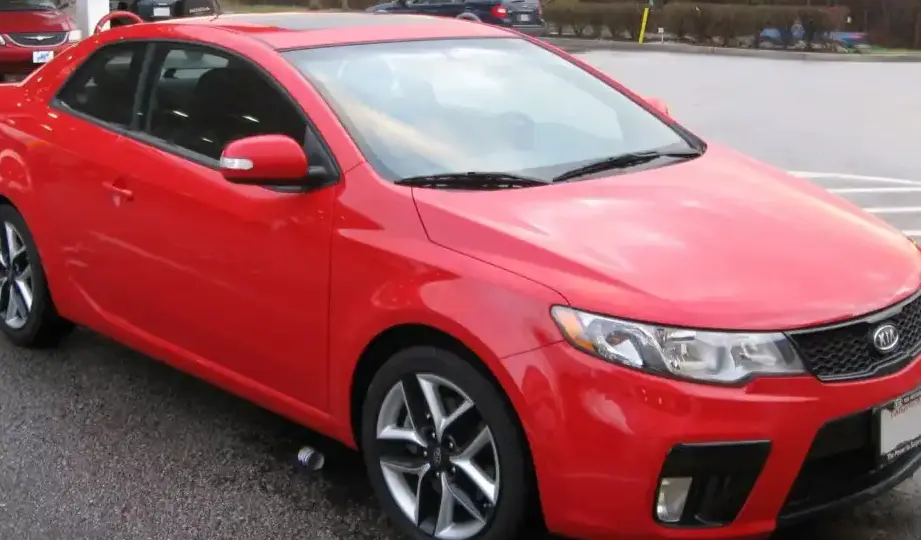
The Kia Forte III 2.0 MPI (147 Hp) represents a significant iteration in Kia’s compact sedan lineup, produced from 2019 through October 2021. Positioned as a mainstream offering within the third generation of the Forte (BD platform), this variant aimed to provide a balance of fuel efficiency, practicality, and affordability for the North American market. It served as a core model, bridging the gap between the base engine options and any potential higher-performance trims. The 2.0 MPI version was a key component in Kia’s strategy to gain market share in the highly competitive compact car segment.
Technical Specifications
| Brand | Kia |
| Model | Forte |
| Generation | Forte III |
| Type (Engine) | 2.0 MPI (147 Hp) |
| Start of production | 2019 |
| End of production | October, 2021 |
| Powertrain Architecture | Internal Combustion engine |
| Body type | Sedan |
| Seats | 5 |
| Doors | 4 |
| Fuel consumption (urban) | 8.7 l/100 km (27 US mpg, 32.5 UK mpg, 11.5 km/l) |
| Fuel consumption (extra urban) | 6.4 l/100 km (36.8 US mpg, 44.1 UK mpg, 15.6 km/l) |
| Fuel consumption (combined) | 7.6 l/100 km (30.9 US mpg, 37.2 UK mpg, 13.2 km/l) |
| Fuel Type | Petrol (Gasoline) |
| Weight-to-power ratio | 8.4 kg/Hp, 119.7 Hp/tonne |
| Weight-to-torque ratio | 6.9 kg/Nm, 145.8 Nm/tonne |
| Power | 147 Hp @ 6200 rpm |
| Power per litre | 73.5 Hp/l |
| Torque | 179 Nm @ 4500 rpm (132.02 lb.-ft. @ 4500 rpm) |
| Engine layout | Front, Transverse |
| Engine Model/Code | Nu / G4NH |
| Engine displacement | 1999 cm3 (121.99 cu. in.) |
| Number of cylinders | 4 |
| Engine configuration | Inline |
| Cylinder Bore | 81 mm (3.19 in.) |
| Piston Stroke | 97 mm (3.82 in.) |
| Compression ratio | 12.5:1 |
| Number of valves per cylinder | 4 |
| Fuel injection system | Multi-port manifold injection |
| Engine aspiration | Naturally aspirated engine |
| Valvetrain | DOHC, D-CVVT |
| Engine oil capacity | 4 l (4.23 US qt | 3.52 UK qt) |
| Coolant | 5.6 l (5.92 US qt | 4.93 UK qt) |
| Kerb Weight | 1228-1234 kg (2707.28 – 2720.5 lbs.) |
| Max. weight | 1650 kg (3637.63 lbs.) |
| Max load | 416-422 kg (917.12 – 930.35 lbs.) |
| Trunk (boot) space – minimum | 433 l (15.29 cu. ft.) |
| Fuel tank capacity | 53 l (14 US gal | 11.66 UK gal) |
| Length | 4641 mm (182.72 in.) |
| Width | 1801 mm (70.91 in.) |
| Height | 1435 mm (56.5 in.) |
| Wheelbase | 2700 mm (106.3 in.) |
| Front track | 1562 mm (61.5 in.) |
| Rear (Back) track | 1572 mm (61.89 in.) |
| Ride height (ground clearance) | 135 mm (5.31 in.) |
| Minimum turning circle (turning diameter) | 10.6 m (34.78 ft.) |
| Approach angle | 14.7° |
| Departure angle | 19.5° |
| Drivetrain Architecture | The Internal combustion engine (ICE) drives the front wheels of the vehicle. |
| Drive wheel | Front wheel drive |
| Number of gears and type of gearbox | 6 gears, manual transmission |
| Front suspension | Independent type McPherson |
| Rear suspension | Torsion |
| Front brakes | Ventilated discs |
| Rear brakes | Disc |
| Assisting systems | ABS (Anti-lock braking system) |
| Steering type | Steering rack and pinion |
| Power steering | Electric Steering |
| Tires size | 195/65 R15 |
| Wheel rims size | 6.0J x 15 |
Powertrain & Engine Architecture
The heart of the 2019-2021 Kia Forte III 2.0 MPI is the Hyundai-Kia Nu engine family, specifically the G4NH code. This 1.999-liter (2.0L) inline-four cylinder engine utilizes a naturally aspirated configuration, relying on multi-point fuel injection for precise fuel delivery. The engine features a double overhead camshaft (DOHC) valvetrain with Kia’s Dual Continuously Variable Valve Timing (D-CVVT) technology. D-CVVT optimizes valve timing based on engine load and speed, improving both performance and fuel efficiency. The engine’s 12.5:1 compression ratio contributes to its power output, while the transverse mounting position optimizes space within the engine bay. The 6-speed manual transmission was standard, offering drivers direct control over gear selection.
Driving Characteristics
The 147 horsepower and 132 lb-ft of torque produced by the 2.0 MPI engine provided adequate, though not exhilarating, performance. Acceleration from 0 to 60 mph typically took around 8-9 seconds. The manual transmission allowed for a more engaging driving experience compared to potential automatic options, offering precise gear changes and better control. The gear ratios were tuned for a balance between fuel economy and everyday drivability. While not a sports sedan, the 2.0 MPI Forte offered sufficient power for merging onto highways and navigating city streets. Compared to a potential turbocharged engine option (if offered), the 2.0 MPI delivered a more linear power delivery, making it predictable and easy to manage for less experienced drivers.
Equipment & Trim Levels
The 2.0 MPI variant of the Kia Forte III typically served as a mid-range trim level. Standard features generally included air conditioning, power windows and locks, a rearview camera, a touchscreen infotainment system with Apple CarPlay and Android Auto compatibility, and a suite of basic safety features like ABS and stability control. Higher trim levels added features such as alloy wheels, a sunroof, upgraded audio systems, and advanced driver-assistance systems (ADAS) like lane departure warning and automatic emergency braking. Interior upholstery was typically cloth, with options for upgraded leatherette or leather in higher trims. Dashboard configurations were generally straightforward and functional, prioritizing ease of use.
Chassis & Braking
The Kia Forte III utilized a front-wheel-drive layout with an independent McPherson strut suspension in the front and a torsion beam suspension in the rear. This suspension setup provided a comfortable ride quality suitable for everyday driving. The front brakes were ventilated discs, offering good stopping power, while the rear brakes were solid discs. The electric power steering provided light and responsive steering feel. The chassis was designed to balance rigidity and weight, contributing to the car’s handling characteristics. Stabilizer bars were included to reduce body roll during cornering.
Market Reception & Comparison
The Kia Forte III 2.0 MPI was generally well-received by automotive critics as a practical and affordable compact sedan. Reviewers praised its spacious interior, comfortable ride, and generous standard features. Fuel economy was considered competitive within its class, averaging around 31 mpg combined. Compared to other trims in the Forte lineup, the 2.0 MPI offered a good balance between performance and price. While the base engine was considered underpowered, the 2.0 MPI provided a noticeable improvement in acceleration and overall driving experience. Reliability reports generally indicated good long-term dependability, typical of Kia products during this period.
Legacy
The Kia Forte III 2.0 MPI has established itself as a reliable and affordable used car option. The Nu engine family, while not known for groundbreaking performance, has proven to be durable and relatively maintenance-free. Common maintenance items include routine oil changes, spark plug replacements, and occasional sensor checks. The availability of aftermarket parts and a relatively simple mechanical design contribute to its ease of repair. As of today, well-maintained examples of the 2019-2021 Forte 2.0 MPI continue to offer good value for budget-conscious buyers seeking a dependable and practical compact sedan.