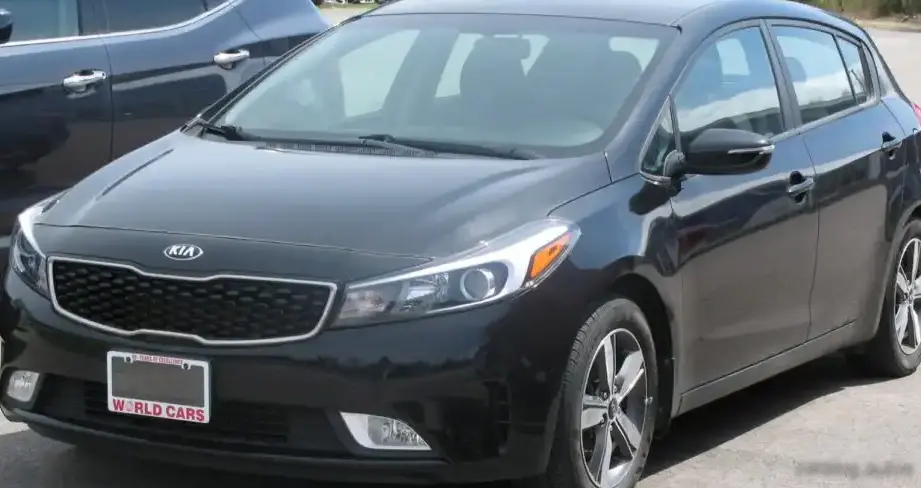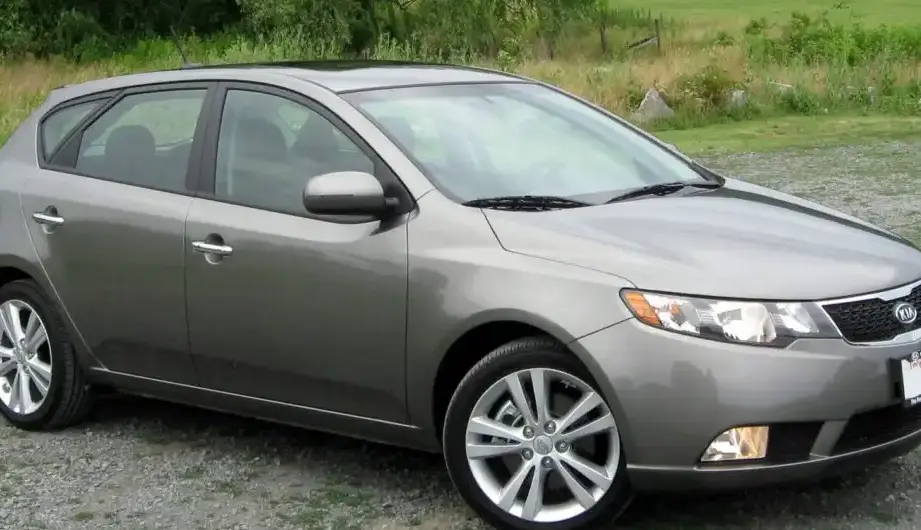
The Kia Forte5 first generation (TD), produced from 2010 to 2013, represented Kia’s entry into the increasingly popular compact hatchback segment in North America. Positioned as a practical and stylish alternative to traditional sedans, the Forte5 aimed to attract younger buyers and those seeking versatility. Within the first generation lineup, the 2.4-liter engine paired with a 6-speed automatic transmission was a mid-range offering, bridging the gap between the base 1.6-liter engine and the more performance-oriented trims. It was designed to provide a balance of fuel efficiency and adequate power for everyday driving needs. The Forte5 was built on the Hyundai-Kia ED platform, shared with the Hyundai Elantra.
Technical Specifications
| Brand | Kia |
| Model | Forte |
| Generation | Forte5 I (TD) |
| Type (Engine) | 2.4 (165 Hp) |
| Start of production | 2010 |
| End of production | 2013 |
| Powertrain Architecture | Internal Combustion engine |
| Body type | Hatchback |
| Seats | 5 |
| Doors | 5 |
| Fuel consumption (economy) – urban (EPA) | 10.7 l/100 km (22 US mpg) |
| Fuel consumption (economy) – extra urban (EPA) | 7.4 l/100 km (31.8 US mpg) |
| Fuel Type | Petrol (Gasoline) |
| Emission standard | SULEV |
| Weight-to-power ratio | 8 kg/Hp |
| Weight-to-torque ratio | 6 kg/Nm |
| Power | 165 Hp @ 6000 rpm |
| Power per litre | 69.9 Hp/l |
| Torque | 218 Nm @ 4000 rpm (160.79 lb.-ft. @ 4000 rpm) |
| Engine layout | Front, Transverse |
| Engine Model/Code | Theta II / G4KE |
| Engine displacement | 2359 cm3 (143.96 cu. in.) |
| Number of cylinders | 4 |
| Engine configuration | Inline |
| Cylinder Bore | 88 mm (3.46 in.) |
| Piston Stroke | 97 mm (3.82 in.) |
| Compression ratio | 10.5:1 |
| Number of valves per cylinder | 4 |
| Fuel injection system | Multi-port manifold injection |
| Engine aspiration | Naturally aspirated engine |
| Valvetrain | DOHC, CVVT |
| Engine oil capacity | 4.3 l (4.54 US qt | 3.78 UK qt) |
| Coolant | 6 l (6.34 US qt | 5.28 UK qt) |
| Kerb Weight | 1314 kg (2896.87 lbs.) |
| Trunk (boot) space – minimum | 550 l (19.42 cu. ft.) |
| Fuel tank capacity | 52 l (13.74 US gal | 11.44 UK gal) |
| Length | 4340 mm (170.87 in.) |
| Width | 1775 mm (69.88 in.) |
| Height | 1460 mm (57.48 in.) |
| Wheelbase | 2650 mm (104.33 in.) |
| Front track | 1539 mm (60.59 in.) |
| Rear (Back) track | 1546 mm (60.87 in.) |
| Ride height (ground clearance) | 150 mm (5.91 in.) |
| Minimum turning circle (turning diameter) | 10.8 m (35.43 ft.) |
| Drivetrain Architecture | The Internal combustion engine (ICE) drives the front wheels of the vehicle. |
| Drive wheel | Front wheel drive |
| Number of gears and type of gearbox | 6 gears, automatic transmission |
| Front suspension | Independent, type McPherson with coil spring and anti-roll bar |
| Rear suspension | Transverse stabilizer, Coil spring, Torsion |
| Front brakes | Ventilated discs, 300 mm |
| Rear brakes | Disc, 262 mm |
| Assisting systems | ABS (Anti-lock braking system) |
| Steering type | Steering rack and pinion |
| Power steering | Hydraulic Steering |
| Tires size | 215/45 R17 |
| Wheel rims size | 7J x 17 |
Introduction
The 2010-2013 Kia Forte5 2.4-liter with the 6-speed automatic transmission was a key variant in Kia’s attempt to establish a stronger foothold in the North American compact car market. It offered a more powerful alternative to the base 1.6-liter engine, appealing to drivers who desired more responsive acceleration and better highway passing power. The Forte5, as a hatchback, provided increased cargo versatility compared to the Forte sedan, making it a practical choice for small families or individuals with active lifestyles. This model year represented a significant step forward for Kia in terms of design, build quality, and overall refinement.
Powertrain & Engine Architecture
At the heart of this Forte5 variant lies the Theta II 2.4-liter inline-four cylinder engine, designated as the G4KE. This engine utilizes a cast iron block with an aluminum cylinder head, a common configuration for balancing durability and weight. The engine employs multi-port fuel injection (MPI) and a double overhead camshaft (DOHC) valvetrain with continuously variable valve timing (CVVT) on both intake and exhaust camshafts. CVVT optimizes engine performance and fuel efficiency by adjusting valve timing based on engine speed and load. The 6-speed automatic transmission, a Hyundai-sourced unit, was chosen for its smooth shifting and relatively efficient operation. It featured a torque converter for smooth launches and a wide range of gear ratios designed to maximize fuel economy and provide adequate acceleration. The transmission was not known for being particularly sporty, prioritizing comfort and efficiency over aggressive shifting.
Driving Characteristics
The 2.4-liter engine and 6-speed automatic combination in the Forte5 delivered a noticeable improvement in performance compared to the 1.6-liter base engine. While not a sports car, the 165 horsepower and 160.79 lb-ft of torque provided sufficient power for merging onto highways and navigating city streets with ease. The automatic transmission, while smooth, could sometimes feel hesitant during quick acceleration, and lacked the responsiveness of a manual transmission. The gear ratios were tuned for fuel economy, meaning the engine often operated at lower RPMs during cruising, contributing to a quieter and more comfortable ride. Compared to a manual transmission equipped Forte5, the automatic version sacrificed some driver engagement and fuel efficiency, but gained convenience and ease of use.
Equipment & Trim Levels
The 2.4-liter automatic Forte5 typically came equipped with a reasonable level of standard features. These generally included air conditioning, power windows and locks, a basic audio system with USB and auxiliary inputs, and standard safety features like ABS, front airbags, and side curtain airbags. Higher trim levels, such as the EX, added features like alloy wheels, a more advanced audio system, keyless entry, and a sunroof. Interior upholstery was typically cloth, with options for upgraded leatherette in higher trims. The dashboard layout was functional and straightforward, prioritizing usability over stylistic flair.
Chassis & Braking
The Forte5 utilized a front-wheel-drive layout with an independent McPherson strut suspension in the front and a torsion beam rear suspension. This suspension setup provided a comfortable ride quality, although it wasn’t particularly sporty. The front suspension incorporated a stabilizer bar to reduce body roll during cornering. Braking duties were handled by ventilated discs in the front and solid discs in the rear. ABS was standard, providing enhanced braking control in emergency situations. The braking system was adequate for the vehicle’s weight and performance, but lacked the stopping power of more performance-oriented vehicles.
Market Reception & Comparison
Critics generally praised the 2010-2013 Kia Forte5 2.4 for its value proposition, spacious interior, and comfortable ride. However, the automatic transmission was sometimes criticized for its lack of responsiveness. Compared to competitors like the Honda Civic, Toyota Corolla, and Mazda3, the Forte5 offered a more affordable price point, but didn’t quite match the refinement or driving dynamics of those established players. The 2.4-liter engine offered better fuel economy than larger engines in competing vehicles, while still providing adequate power. The 1.6L engine offered better fuel economy, but at the cost of performance. The automatic transmission was less fuel efficient than the manual transmission option.
Legacy
The Kia Forte5 2.4-liter automatic has proven to be a relatively reliable powertrain in the used car market. The Theta II engine is generally considered durable, although regular maintenance, including oil changes and timing belt replacements (where applicable), is crucial for long-term reliability. The 6-speed automatic transmission has also proven to be fairly robust. Today, these vehicles are often found as affordable and practical transportation options, particularly for first-time car buyers or those seeking a budget-friendly hatchback. While not a collector’s item, the first-generation Forte5 played a significant role in Kia’s brand transformation, demonstrating the company’s commitment to building quality and value-driven vehicles.