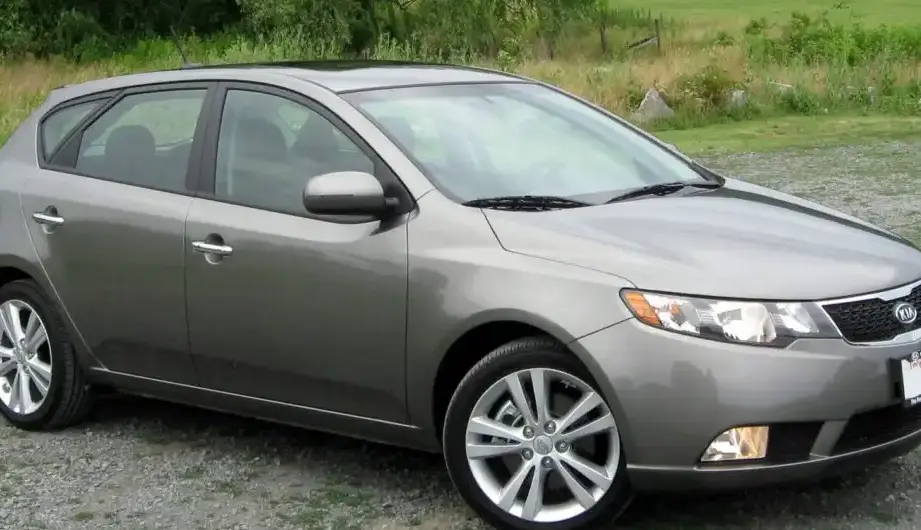
The Kia Forte5 II, specifically the facelifted version released for the 2017 and 2018 model years, represented a significant step forward for Kia in the competitive compact hatchback segment. This variant, equipped with the 2.0-liter GDI (Gasoline Direct Injection) engine producing 164 horsepower, occupied a mid-range position within the Forte5 lineup, offering a balance between performance, fuel efficiency, and features. It was primarily marketed towards buyers seeking a practical, stylish, and well-equipped hatchback with a more engaging driving experience than the base engine offered. The Forte5 aimed to attract customers away from established European and Japanese competitors, offering a compelling value proposition with a generous warranty.
Technical Specifications
| Brand | Kia |
| Model | Forte |
| Generation | Forte5 II (facelift 2017) |
| Type (Engine) | 2.0 GDI (164 Hp) |
| Start of production | 2017 |
| End of production | 2018 |
| Powertrain Architecture | Internal Combustion engine |
| Body type | Hatchback |
| Seats | 5 |
| Doors | 5 |
| Fuel consumption (economy) – urban | 9.8 l/100 km (24 US mpg, 28.8 UK mpg, 10.2 km/l) |
| Fuel consumption (economy) – combined | 7.3 l/100 km (32.2 US mpg, 38.7 UK mpg, 13.7 km/l) |
| Fuel Type | Petrol (Gasoline) |
| Weight-to-power ratio | 8.3 kg/Hp, 120 Hp/tonne |
| Weight-to-torque ratio | 6.7 kg/Nm, 150 Nm/tonne |
| Power | 164 Hp @ 6200 rpm |
| Torque | 205 Nm @ 4000 rpm (151.2 lb.-ft. @ 4000 rpm) |
| Engine layout | Front, Transverse |
| Engine Model/Code | Nu / G4NC |
| Number of cylinders | 4 |
| Engine configuration | Inline |
| Compression ratio | 11.5:1 |
| Number of valves per cylinder | 4 |
| Fuel injection system | Direct injection |
| Engine aspiration | Naturally aspirated engine |
| Valvetrain | DOHC |
| Engine oil capacity | 4 l (4.23 US qt | 3.52 UK qt) |
| Coolant capacity | 6 l (6.34 US qt | 5.28 UK qt) |
| Kerb Weight | 1367 kg (3013.72 lbs.) |
| Max. weight | 1780 kg (3924.23 lbs.) |
| Max load | 413 kg (910.51 lbs.) |
| Trunk (boot) space – minimum | 657 l (23.2 cu. ft.) |
| Fuel tank capacity | 50 l (13.21 US gal | 11 UK gal) |
| Length | 4350 mm (171.26 in.) |
| Width | 1780 mm (70.08 in.) |
| Height | 1450 mm (57.09 in.) |
| Wheelbase | 2700 mm (106.3 in.) |
| Ride height (ground clearance) | 140 mm (5.51 in.) |
| Drivetrain Architecture | The Internal combustion engine (ICE) drives the front wheels of the vehicle. |
| Drive wheel | Front wheel drive |
| Number of gears and type of gearbox | 6 gears, manual transmission |
| Front suspension | Independent, type McPherson with coil spring and anti-roll bar |
| Rear suspension | Semi-independent, coil spring |
| Front brakes | Ventilated discs |
| Rear brakes | Disc |
| Assisting systems | ABS (Anti-lock braking system) |
| Steering type | Steering rack and pinion |
| Power steering | Electric Steering |
Powertrain & Engine Architecture
The heart of the 2017-2018 Kia Forte5 2.0 GDI is the Nu engine family, specifically the G4NC code. This 1998cc (2.0L) inline-four cylinder engine utilizes direct fuel injection (GDI) to maximize combustion efficiency and power output. The GDI system injects fuel directly into the combustion chamber, allowing for more precise fuel control and a higher compression ratio of 11.5:1. The engine features a double overhead camshaft (DOHC) valvetrain with four valves per cylinder, contributing to its responsive nature. The 6-speed manual transmission was standard, providing drivers with full control over the engine’s power. The engine’s design prioritized a balance between performance and fuel economy, making it suitable for daily commuting and occasional spirited driving.
Driving Characteristics
The 164 horsepower and 151.2 lb-ft of torque delivered by the 2.0 GDI engine, coupled with the 6-speed manual transmission, provided a noticeably more engaging driving experience compared to the base 1.6L engine. Acceleration was brisk, allowing for confident merging and overtaking maneuvers. The manual gearbox offered precise shifts and a direct connection to the engine. While not a sports car, the Forte5 2.0 GDI offered a level of responsiveness that appealed to drivers who enjoyed a more involved driving experience. The gear ratios were well-matched to the engine’s powerband, providing adequate acceleration in all gears. Compared to automatic transmission equipped models, the manual version felt more lively and efficient.
Equipment & Trim Levels
The 2.0 GDI trim of the Forte5 typically included features such as air conditioning, power windows and locks, a touchscreen infotainment system with Bluetooth connectivity, and a rearview camera. Higher trim levels added features like a sunroof, upgraded audio system, keyless entry, and leather upholstery. Interior upholstery was typically cloth, with optional leather available. The dashboard layout was functional and modern, with a focus on ease of use. Optional extras included a navigation system, and various driver-assistance features.
Chassis & Braking
The Forte5 utilized a McPherson strut front suspension and a semi-independent coil spring rear suspension. This setup provided a comfortable ride quality while maintaining reasonable handling characteristics. The front brakes were ventilated discs, offering good stopping power, while the rear brakes were solid discs. An Anti-lock Braking System (ABS) was standard, enhancing safety. The chassis was designed to balance rigidity and weight, contributing to the car’s overall stability. The electric power steering provided light and precise steering feel.
Market Reception & Comparison
Critics generally praised the Forte5 2.0 GDI for its value, spacious interior, and engaging driving dynamics. The 2.0L engine was considered a significant upgrade over the base engine, providing ample power for most driving situations. Fuel economy was competitive within its class, averaging around 32.2 US mpg in combined driving. Compared to the 1.6L Forte5, the 2.0 GDI offered a noticeable performance boost, but at a slightly higher price point. Compared to rivals like the Honda Civic Hatchback and Mazda3, the Forte5 offered a similar level of features and performance at a more affordable price.
Legacy
The Kia Forte5 2.0 GDI (2017-2018) has proven to be a relatively reliable vehicle in the used car market. The Nu engine family is generally known for its durability, although regular maintenance, including oil changes and timing chain inspections, is crucial. The direct injection system can be prone to carbon buildup over time, potentially affecting performance, but this can be mitigated with regular fuel system cleaning. Overall, the Forte5 2.0 GDI remains a practical and affordable option for buyers seeking a well-equipped and reliable compact hatchback. Its combination of features, performance, and value has contributed to its continued popularity in the used car market.