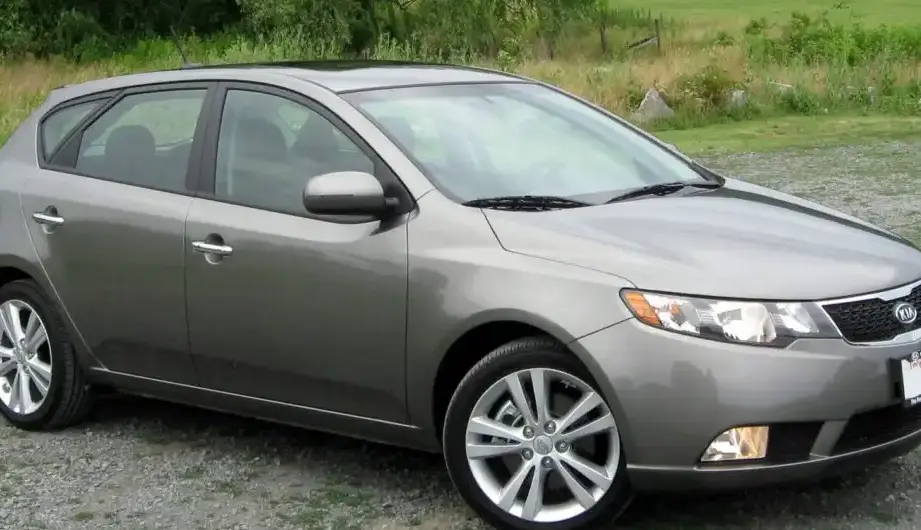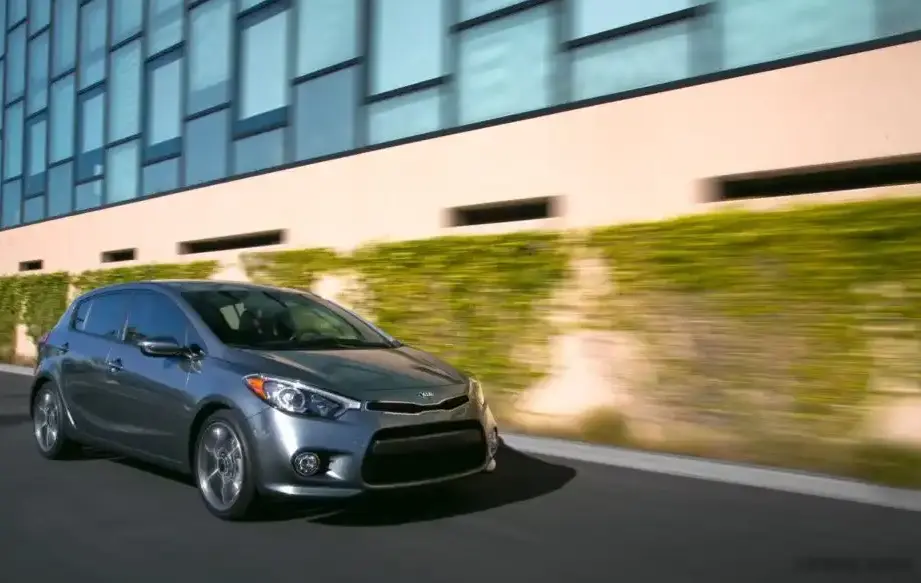
The Kia Forte5 II (YD) 2.0 GDI Automatic, produced from 2013 to 2016, represented a significant step forward for Kia in the compact hatchback segment within the North American market. Positioned as a more practical and stylish alternative to traditional sedans, the Forte5 aimed to attract younger buyers and those seeking versatility. This particular variant, equipped with the 2.0-liter GDI engine and a six-speed automatic transmission, occupied a mid-range position within the Forte5 lineup, offering a balance of performance, fuel efficiency, and features. It was a key component of Kia’s strategy to establish itself as a mainstream automotive brand known for value and quality.
Technical Specifications
| Brand | Kia |
| Model | Forte |
| Generation | Forte5 II (YD) |
| Type (Engine) | 2.0 GDI (173 Hp) Automatic |
| Start of production | 2013 |
| End of production | 2016 |
| Powertrain Architecture | Internal Combustion engine |
| Body type | Hatchback |
| Seats | 5 |
| Doors | 5 |
| Fuel consumption (economy) – urban (EPA) | 9.4-9.8 l/100 km (25 – 24 US mpg) |
| Fuel consumption (economy) – extra urban (EPA) | 6.9-7.1 l/100 km (34.1 – 33.1 US mpg) |
| Fuel consumption (economy) – combined (EPA) | 8.4 l/100 km (28 US mpg) |
| Fuel Type | Petrol (Gasoline) |
| Emission standard | ULEV-II |
| Weight-to-power ratio | 7.6 kg/Hp, 131 Hp/tonne |
| Weight-to-torque ratio | 6.3 kg/Nm, 158.2 Nm/tonne |
| Power | 173 Hp @ 6500 rpm |
| Power per litre | 86.5 Hp/l |
| Torque | 209 Nm @ 4700 rpm (154.15 lb.-ft. @ 4700 rpm) |
| Engine layout | Front, Transverse |
| Engine Model/Code | Nu / G4NC |
| Engine displacement | 1999 cm3 (121.99 cu. in.) |
| Number of cylinders | 4 |
| Engine configuration | Inline |
| Cylinder Bore | 81 mm (3.19 in.) |
| Piston Stroke | 97 mm (3.82 in.) |
| Compression ratio | 11.5:1 |
| Number of valves per cylinder | 4 |
| Fuel injection system | Direct injection |
| Engine aspiration | Naturally aspirated engine |
| Valvetrain | DOHC, D-CVVT |
| Engine oil capacity | 4 l (4.23 US qt | 3.52 UK qt) |
| Coolant | 5.9 l (6.23 US qt | 5.19 UK qt) |
| Kerb Weight | 1321-1381 kg (2912.31 – 3044.58 lbs.) |
| Max. weight | 1800 kg (3968.32 lbs.) |
| Max load | 419-479 kg (923.74 – 1056.01 lbs.) |
| Trunk (boot) space – minimum | 657 l (23.2 cu. ft.) |
| Fuel tank capacity | 50 l (13.21 US gal | 11 UK gal) |
| Length | 4350 mm (171.26 in.) |
| Width | 1780 mm (70.08 in.) |
| Height | 1450 mm (57.09 in.) |
| Wheelbase | 2700 mm (106.3 in.) |
| Front track | 1553-1557 mm (61.14 – 61.3 in.) |
| Rear (Back) track | 1566-1570 mm (61.65 – 61.81 in.) |
| Front overhang | 880 mm (34.65 in.) |
| Rear overhang | 770 mm (30.31 in.) |
| Ride height (ground clearance) | 140 mm (5.51 in.) |
| Minimum turning circle (turning diameter) | 10.6 m (34.78 ft.) |
| Approach angle | 15.2° |
| Departure angle | 25.1° |
| Drivetrain Architecture | The Internal combustion engine (ICE) drives the front wheels of the vehicle. |
| Drive wheel | Front wheel drive |
| Number of gears and type of gearbox | 6 gears, automatic transmission |
| Front suspension | Independent, type McPherson with coil spring and anti-roll bar |
| Rear suspension | Coil spring, Torsion |
| Front brakes | Ventilated discs, 280 mm |
| Rear brakes | Disc, 262 mm |
| Assisting systems | ABS (Anti-lock braking system) |
| Steering type | Steering rack and pinion |
| Power steering | Electric Steering |
| Tires size | 205/55 R16; 215/45 R17 |
| Wheel rims size | 6.5J x 16; 7J x 17 |
INTRODUCTION
The Kia Forte5 II (YD) 2.0 GDI Automatic, launched in 2013, was a crucial model for Kia as they sought to broaden their appeal in the competitive North American market. Built on the 1HX0/A3 platform shared with the Hyundai Elantra GT, the Forte5 offered a more practical and versatile alternative to the standard Forte sedan. The “GDI” designation signifies the engine’s use of Gasoline Direct Injection technology, a key feature contributing to improved fuel efficiency and power output. This variant aimed to provide a comfortable and efficient driving experience for daily commutes and weekend trips, appealing to a wide range of buyers.
Powertrain & Engine Architecture
At the heart of the Forte5 2.0 GDI Automatic lies the Nu engine family, specifically the G4NC code. This 1999cc inline-four cylinder engine utilizes direct fuel injection, a technology that precisely meters fuel directly into the combustion chamber, resulting in more complete combustion and increased efficiency. The engine features a double overhead camshaft (DOHC) valvetrain with Kia’s Dual Continuously Variable Valve Timing (D-CVVT) system, optimizing valve timing for improved performance and fuel economy across the engine’s operating range. The six-speed automatic transmission, sourced from Hyundai, was chosen for its smooth shifting and responsiveness. It features a conventional torque converter design and offers a ‘Sport’ mode for more aggressive shifting. The transmission’s gear ratios were tuned to balance acceleration with fuel efficiency, prioritizing usability over outright performance.
Driving Characteristics
The 173 horsepower and 209 Nm (154 lb-ft) of torque delivered by the 2.0 GDI engine, coupled with the six-speed automatic, provided adequate, though not exhilarating, performance. Acceleration from 0 to 60 mph was typically in the 8-9 second range. The automatic transmission, while smooth, could sometimes feel hesitant during quick acceleration or downshifts. Compared to the manual transmission version, the automatic offered less driver engagement but greater convenience. The higher-output engines available in other Forte models (like the turbocharged variants) provided significantly more power, but at the expense of fuel economy. The Forte5 2.0 GDI Automatic prioritized a comfortable and predictable driving experience, making it well-suited for everyday driving conditions.
Equipment & Trim Levels
The 2.0 GDI Automatic trim typically included standard features such as air conditioning, power windows and locks, a touchscreen infotainment system with Bluetooth connectivity, and a rearview camera. Higher trim levels added features like a sunroof, leather upholstery, heated front seats, and a premium audio system. Interior upholstery was generally cloth, with optional leather available on higher trims. The dashboard layout was functional and straightforward, with a focus on ease of use. Optional extras included navigation, keyless entry, and push-button start.
Chassis & Braking
The Forte5 utilized a McPherson strut front suspension and a torsion beam rear suspension. This setup provided a comfortable ride quality, although it wasn’t particularly sporty. Front brakes were ventilated discs, while rear brakes were solid discs, providing adequate stopping power for the vehicle’s weight class. Anti-lock Braking System (ABS) was standard. The steering was electrically assisted, offering light and precise control. Stabilizer bars were included both front and rear to reduce body roll during cornering.
Market Reception & Comparison
Critics generally praised the Forte5 2.0 GDI Automatic for its value, fuel efficiency, and spacious interior. However, some reviewers noted that the engine could feel strained under hard acceleration and that the automatic transmission wasn’t as responsive as some competitors. Compared to other compact hatchbacks like the Honda Civic Hatchback or Mazda3, the Forte5 offered a more affordable price point but lacked the same level of refinement and driving dynamics. Fuel economy was competitive, averaging around 28 mpg combined, making it an attractive option for budget-conscious buyers. Reliability was generally good, with few major issues reported.
Legacy
The Kia Forte5 II (YD) 2.0 GDI Automatic has proven to be a relatively reliable vehicle in the used car market. The Nu engine family is known for its durability, and the six-speed automatic transmission has a good track record. Common maintenance items include routine oil changes, spark plug replacements, and occasional sensor replacements. Today, these vehicles represent a good value for buyers seeking an affordable and practical compact hatchback. While not a performance standout, the Forte5 2.0 GDI Automatic remains a competent and dependable choice for daily transportation.