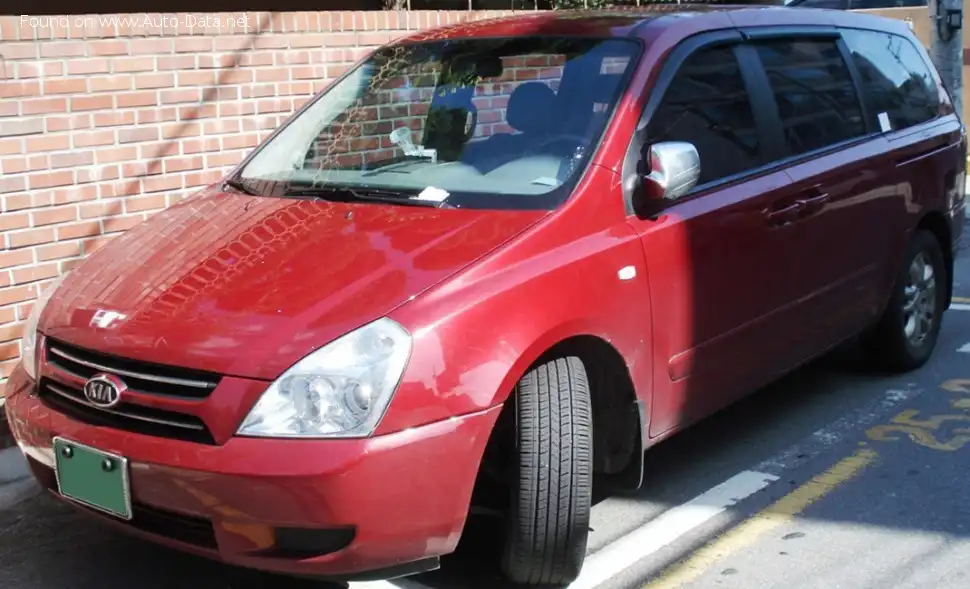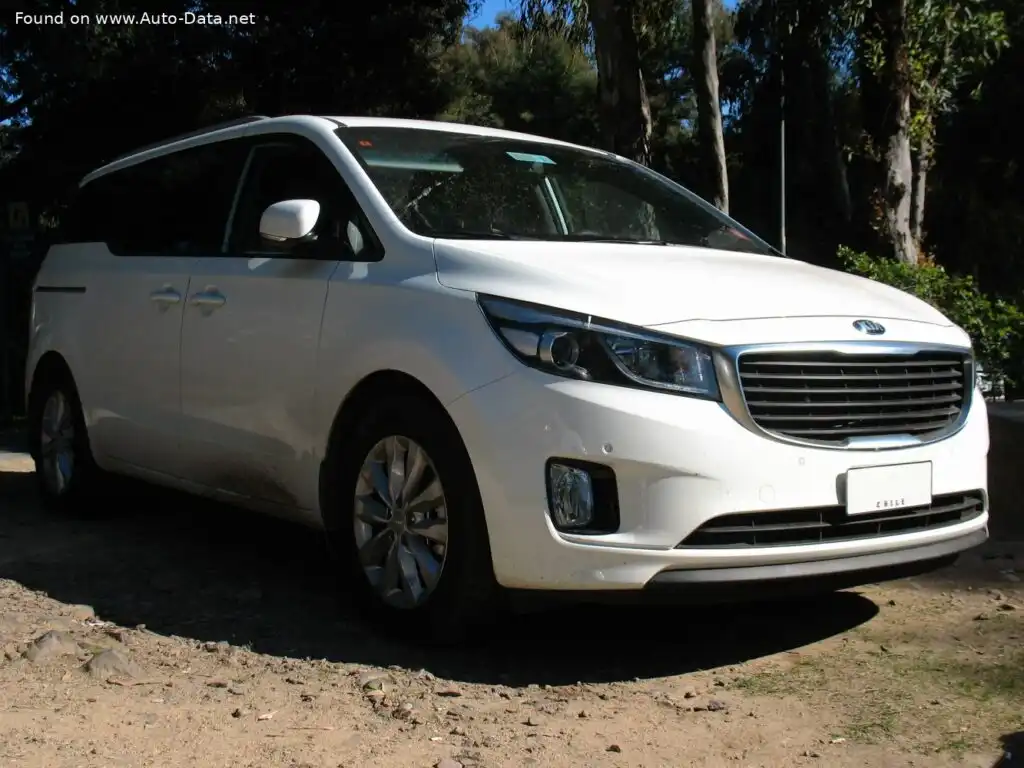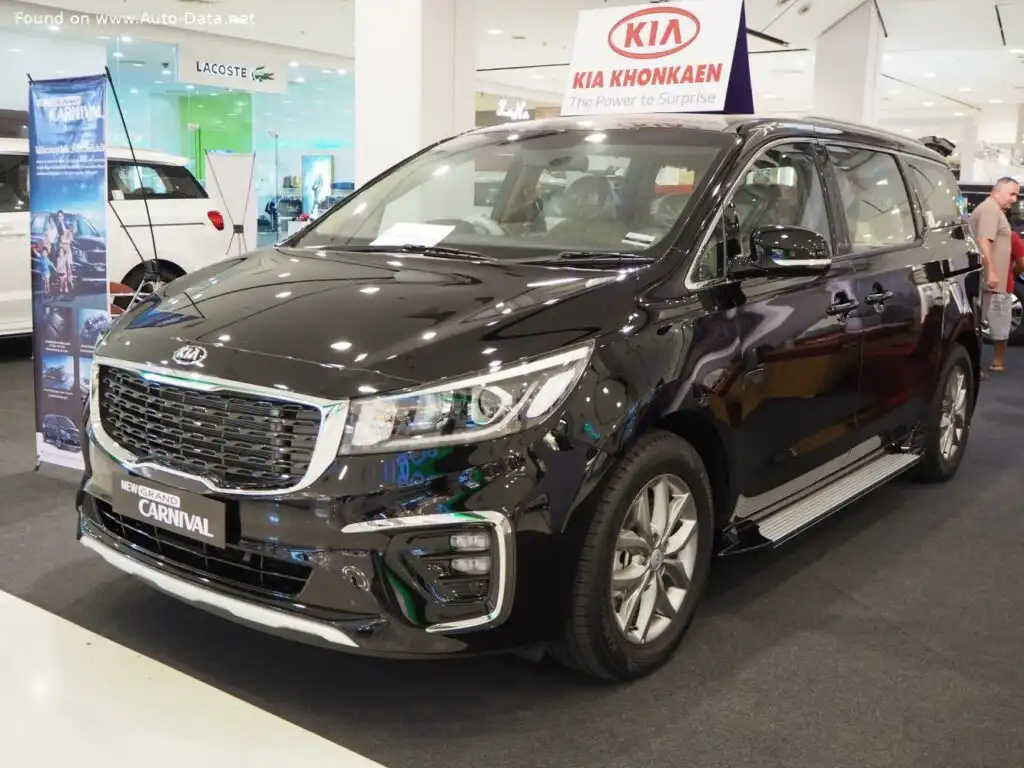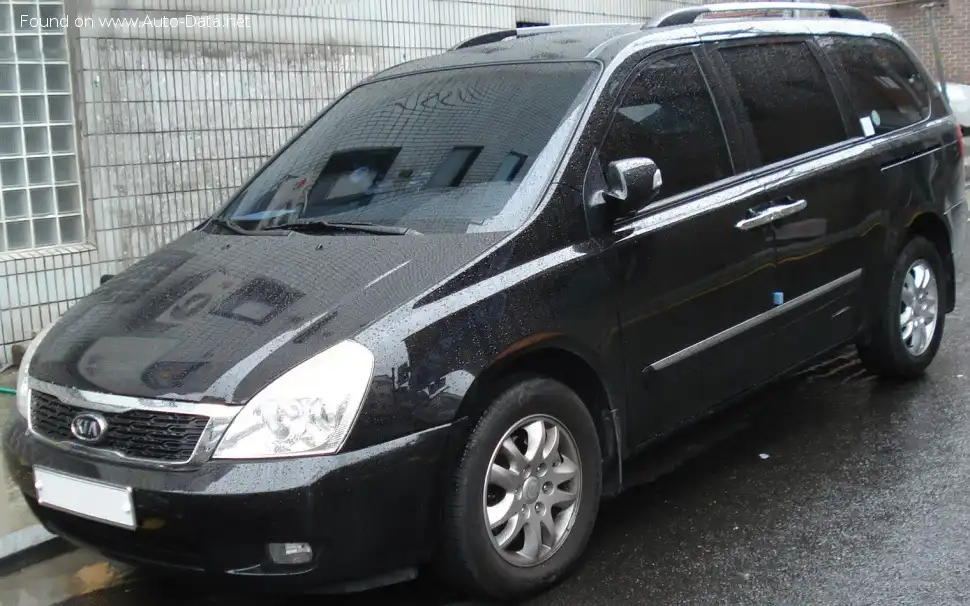
The Kia Grand Carnival II, specifically the facelifted version introduced in 2010, represented a significant step forward for Kia in the competitive minivan segment. This iteration, produced through 2014, aimed to offer a compelling blend of space, comfort, and features, particularly in markets outside of North America where larger MPVs remained popular. The 2.2 E-VGT (197 hp) Automatic variant occupied a mid-range position within the Grand Carnival lineup, offering a balance between performance, fuel efficiency, and price. It was designed to appeal to families and those requiring a versatile vehicle for both daily commuting and longer journeys.
Technical Specifications
| Brand | Kia |
| Model | Carnival |
| Generation | Grand Carnival II (facelift 2010) |
| Type (Engine) | 2.2 E-VGT (197 Hp) Automatic |
| Start of production | 2010 |
| End of production | 2014 |
| Powertrain Architecture | Internal Combustion engine |
| Body type | Minivan |
| Seats | 7 |
| Doors | 5 |
| Fuel Type | Diesel |
| Weight-to-power ratio | 10.6 kg/Hp, 94.5 Hp/tonne |
| Weight-to-torque ratio | 4.8 kg/Nm, 209.1 Nm/tonne |
| Power | 197 Hp @ 3800 rpm |
| Power per litre | 89.6 Hp/l |
| Torque | 436 Nm @ 2000 rpm (321.58 lb.-ft. @ 2000 rpm) |
| Engine layout | Front, Transverse |
| Engine displacement | 2199 cm3 (134.19 cu. in.) |
| Number of cylinders | 4 |
| Engine configuration | Inline |
| Cylinder Bore | 85.4 mm (3.36 in.) |
| Piston Stroke | 96 mm (3.78 in.) |
| Compression ratio | 16:1 |
| Number of valves per cylinder | 4 |
| Fuel injection system | Diesel Commonrail |
| Engine aspiration | Turbocharger, Intercooler |
| Valvetrain | DOHC |
| Engine oil capacity | 6.7 l (7.08 US qt | 5.9 UK qt) |
| Coolant | 9.8 l (10.36 US qt | 8.62 UK qt) |
| Kerb Weight | 2085 kg (4596.64 lbs.) |
| Trunk (boot) space – minimum | 912 l (32.21 cu. ft.) |
| Trunk (boot) space – maximum | 4007 l (141.51 cu. ft.) |
| Fuel tank capacity | 80 l (21.13 US gal | 17.6 UK gal) |
| Length | 5130 mm (201.97 in.) |
| Width | 1985 mm (78.15 in.) |
| Height | 1780 mm (70.08 in.) |
| Wheelbase | 3020 mm (118.9 in.) |
| Front track | 1685 mm (66.34 in.) |
| Rear (Back) track | 1685 mm (66.34 in.) |
| Drag coefficient (Cd) | 0.34 |
| Minimum turning circle | 12.1 m (39.7 ft.) |
| Drivetrain Architecture | The Internal combustion engine (ICE) drives the front wheels of the vehicle. |
| Drive wheel | Front wheel drive |
| Number of gears and type of gearbox | 6 gears, automatic transmission |
| Front suspension | Independent type McPherson |
| Rear suspension | Dependent spring suspension with transverse stabilizer |
| Front brakes | Ventilated discs |
| Rear brakes | Drum |
| Assisting systems | ABS (Anti-lock braking system) |
| Steering type | Steering rack and pinion |
| Tires size | 235/60 R17 |
| Wheel rims size | 17 |
Powertrain & Engine Architecture
The heart of the Grand Carnival II 2.2 E-VGT Automatic is the 2.2-liter inline-four cylinder diesel engine. This engine, often identified by engine codes like G4KD, utilizes a common rail direct injection system, delivering fuel directly into the combustion chamber at extremely high pressure. This technology, coupled with a variable geometry turbocharger (VGT) and intercooler, optimizes combustion efficiency and boosts power output. The engine features a double overhead camshaft (DOHC) valvetrain with four valves per cylinder, enhancing breathing and contributing to its 197 horsepower and 321.58 lb-ft of torque. The six-speed automatic transmission was chosen for its smooth operation and convenience, catering to the target audience who prioritized ease of driving over outright performance. This transmission was designed to handle the engine’s torque output effectively, providing reasonable acceleration and acceptable fuel economy.
Driving Characteristics
The 2.2 E-VGT Automatic Grand Carnival offered a comfortable and relaxed driving experience. While not a performance-oriented vehicle, the engine provided sufficient power for everyday driving and highway cruising. The automatic transmission, while smooth, wasn’t particularly quick to downshift, resulting in a slightly less responsive feel compared to the manual transmission options available in other Grand Carnival trims. The gear ratios were tuned for fuel efficiency and drivability, prioritizing smooth transitions over aggressive acceleration. The vehicle’s weight, approximately 4,600 pounds, was noticeable, particularly when fully loaded with passengers and cargo. However, the suspension did a reasonable job of absorbing bumps and providing a stable ride.
Equipment & Trim Levels
The 2.2 E-VGT Automatic trim typically included features such as air conditioning, power windows and locks, a basic audio system with CD player, and standard safety equipment like ABS and airbags. Higher trim levels offered upgrades like leather upholstery, a sunroof, a more advanced audio system with navigation, and parking sensors. The interior design was functional and spacious, with seating for up to seven passengers. The second-row seats often featured individual captain’s chairs for added comfort, and the third-row seats could be folded flat to maximize cargo space. The dashboard layout was straightforward and easy to use, with clearly labeled controls.
Chassis & Braking
The Grand Carnival II utilized a front-wheel-drive layout with an independent McPherson strut suspension in the front and a dependent spring suspension with a transverse stabilizer in the rear. The front suspension provided decent handling and ride comfort, while the rear suspension was designed to handle the vehicle’s load-carrying capacity. The braking system consisted of ventilated discs in the front and drum brakes in the rear. While adequate for normal driving conditions, the braking performance wasn’t particularly strong, especially when the vehicle was heavily loaded. The steering was a rack and pinion system, providing reasonable precision and feedback.
Market Reception & Comparison
The Kia Grand Carnival II 2.2 E-VGT Automatic was generally well-received by critics as a practical and affordable minivan option. It offered a good balance of space, comfort, and features for the price. Compared to the higher-powered gasoline engine options, the diesel variant provided superior fuel economy, making it a popular choice for long-distance drivers. However, some critics noted that the automatic transmission could be slow to respond and that the overall driving experience wasn’t as engaging as some of its competitors. Compared to other trims within the Grand Carnival lineup, the 2.2 E-VGT Automatic offered a more economical and fuel-efficient alternative to the more powerful gasoline engines, appealing to a different segment of the market.
Legacy
The Kia Grand Carnival II 2.2 E-VGT Automatic has proven to be a relatively reliable vehicle in the used car market. The 2.2-liter diesel engine, while requiring regular maintenance, is generally known for its durability. The automatic transmission has also proven to be fairly robust. Common issues reported by owners include wear and tear on suspension components and occasional problems with the electronic systems. Overall, the Grand Carnival II remains a popular choice for families and those seeking a spacious and versatile vehicle at an affordable price. Its blend of practicality, fuel efficiency, and reliability has ensured its continued presence on roads around the world.