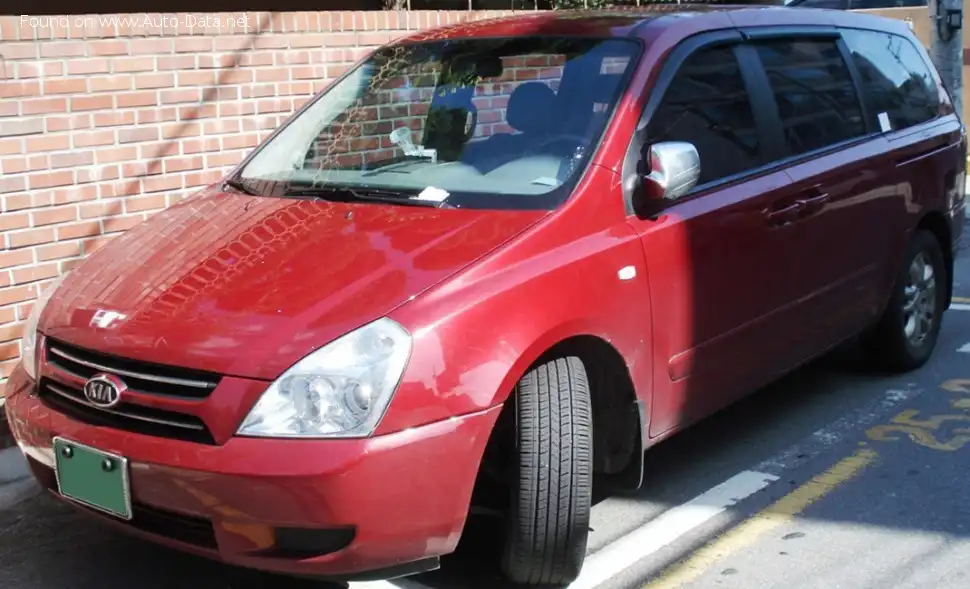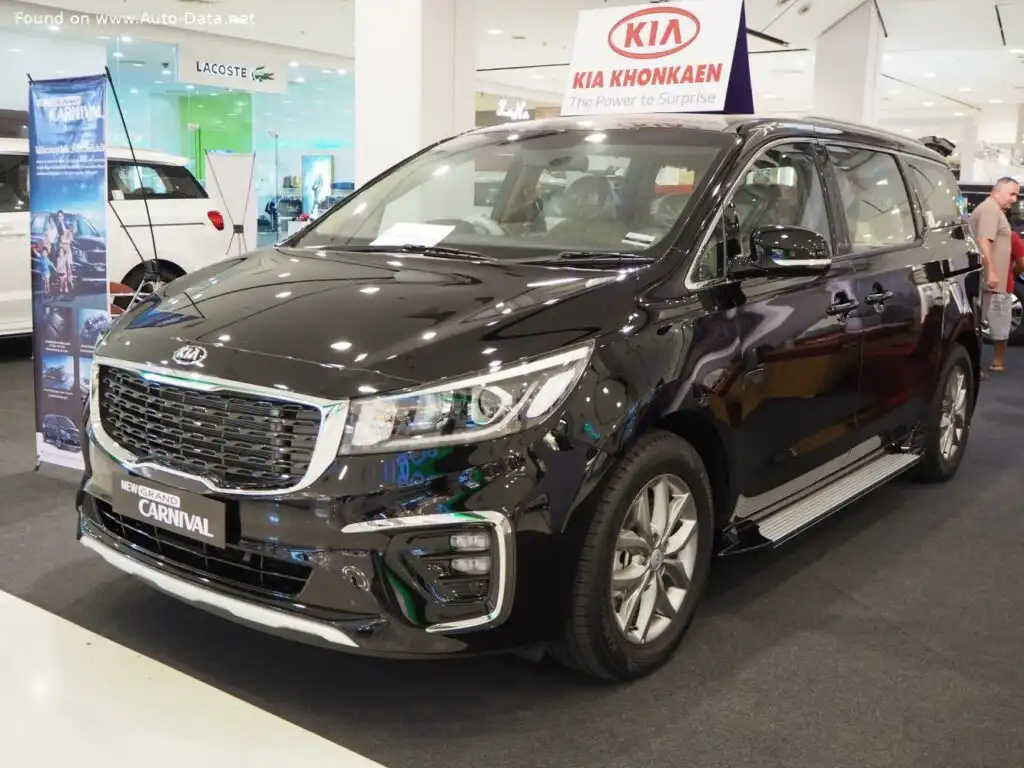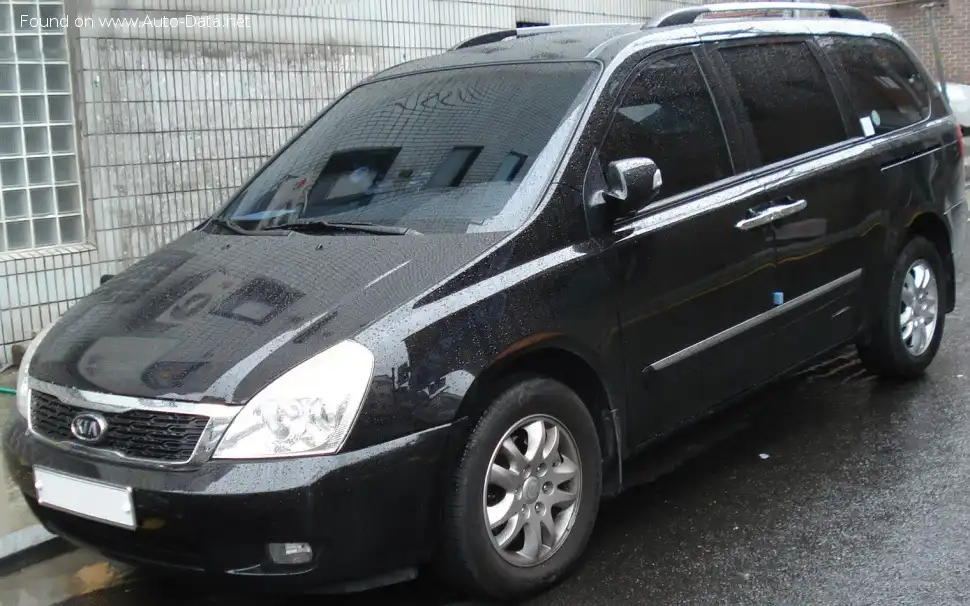
The Kia Grand Carnival II, specifically the facelifted version introduced in 2010, represented a significant step forward for Kia in the competitive minivan segment. This iteration, produced through 2014, aimed to provide a compelling blend of space, comfort, and practicality, particularly for families. The 2.9 CRDi variant with an automatic transmission was a key offering, positioned as a mid-range option balancing fuel efficiency with adequate performance for everyday driving needs. It was primarily marketed towards families and those requiring a versatile vehicle capable of carrying passengers and cargo. This model was largely focused on markets outside of North America, finding success in Asia, Australia, and parts of Europe.
Technical Specifications
| Brand | Kia |
| Model | Carnival |
| Generation | Grand Carnival II (facelift 2010) |
| Type (Engine) | 2.9 CRDi (185 Hp) Automatic |
| Start of production | 2010 |
| End of production | 2014 |
| Powertrain Architecture | Internal Combustion engine |
| Body type | Minivan |
| Seats | 7 |
| Doors | 5 |
| Fuel Type | Diesel |
| Weight-to-power ratio | 11.5 kg/Hp, 86.8 Hp/tonne |
| Weight-to-torque ratio | 6.2 kg/Nm, 160.9 Nm/tonne |
| Power | 185 Hp @ 3800 rpm |
| Power per litre | 63.7 Hp/l |
| Torque | 343 Nm @ 1750-3500 rpm (252.98 lb.-ft. @ 1750-3500 rpm) |
| Engine layout | Front, Transverse |
| Engine displacement | 2902 cm3 (177.09 cu. in.) |
| Number of cylinders | 4 |
| Engine configuration | Inline |
| Cylinder Bore | 97.1 mm (3.82 in.) |
| Piston Stroke | 98 mm (3.86 in.) |
| Compression ratio | 18:1 |
| Number of valves per cylinder | 4 |
| Fuel injection system | Diesel Commonrail |
| Engine aspiration | Turbocharger, Intercooler |
| Valvetrain | DOHC |
| Engine oil capacity | 6.6 l (6.97 US qt | 5.81 UK qt) |
| Coolant | 10 l (10.57 US qt | 8.8 UK qt) |
| Kerb Weight | 2132 kg (4700.26 lbs.) |
| Max. weight | 2920 kg (6437.5 lbs.) |
| Max load | 788 kg (1737.24 lbs.) |
| Trunk (boot) space – minimum | 912 l (32.21 cu. ft.) |
| Trunk (boot) space – maximum | 4007 l (141.51 cu. ft.) |
| Fuel tank capacity | 80 l (21.13 US gal | 17.6 UK gal) |
| Length | 5130 mm (201.97 in.) |
| Width | 1985 mm (78.15 in.) |
| Height | 1775 mm (69.88 in.) |
| Wheelbase | 3020 mm (118.9 in.) |
| Front track | 1685 mm (66.34 in.) |
| Rear (Back) track | 1685 mm (66.34 in.) |
| Drag coefficient (Cd) | 0.34 |
| Minimum turning circle | 12.1 m (39.7 ft.) |
| Drivetrain Architecture | The Internal combustion engine (ICE) drives the front wheels of the vehicle. |
| Drive wheel | Front wheel drive |
| Number of gears | 5 |
| Gearbox type | automatic transmission |
| Front suspension | Independent type McPherson |
| Rear suspension | Dependent spring suspension with transverse stabilizer |
| Front brakes | Ventilated discs |
| Rear brakes | Drum |
| Assisting systems | ABS (Anti-lock braking system) |
| Steering type | Steering rack and pinion |
| Tires size | 235/60 R17 |
| Wheel rims size | 17 |
Powertrain & Engine Architecture
The heart of the 2010-2014 Kia Grand Carnival II 2.9 CRDi Automatic is the 2.9-liter inline-four cylinder diesel engine. This engine, often identified by internal codes depending on the specific market, utilizes a common rail direct injection system for optimized fuel delivery and combustion efficiency. The engine benefits from a turbocharger and intercooler, which work in tandem to boost power output and improve torque across a broad RPM range. The DOHC (Double Overhead Camshaft) valvetrain further contributes to efficient engine breathing. The 5-speed automatic transmission was chosen for its balance of smoothness and cost-effectiveness, although it wasn’t the most advanced unit available at the time. It was designed to provide comfortable shifts for everyday driving, prioritizing usability over outright performance.
Driving Characteristics
The 185 horsepower and 343 Nm (253 lb-ft) of torque delivered by the 2.9 CRDi engine provided adequate, though not exhilarating, performance for the Grand Carnival. The automatic transmission, while smooth, did impact acceleration compared to the available manual transmission options. The gear ratios were tuned for fuel economy and relaxed cruising, meaning the engine often operated at lower RPMs during normal driving conditions. This resulted in a comfortable ride but could feel strained when fully loaded or attempting quick overtaking maneuvers. Compared to higher-output versions of the Carnival, this variant prioritized fuel efficiency and lower running costs over outright speed.
Equipment & Trim Levels
The 2.9 CRDi Automatic trim typically included features such as air conditioning, power windows and locks, a basic audio system, and standard safety equipment like ABS. Higher trim levels added features like alloy wheels, a more sophisticated audio system with navigation, leather upholstery, and additional comfort features. Interior upholstery was generally cloth on the base models, with leather options available as upgrades. The dashboard layout was functional and straightforward, prioritizing ease of use over stylistic flair. Optional extras often included a sunroof, rear parking sensors, and upgraded sound systems.
Chassis & Braking
The Grand Carnival II utilized a McPherson strut independent suspension setup at the front, providing a comfortable ride and reasonable handling. The rear suspension employed a dependent spring suspension with a transverse stabilizer, which was a cost-effective solution for managing the vehicle’s weight and providing stability. The braking system featured ventilated discs at the front and drum brakes at the rear. While adequate for normal driving conditions, the rear drum brakes were a point of criticism compared to the all-disc setups found on some competitors. The steering was rack and pinion, offering reasonable precision and feedback.
Market Reception & Comparison
The Kia Grand Carnival II 2.9 CRDi Automatic was generally well-received as a practical and affordable family minivan. Critics praised its spacious interior, comfortable ride, and competitive pricing. However, the automatic transmission was sometimes criticized for being somewhat dated and lacking the responsiveness of more modern units. Fuel economy was considered reasonable for a vehicle of its size and weight. Compared to other trims in the Carnival lineup, the 2.9 CRDi Automatic offered a good balance between performance, fuel efficiency, and cost. It was often seen as a sensible choice for families prioritizing practicality over outright performance.
Legacy
The 2.9 CRDi engine, while not known for being exceptionally high-performance, proved to be relatively reliable when properly maintained. Common issues included turbocharger wear and potential problems with the fuel injection system. The automatic transmission, while generally durable, could experience issues with solenoid failure or valve body wear over time. Today, the 2010-2014 Kia Grand Carnival II 2.9 CRDi Automatic represents a relatively affordable option in the used minivan market. Its spacious interior and practical features continue to appeal to families, but potential buyers should be aware of the potential maintenance issues associated with the engine and transmission. Overall, it remains a viable option for those seeking a dependable and versatile people carrier.