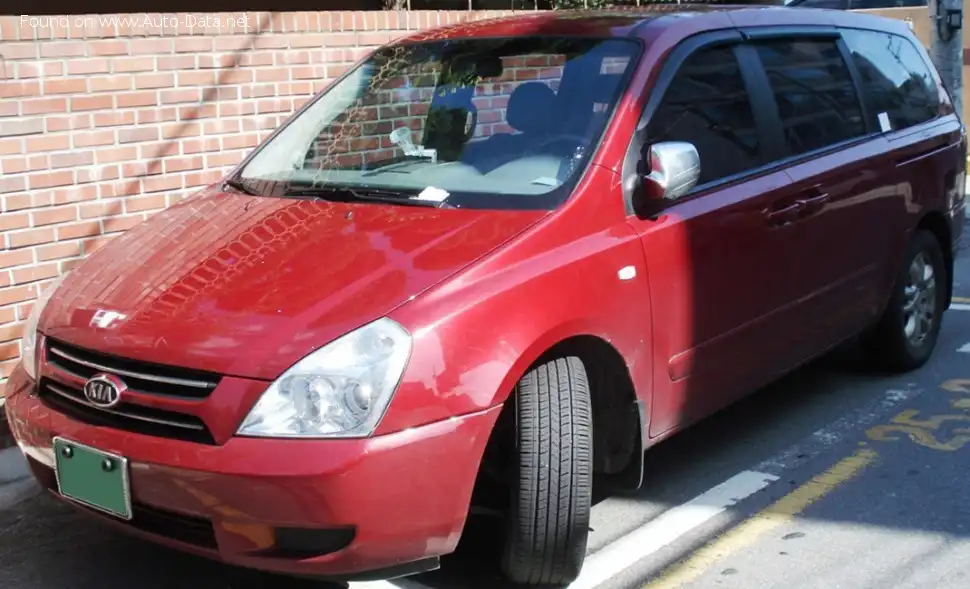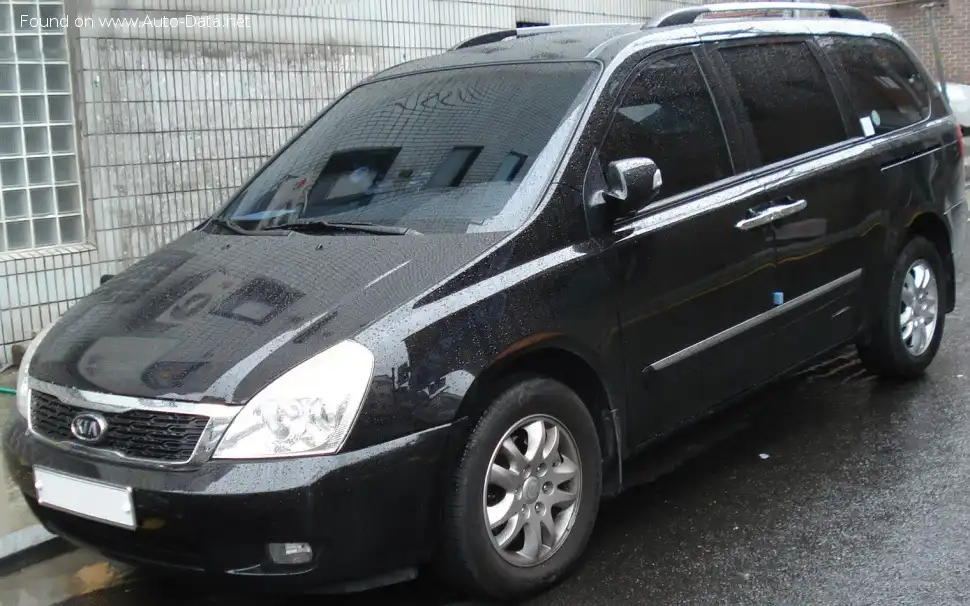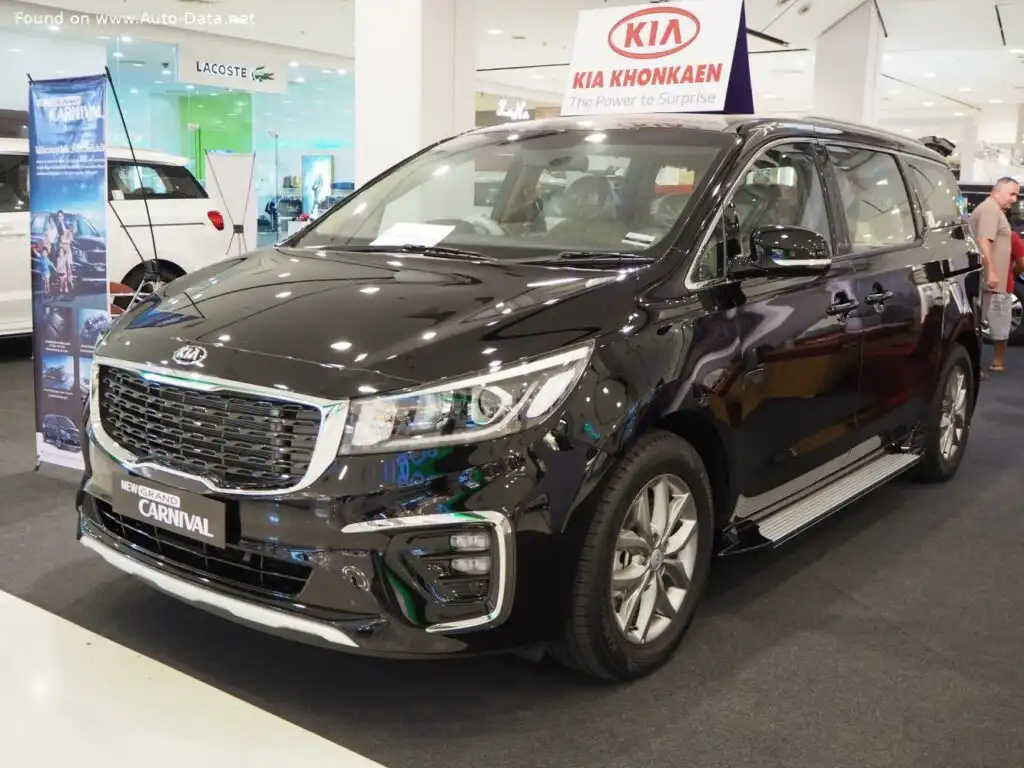
The Kia Grand Carnival III, specifically the 2.2 CRDi variant producing 200 horsepower and paired with a six-speed automatic transmission, was a key model in Kia’s lineup from 2014 to 2018. Positioned as a mid-to-upper trim level within the third generation of the Carnival (known as the Sedona in North America), this version aimed to balance fuel efficiency with respectable performance for a large family vehicle. It served as a popular choice for families needing substantial passenger and cargo space, offering a more refined experience than the base engine options while remaining more accessible than potential future, more luxurious trims. The Grand Carnival competed directly with other large MPVs like the Honda Odyssey, Toyota Sienna, and Chrysler Pacifica.
Technical Specifications
| Brand | Kia |
| Model | Carnival |
| Generation | Grand Carnival III |
| Type (Engine) | 2.2 CRDi (200 Hp) Automatic |
| Start of production | 2014 |
| End of production | 2018 |
| Powertrain Architecture | Internal Combustion engine |
| Body type | Minivan |
| Seats | 8-11 |
| Doors | 5 |
| Fuel consumption (urban) | 9.7 l/100 km (24.2 US mpg) |
| Fuel consumption (extra urban) | 6.4 l/100 km (36.8 US mpg) |
| Fuel consumption (combined) | 7.7 l/100 km (30.5 US mpg) |
| CO2 emissions | 199 g/km |
| Fuel Type | Diesel |
| Acceleration 0 – 100 km/h | 13.6 sec |
| Acceleration 0 – 62 mph | 13.6 sec |
| Acceleration 0 – 60 mph | 12.9 sec |
| Maximum speed | 190 km/h (118.06 mph) |
| Emission standard | Euro 5 |
| Weight-to-power ratio | 10.1 kg/Hp |
| Weight-to-torque ratio | 4.6 kg/Nm |
| Power | 200 Hp @ 3800 rpm |
| Torque | 440 Nm @ 1750-2750 rpm (324.53 lb.-ft.) |
| Engine layout | Front, Longitudinal |
| Engine Model/Code | D4HB |
| Engine displacement | 2199 cm3 (134.19 cu. in.) |
| Number of cylinders | 4 |
| Engine configuration | Inline |
| Cylinder Bore | 85.4 mm (3.36 in.) |
| Piston Stroke | 96 mm (3.78 in.) |
| Compression ratio | 16:1 |
| Number of valves per cylinder | 4 |
| Fuel injection system | Diesel Commonrail |
| Engine aspiration | Turbocharger, Intercooler |
| Engine oil capacity | 6.3 l (6.66 US qt | 5.54 UK qt) |
| Coolant capacity | 12.1 l (12.79 US qt | 10.65 UK qt) |
| Kerb Weight | 2024-2102 kg (4462.16 – 4634.12 lbs.) |
| Max. weight | 3045 kg (6713.08 lbs.) |
| Max load | 943-1021 kg (2078.96 – 2250.92 lbs.) |
| Trunk (boot) space – minimum | 359 l (12.68 cu. ft.) |
| Trunk (boot) space – maximum | 2335 l (82.46 cu. ft.) |
| Length | 5115 mm (201.38 in.) |
| Width | 1985 mm (78.15 in.) |
| Height | 1740-1767 mm (68.5 – 69.57 in.) |
| Wheelbase | 3060 mm (120.47 in.) |
| Front track | 1745 mm (68.7 in.) |
| Rear track | 1752 mm (68.98 in.) |
| Front overhang | 955 mm (37.6 in.) |
| Rear overhang | 1100 mm (43.31 in.) |
| Ride height (ground clearance) | 171 mm (6.73 in.) |
| Minimum turning circle | 11.2 m (36.75 ft.) |
| Drivetrain | Front wheel drive |
| Number of gears | 6 |
| Gearbox type | Automatic transmission |
| Front suspension | Independent, McPherson with coil spring and anti-roll bar |
| Rear suspension | Double wishbone |
| Front brakes | Ventilated discs |
| Rear brakes | Disc |
| Assisting systems | ABS (Anti-lock braking system) |
| Steering type | Steering rack and pinion |
| Power steering | Hydraulic |
| Tires size | 235/65 R17 |
| Wheel rims size | 17 |
INTRODUCTION
The Kia Grand Carnival III, launched in 2014, represented a significant step forward for Kia in the MPV segment. Built on the platform designated as the KA4, this generation offered increased space, improved refinement, and a wider range of features compared to its predecessors. The 2.2 CRDi 200 hp Automatic variant was a popular choice, particularly in markets outside of North America where diesel engines were more prevalent. It aimed to provide a balance between fuel economy, performance, and comfort, making it suitable for both long-distance family trips and daily commuting. This model year saw updates to styling and technology, solidifying the Grand Carnival’s position as a competitive MPV.
Powertrain & Engine Architecture
At the heart of the 2.2 CRDi variant lies the D4HB engine, a 2.2-liter inline-four cylinder diesel engine. This engine utilizes a common-rail direct injection system, delivering fuel at extremely high pressure for optimized combustion. The D4HB is equipped with a variable geometry turbocharger (VGT) and an intercooler, enhancing both power and torque output. The engine produces 200 horsepower at 3800 rpm and a substantial 440 Nm (324.53 lb.-ft.) of torque between 1750 and 2750 rpm. This broad torque curve is particularly beneficial for a large vehicle like the Grand Carnival, providing strong pulling power at lower engine speeds. The engine also features a 16:1 compression ratio and 4 valves per cylinder. The six-speed automatic transmission, while not known for being the most cutting-edge, was chosen for its reliability and smooth operation. It’s a conventional torque converter automatic, prioritizing comfort over outright performance.
Driving Characteristics
The 2.2 CRDi Automatic Grand Carnival delivers a comfortable and composed driving experience. While not a sporty vehicle, the engine’s torque output provides adequate acceleration for everyday driving and highway merging. The 0-60 mph time of around 12.9 seconds reflects its focus on practicality rather than speed. The automatic transmission shifts smoothly, although it can sometimes feel hesitant during quick acceleration. The gear ratios are tuned for fuel efficiency and relaxed cruising, rather than aggressive performance. Compared to the base engine options, the 2.2 CRDi offers a noticeable improvement in power and responsiveness. However, it doesn’t match the performance of potential higher-output gasoline engines (if offered in certain markets). The front-wheel-drive configuration contributes to predictable handling, but it’s not designed for spirited driving.
Equipment & Trim Levels
The 2.2 CRDi Automatic trim typically included a generous array of standard features. These often included automatic climate control, power windows and locks, a touchscreen infotainment system with Bluetooth connectivity, and rear parking sensors. Higher trim levels added features like leather upholstery, a sunroof, and a more advanced audio system. Safety features such as ABS, electronic stability control, and multiple airbags were standard across the range. The interior design was functional and spacious, with comfortable seating for up to eight passengers. Optional extras could include a navigation system, a rearview camera, and upgraded alloy wheels.
Chassis & Braking
The Grand Carnival III utilizes a McPherson strut front suspension and a double wishbone rear suspension, providing a comfortable ride quality. The suspension is tuned to absorb bumps and irregularities in the road, making it well-suited for long journeys. The front brakes are ventilated discs, while the rear brakes are solid discs, providing adequate stopping power for the vehicle’s weight. Hydraulic power steering offers a light and easy steering feel. The chassis is designed to prioritize stability and comfort, rather than sporty handling. Stabilizer bars are included both front and rear to reduce body roll during cornering.
Market Reception & Comparison
The Kia Grand Carnival III 2.2 CRDi Automatic was generally well-received by automotive critics. It was praised for its spacious interior, comfortable ride, and good fuel economy. The diesel engine was appreciated for its torque and efficiency, particularly in markets where diesel fuel was readily available and affordable. Compared to other MPVs in its class, the Grand Carnival offered a competitive level of features and value for money. However, some critics noted that the automatic transmission could be slow to respond at times, and the interior materials weren’t as premium as some of its rivals. Fuel economy figures of around 30.5 US mpg combined were considered respectable for a vehicle of its size and weight.
Legacy
The Kia Grand Carnival III 2.2 CRDi Automatic has proven to be a relatively reliable vehicle in the long term. The D4HB engine is known for its durability, although regular maintenance is essential to prevent issues. Common maintenance items include oil changes, filter replacements, and timing belt replacement (if applicable). The automatic transmission is generally reliable, but it’s important to ensure that the transmission fluid is changed at the recommended intervals. In the used car market, these Grand Carnivals represent a good value proposition for families needing a spacious and practical MPV. They continue to be popular choices for those seeking a comfortable and reliable vehicle for long-distance travel and everyday use.