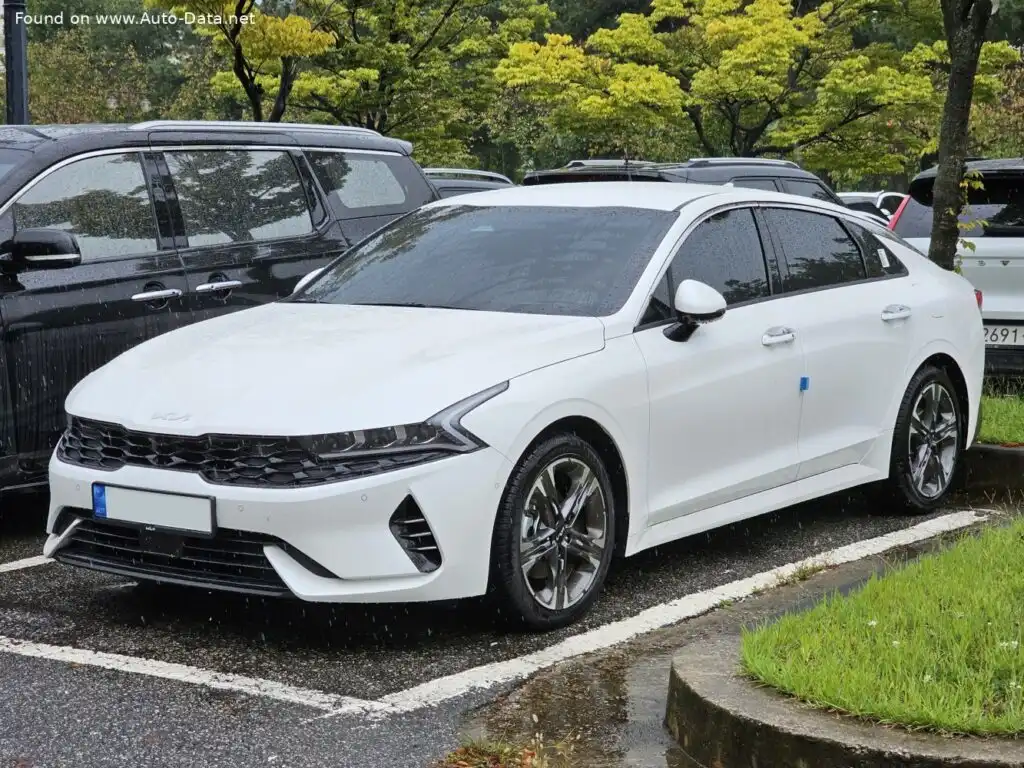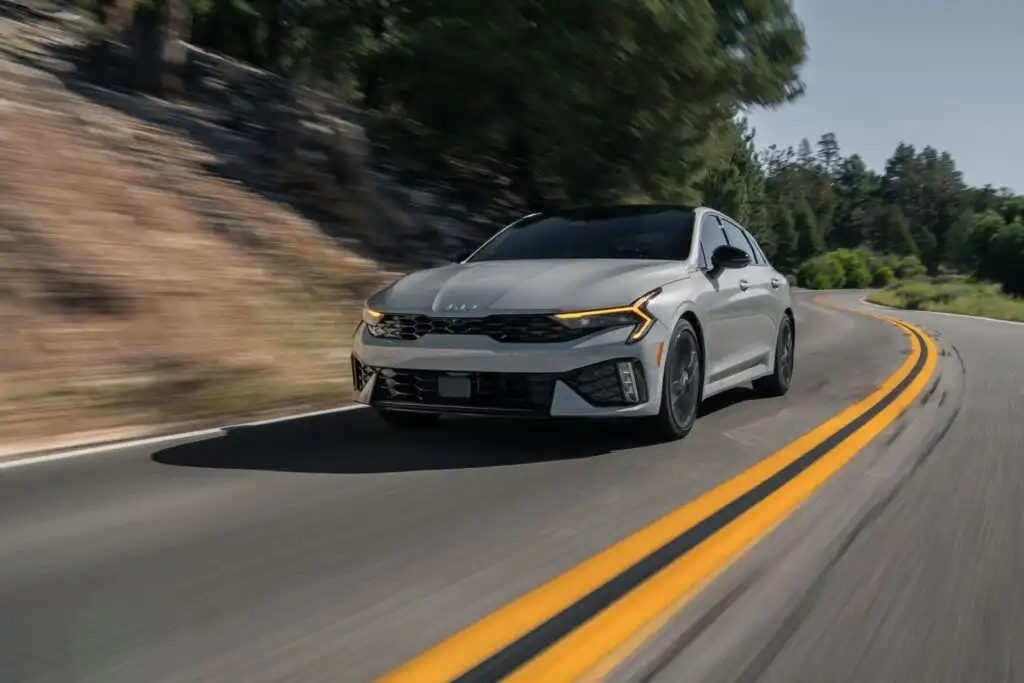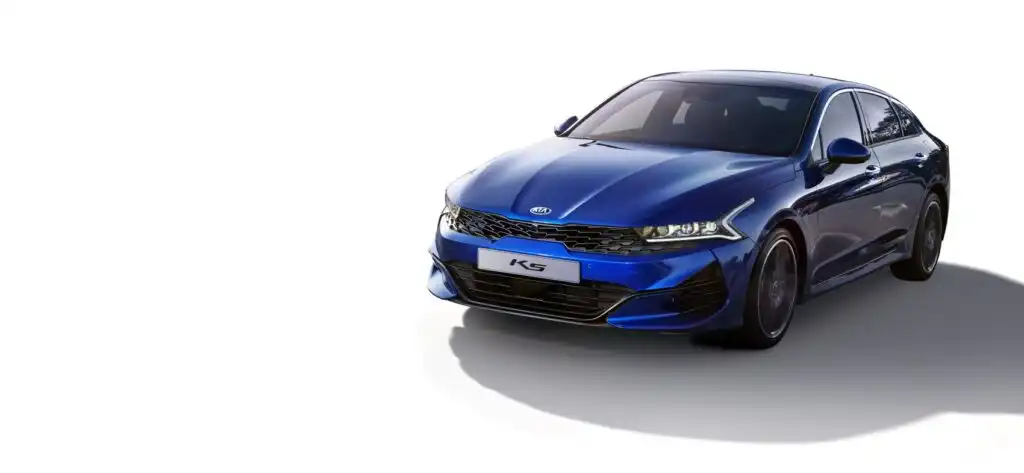
The Kia K5 2.0 LPI Automatic, produced from 2020 through October 2023, represents a significant offering within the fourth generation of the Kia K5 (known as the Optima in some markets). This variant was primarily aimed at the South Korean domestic market, utilizing a Liquefied Petroleum Gas (LPG) fueled engine. Positioned as a fuel-efficient and economically sensible option within the K5 lineup, it offered a balance between practicality and reasonable performance. The K5, overall, aimed to elevate Kia’s presence in the mid-size sedan segment, competing with established players like the Toyota Camry, Honda Accord, and Hyundai Sonata.
Technical Specifications
| Brand | Kia |
| Model | K5 |
| Generation | K5 |
| Type (Engine) | 2.0 LPI (146 Hp) Automatic |
| Start of production | 2020 |
| End of production | October, 2023 |
| Powertrain Architecture | Internal Combustion engine |
| Body type | Sedan, Fastback |
| Seats | 5 |
| Doors | 4 |
| Fuel consumption (urban) | 11.1-11.3 l/100 km (21.2 – 20.8 US mpg) |
| Fuel consumption (extra urban) | 8.3-8.5 l/100 km (28.3 – 27.7 US mpg) |
| Fuel consumption (combined) | 9.8-10 l/100 km (24 – 23.5 US mpg) |
| CO2 emissions | 128-131 g/km |
| Fuel Type | LPG |
| Weight-to-power ratio | 9.7 kg/Hp |
| Weight-to-torque ratio | 7.4 kg/Nm |
| Power | 146 Hp @ 6000 rpm |
| Power per litre | 73 Hp/l |
| Torque | 191 Nm @ 4200 rpm (140.87 lb.-ft. @ 4200 rpm) |
| Engine layout | Front, Transverse |
| Engine displacement | 1999 cm3 (121.99 cu. in.) |
| Number of cylinders | 4 |
| Engine configuration | Inline |
| Number of valves per cylinder | 4 |
| Fuel injection system | Multi-port manifold injection |
| Engine aspiration | Naturally aspirated engine |
| Kerb Weight | 1410-1425 kg (3108.52 – 3141.59 lbs.) |
| Length | 4905 mm (193.11 in.) |
| Width | 1860 mm (73.23 in.) |
| Height | 1445 mm (56.89 in.) |
| Wheelbase | 2850 mm (112.2 in.) |
| Front track | 1623-1633 mm (63.9 – 64.29 in.) |
| Rear track | 1630-1640 mm (64.17 – 64.57 in.) |
| Drivetrain Architecture | Front wheel drive |
| Number of gears | 6 |
| Gearbox type | Automatic transmission |
| Front suspension | Independent type McPherson |
| Rear suspension | Independent multi-link suspension |
| Front brakes | Ventilated discs |
| Rear brakes | Disc |
| Steering type | Steering rack and pinion |
| Power steering | Electric Steering |
| Tires size | 205/65 R16; 215/55 R17 |
| Wheel rims size | 16; 17 |
Powertrain & Engine Architecture
The heart of the K5 2.0 LPI is a 1.999-liter inline-four cylinder engine specifically designed to run on Liquefied Petroleum Gas (LPG). This engine, while sharing a basic architecture with Kia’s gasoline counterparts, incorporates unique components to handle the different fuel delivery requirements of LPG. The engine utilizes a multi-point fuel injection system, delivering fuel directly into the intake ports. The engine’s valvetrain features four valves per cylinder, contributing to improved breathing and efficiency. The 6-speed automatic transmission was a standard feature, chosen for its smooth operation and suitability for everyday driving. This transmission is a conventional torque-converter automatic, prioritizing comfort and ease of use over outright performance. The engine code is not widely publicized outside of South Korea, but it is a derivative of the Kia/Hyundai Smartstream engine family.
Driving Characteristics
The K5 2.0 LPI Automatic delivers a comfortable and predictable driving experience. With 146 horsepower and 191 Nm (140.87 lb-ft) of torque, acceleration is adequate for typical commuting and highway driving, but it’s not particularly sporty. The automatic transmission is tuned for fuel efficiency, with gear changes occurring smoothly and at relatively low RPMs. Compared to the more powerful gasoline-powered K5 variants, the LPI model feels noticeably less responsive, especially during overtaking maneuvers. The 6-speed automatic transmission’s gear ratios are optimized for fuel economy rather than rapid acceleration. The LPI version prioritizes a relaxed driving style, making it well-suited for drivers who value comfort and fuel savings over performance.
Equipment & Trim Levels
The K5 2.0 LPI Automatic typically came with a respectable level of standard equipment. Features included air conditioning, power windows and locks, a basic audio system, and standard safety features like ABS and airbags. Higher trim levels offered upgrades such as leather upholstery, a larger touchscreen infotainment system, a rearview camera, and various driver-assistance technologies. Interior upholstery was typically cloth on the base models, with leather options available on higher trims. Dashboard configurations were consistent across the K5 range, featuring a modern and user-friendly design. Optional extras included a sunroof, premium audio system, and advanced safety features like lane departure warning and automatic emergency braking.
Chassis & Braking
The K5 2.0 LPI utilizes a front-wheel-drive layout with independent suspension on all four corners. The front suspension employs a McPherson strut design, while the rear features a multi-link setup. This suspension configuration provides a good balance between ride comfort and handling. Braking duties are handled by ventilated discs at the front and solid discs at the rear. The braking system is assisted by ABS (Anti-lock Braking System), ensuring safe and controlled stopping power. Stabilizer bars are fitted to both the front and rear axles to reduce body roll during cornering. The chassis was tuned to accommodate the slightly different weight distribution associated with the LPG fuel system.
Market Reception & Comparison
The K5 2.0 LPI Automatic was well-received in the South Korean market as a practical and economical choice. Critics praised its fuel efficiency and comfortable ride, but noted its lack of sporty performance. Compared to the gasoline-powered K5 variants, the LPI model offered lower running costs due to the lower price of LPG fuel. However, it also delivered less power and acceleration. The LPI version was often seen as a sensible option for families and commuters who prioritized fuel economy and reliability over driving excitement. Its fuel economy figures of around 24-23.5 US mpg combined were competitive with other mid-size sedans in the Korean market.
Legacy
The Kia K5 2.0 LPI Automatic, while not widely exported outside of South Korea, represents an important part of Kia’s strategy to offer diverse powertrain options to meet the specific needs of different markets. The engine itself has proven to be relatively reliable, with few widespread issues reported. On the used car market in South Korea, these models are generally sought after for their fuel efficiency and affordability. The longevity of the LPG system is dependent on proper maintenance, including regular inspections of the fuel lines and regulator. As LPG infrastructure evolves, the K5 2.0 LPI continues to offer a viable and economical transportation option for those seeking a mid-size sedan.