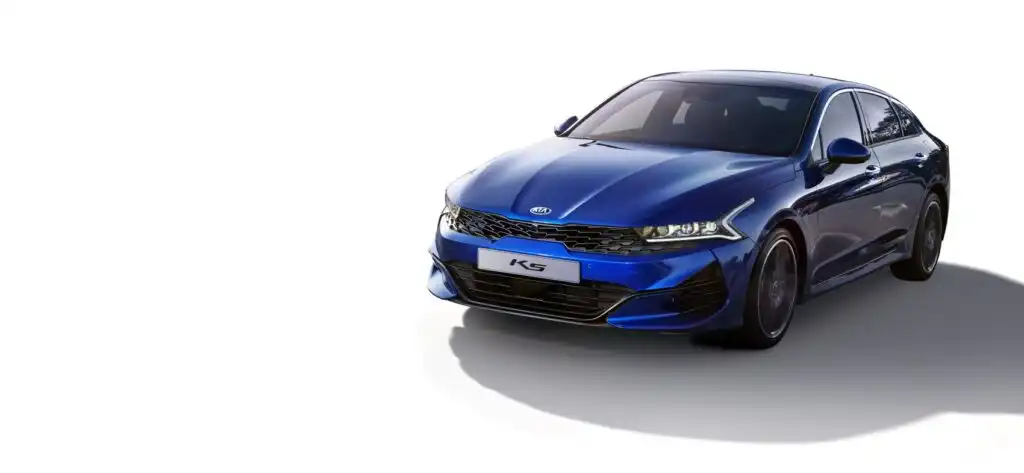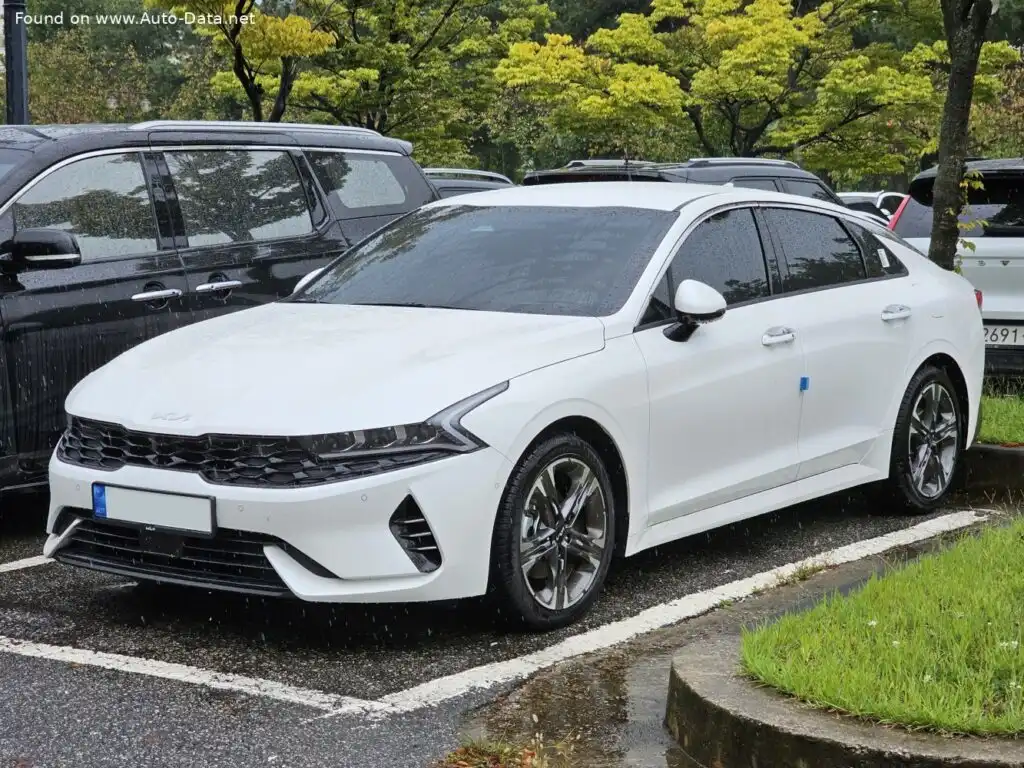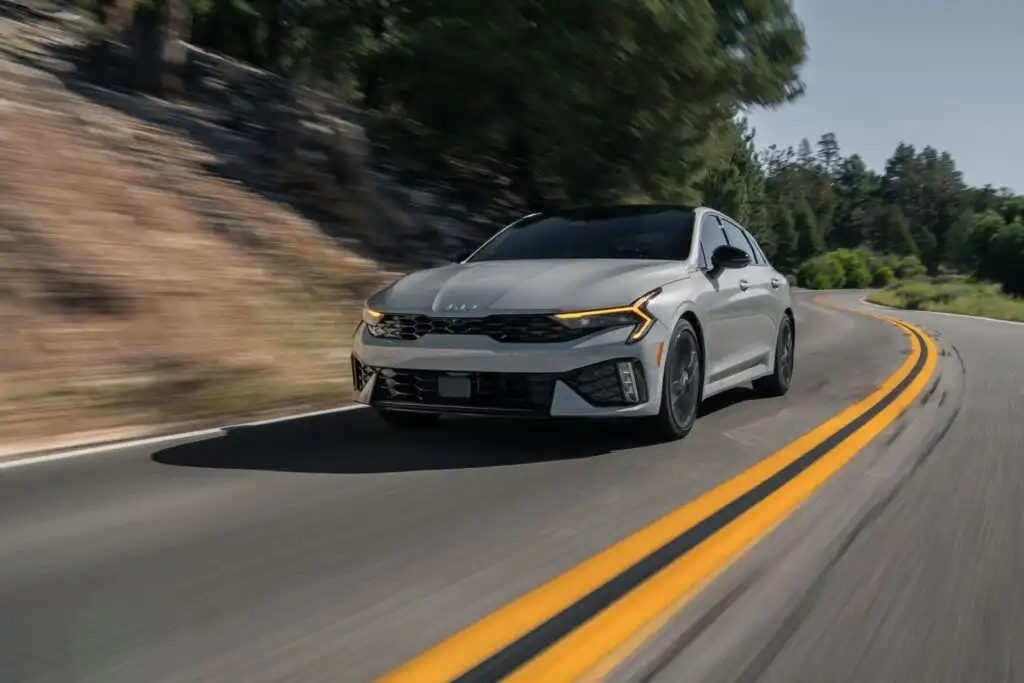
The Kia K5, specifically the 2.0-liter (160 horsepower) variant with an automatic transmission, represents a key offering in Kia’s mid-size sedan lineup. Introduced with the facelift in October 2023, this version of the K5 (internally designated as a refresh of the fifth generation, introduced in 2020) aims to balance affordability, fuel efficiency, and modern features within the competitive American sedan market. Positioned as a mainstream trim, it sits below the higher-performance GT and turbocharged options, targeting buyers prioritizing value and everyday usability. The K5, replacing the Optima, was designed to appeal to a younger demographic with its more aggressive styling and technology integration.
Technical Specifications
| Brand | Kia |
| Model | K5 |
| Generation | K5 (facelift 2023) |
| Type (Engine) | 2.0 (160 Hp) Automatic |
| Start of production | October, 2023 |
| Powertrain Architecture | Internal Combustion engine |
| Body type | Sedan, Fastback |
| Seats | 5 |
| Doors | 4 |
| Fuel consumption (urban) | 8.9-9.2 l/100 km (26.4 – 25.6 US mpg) |
| Fuel consumption (extra urban) | 6.8-7.1 l/100 km (34.6 – 33.1 US mpg) |
| Fuel consumption (combined) | 7.9-8.2 l/100 km (29.8 – 28.7 US mpg) |
| CO2 emissions | 132-137 g/km |
| Fuel Type | Petrol (Gasoline) |
| Weight-to-power ratio | 9 kg/Hp, 111.5 Hp/tonne |
| Weight-to-torque ratio | 7.3 kg/Nm, 136.6 Nm/tonne |
| Power | 160 Hp @ 6500 rpm |
| Power per litre | 80 Hp/l |
| Torque | 196 Nm @ 4800 rpm (144.56 lb.-ft. @ 4800 rpm) |
| Engine layout | Front, Transverse |
| Engine Model/Code | Smartstream |
| Engine displacement | 1999 cm3 (121.99 cu. in.) |
| Number of cylinders | 4 |
| Engine configuration | Inline |
| Number of valves per cylinder | 4 |
| Fuel injection system | Multi-port manifold injection |
| Engine aspiration | Naturally aspirated engine |
| Engine systems | Start & Stop System |
| Kerb Weight | 1435-1455 kg (3163.63 – 3207.73 lbs.) |
| Length | 4905 mm (193.11 in.) |
| Width | 1860 mm (73.23 in.) |
| Height | 1445 mm (56.89 in.) |
| Wheelbase | 2850 mm (112.2 in.) |
| Front track | 1610-1623 mm (63.39 – 63.9 in.) |
| Rear track | 1617-1630 mm (63.66 – 64.17 in.) |
| Drivetrain Architecture | Front wheel drive |
| Number of gears and type of gearbox | 6 gears, automatic transmission |
| Front suspension | Independent type McPherson |
| Rear suspension | Independent multi-link suspension |
| Front brakes | Ventilated discs |
| Rear brakes | Disc |
| Assisting systems | ABS (Anti-lock braking system) |
| Steering type | Steering rack and pinion |
| Power steering | Electric Steering |
| Wheel rims size | 17; 18 |
Powertrain & Engine Architecture
The K5 2.0 utilizes Kia’s Smartstream G2.0 engine, a naturally aspirated inline-four cylinder powerplant. This engine employs multi-point fuel injection and a dual continuously variable valve timing (CVVT) system to optimize efficiency and power delivery. The engine’s architecture prioritizes a balance between responsiveness and fuel economy, rather than outright performance. The 6-speed automatic transmission is a conventional torque-converter type, chosen for its smoothness and reliability. While not offering the rapid shifts of a dual-clutch transmission, it provides a comfortable driving experience suitable for everyday commuting. The transmission is tuned for fuel efficiency, with taller gear ratios in the higher gears.
Driving Characteristics
The 160 horsepower and 196 Nm (144.56 lb-ft) of torque delivered by the 2.0-liter engine provide adequate, but not exhilarating, performance. Acceleration from 0 to 60 mph is estimated to be around 9.5 seconds. The automatic transmission contributes to a smooth and predictable driving experience. Compared to the turbocharged 1.6-liter or the GT model, the 2.0-liter feels less urgent in its acceleration. However, it offers a more linear power delivery, making it easier to modulate in traffic. The transmission’s shift points are generally well-chosen, but can sometimes feel hesitant during quick overtaking maneuvers. The weight-to-power ratio of 9 kg/Hp results in a noticeable difference in responsiveness compared to lighter, more powerful variants.
Equipment & Trim Levels
The 2.0-liter K5 typically comes standard with a respectable array of features. These include an 8-inch touchscreen infotainment system with Apple CarPlay and Android Auto compatibility, a suite of driver-assistance technologies (such as forward collision avoidance assist, lane keeping assist, and driver attention warning), and cloth upholstery. Higher trim levels within the 2.0-liter range add features like a larger 10.25-inch touchscreen, leather upholstery, a power driver’s seat, and a premium audio system. Optional extras often include a panoramic sunroof, heated and ventilated front seats, and advanced driver-assistance features like adaptive cruise control.
Chassis & Braking
The K5 utilizes a front-wheel-drive platform with an independent McPherson strut suspension in the front and an independent multi-link suspension in the rear. This suspension setup is tuned for a comfortable ride, prioritizing smoothness over sporty handling. The standard brakes consist of ventilated discs in the front and solid discs in the rear. ABS (Anti-lock Braking System) is standard. The steering is electrically assisted, providing light and easy steering feel. The K5’s chassis is designed to provide a stable and predictable driving experience, but it doesn’t offer the same level of engagement as some of its more performance-oriented competitors.
Market Reception & Comparison
Critics generally view the K5 2.0 as a solid, value-oriented option in the mid-size sedan segment. Its fuel economy (around 30 mpg combined) is competitive, and its interior is well-appointed for the price. However, some reviewers note that the engine can feel underpowered, especially when fully loaded or driving uphill. Compared to the turbocharged K5 variants, the 2.0-liter offers lower running costs but sacrifices performance. Against competitors like the Honda Accord and Toyota Camry, the K5 2.0 offers a more stylish design and a longer warranty, but may not match their overall refinement or resale value.
Legacy
The Kia K5 2.0 Automatic, while not the most powerful or technologically advanced version of the K5, represents a pragmatic choice for buyers seeking a reliable and affordable mid-size sedan. The Smartstream engine, while not known for exceptional longevity, has proven to be generally reliable in other Kia and Hyundai applications. The 6-speed automatic transmission is also a well-proven unit. As these vehicles enter the used car market, they are likely to appeal to buyers looking for a comfortable and fuel-efficient daily driver with a modern feature set. Long-term reliability will depend on proper maintenance, but the K5 2.0 is expected to hold its value reasonably well due to Kia’s growing reputation for quality and its comprehensive warranty.