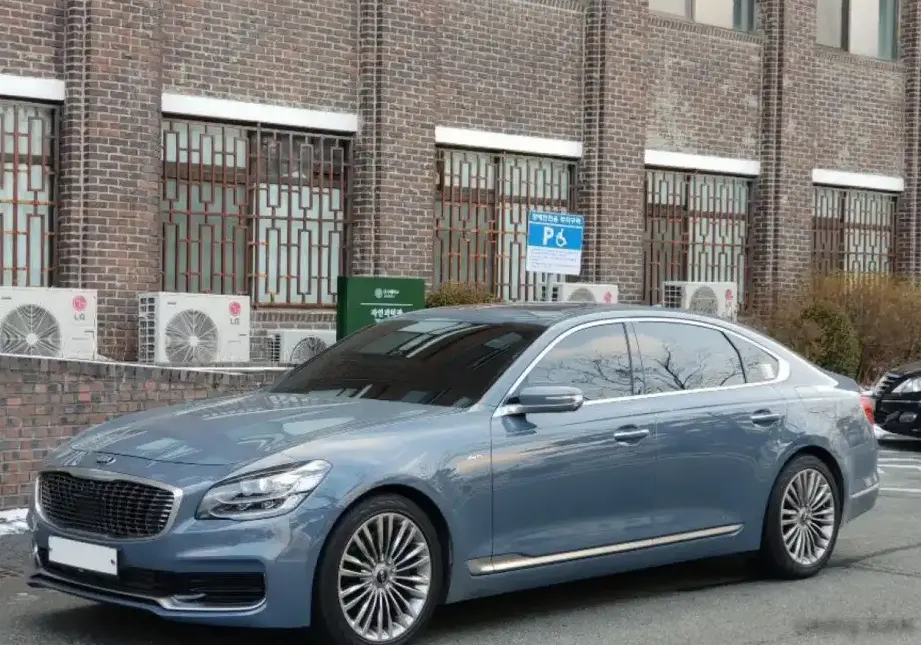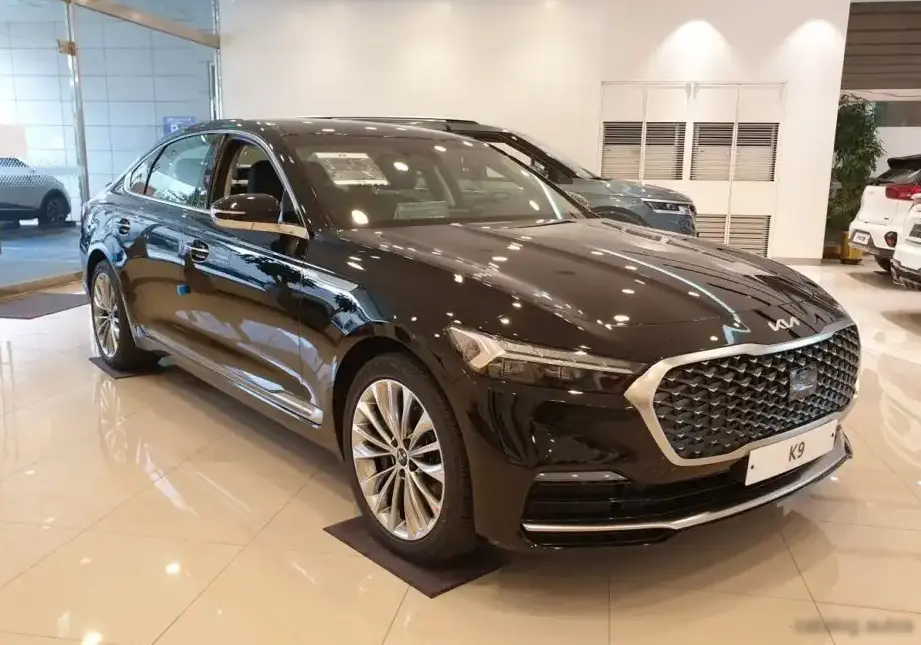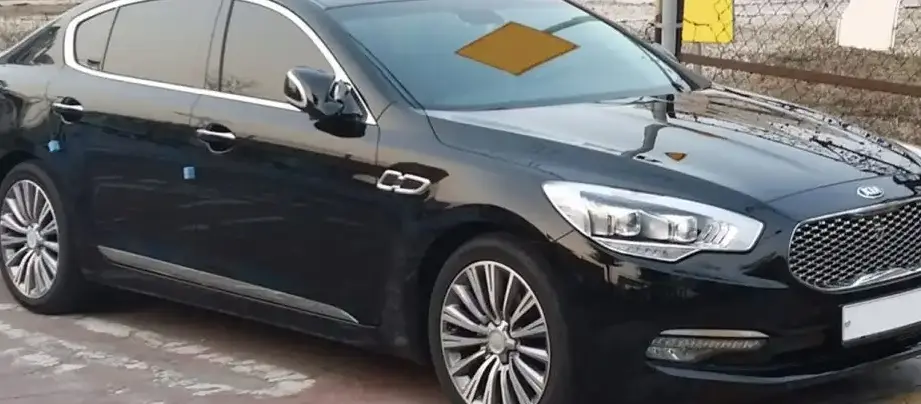
The Kia K9, launched in 2012 and receiving a significant facelift in November 2014, represented Kia’s ambitious entry into the full-size luxury sedan segment. This iteration, produced through April 2018, aimed to compete with established players like the Lexus LS and Acura RLX, offering a compelling blend of features, technology, and value. The 3.8 GDI V6 with an eight-speed automatic transmission was positioned as the mainstream offering within the K9 lineup, balancing performance and fuel efficiency for the majority of buyers. It sat above the base 3.3L V6 and below the range-topping 5.0L V8, catering to those seeking a refined driving experience without the added cost of the flagship model.
Technical Specifications
| Brand | Kia |
| Model | K9 |
| Generation | K9 I (facelift 2014) |
| Type (Engine) | 3.8 GDI V6 (311 Hp) Automatic |
| Start of production | November, 2014 |
| End of production | April, 2018 |
| Powertrain Architecture | Internal Combustion engine |
| Body type | Sedan |
| Seats | 5 |
| Doors | 4 |
| Fuel consumption (economy) – urban | 13.8 l/100 km (17 US mpg, 20.5 UK mpg, 7.2 km/l) |
| Fuel consumption (economy) – extra urban | 9 l/100 km (26.1 US mpg, 31.4 UK mpg, 11.1 km/l) |
| Fuel consumption (economy) – combined | 11.8 l/100 km (19.9 US mpg, 23.9 UK mpg, 8.5 km/l) |
| Fuel Type | Petrol (Gasoline) |
| Weight-to-power ratio | 6.4 kg/Hp, 156.7 Hp/tonne |
| Weight-to-torque ratio | 5 kg/Nm, 200 Nm/tonne |
| Power | 311 Hp @ 6000 rpm |
| Power per litre | 82.3 Hp/l |
| Torque | 397 Nm @ 5000 rpm (292.81 lb.-ft. @ 5000 rpm) |
| Engine layout | Front, Longitudinal |
| Engine Model/Code | G6DJ |
| Engine displacement | 3778 cm3 (230.55 cu. in.) |
| Number of cylinders | 6 |
| Engine configuration | V-engine |
| Cylinder Bore | 96 mm (3.78 in.) |
| Piston Stroke | 87 mm (3.43 in.) |
| Compression ratio | 11.5:1 |
| Fuel injection system | Direct injection |
| Engine aspiration | Naturally aspirated engine |
| Valvetrain | DOHC |
| Engine oil capacity | 5.7 l (6.02 US qt | 5.02 UK qt) |
| Coolant | 8.4 l (8.88 US qt | 7.39 UK qt) |
| Kerb Weight | 1985 kg (4376.18 lbs.) |
| Max. weight | 2430 kg (5357.23 lbs.) |
| Max load | 445 kg (981.06 lbs.) |
| Trunk (boot) space – minimum | 450 l (15.89 cu. ft.) |
| Fuel tank capacity | 75 l (19.81 US gal | 16.5 UK gal) |
| Length | 5095 mm (200.59 in.) |
| Width | 1900 mm (74.8 in.) |
| Height | 1485 mm (58.46 in.) |
| Wheelbase | 3045 mm (119.88 in.) |
| Front track | 1616 mm (63.62 in.) |
| Rear (Back) track | 1634 mm (64.33 in.) |
| Front overhang | 879 mm (34.61 in.) |
| Rear overhang | 1171 mm (46.1 in.) |
| Drive wheel | Rear wheel drive |
| Number of gears and type of gearbox | 8 gears, automatic transmission |
| Front suspension | Independent multi-link suspension |
| Rear suspension | Independent multi-link suspension |
| Front brakes | Ventilated discs |
| Rear brakes | Disc |
| Assisting systems | ABS (Anti-lock braking system) |
| Steering type | Steering rack and pinion |
| Power steering | Electric Steering |
| Tires size | Front wheel tires: 245/50 R18 Rear wheel tires: 245/50 R18 |
| Wheel rims size | Front wheel rims: 7.5J x 18 Rear wheel rims: 7.5J x 18 |
Powertrain & Engine Architecture
The heart of the K9 3.8 GDI is Kia’s Lambda II 3.8-liter V6 engine, designated the G6DJ. This engine utilizes Gasoline Direct Injection (GDI) technology, injecting fuel directly into the combustion chamber for improved efficiency and power output. The engine features a double overhead camshaft (DOHC) valvetrain with continuously variable valve timing (CVVT) on both intake and exhaust sides, optimizing engine breathing across the rev range. The 3.8L V6 produces 311 horsepower at 6,000 rpm and 292 lb-ft of torque at 5,000 rpm. Paired with this engine is a smooth-shifting eight-speed automatic transmission, providing ample gear ratios for both comfortable cruising and responsive acceleration. This transmission was sourced from ZF, a renowned supplier of automatic transmissions to many luxury automakers. The longitudinal engine layout and rear-wheel-drive configuration contribute to a balanced driving experience.
Driving Characteristics
The 3.8 GDI powertrain delivers a refined and comfortable driving experience. While not overtly sporty, the engine provides sufficient power for confident highway merging and passing maneuvers. The eight-speed automatic transmission is well-tuned, offering smooth gear changes and minimizing noticeable hunting for the right gear. Compared to the base 3.3L V6, the 3.8 GDI offers a noticeable increase in performance, particularly in mid-range acceleration. However, it doesn’t match the outright power of the 5.0L V8. The rear-wheel-drive platform provides a balanced feel, although it lacks the all-weather capability of all-wheel-drive systems found in some competitors. The gear ratios are optimized for highway cruising, resulting in a relatively relaxed engine note at typical interstate speeds.
Equipment & Trim Levels
The K9 3.8 GDI typically came well-equipped, reflecting its luxury positioning. Standard features often included leather upholstery, heated and ventilated front seats, a premium audio system, a navigation system, and a suite of advanced safety technologies such as blind-spot monitoring, lane departure warning, and adaptive cruise control. Optional extras could include a rear-seat entertainment system, a panoramic sunroof, and upgraded interior trim materials. The interior design emphasized spaciousness and comfort, with a focus on high-quality materials and a user-friendly interface. Trim levels varied slightly depending on the model year and regional market, but generally offered increasing levels of luxury and technology.
Chassis & Braking
The K9’s chassis features an independent multi-link suspension at both the front and rear, designed to provide a comfortable ride and stable handling. The suspension tuning prioritizes comfort over outright sportiness, absorbing bumps and imperfections in the road surface effectively. Braking duties are handled by ventilated discs at the front and solid discs at the rear, providing adequate stopping power for the vehicle’s weight. An Anti-lock Braking System (ABS) is standard, enhancing safety during emergency braking situations. The K9’s steering utilizes an electric power steering system, offering a light and precise feel.
Market Reception & Comparison
The Kia K9, even with the 3.8 GDI engine, faced an uphill battle in the luxury sedan market. Critics generally praised the K9’s value proposition, noting its generous features list and competitive pricing compared to established rivals. However, it often received criticism for lacking the brand recognition and prestige of its competitors. Fuel economy was considered average for its class, with combined figures around 19.9 US mpg. Compared to the 3.3L V6, the 3.8 GDI offered a worthwhile performance upgrade, but at a slightly higher price point. The 5.0L V8 provided significantly more power but came with a substantial price premium and reduced fuel efficiency. Reliability reports have been generally positive, with few widespread issues reported for the 3.8 GDI powertrain.
Legacy
The Kia K9, while not a massive sales success, played a crucial role in elevating Kia’s brand image and demonstrating its ability to compete in the luxury segment. The 3.8 GDI V6 powertrain proved to be a reliable and capable unit, offering a good balance of performance and efficiency. On the used car market, K9s with this engine represent a compelling value proposition for buyers seeking a spacious, well-equipped luxury sedan at a relatively affordable price. While maintenance costs may be slightly higher than those of more mainstream brands, the K9’s robust construction and readily available parts supply ensure its continued viability as a comfortable and reliable transportation option.