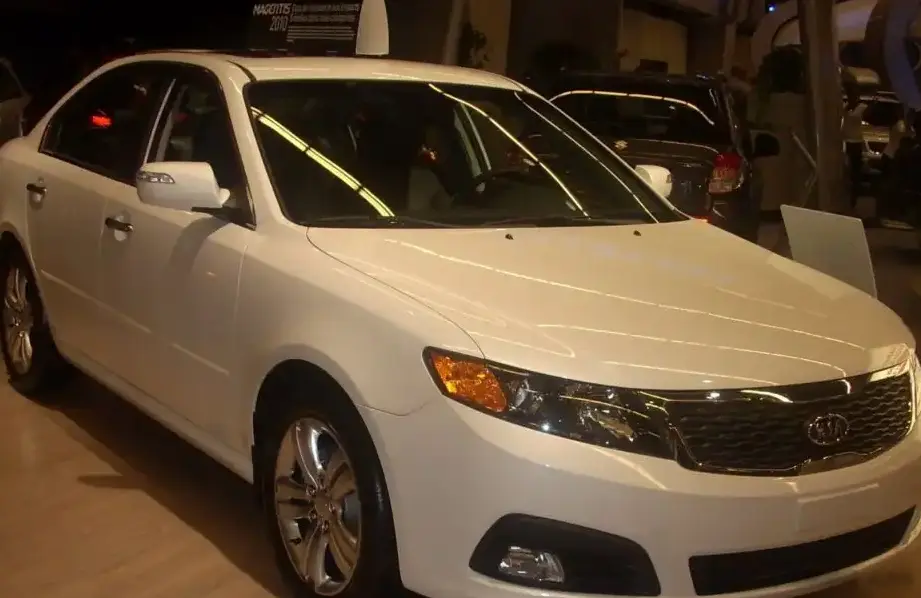
The Kia Magentis, known as the Kia Optima in some markets, represented Kia’s entry into the mid-size sedan segment. Introduced in 2000 and continuing through 2005 for the first generation (Magentis I), it aimed to provide a compelling alternative to established Japanese and European competitors. The 2.0-liter, 136 horsepower variant occupied a central position in the Magentis lineup, offering a balance between performance and affordability. This model was primarily targeted at family buyers seeking a spacious and reliable vehicle with a reasonable price point. While a V6 engine was available in some regions, the 2.0L was the volume seller, particularly in markets where fuel economy and purchase price were key considerations.
Technical Specifications
| Brand | Kia |
| Model | Magentis |
| Generation | Magentis I |
| Type (Engine) | 2.0 (136 Hp) |
| Start of production | 2000 year |
| End of production | 2005 year |
| Powertrain Architecture | Internal Combustion engine |
| Body type | Sedan |
| Seats | 5 |
| Doors | 4 |
| Fuel consumption (economy) – urban | 12.3 l/100 km (19.1 US mpg, 23 UK mpg, 8.1 km/l) |
| Fuel consumption (economy) – extra urban | 6.9 l/100 km (34.1 US mpg, 40.9 UK mpg, 14.5 km/l) |
| Fuel consumption (economy) – combined | 8.9 l/100 km (26.4 US mpg, 31.7 UK mpg, 11.2 km/l) |
| CO2 emissions | 210 g/km |
| Fuel Type | Petrol (Gasoline) |
| Acceleration 0 – 100 km/h | 11.5 sec |
| Acceleration 0 – 62 mph | 11.5 sec |
| Acceleration 0 – 60 mph | 10.9 sec |
| Maximum speed | 207 km/h (128.62 mph) |
| Emission standard | Euro 3 |
| Weight-to-power ratio | 10.9 kg/Hp, 92 Hp/tonne |
| Weight-to-torque ratio | 8.2 kg/Nm, 121.8 Nm/tonne |
| Power | 136 Hp @ 6000 rpm |
| Power per litre | 68.1 Hp/l |
| Torque | 180 Nm @ 4500 rpm (132.76 lb.-ft. @ 4500 rpm) |
| Engine layout | Front, Transverse |
| Engine Model/Code | Sirius II / G4JP |
| Engine displacement | 1997 cm3 (121.86 cu. in.) |
| Number of cylinders | 4 |
| Engine configuration | Inline |
| Cylinder Bore | 85 mm (3.35 in.) |
| Piston Stroke | 88 mm (3.46 in.) |
| Compression ratio | 10:1 |
| Number of valves per cylinder | 4 |
| Fuel injection system | Multi-port manifold injection |
| Engine aspiration | Naturally aspirated engine |
| Valvetrain | DOHC |
| Engine oil capacity | 4.3 l (4.54 US qt | 3.78 UK qt) |
| Coolant | 5.5 l (5.81 US qt | 4.84 UK qt) |
| Kerb Weight | 1478 kg (3258.43 lbs.) |
| Max. weight | 1985 kg (4376.18 lbs.) |
| Max load | 507 kg (1117.74 lbs.) |
| Trunk (boot) space – minimum | 479 l (16.92 cu. ft.) |
| Trunk (boot) space – maximum | 810 l (28.6 cu. ft.) |
| Fuel tank capacity | 65 l (17.17 US gal | 14.3 UK gal) |
| Max. roof load | 100 kg (220.46 lbs.) |
| Permitted trailer load with brakes (12%) | 1700 kg (3747.86 lbs.) |
| Permitted trailer load without brakes | 750 kg (1653.47 lbs.) |
| Length | 4730 mm (186.22 in.) |
| Width | 1820 mm (71.65 in.) |
| Height | 1410 mm (55.51 in.) |
| Wheelbase | 2700 mm (106.3 in.) |
| Front track | 1540 mm (60.63 in.) |
| Rear (Back) track | 1520 mm (59.84 in.) |
| Minimum turning circle (turning diameter) | 11.60 m (38.06 ft.) |
| Drivetrain Architecture | The Internal combustion engine (ICE) drives the front wheels of the vehicle. |
| Drive wheel | Front wheel drive |
| Number of gears and type of gearbox | 5 gears, manual transmission |
| Front suspension | Double wishbone |
| Rear suspension | Independent multi-link suspension |
| Front brakes | Ventilated discs |
| Rear brakes | Disc |
| Assisting systems | ABS (Anti-lock braking system) |
| Steering type | Steering rack and pinion |
| Power steering | Hydraulic Steering |
| Tires size | 205/60 R15 |
| Wheel rims size | 15 |
Powertrain & Engine Architecture
The heart of the Magentis 2.0 was the Kia Sirius II engine, designated G4JP. This 1.997-liter inline-four cylinder engine utilized a multi-port fuel injection system, delivering a respectable 136 horsepower at 6000 rpm and 180 Nm (132.76 lb-ft) of torque at 4500 rpm. The engine featured a double overhead camshaft (DOHC) valvetrain with four valves per cylinder, contributing to its relatively efficient operation. The 10:1 compression ratio was typical for naturally aspirated engines of the era. The engine was transversely mounted in the front of the vehicle, driving the front wheels. The five-speed manual transmission was the standard offering, providing a direct connection between the engine and the wheels. While an automatic transmission was available, it was often criticized for its sluggish shifts and impact on fuel economy.
Driving Characteristics
The 2.0-liter Magentis offered adequate, but not exhilarating, performance. Acceleration from 0 to 60 mph took around 10.9 seconds, making it competitive with other mid-size sedans of the time. The manual transmission allowed for more driver control and a slightly more engaging driving experience. The automatic transmission, while offering convenience, noticeably dulled the car’s responsiveness. The gear ratios were tuned for fuel efficiency rather than outright acceleration. In real-world driving, the 2.0L engine felt most comfortable during highway cruising, where its torque allowed for relaxed and effortless progress. Compared to the available V6 engine, the 2.0L lacked the punch for quick overtaking maneuvers, but it offered significantly better fuel economy.
Equipment & Trim Levels
The Magentis 2.0 typically came standard with features such as air conditioning, power windows and locks, and a basic audio system. Higher trim levels added features like alloy wheels, a sunroof, and upgraded interior upholstery. Interior materials were generally durable but not luxurious. The dashboard layout was functional and straightforward, prioritizing ease of use over aesthetic flair. Optional extras included a CD player, cruise control, and leather seats. The base model was fairly spartan, while the higher trims offered a more comfortable and refined experience.
Chassis & Braking
The Magentis I utilized a front double wishbone suspension and a rear independent multi-link suspension, providing a reasonably comfortable ride. The suspension was tuned for everyday driving, prioritizing comfort over sporty handling. The front brakes were ventilated discs, while the rear brakes were solid discs. Anti-lock Braking System (ABS) was standard, enhancing safety. The steering was hydraulic power-assisted rack and pinion, offering a decent level of feedback. The standard tire size was 205/60 R15, mounted on 15-inch steel or alloy wheels.
Market Reception & Comparison
The Kia Magentis 2.0 was generally well-received as a value-oriented mid-size sedan. Critics praised its spacious interior, comfortable ride, and competitive price. However, some criticized its bland styling and the lackluster performance of the automatic transmission. Compared to rivals like the Honda Accord and Toyota Camry, the Magentis offered a lower price point but lacked the same level of refinement and brand recognition. Fuel economy was respectable, averaging around 26.4 US mpg in combined driving. Reliability was generally good, although some owners reported minor issues with the electrical system.
Legacy
The Kia Magentis I, particularly the 2.0-liter variant, played a significant role in establishing Kia as a credible player in the mid-size sedan market. While not known for exceptional performance or groundbreaking technology, it offered a practical and affordable transportation solution. Today, the Magentis I is a relatively affordable used car, often appealing to budget-conscious buyers. The Sirius II engine is generally considered reliable, although regular maintenance is essential to prevent issues. Parts availability is generally good, making it a relatively easy car to maintain. The 2.0L manual transmission version is often preferred by enthusiasts for its more engaging driving experience.