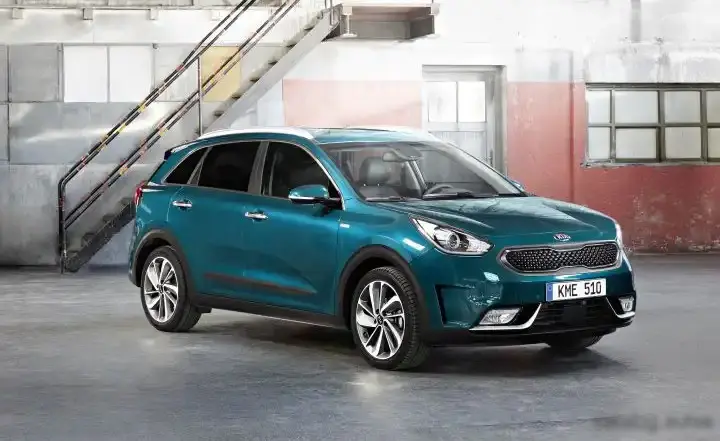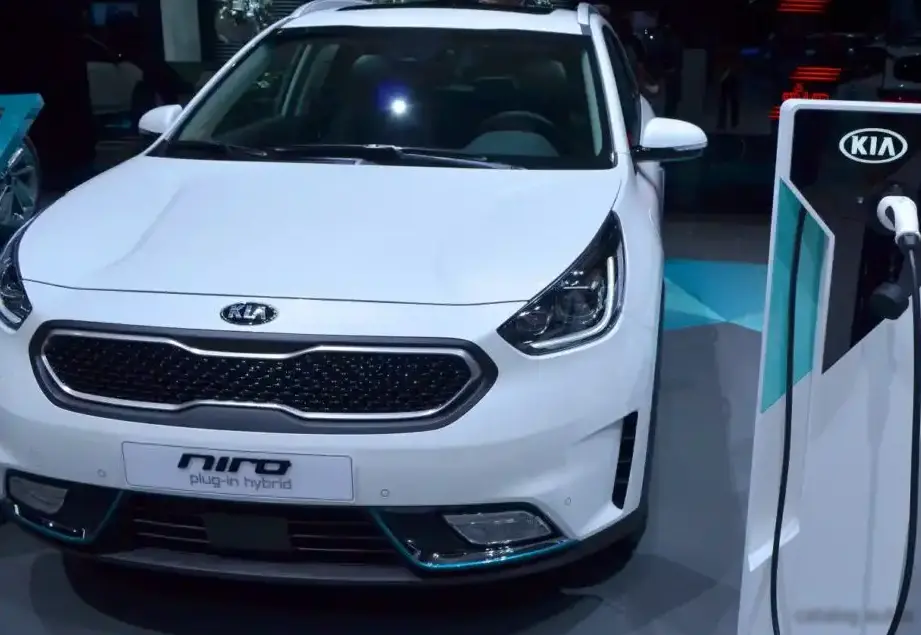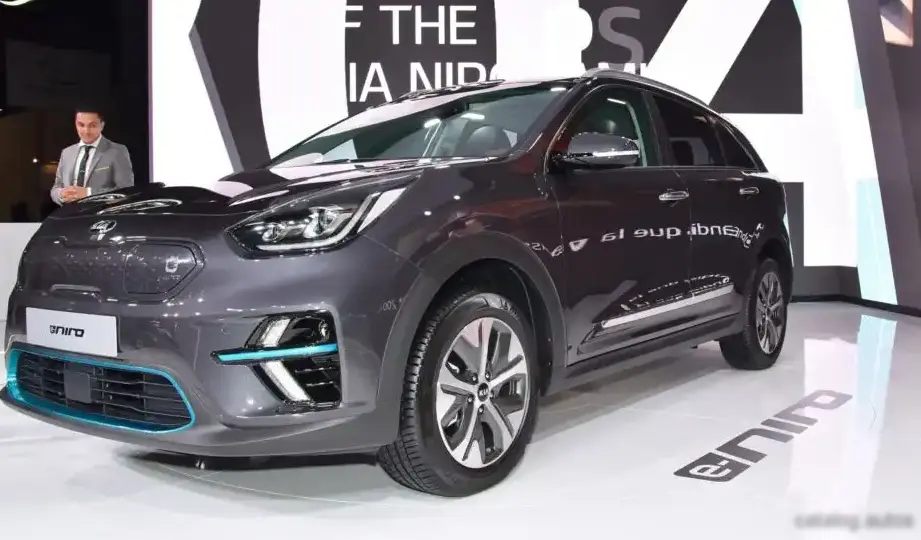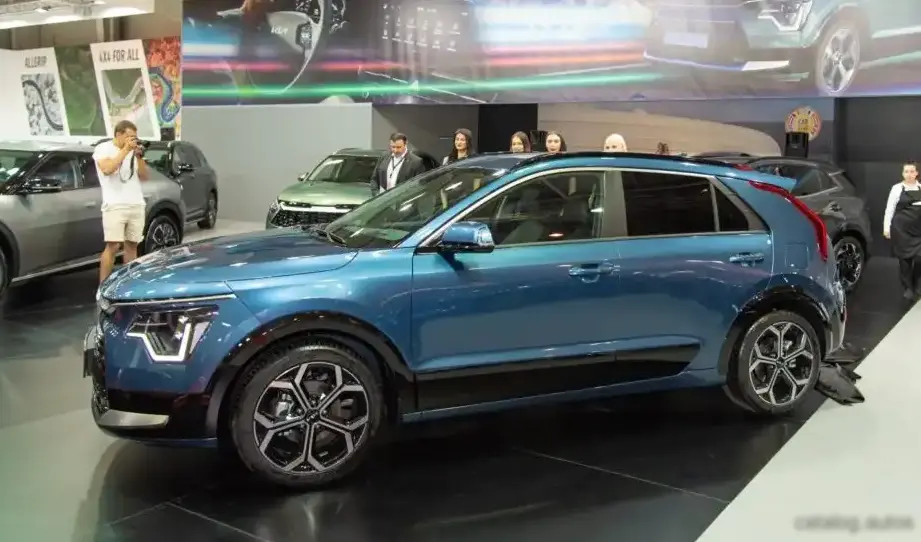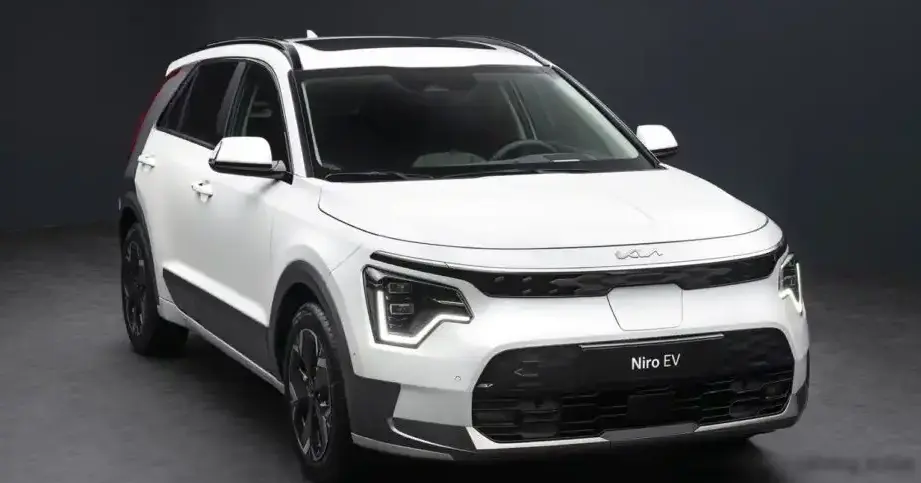
The Kia Niro II 1.6 GDI (129 Hp) Full Hybrid DCT is a compact crossover SUV produced by the South Korean manufacturer Kia, beginning in May 2024 and running through July 2025. This variant represents a key offering within the second generation Niro lineup (designated as the DE model), built on the updated platform shared with the Hyundai Kona. Positioned as a mid-range trim, it balances fuel efficiency with a reasonable level of performance and features, targeting environmentally conscious buyers seeking a practical and versatile vehicle. The Niro II aimed to improve upon the first generation’s success by offering enhanced styling, a more refined interior, and improved hybrid technology.
Technical Specifications
| Brand | Kia |
| Model | Niro |
| Generation | Niro II |
| Type (Engine) | 1.6 GDI (129 Hp) Full Hybrid DCT |
| Start of production | May, 2024 |
| End of production | July, 2025 |
| Powertrain Architecture | FHEV (Full Hybrid Electric Vehicle) |
| Body type | SUV |
| Seats | 5 |
| Doors | 5 |
| Fuel consumption at Low speed (WLTP) | 4.1-4.3 l/100 km (57.4 – 54.7 US mpg) |
| Fuel consumption at Medium speed (WLTP) | 3.7-4.4 l/100 km (63.6 – 53.5 US mpg) |
| Fuel consumption at high speed (WLTP) | 3.8-4.4 l/100 km (61.9 – 53.5 US mpg) |
| Fuel consumption at very high speed (WLTP) | 5.4-5.5 l/100 km (43.6 – 42.8 US mpg) |
| Combined fuel consumption (WLTP) | 4.4-4.7 l/100 km (53.5 – 50 US mpg) |
| CO2 emissions (WLTP) | 100-107 g/km |
| Fuel Type | Petrol (Gasoline) |
| Acceleration 0 – 100 km/h | 11.3 sec |
| Acceleration 0 – 62 mph | 11.3 sec |
| Acceleration 0 – 60 mph | 10.7 sec |
| Maximum speed | 160 km/h (99.42 mph) |
| Emission standard | Euro 6e |
| Weight-to-power ratio | 10.8 kg/Hp |
| Weight-to-torque ratio | 5.3 kg/Nm |
| Gross battery capacity | 1.32 kWh |
| Battery voltage | 240 V |
| Battery technology | Lithium-polymer (LiPo) |
| Battery weight | 34 kg (74.96 lbs.) |
| Max speed (electric) | 120 km/h (74.56 mph) |
| Electric motor power | 44 Hp @ 1798-2500 rpm |
| Electric motor Torque | 170 Nm @ 0-1798 rpm (125.39 lb.-ft. @ 0-1798 rpm) |
| Electric motor location | Between the combustion engine and the transmission |
| Electric motor type | Synchronous |
| System power | 129 Hp @ 5700 rpm |
| System torque | 265 Nm @ 1000-2400 rpm (195.45 lb.-ft. @ 1000-2400 rpm) |
| Power | 93 Hp @ 5700 rpm |
| Torque | 134 Nm @ 4000 rpm (98.83 lb.-ft. @ 4000 rpm) |
| Engine layout | Front, Transverse |
| Engine Model/Code | Smartstream / G4LE |
| Engine displacement | 1580 cm3 (96.42 cu. in.) |
| Number of cylinders | 4 |
| Engine configuration | Inline |
| Cylinder Bore | 72 mm (2.83 in.) |
| Piston Stroke | 97 mm (3.82 in.) |
| Compression ratio | 14:1 |
| Number of valves per cylinder | 4 |
| Fuel injection system | Direct injection |
| Engine aspiration | Naturally aspirated engine |
| Valvetrain | DOHC, Dual CVVT |
| Engine oil capacity | 4.1 l (4.33 US qt | 3.61 UK qt) |
| Coolant | 5.8 l (6.13 US qt | 5.1 UK qt) |
| Kerb Weight | 1399-1490 kg (3084.27 – 3284.89 lbs.) |
| Max. weight | 1940 kg (4276.97 lbs.) |
| Max load | 450-541 kg (992.08 – 1192.7 lbs.) |
| Trunk (boot) space – minimum | 451 l (15.93 cu. ft.) |
| Trunk (boot) space – maximum | 1445 l (51.03 cu. ft.) |
| Fuel tank capacity | 42 l (11.1 US gal | 9.24 UK gal) |
| Max. roof load | 75 kg (165.35 lbs.) |
| Permitted trailer load with brakes (12%) | 1010 kg (2226.67 lbs.) |
| Permitted trailer load without brakes | 600 kg (1322.77 lbs.) |
| Permitted towbar download | 100 kg (220.46 lbs.) |
| Length | 4420 mm (174.02 in.) |
| Width | 1825 mm (71.85 in.) |
| Height | 1545 mm (60.83 in.) |
| Wheelbase | 2720 mm (107.09 in.) |
| Front track | 1573-1585 mm (61.93 – 62.4 in.) |
| Rear (Back) track | 1585-1596 mm (62.4 – 62.83 in.) |
| Front overhang | 895 mm (35.24 in.) |
| Rear overhang | 805 mm (31.69 in.) |
| Ride height (ground clearance) | 160 mm (6.3 in.) |
| Drag coefficient (Cd) | 0.285 |
| Minimum turning circle (turning diameter) | 10.6 m (34.78 ft.) |
| Drivetrain Architecture | The Internal combustion engine (ICE) and electric motor drive the front wheels of the car with the ability to work in full electric or mixed mode. |
| Drive wheel | Front wheel drive |
| Number of gears and type of gearbox | 6 gears, automatic transmission DCT |
| Front suspension | Independent type McPherson |
| Rear suspension | Independent multi-link suspension |
| Front brakes | Ventilated discs |
| Rear brakes | Disc |
| Assisting systems | ABS (Anti-lock braking system) |
| Steering type | Steering rack and pinion |
| Power steering | Electric Steering |
| Wheel rims size | 6.5J x 16 ET46; 7.5J x 18 ET52 |
INTRODUCTION
The Kia Niro II 1.6 GDI Full Hybrid DCT, launched in 2024, represents Kia’s continued commitment to fuel-efficient and practical vehicles. Building upon the success of the first-generation Niro, this variant offers a compelling blend of hybrid technology, modern styling, and a spacious interior. The Niro II is positioned as a direct competitor to vehicles like the Toyota Corolla Cross Hybrid and Hyundai Kona Hybrid, aiming to capture a significant share of the growing compact hybrid SUV market. This specific 1.6 GDI configuration, paired with a dual-clutch transmission (DCT), was designed to provide a balance between performance and economy, making it an attractive option for daily commuting and family use.
Powertrain & Engine Architecture
At the heart of the Niro II 1.6 GDI is Kia’s Smartstream G4LE 1.6-liter four-cylinder gasoline engine. This engine produces 93 horsepower and 134 Nm of torque. It utilizes direct fuel injection (GDI) and a Dual Continuous Variable Valve Timing (CVVT) system to optimize combustion efficiency and reduce emissions. The engine is paired with a 44 horsepower electric motor, powered by a 1.32 kWh lithium-polymer battery pack. The combined system output is 129 horsepower and 265 Nm of torque. The power is delivered to the front wheels via a six-speed dual-clutch transmission (DCT). The DCT offers quicker and smoother gear changes compared to a traditional automatic transmission, contributing to improved fuel economy and a more engaging driving experience. The hybrid system intelligently switches between electric, gasoline, and combined power modes to maximize efficiency based on driving conditions.
Driving Characteristics
The Niro II 1.6 GDI DCT delivers a comfortable and refined driving experience. While not particularly sporty, the combined output of the engine and electric motor provides adequate acceleration for everyday driving situations. The DCT transmission contributes to smooth gear changes, and the hybrid system seamlessly blends power delivery. Acceleration from 0 to 60 mph takes approximately 10.7 seconds, and the top speed is limited to 99.42 mph. The electric motor provides instant torque, which is particularly noticeable during initial acceleration. Compared to higher-output Niro variants, this 1.6 GDI model prioritizes fuel economy over outright performance. The gear ratios are tuned for efficiency, resulting in a slightly less responsive feel than versions with more powerful engines. However, the hybrid system’s regenerative braking helps to recapture energy and further enhance fuel efficiency.
Equipment & Trim Levels
The Niro II 1.6 GDI typically came standard with a comprehensive suite of features, including automatic climate control, an 8-inch touchscreen infotainment system with Apple CarPlay and Android Auto compatibility, a rearview camera, and a suite of advanced driver-assistance systems (ADAS) such as lane keeping assist, forward collision avoidance assist, and adaptive cruise control. Interior upholstery was typically cloth, with options for leather upgrades on higher trims. Available optional extras included a larger touchscreen display, a premium sound system, a panoramic sunroof, and heated and ventilated front seats. The trim level often dictated the availability of these features, with higher trims offering more luxurious appointments and advanced technology.
Chassis & Braking
The Niro II utilizes a front-wheel-drive layout with an independent McPherson strut suspension in the front and an independent multi-link suspension in the rear. This suspension setup provides a comfortable ride quality and good handling characteristics. The vehicle is equipped with ventilated disc brakes in the front and solid disc brakes in the rear. ABS (Anti-lock Braking System) is standard, along with electronic stability control and traction control. The chassis is designed to balance rigidity and weight, contributing to both safety and fuel efficiency. The steering is electrically assisted, providing a light and responsive feel.
Market Reception & Comparison
The Kia Niro II 1.6 GDI Full Hybrid DCT was generally well-received by automotive critics. Reviewers praised its fuel efficiency, comfortable ride, and spacious interior. The hybrid powertrain was lauded for its smooth operation and ability to deliver impressive fuel economy in real-world driving conditions. Compared to other trims in the Niro lineup, the 1.6 GDI model offered a more affordable entry point into the hybrid crossover segment. While the higher-output variants provided more spirited performance, the 1.6 GDI prioritized fuel economy and value. Fuel economy figures of 4.4-4.7 l/100 km (53.5 – 50 US mpg) were competitive within its class. Reliability reports have been generally positive, with the Niro II demonstrating a solid track record for dependability.
Legacy
The Kia Niro II 1.6 GDI Full Hybrid DCT has established itself as a reliable and fuel-efficient option in the used car market. The Smartstream engine and DCT transmission have proven to be durable and relatively maintenance-free. The hybrid system’s components, including the battery pack, have demonstrated good longevity. As a result, the Niro II 1.6 GDI continues to be a popular choice for buyers seeking a practical and economical crossover SUV. Its blend of fuel efficiency, comfort, and features ensures its continued relevance in the used car market for years to come.