
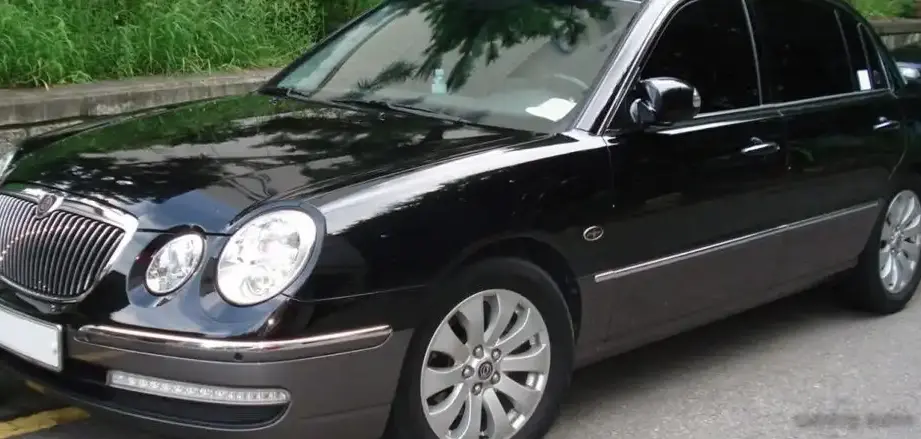
The Kia Opirus 3.8 i V6 24V, produced between 2007 and 2010, represented Kia’s ambitious foray into the mid-size luxury sedan segment. Positioned as a flagship model, the Opirus aimed to challenge established players like the Toyota Avalon and Buick LaCrosse, offering a blend of spaciousness, features, and a powerful V6 engine. This particular variant, equipped with the 3.8-liter V6 and a five-speed automatic transmission, served as the top-tier offering within the Opirus lineup, emphasizing performance and a more refined driving experience. The Opirus, while not a massive sales success in the United States, was a significant step forward for Kia in terms of design, engineering, and perceived quality.
Technical Specifications
| Brand | Kia |
| Model | Opirus |
| Generation | Opirus |
| Type (Engine) | 3.8 i V6 24V (266 Hp) |
| Start of production | 2007 |
| End of production | 2010 |
| Powertrain Architecture | Internal Combustion engine |
| Body type | Sedan |
| Seats | 5 |
| Doors | 4 |
| Fuel consumption (combined) | 10.9 l/100 km (21.6 US mpg) |
| Fuel Type | Petrol (Gasoline) |
| Acceleration 0 – 100 km/h | 7.5 sec |
| Acceleration 0 – 62 mph | 7.5 sec |
| Acceleration 0 – 60 mph | 7.1 sec |
| Maximum speed | 230 km/h (142.92 mph) |
| Weight-to-power ratio | 6.9 kg/Hp |
| Weight-to-torque ratio | 5.2 kg/Nm |
| Power | 266 Hp @ 6000 rpm |
| Power per litre | 70.4 Hp/l |
| Torque | 353 Nm @ 4500 rpm (260.36 lb.-ft. @ 4500 rpm) |
| Engine layout | Front, Transverse |
| Engine displacement | 3778 cm3 (230.55 cu. in.) |
| Number of cylinders | 6 |
| Engine configuration | V-engine |
| Cylinder Bore | 96 mm (3.78 in.) |
| Piston Stroke | 87 mm (3.43 in.) |
| Compression ratio | 10.4:1 |
| Number of valves per cylinder | 4 |
| Fuel injection system | Multi-port manifold injection |
| Engine aspiration | Naturally aspirated engine |
| Kerb Weight | 1825 kg (4023.44 lbs.) |
| Max. weight | 2270 kg (5004.49 lbs.) |
| Max load | 445 kg (981.06 lbs.) |
| Trunk (boot) space – maximum | 450 l (15.89 cu. ft.) |
| Fuel tank capacity | 70 l (18.49 US gal | 15.4 UK gal) |
| Length | 4970 mm (195.67 in.) |
| Width | 1850 mm (72.83 in.) |
| Height | 1486 mm (58.5 in.) |
| Wheelbase | 2800 mm (110.24 in.) |
| Front track | 1585 mm (62.4 in.) |
| Rear (Back) track | 1590 mm (62.6 in.) |
| Drivetrain Architecture | Front wheel drive |
| Number of gears and type of gearbox | 5 gears, automatic transmission |
| Front suspension | Independent, type McPherson with coil spring and anti-roll bar |
| Rear suspension | Independent multi-link spring suspension with stabilizer |
| Front brakes | Disc |
| Rear brakes | Disc |
| Assisting systems | ABS (Anti-lock braking system) |
| Steering type | Steering rack and pinion |
| Tires size | 235/55 R17 |
Powertrain & Engine Architecture
The heart of the Opirus 3.8 i was Kia’s 3.8-liter (3778 cc) DOHC 24-valve V6 engine. This engine, internally designated as the G6DA, was a naturally aspirated powerplant featuring multi-port fuel injection. The engine’s design prioritized smooth power delivery and refinement over outright performance. The 60-degree V-angle contributed to a relatively compact engine layout. The engine produced 266 horsepower at 6000 rpm and 353 Nm (260.36 lb-ft) of torque at 4500 rpm. This power was routed through a five-speed automatic transmission, which was chosen for its comfort and ease of use, aligning with the Opirus’s luxury-oriented positioning. While not a particularly advanced transmission by contemporary standards, it provided adequate shifting performance for everyday driving.
Driving Characteristics
The Opirus 3.8 i offered a comfortable and composed driving experience. The 3.8-liter V6 provided ample power for merging onto highways and passing maneuvers, with a 0-60 mph time of around 7.1 seconds. The automatic transmission, while smooth, wasn’t particularly quick to downshift, meaning the engine sometimes felt slightly strained during aggressive acceleration. Compared to a hypothetical manual transmission version (which wasn’t offered), the automatic prioritized smoothness over responsiveness. The suspension, tuned for comfort, absorbed bumps and road imperfections well, but didn’t offer the sporty handling characteristics of some competitors. The front-wheel-drive configuration contributed to a slight tendency towards understeer in hard corners.
Equipment & Trim Levels
The Opirus 3.8 i typically came well-equipped, reflecting its status as the top trim level. Standard features included leather upholstery, power-adjustable front seats, a premium audio system, automatic climate control, and alloy wheels. Optional extras often included a sunroof, navigation system, and upgraded interior trim. The interior design aimed for a luxurious feel, with woodgrain accents and a generally spacious cabin. The Opirus offered a generous amount of rear-seat legroom, making it a comfortable choice for passengers.
Chassis & Braking
The Opirus utilized a front-wheel-drive platform with an independent McPherson strut suspension in the front and an independent multi-link suspension in the rear. This setup aimed to balance ride comfort and handling. The car was equipped with disc brakes on all four wheels, providing adequate stopping power. Anti-lock Braking System (ABS) was standard, enhancing safety. The steering was rack-and-pinion, offering reasonable precision, though it lacked the feedback of some more performance-oriented systems. The Opirus rode on 235/55 R17 tires, which contributed to a comfortable ride quality.
Market Reception & Comparison
The Kia Opirus faced an uphill battle in the competitive mid-size sedan market. Critics generally praised its spacious interior, comfortable ride, and generous features for the price. However, it was often criticized for its somewhat bland styling and lack of brand recognition compared to established competitors. Fuel economy, at 21.6 US mpg combined, was average for its class. Compared to the base Opirus models with smaller engines, the 3.8 i offered a significant performance upgrade, but at a higher price point. The 3.8L V6 was the most expensive trim, and targeted buyers who wanted a comfortable, well-equipped sedan without necessarily prioritizing sporty handling or fuel efficiency.
Legacy
The Kia Opirus, while not a runaway success, played a crucial role in Kia’s evolution as a brand. It demonstrated Kia’s ability to produce a relatively sophisticated and well-equipped sedan. The 3.8-liter V6 engine proved to be reasonably reliable, with few widespread mechanical issues reported. On the used car market, the Opirus 3.8 i represents a relatively affordable option for buyers seeking a spacious and comfortable sedan. While it may lack the prestige of some competitors, it offers a good value proposition, particularly for those prioritizing comfort and features over brand image. Parts availability is generally good, and maintenance costs are typically moderate, making it a practical choice for budget-conscious buyers.
