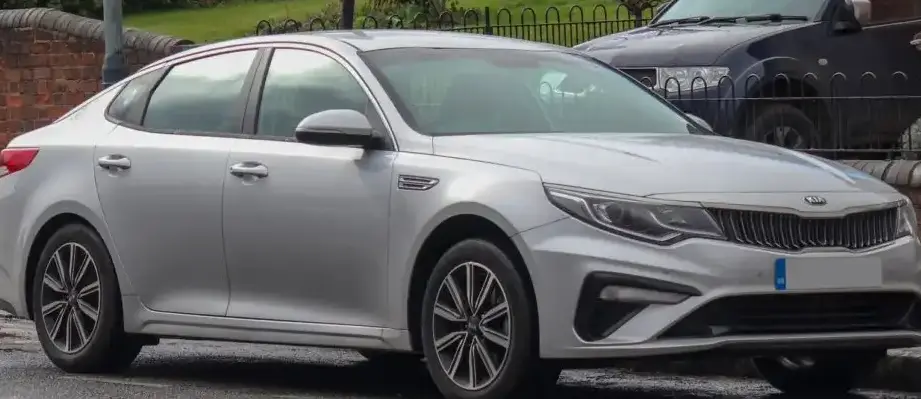
The Kia Optima IV, specifically the 2.0 GDI (192 Hp) Hybrid Automatic variant produced from 2018 to 2020, represents a significant step in Kia’s commitment to fuel efficiency and mainstream appeal. This model, part of the fourth generation (JF) Optima lineup, was a key offering in the mid-size sedan segment, positioned as a technologically advanced and stylish alternative to established competitors like the Toyota Camry and Honda Accord. The facelifted 2018 model brought revised styling and enhanced features, solidifying the Optima’s position as a strong contender in the American market. This particular powertrain combination aimed to balance performance with exceptional fuel economy, appealing to buyers seeking a practical and efficient daily driver.
Technical Specifications
| Brand | Kia |
| Model | Optima |
| Generation | Optima IV (facelift 2018) |
| Type (Engine) | 2.0 GDI (192 Hp) Hybrid Automatic |
| Start of production | 2018 |
| End of production | 2020 |
| Powertrain Architecture | FHEV (Full Hybrid Electric Vehicle) |
| Body type | Sedan |
| Seats | 5 |
| Doors | 4 |
| Fuel consumption (urban) | 5.9 l/100 km (39.9 US mpg) |
| Fuel consumption (extra urban) | 5.2 l/100 km (45.2 US mpg) |
| Fuel consumption (combined) | 5.6 l/100 km (42 US mpg) |
| Fuel Type | Petrol (Gasoline) |
| Emission standard | SULEV LEV3 |
| Weight-to-power ratio | 8.3 kg/Hp |
| Weight-to-torque ratio | 4.3 kg/Nm |
| Gross battery capacity | 1.76 kWh |
| Battery voltage | 270 V |
| Battery technology | Lithium-polymer (LiPo) |
| Battery weight | 42 kg (92.59 lbs) |
| Battery location | Inside the trunk |
| Max speed (electric) | 120 km/h (74.56 mph) |
| Electric motor power | 51 Hp @ 1770-2000 rpm |
| Electric motor Torque | 205 Nm @ 0-1770 rpm (151.2 lb.-ft.) |
| Electric motor location | Between the combustion engine and the transmission |
| Electric motor type | Synchronous |
| System power | 192 Hp @ 6000 rpm |
| System torque | 367 Nm @ 1770 rpm (270.69 lb.-ft.) |
| Engine Power | 156 Hp @ 6000 rpm |
| Engine Torque | 190 Nm @ 5000 rpm (140.14 lb.-ft.) |
| Engine layout | Front, Transverse |
| Engine Model/Code | Nu / G4NG |
| Engine displacement | 1999 cm3 (121.99 cu. in.) |
| Number of cylinders | 4 |
| Engine configuration | Inline |
| Cylinder Bore | 81 mm (3.19 in.) |
| Piston Stroke | 97 mm (3.82 in.) |
| Compression ratio | 13.5:1 |
| Number of valves per cylinder | 4 |
| Fuel injection system | Direct injection |
| Engine aspiration | Naturally aspirated engine |
| Valvetrain | DOHC, CVVT |
| Engine oil capacity | 4.1 l (4.33 US qt | 3.61 UK qt) |
| Coolant capacity | 6.74 l (7.12 US qt | 5.93 UK qt) |
| Kerb Weight | 1586-1638 kg (3496.53 – 3611.17 lbs) |
| Trunk (boot) space | 380 l (13.42 cu. ft.) |
| Fuel tank capacity | 60 l (15.85 US gal | 13.2 UK gal) |
| Length | 4855 mm (191.14 in.) |
| Width | 1860 mm (73.23 in.) |
| Height | 1460 mm (57.48 in.) |
| Wheelbase | 2805 mm (110.43 in.) |
| Front track | 1602-1614 mm (63.07 – 63.54 in.) |
| Rear track | 1609-1621 mm (63.35 – 63.82 in.) |
| Front overhang | 965 mm (37.99 in.) |
| Rear overhang | 1085 mm (42.72 in.) |
| Ride height (ground clearance) | 130 mm (5.12 in.) |
| Drag coefficient (Cd) | 0.24 |
| Minimum turning circle | 10.9 m (35.76 ft.) |
| Drivetrain Architecture | Front wheel drive. FHEV. |
| Number of gears | 6 |
| Gearbox type | Automatic transmission |
| Front suspension | Independent, McPherson with coil spring and anti-roll bar |
| Rear suspension | Independent multi-link with stabilizer |
| Front brakes | Ventilated discs, 305 mm |
| Rear brakes | Disc, 284 mm |
| Assisting systems | ABS |
| Steering type | Steering rack and pinion |
| Power steering | Electric |
| Tires size | 205/65 R16; 215/55 R17 |
| Wheel rims size | 6.5J x 16; 7J x 17 |
Powertrain & Engine Architecture
At the heart of the 2018-2020 Kia Optima Hybrid lies the Nu series 2.0-liter inline-four gasoline engine, designated G4NG. This engine produces 156 horsepower at 6000 rpm and 190 Nm (140 lb-ft) of torque at 5000 rpm. It features direct fuel injection (GDI) and a double overhead camshaft (DOHC) valvetrain with continuously variable valve timing (CVVT) for optimized efficiency and performance. The engine is paired with a 51 horsepower electric motor, drawing power from a 1.76 kWh lithium-polymer battery pack located under the trunk floor. The combined system output reaches 192 horsepower and 367 Nm (270 lb-ft) of torque. The powertrain utilizes a six-speed automatic transmission, specifically tuned to work seamlessly with both the gasoline engine and the electric motor. The transmission’s programming prioritizes fuel efficiency, with smooth shifts and a focus on keeping the engine in its optimal operating range.
Driving Characteristics
The 2.0 GDI Hybrid Automatic Optima delivers a comfortable and refined driving experience. While not a performance-oriented model, the combined output of the engine and electric motor provides adequate acceleration for everyday driving situations. The electric motor provides instant torque, enhancing responsiveness from a standstill. The six-speed automatic transmission is well-matched to the powertrain, offering smooth and predictable shifts. In hybrid mode, the system intelligently switches between gasoline and electric power, or combines both, to maximize fuel efficiency. The steering is light and precise, making the Optima easy to maneuver in urban environments. The suspension is tuned for comfort, absorbing bumps and imperfections in the road surface effectively. Compared to the standard 2.4-liter gasoline engine Optima, the hybrid model offers significantly better fuel economy, but slightly less overall power.
Equipment & Trim Levels
The 2.0 GDI Hybrid Automatic typically came well-equipped, often representing a mid-range trim level within the Optima lineup. Standard features generally included automatic climate control, a touchscreen infotainment system with Apple CarPlay and Android Auto compatibility, a rearview camera, and a suite of advanced safety features such as automatic emergency braking, lane departure warning, and blind-spot monitoring. Interior upholstery was typically cloth, with available upgrades to leather. Optional extras included a panoramic sunroof, premium audio system, and navigation system. The hybrid models often featured unique interior trim elements to distinguish them from the standard gasoline-powered Optimas.
Chassis & Braking
The Optima Hybrid utilizes a front-wheel-drive layout. The front suspension consists of independent McPherson struts with coil springs and an anti-roll bar, while the rear suspension employs an independent multi-link setup with a stabilizer bar. This configuration provides a good balance of ride comfort and handling stability. Braking duties are handled by ventilated discs at the front and solid discs at the rear. The hybrid system incorporates regenerative braking, which captures energy during deceleration and uses it to recharge the battery, further enhancing fuel efficiency. The Optima Hybrid also features ABS (Anti-lock Braking System) and electronic stability control as standard safety features.
Market Reception & Comparison
The 2018-2020 Kia Optima Hybrid was generally well-received by automotive critics. It was praised for its fuel efficiency, comfortable ride, spacious interior, and long warranty. Critics noted that the hybrid powertrain provided a noticeable improvement in fuel economy compared to the standard gasoline engine, without sacrificing too much performance. Compared to competitors like the Toyota Camry Hybrid and Honda Accord Hybrid, the Optima Hybrid offered a more stylish design and a more generous standard feature list. However, some critics found the interior materials to be slightly less premium than those found in some of its rivals.
Legacy
The Kia Optima Hybrid, including the 2.0 GDI Automatic variant, has proven to be a reliable and durable vehicle. The Nu engine, while not without its occasional issues (such as potential for oil consumption in some cases), is generally considered to be a robust and long-lasting powerplant. The hybrid system components, including the battery pack and electric motor, have also demonstrated good longevity. On the used car market, these Optima Hybrids remain a popular choice for buyers seeking a fuel-efficient and well-equipped mid-size sedan. Their combination of practicality, technology, and value continues to make them a compelling option in the used car segment.