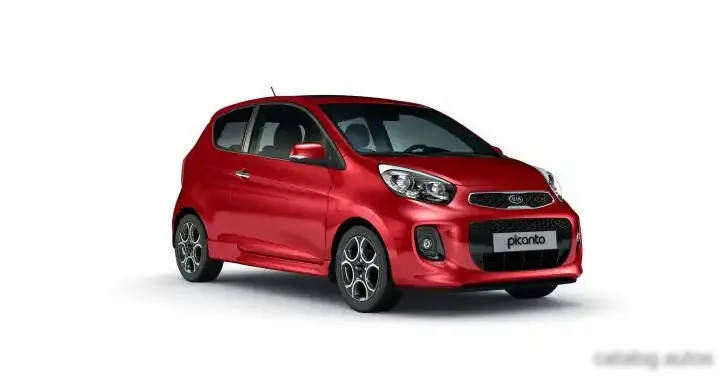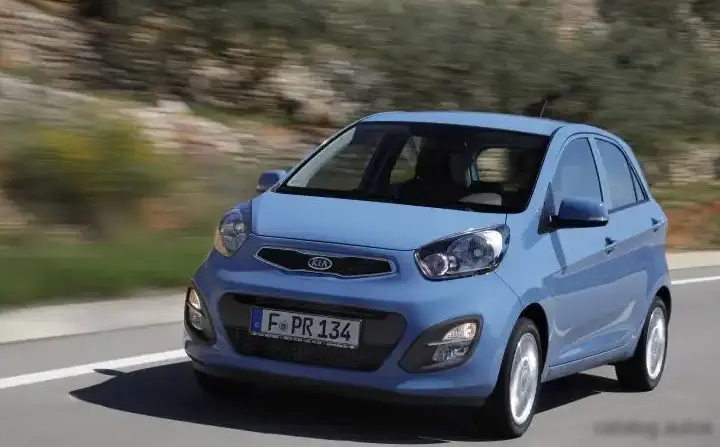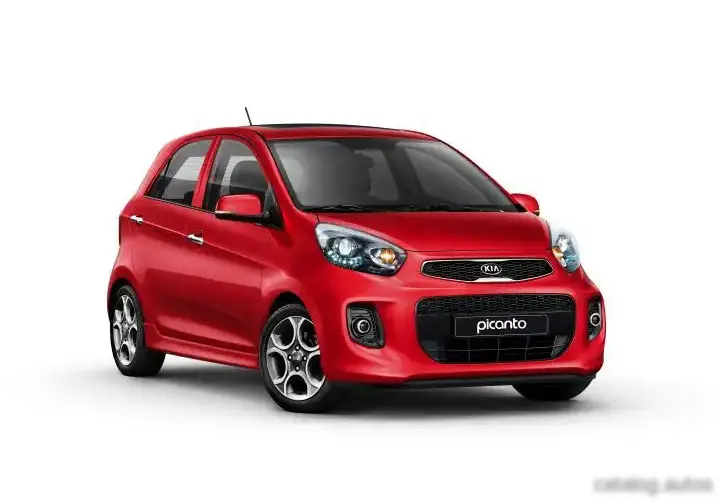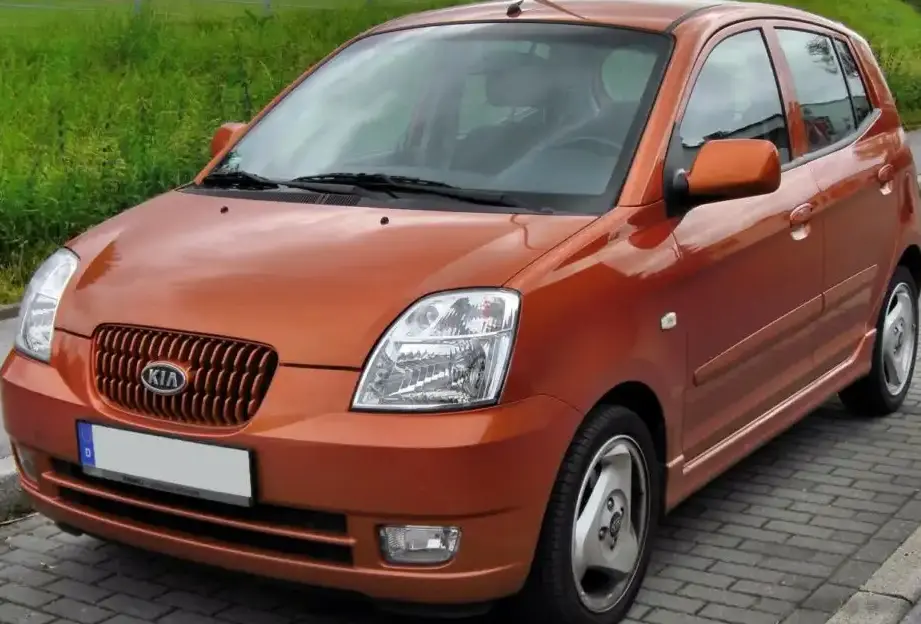
The Kia Picanto first generation, produced from 2004 to 2007, represented Kia’s entry into the highly competitive European city car segment. The 1.1i 12V variant, powered by the G4HG engine and producing 64 horsepower, was a cornerstone of the Picanto lineup during this period. Positioned as the base model, it aimed to provide affordable and economical transportation for urban drivers. This model was particularly significant in markets where smaller, fuel-efficient vehicles were highly sought after, and it served as a crucial stepping stone for Kia’s brand building in Europe and other regions. The Picanto I was built on the SA platform, shared with the Hyundai Getz.
Technical Specifications
| Brand | Kia |
| Model | Picanto |
| Generation | Picanto I |
| Type (Engine) | 1.1i 12V (64 Hp) |
| Start of production | 2004 |
| End of production | 2007 |
| Powertrain Architecture | Internal Combustion engine |
| Body type | Hatchback |
| Seats | 5 |
| Doors | 5 |
| Fuel consumption (urban) | 6.5 l/100 km (36.2 US mpg, 43.5 UK mpg, 15.4 km/l) |
| Fuel consumption (extra urban) | 4.4 l/100 km (53.5 US mpg, 64.2 UK mpg, 22.7 km/l) |
| Fuel consumption (combined) | 4.9 l/100 km (48 US mpg, 57.6 UK mpg, 20.4 km/l) |
| Fuel Type | Petrol (Gasoline) |
| Acceleration 0 – 100 km/h | 15.4 sec |
| Acceleration 0 – 62 mph | 15.4 sec |
| Acceleration 0 – 60 mph | 14.6 sec |
| Maximum speed | 154 km/h (95.69 mph) |
| Weight-to-power ratio | 15.1 kg/Hp, 66.3 Hp/tonne |
| Weight-to-torque ratio | 10 kg/Nm, 100.4 Nm/tonne |
| Power | 64 Hp @ 5500 rpm |
| Power per litre | 58.9 Hp/l |
| Torque | 97 Nm @ 2800 rpm (71.54 lb.-ft. @ 2800 rpm) |
| Engine layout | Front, Transverse |
| Engine Model/Code | G4HG |
| Engine displacement | 1086 cm3 (66.27 cu. in.) |
| Number of cylinders | 4 |
| Engine configuration | Inline |
| Cylinder Bore | 67 mm (2.64 in.) |
| Piston Stroke | 77 mm (3.03 in.) |
| Compression ratio | 10:1 |
| Number of valves per cylinder | 3 |
| Fuel injection system | Multi-port manifold injection |
| Engine aspiration | Naturally aspirated engine |
| Valvetrain | OHC |
| Engine oil capacity | 3 l (3.17 US qt | 2.64 UK qt) |
| Coolant capacity | 4.7 l (4.97 US qt | 4.14 UK qt) |
| Kerb Weight | 966 kg (2129.67 lbs.) |
| Max. weight | 1350 kg (2976.24 lbs.) |
| Max load | 384 kg (846.58 lbs.) |
| Trunk (boot) space – minimum | 220 l (7.77 cu. ft.) |
| Trunk (boot) space – maximum | 882 l (31.15 cu. ft.) |
| Fuel tank capacity | 35 l (9.25 US gal | 7.7 UK gal) |
| Length | 3495 mm (137.6 in.) |
| Width | 1595 mm (62.8 in.) |
| Height | 1480 mm (58.27 in.) |
| Wheelbase | 2370 mm (93.31 in.) |
| Front track | 1400 mm (55.12 in.) |
| Rear (Back) track | 1385 mm (54.53 in.) |
| Minimum turning circle | 9.2 m (30.18 ft.) |
| Drivetrain Architecture | Front wheel drive |
| Number of gears and type of gearbox | 5 gears, manual transmission |
| Front suspension | Spring Strut |
| Rear suspension | Torsion |
| Front brakes | Disc |
| Rear brakes | Disc |
| Assisting systems | ABS (Anti-lock braking system) |
| Steering type | Steering rack and pinion |
| Tires size | 165/65 R14 |
| Wheel rims size | 5J x 14 |
Powertrain & Engine Architecture
The heart of the Picanto 1.1i is the Kia G4HG engine, a 1.1-liter inline-four cylinder gasoline engine. This engine utilizes a single overhead camshaft (SOHC) valvetrain with three valves per cylinder (two intake, one exhaust). The G4HG employs multi-point fuel injection, delivering fuel directly into the intake ports. This configuration, while simple, was chosen for its reliability and cost-effectiveness. The engine’s modest output of 64 horsepower at 5500 rpm and 71.54 lb-ft of torque at 2800 rpm was sufficient for city driving, but it wasn’t designed for high-speed performance. The engine’s relatively low compression ratio of 10:1 contributed to its ability to run on readily available fuel grades. The 5-speed manual transmission was the standard offering, providing a reasonable balance between fuel economy and drivability. The transmission’s gear ratios were optimized for low-speed acceleration and maximizing fuel efficiency in urban environments.
Driving Characteristics
The 1.1i Picanto, with its limited horsepower and torque, offered a decidedly unhurried driving experience. Acceleration was slow, taking approximately 15.4 seconds to reach 60 mph. However, the light weight of the vehicle (around 2130 lbs) helped to mitigate the effects of the small engine. The manual transmission allowed drivers to keep the engine in its optimal power band, but frequent downshifting was often necessary, especially when encountering hills or overtaking other vehicles. The steering was light and easy, making it ideal for maneuvering in tight city streets. The suspension, tuned for comfort rather than handling, provided a reasonably smooth ride, absorbing bumps and imperfections in the road surface. Compared to potential higher-trim Picantos with larger engines, the 1.1i prioritized fuel economy and affordability over performance.
Equipment & Trim Levels
The base-level 1.1i Picanto was typically equipped with basic amenities. Standard features generally included power steering, central locking, and an immobilizer. Interior upholstery was typically a durable cloth material. Air conditioning, power windows, and a radio/CD player were often optional extras. The dashboard layout was functional and straightforward, with clearly labeled controls. Safety features were limited, typically including driver and passenger airbags and ABS brakes. The overall interior design was minimalist, reflecting the car’s budget-friendly positioning.
Chassis & Braking
The Picanto I utilized a simple yet effective chassis design. The front suspension consisted of MacPherson strut coil springs, while the rear suspension employed a torsion beam axle. This setup provided a comfortable ride and adequate handling for its intended purpose. The braking system featured disc brakes on all four wheels, which was relatively uncommon for cars in this segment at the time. ABS (Anti-lock Braking System) was included as standard, enhancing safety by preventing wheel lockup during hard braking. The relatively light weight of the vehicle contributed to its braking performance.
Market Reception & Comparison
The Kia Picanto 1.1i was generally well-received by critics as an affordable and practical city car. Its fuel economy was a major selling point, and its compact size made it easy to park and maneuver in urban environments. However, its lack of power and basic interior were often criticized. Compared to competitors like the Fiat Panda, Toyota Aygo, and Peugeot 107, the Picanto offered a competitive price point and a longer warranty. The 1.1i variant was often seen as a sensible choice for first-time car buyers or those seeking a low-cost, reliable vehicle for short commutes.
Legacy
The Kia Picanto I 1.1i, while not a performance icon, established Kia as a viable player in the European city car market. The G4HG engine proved to be reasonably reliable, and many examples are still on the road today. The 1.1i variant remains a popular choice for budget-conscious buyers in the used car market. Its simplicity and affordability continue to appeal to those seeking a basic, economical mode of transportation. The success of the first-generation Picanto paved the way for subsequent generations, which have continued to build on its reputation for value and reliability.