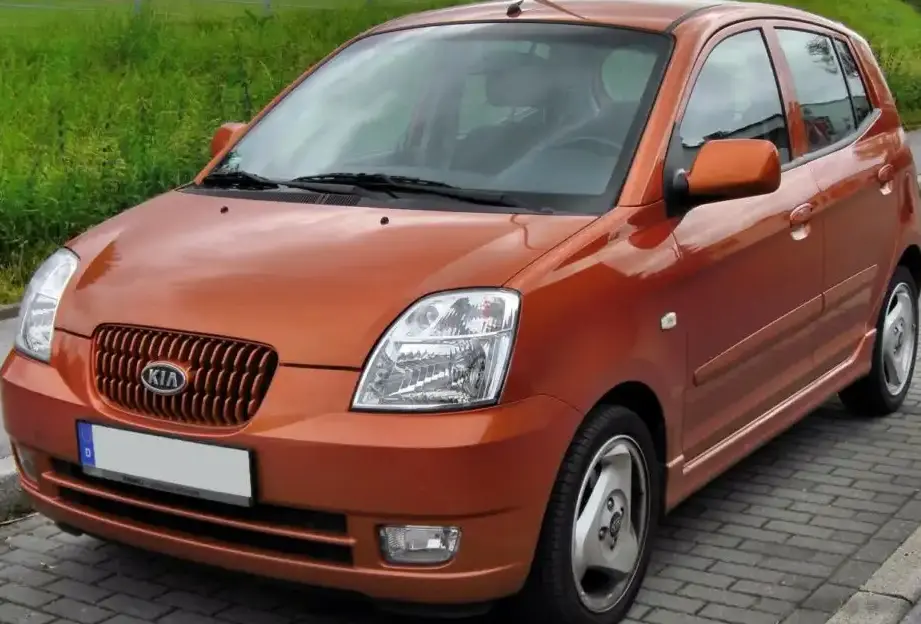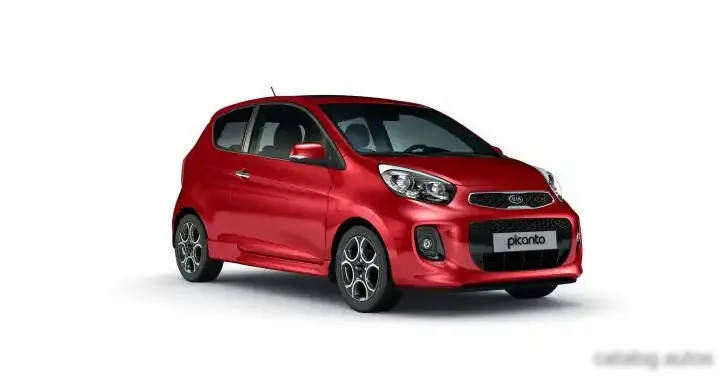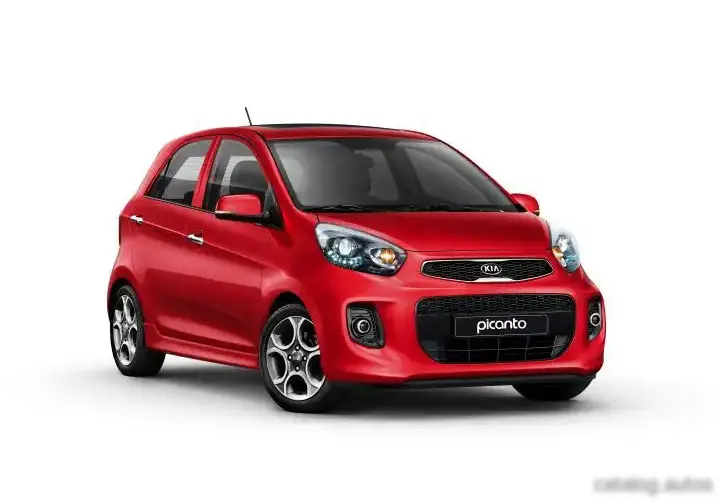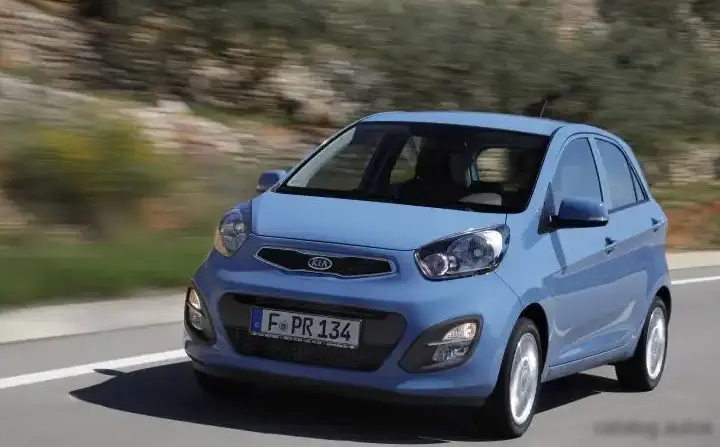
The Kia Picanto II 5D 1.0 12V LPI (82 hp) is a subcompact hatchback produced by the South Korean manufacturer Kia from 2011 to 2015. This variant represents an entry-level offering within the second generation of the Picanto (TA model), positioned as an affordable and economical city car. It was primarily marketed in Europe and other regions where small, fuel-efficient vehicles are in high demand. The “LPI” designation indicates that this model was specifically designed to run on Liquefied Petroleum Gas, a common alternative fuel in several European markets. This version played a significant role in Kia’s efforts to expand its presence in the competitive microcar segment.
Technical Specifications
| Brand | Kia |
| Model | Picanto |
| Generation | Picanto II 5D |
| Type (Engine) | 1.0 12V LPI (82 Hp) |
| Start of production | 2011 |
| End of production | 2015 |
| Powertrain Architecture | Internal Combustion engine |
| Body type | Hatchback |
| Seats | 5 |
| Doors | 5 |
| Fuel consumption (urban) | 7.4 l/100 km (31.8 US mpg) |
| Fuel consumption (extra urban) | 5 l/100 km (47 US mpg) |
| Fuel consumption (combined) | 5.9 l/100 km (39.9 US mpg) |
| Fuel Type | Petrol (Gasoline)/LPG |
| Acceleration 0 – 100 km/h | 14.4 sec |
| Acceleration 0 – 62 mph | 14.4 sec |
| Acceleration 0 – 60 mph | 13.7 sec |
| Maximum speed | 153 km/h (95.07 mph) |
| Emission standard | Euro 5 |
| Weight-to-power ratio | 10.7 kg/Hp |
| Weight-to-torque ratio | 9.4 kg/Nm |
| Power | 82 Hp |
| Torque | 94 Nm @ 3500 rpm (69.33 lb.-ft. @ 3500 rpm) |
| Engine layout | Front, Transverse |
| Engine Model/Code | B3LA |
| Engine displacement | 998 cm3 (60.9 cu. in.) |
| Number of cylinders | 3 |
| Engine configuration | Inline |
| Fuel injection system | Multi-port manifold injection |
| Engine aspiration | Naturally aspirated |
| Engine oil capacity | 2.9 l (3.06 US qt | 2.55 UK qt) |
| Coolant capacity | 5.1 l (5.39 US qt | 4.49 UK qt) |
| Kerb Weight | 880 kg (1940.07 lbs.) |
| Max. weight | 1340 kg (2954.19 lbs.) |
| Max load | 460 kg (1014.13 lbs.) |
| Trunk (boot) space – minimum | 200 l (7.06 cu. ft.) |
| Trunk (boot) space – maximum | 605 l (21.37 cu. ft.) |
| Fuel tank capacity | 35 l (9.25 US gal | 7.7 UK gal) |
| Length | 3595 mm (141.54 in.) |
| Width | 1595 mm (62.8 in.) |
| Height | 1480 mm (58.27 in.) |
| Wheelbase | 2385 mm (93.9 in.) |
| Front track | 1421 mm (55.94 in.) |
| Rear track | 1424 mm (56.06 in.) |
| Minimum turning circle | 9.8 m (32.15 ft.) |
| Drivetrain | Front wheel drive |
| Number of gears | 5 gears, manual transmission |
| Assisting systems | ABS (Anti-lock braking system) |
| Steering type | Steering rack and pinion |
| Tires size | 165/60 R14 |
| Wheel rims size | 14 |
Powertrain & Engine Architecture
The heart of the Picanto II 5D 1.0 LPI is the B3LA engine, a 998cc inline-three cylinder gasoline engine specifically adapted for Liquefied Petroleum Gas (LPG) operation. This engine utilizes a multi-point fuel injection system, delivering fuel directly into the intake ports. The engine features a double overhead camshaft (DOHC) valvetrain, contributing to improved breathing and efficiency. The LPI system involves a dedicated fuel rail and injectors for the LPG, switching between gasoline and LPG operation automatically. The engine produces 82 horsepower and 94 Nm of torque at 3500 rpm. This engine is known for its simplicity and relatively low maintenance requirements. The Picanto 1.0 LPI was exclusively offered with a five-speed manual transmission, prioritizing fuel economy over outright performance.
Driving Characteristics
The 1.0L LPI engine, paired with the five-speed manual gearbox, delivers modest performance. Acceleration from 0 to 60 mph takes approximately 13.7 seconds, and the top speed is around 95 mph. The power delivery is linear but requires the engine to be revved to extract the most performance. The gear ratios are tuned for economy, meaning the engine can feel strained when climbing hills or carrying a full load. Compared to potential higher-spec Picanto variants (which were not widely available with the LPI engine), this version prioritizes fuel efficiency and low running costs over sporty driving dynamics. The light weight of the Picanto helps to mitigate the lack of outright power, making it nimble in urban environments.
Equipment & Trim Levels
The 1.0 LPI variant of the Picanto II 5D typically came with a basic level of equipment, reflecting its position as an entry-level model. Standard features generally included power steering, central locking, electric front windows, and an ABS anti-lock braking system. Interior upholstery was typically cloth, and the dashboard featured a simple, functional design. Optional extras could include air conditioning, alloy wheels, and a radio/CD player. The trim level was often designated as ‘1’ or a similar base-level identifier, signifying its position at the bottom of the Picanto range.
Chassis & Braking
The Picanto II 5D utilizes a front-wheel-drive layout with a MacPherson strut front suspension and a torsion beam rear suspension. The rear brakes were typically drum brakes, while the front brakes were disc brakes. This configuration was chosen to keep costs down and maintain a reasonable level of ride comfort. The steering is rack and pinion, providing light and easy steering feel. Stabilizer bars were often omitted on the base models to further reduce weight and cost. The suspension setup is tuned for comfort rather than sporty handling, prioritizing a smooth ride over sharp cornering.
Market Reception & Comparison
The Kia Picanto II 5D 1.0 LPI was generally well-received as an affordable and economical city car. Critics praised its fuel efficiency, low running costs, and compact size, making it ideal for navigating congested urban areas. However, the engine’s lack of power was a common criticism. Compared to other Picanto variants, the LPI model offered similar practicality but with a focus on alternative fuel operation. Against competitors like the Fiat Panda, Toyota Aygo, and Volkswagen Up!, the Picanto LPI offered a competitive price point and a longer warranty, which were key selling points. The LPI version was particularly popular in countries with incentives for LPG-powered vehicles.
Legacy
The Kia Picanto II 5D 1.0 LPI has proven to be a reliable and durable vehicle. The B3LA engine is known for its robustness and relatively low maintenance requirements. In the used car market, these models are often sought after by buyers looking for an affordable and economical runabout. While the LPG system requires periodic servicing, the overall running costs remain low. The Picanto II 5D 1.0 LPI represents a significant step forward for Kia in terms of build quality and reliability, contributing to the brand’s growing reputation in the European market. Today, well-maintained examples continue to provide dependable transportation for budget-conscious drivers.