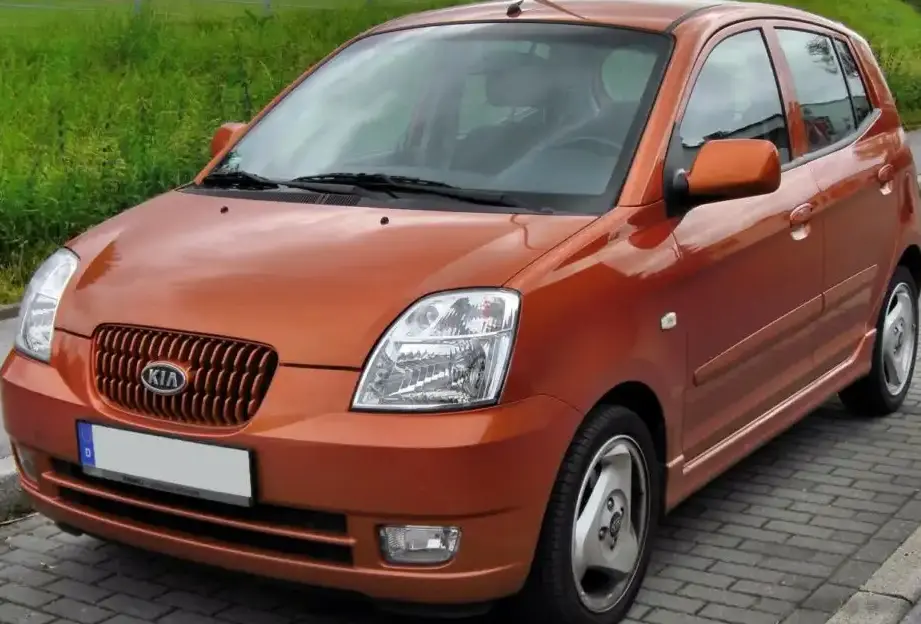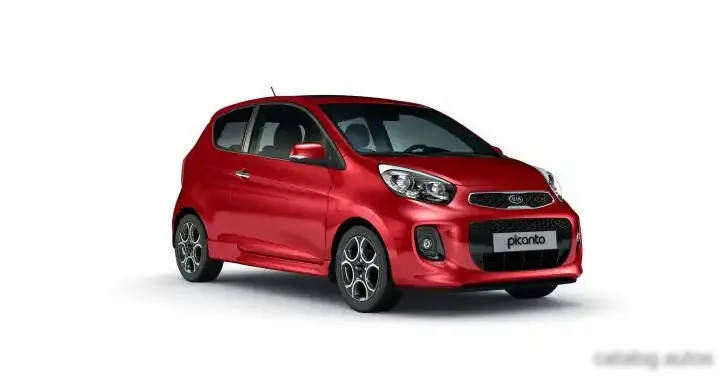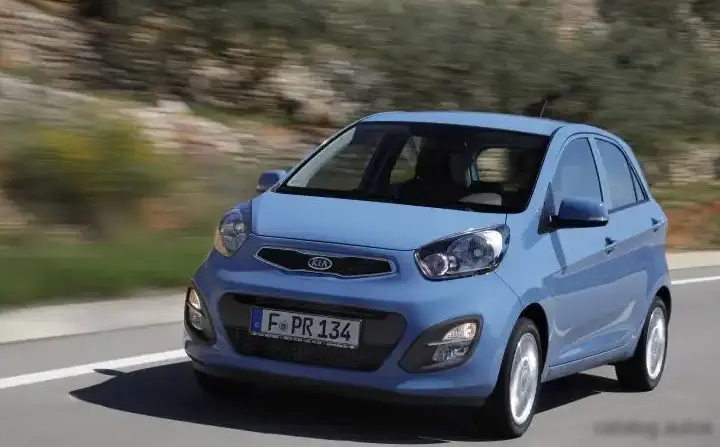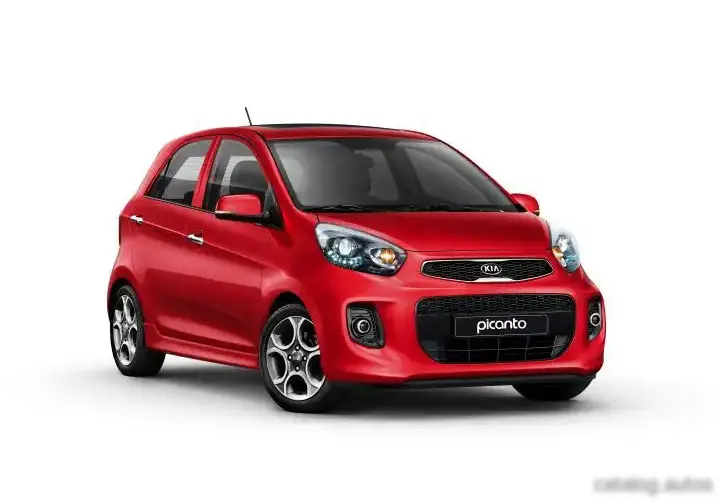
The Kia Picanto II 5D (facelift 2015) 1.0 (67 Hp) LPG represents a specific variant within the second generation of Kia’s city car, the Picanto. Produced from 2015 to 2017, this model was primarily aimed at the European market, where smaller, fuel-efficient vehicles are highly sought after. The facelift brought minor cosmetic updates and refinements to the existing Picanto II platform (TA), which was based on Hyundai’s HA platform. This particular configuration – the 1.0-liter engine paired with LPG capability – positioned itself as an entry-level option, emphasizing affordability and low running costs. It served as a gateway into the Picanto range, appealing to first-time car buyers, city dwellers, and those seeking a practical and economical vehicle.
Technical Specifications
| Brand | Kia |
| Model | Picanto |
| Generation | Picanto II 5D (facelift 2015) |
| Type (Engine) | 1.0 (67 Hp) LPG |
| Start of production | 2015 |
| End of production | 2017 |
| Powertrain Architecture | Internal Combustion engine |
| Body type | Hatchback |
| Seats | 5 |
| Doors | 5 |
| Fuel consumption (economy) – urban | 6.1-6.2 l/100 km (38.6 – 37.9 US mpg, 46.3 – 45.6 UK mpg, 16.4 – 16.1 km/l) |
| Fuel consumption (economy) – urban (LPG) | 8.7-8.2 l/100 km |
| Fuel consumption (economy) – extra urban | 3.7-3.9 l/100 km (63.6 – 60.3 US mpg, 76.3 – 72.4 UK mpg, 27 – 25.6 km/l) |
| Fuel consumption (economy) – extra urban (LPG) | 5.0 l/100 km |
| Fuel consumption (economy) – combined | 4.6-4.7 l/100 km (51.1 – 50 US mpg, 61.4 – 60.1 UK mpg, 21.7 – 21.3 km/l) |
| Fuel consumption (economy) – combined (LPG) | 6.0-6.2 l/100 km |
| CO2 emissions | 107-110 g/km |
| CO2 emissions (LPG) | 97-100 g/km |
| Fuel Type | Petrol / LPG |
| Acceleration 0 – 100 km/h | 13.9 sec |
| Acceleration 0 – 62 mph | 13.9 sec |
| Acceleration 0 – 60 mph | 13.2 sec |
| Maximum speed | 157 km/h (97.56 mph) |
| Maximum speed (LPG) | 155 km/h |
| Emission standard | Euro 6 |
| Weight-to-power ratio | 14 kg/Hp, 71.3 Hp/tonne |
| Weight-to-torque ratio | 10.2 kg/Nm, 97.9 Nm/tonne |
| Power | 67 Hp @ 6200 rpm |
| Power per litre | 67.1 Hp/l |
| Torque | 92 Nm @ 3500 rpm (67.86 lb.-ft. @ 3500 rpm) |
| Engine layout | Front, Transverse |
| Engine Model/Code | B3LA |
| Engine displacement | 998 cm3 (60.9 cu. in.) |
| Number of cylinders | 3 |
| Engine configuration | Inline |
| Cylinder Bore | 71 mm (2.8 in.) |
| Piston Stroke | 84 mm (3.31 in.) |
| Compression ratio | 10.5:1 |
| Number of valves per cylinder | 4 |
| Fuel injection system | Multi-port manifold injection |
| Engine aspiration | Naturally aspirated engine |
| Engine oil capacity | 2.9 l (3.06 US qt | 2.55 UK qt) |
| Coolant | 5.1 l (5.39 US qt | 4.49 UK qt) |
| Kerb Weight | 940-1020 kg (2072.35 – 2248.72 lbs.) |
| Max. weight | 1400 kg (3086.47 lbs.) |
| Max load | 380-460 kg (837.76 – 1014.13 lbs.) |
| Trunk (boot) space – minimum | 151 l (5.33 cu. ft.) |
| Trunk (boot) space – maximum | 821 l (28.99 cu. ft.) |
| Fuel tank capacity | 35 l (9.25 US gal | 7.7 UK gal) |
| Fuel tank capacity (LPG) | 27 l |
| Length | 3595 mm (141.54 in.) |
| Width | 1595 mm (62.8 in.) |
| Width including mirrors | 1880 mm (74.02 in.) |
| Height | 1480 mm (58.27 in.) |
| Wheelbase | 2385 mm (93.9 in.) |
| Front track | 1409-1421 mm (55.47 – 55.94 in.) |
| Rear (Back) track | 1412-1424 mm (55.59 – 56.06 in.) |
| Minimum turning circle | 9.6 m (31.5 ft.) |
| Drivetrain Architecture | The Internal combustion engine (ICE) drives the front wheels of the vehicle. |
| Drive wheel | Front wheel drive |
| Number of gears and type of gearbox | 5 gears, manual transmission |
| Front suspension | Independent, type McPherson with coil spring and anti-roll bar |
| Rear suspension | Semi-independent, coil spring |
| Front brakes | Ventilated discs |
| Rear brakes | Disc |
| Assisting systems | ABS (Anti-lock braking system) |
| Steering type | Steering rack and pinion |
| Power steering | Electric Steering |
| Tires size | 155/70 R13 75T; 165/60 R14 75H; 175/50 R15 75H |
| Wheel rims size | 4.5J x 13 ET 46; 5.0J x 14 ET 49; 5.5J x 15 |
INTRODUCTION
The Kia Picanto II, launched in 2011 and facelifted in 2015, represented a significant step forward for Kia in the European city car segment. The facelift brought subtle styling revisions, improved interior materials, and enhanced equipment levels. The 1.0-liter (67 hp) LPG variant was a key offering, particularly in markets where LPG infrastructure was well-developed. This version aimed to provide an exceptionally economical and environmentally conscious option for buyers. It slotted into the Picanto lineup as the base model, below the 1.25-liter petrol variants, and was designed for those prioritizing fuel efficiency and low purchase price over outright performance.
Powertrain & Engine Architecture
At the heart of this Picanto variant lies the Kia B3LA engine, a 998cc inline-three cylinder petrol engine. This engine utilizes a multi-point fuel injection system and a naturally aspirated design. The B3LA engine is known for its simplicity and reliability, though it doesn’t boast cutting-edge technology. The LPG conversion is a factory-installed system, ensuring compatibility and maintaining Kia’s warranty coverage. The engine produces 67 horsepower at 6,200 rpm and 92 Nm (67.86 lb-ft) of torque at 3,500 rpm. The engine’s modest output is channeled through a five-speed manual transmission, which was the only transmission option available with this engine/fuel combination. The transmission is a standard manual unit, designed for durability and ease of use rather than sporty performance.
Driving Characteristics
The 1.0-liter LPG Picanto is not a performance-oriented vehicle. Acceleration is leisurely, taking approximately 13.9 seconds to reach 62 mph (100 km/h). However, within the urban environment, where it’s primarily intended to operate, the engine provides sufficient power for everyday driving. The five-speed manual transmission allows drivers to keep the engine in its optimal power band, but frequent downshifts are often necessary when encountering hills or overtaking. Compared to the 1.25-liter Picanto, this variant feels noticeably slower, particularly at higher speeds. The LPG system does result in a slight reduction in power compared to the petrol-only version, but the cost savings on fuel often outweigh this performance difference. The gear ratios are tuned for economy, prioritizing fuel efficiency over rapid acceleration.
Equipment & Trim Levels
The 1.0 LPG Picanto typically came with a basic, yet functional, equipment list. Standard features generally included central locking, power steering, electric front windows, and an ABS anti-lock braking system. Air conditioning was often an optional extra, as were features like alloy wheels and a stereo system with USB connectivity. Interior upholstery was typically cloth, with a simple dashboard layout. The focus was on providing essential features at an affordable price point. Higher trim levels within the Picanto II range offered more luxurious appointments, such as leather upholstery, automatic climate control, and a more sophisticated infotainment system, but these were not available on the base 1.0 LPG model.
Chassis & Braking
The Picanto II utilizes a front-wheel-drive layout with a McPherson strut front suspension and a semi-independent coil spring rear suspension. This setup provides a comfortable ride quality, well-suited for navigating city streets. The front brakes are ventilated discs, while the rear brakes are discs. ABS is standard, providing enhanced braking performance and stability. The chassis is relatively lightweight, contributing to the car’s fuel efficiency. Stabilizer bars were fitted to both the front and rear axles to reduce body roll during cornering, though the Picanto is not designed for spirited driving. The suspension is tuned for comfort rather than handling precision.
Market Reception & Comparison
The Kia Picanto II 1.0 LPG was generally well-received by critics as a practical and economical city car. Its low purchase price and excellent fuel economy were major selling points. Compared to other city cars in its class, such as the Fiat 500 or Volkswagen Up!, the Picanto offered a more spacious interior and a longer warranty. However, it lacked the brand cachet of some of its competitors. The LPG variant was particularly popular in countries with established LPG infrastructure, where drivers could benefit from significant fuel cost savings. The 1.25-liter petrol Picanto offered more performance, but at a higher price point and with reduced fuel economy. The LPG version appealed to a different segment of the market – those prioritizing cost savings above all else.
Legacy
The Kia Picanto II 1.0 LPG has proven to be a reliable and durable vehicle. The B3LA engine is known for its longevity, and the LPG system, when properly maintained, can provide years of trouble-free service. In the used car market, these Picantos are often sought after by budget-conscious buyers looking for an economical and practical vehicle. While not a particularly exciting car to drive, its low running costs and proven reliability make it a sensible choice for city commuting and short journeys. Parts availability remains good, and maintenance costs are relatively low, further enhancing its appeal in the used car market.