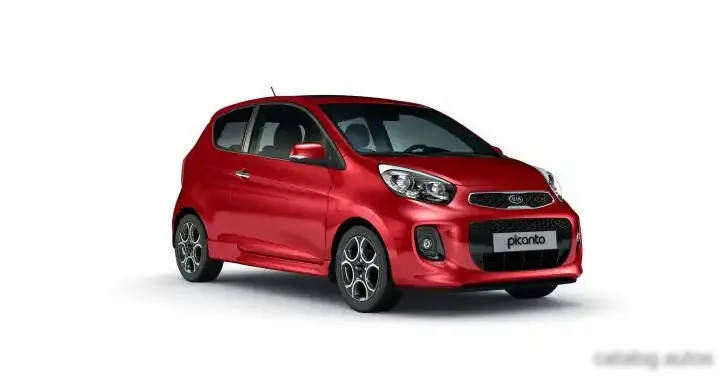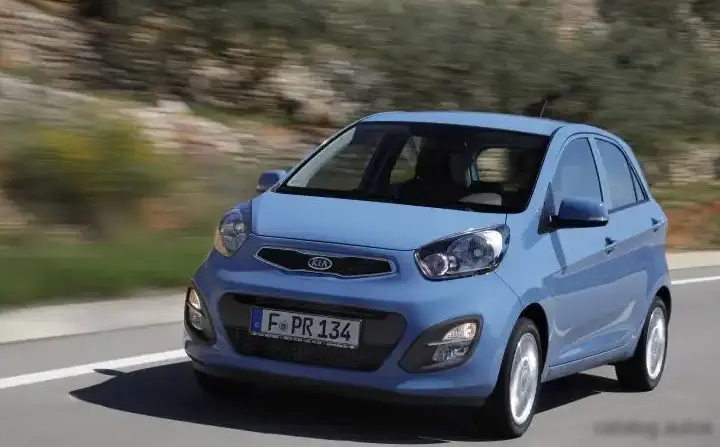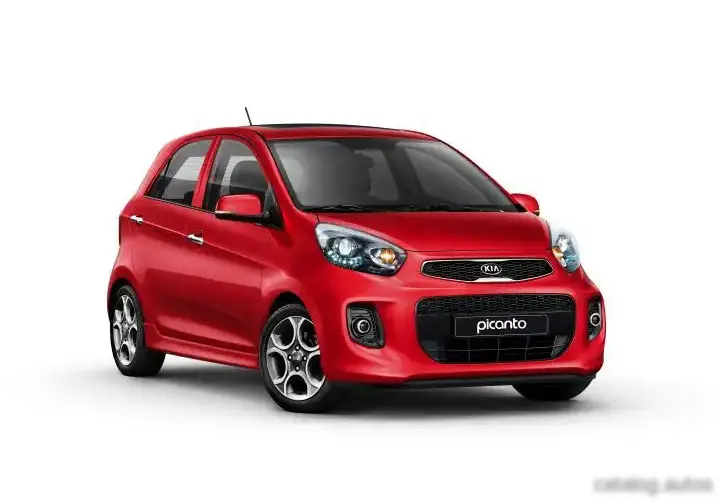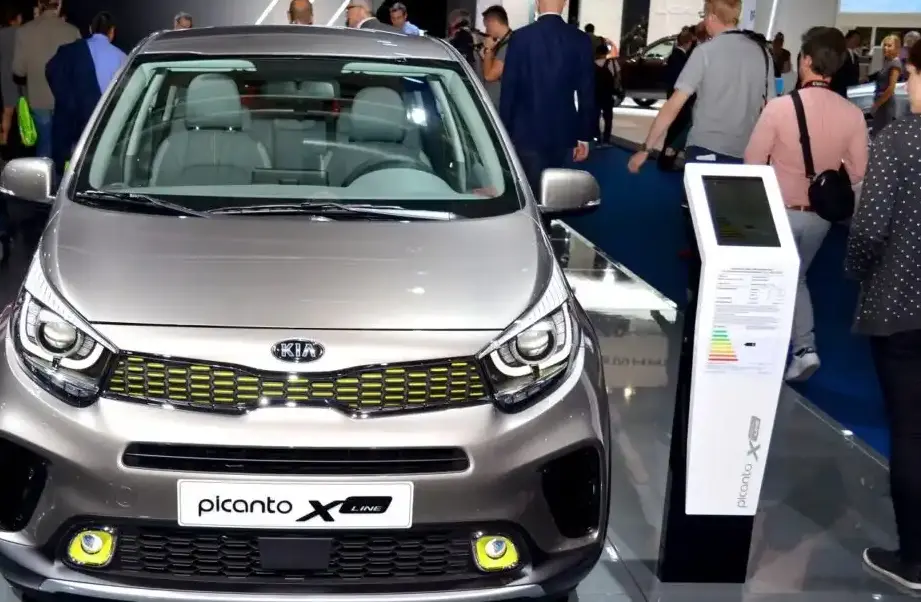
The Kia Picanto III 1.0, producing 67 horsepower, was a key entry point into the third generation of Kia’s city car, launched in April 2017 and continuing through June 2020. Positioned as the base model within the Picanto III range, it aimed to provide affordable and efficient transportation, particularly in urban environments. This variant played a significant role in expanding Kia’s presence in the European and Asian microcar segments, offering a compelling alternative to established competitors like the Fiat 500 and Hyundai i10. The Picanto III itself represented a substantial step forward in terms of design, interior quality, and available technology compared to its predecessors.
Technical Specifications
| Brand | Kia |
| Model | Picanto |
| Generation | Picanto III |
| Type (Engine) | 1.0 (67 Hp) |
| Start of production | April, 2017 |
| End of production | June, 2020 |
| Powertrain Architecture | Internal Combustion engine |
| Body type | Hatchback |
| Seats | 5 |
| Doors | 5 |
| Fuel consumption (urban) | 5.6 l/100 km (42 US mpg, 50.4 UK mpg, 17.9 km/l) |
| Fuel consumption (extra urban) | 3.7 l/100 km (63.6 US mpg, 76.3 UK mpg, 27 km/l) |
| Fuel consumption (combined) | 4.4 l/100 km (53.5 US mpg, 64.2 UK mpg, 22.7 km/l) |
| CO2 emissions | 101 g/km |
| Fuel Type | Petrol (Gasoline) |
| Acceleration 0 – 100 km/h | 14.3 sec |
| Acceleration 0 – 62 mph | 14.3 sec |
| Acceleration 0 – 60 mph | 13.6 sec |
| Maximum speed | 161 km/h (100.04 mph) |
| Emission standard | Euro 6 |
| Weight-to-power ratio | 14 kg/Hp, 71.7 Hp/tonne |
| Weight-to-torque ratio | 9.7 kg/Nm, 102.7 Nm/tonne |
| Power | 67 Hp @ 5500 rpm |
| Power per litre | 67.1 Hp/l |
| Torque | 96 Nm @ 3500 rpm (70.81 lb.-ft. @ 3500 rpm) |
| Engine layout | Front, Transverse |
| Engine Model/Code | G3LA |
| Engine displacement | 998 cm3 (60.9 cu. in.) |
| Number of cylinders | 3 |
| Engine configuration | Inline |
| Cylinder Bore | 71 mm (2.8 in.) |
| Piston Stroke | 84 mm (3.31 in.) |
| Compression ratio | 10.5:1 |
| Number of valves per cylinder | 4 |
| Fuel injection system | Multi-port manifold injection |
| Engine aspiration | Naturally aspirated engine |
| Valvetrain | DOHC |
| Engine oil capacity | 2.9 l (3.06 US qt | 2.55 UK qt) |
| Coolant | 5 l (5.28 US qt | 4.4 UK qt) |
| Kerb Weight | 935-1028 kg (2061.32 – 2266.35 lbs.) |
| Max. weight | 1400 kg (3086.47 lbs.) |
| Max load | 372-465 kg (820.12 – 1025.15 lbs.) |
| Trunk (boot) space – minimum | 255 l (9.01 cu. ft.) |
| Trunk (boot) space – maximum | 1010 l (35.67 cu. ft.) |
| Fuel tank capacity | 35 l (9.25 US gal | 7.7 UK gal) |
| Length | 3595 mm (141.54 in.) |
| Width | 1595 mm (62.8 in.) |
| Width including mirrors | 1880 mm (74.02 in.) |
| Height | 1485 mm (58.46 in.) |
| Wheelbase | 2400 mm (94.49 in.) |
| Front track | 1406 mm (55.35 in.) |
| Rear (Back) track | 1415 mm (55.71 in.) |
| Front overhang | 675 mm (26.57 in.) |
| Rear overhang | 520 mm (20.47 in.) |
| Ride height (ground clearance) | 141 mm (5.55 in.) |
| Minimum turning circle | 9.4 m (30.84 ft.) |
| Drivetrain Architecture | The Internal combustion engine (ICE) drives the front wheels of the vehicle. |
| Drive wheel | Front wheel drive |
| Number of gears and type of gearbox | 5 gears, manual transmission |
| Front suspension | Independent, type McPherson with coil spring and anti-roll bar |
| Rear suspension | Semi-independent, coil spring |
| Front brakes | Ventilated discs |
| Rear brakes | Disc |
| Assisting systems | ABS (Anti-lock braking system) |
| Steering type | Steering rack and pinion |
| Power steering | Electric Steering |
| Tires size | 175/65 R14 |
| Wheel rims size | 5.5J X 14 |
Powertrain & Engine Architecture
The heart of the Picanto III 1.0 is the Kia G3LA engine, a naturally aspirated, 998cc inline-three cylinder petrol engine. This engine utilizes a multi-point fuel injection system and a double overhead camshaft (DOHC) valvetrain, contributing to its relatively efficient operation. The G3LA engine is known for its simplicity and durability, making it a cost-effective choice for Kia. The engine produces 67 horsepower at 5,500 rpm and 96 Nm (70.81 lb-ft) of torque at 3,500 rpm. This power is delivered to the front wheels through a five-speed manual transmission, which was the standard offering for this variant. The engine’s relatively low compression ratio of 10.5:1 helps to accommodate a wide range of fuel qualities.
Driving Characteristics
The 1.0-liter Picanto III, with its 67 horsepower and manual transmission, offered a decidedly economy-focused driving experience. Acceleration was modest, taking approximately 14.3 seconds to reach 62 mph (100 km/h). In real-world conditions, this translated to adequate performance for city driving, but required more planning when overtaking or merging onto highways. The five-speed manual transmission was well-matched to the engine’s characteristics, providing reasonable control over the limited power output. Compared to higher-spec Picanto models with larger engines, the 1.0 felt noticeably slower, but its lighter weight and nimble handling made it enjoyable to drive in urban environments. The gear ratios were optimized for fuel efficiency rather than outright performance.
Equipment & Trim Levels
The base-level Picanto III 1.0 typically came equipped with essential features such as air conditioning, central locking, electric front windows, and a basic audio system with USB connectivity. Safety features included ABS (Anti-lock Braking System) and airbags. Interior upholstery was typically cloth, and the dashboard featured a functional, if somewhat basic, design. Optional extras included alloy wheels, a touchscreen infotainment system, and rear parking sensors. The trim level was designed to appeal to budget-conscious buyers who prioritized practicality and affordability over luxury features.
Chassis & Braking
The Picanto III utilized a McPherson strut front suspension and a semi-independent coil spring rear suspension. This setup provided a comfortable ride quality, particularly on smoother roads. The front brakes were ventilated discs, while the rear brakes were discs, offering adequate stopping power for the vehicle’s weight and performance. The electric power steering provided light and easy steering, making it ideal for maneuvering in tight city streets. The relatively short wheelbase and narrow track contributed to the Picanto’s nimble handling characteristics.
Market Reception & Comparison
The Kia Picanto III 1.0 was generally well-received by critics as an affordable and efficient city car. Its fuel economy of around 53.5 US mpg (64.2 UK mpg) was a major selling point. Compared to other trims in the Picanto lineup, the 1.0 offered the lowest price point but sacrificed performance. The 1.2-liter engine offered a noticeable improvement in power, while the automatic transmission provided added convenience. However, the 1.0’s simplicity and low running costs made it a popular choice for first-time car buyers and those seeking a reliable and economical urban runabout.
Legacy
The Kia Picanto III 1.0 has proven to be a reliable and durable vehicle, with many examples still on the road today. The G3LA engine is known for its longevity, and routine maintenance is relatively inexpensive. In the used car market, the Picanto III 1.0 remains an attractive option for buyers seeking an affordable and fuel-efficient city car. While not offering the performance or features of higher-spec models, its simplicity and low running costs continue to make it a compelling choice.