Technical Specifications
| Brand | Kia |
| Model | Picanto |
| Generation | Picanto III |
| Type (Engine) | 1.2 (84 Hp) |
| Start of production | April, 2017 |
| End of production | June, 2020 |
| Powertrain Architecture | Internal Combustion engine |
| Body type | Hatchback |
| Seats | 5 |
| Doors | 5 |
| Fuel consumption (urban) | 5.9 l/100 km (39.9 US mpg, 47.9 UK mpg, 16.9 km/l) |
| Fuel consumption (extra urban) | 3.8 l/100 km (61.9 US mpg, 74.3 UK mpg, 26.3 km/l) |
| Fuel consumption (combined) | 4.6 l/100 km (51.1 US mpg, 61.4 UK mpg, 21.7 km/l) |
| CO2 emissions | 106 g/km |
| Fuel Type | Petrol (Gasoline) |
| Acceleration 0 – 100 km/h | 12 sec |
| Acceleration 0 – 62 mph | 12 sec |
| Acceleration 0 – 60 mph | 11.4 sec |
| Maximum speed | 173 km/h (107.5 mph) |
| Emission standard | Euro 6 |
| Weight-to-power ratio | 11.2 kg/Hp, 89.5 Hp/tonne |
| Weight-to-torque ratio | 7.7 kg/Nm, 129.9 Nm/tonne |
| Power | 84 Hp @ 6000 rpm |
| Power per litre | 67.3 Hp/l |
| Torque | 122 Nm @ 4000 rpm (89.98 lb.-ft. @ 4000 rpm) |
| Engine layout | Front, Transverse |
| Engine Model/Code | G4LA |
| Engine displacement | 1248 cm3 (76.16 cu. in.) |
| Number of cylinders | 4 |
| Engine configuration | Inline |
| Cylinder Bore | 71 mm (2.8 in.) |
| Piston Stroke | 78.8 mm (3.1 in.) |
| Compression ratio | 10.5:1 |
| Number of valves per cylinder | 4 |
| Fuel injection system | Multi-port manifold injection |
| Engine aspiration | Naturally aspirated engine |
| Valvetrain | DOHC |
| Engine oil capacity | 3.5 l (3.7 US qt | 3.08 UK qt) |
| Coolant | 5.5 l (5.81 US qt | 4.84 UK qt) |
| Kerb Weight | 939-1051 kg (2070.14 – 2317.06 lbs.) |
| Max. weight | 1400 kg (3086.47 lbs.) |
| Max load | 349-461 kg (769.41 – 1016.33 lbs.) |
| Trunk (boot) space – minimum | 255 l (9.01 cu. ft.) |
| Trunk (boot) space – maximum | 1010 l (35.67 cu. ft.) |
| Fuel tank capacity | 35 l (9.25 US gal | 7.7 UK gal) |
| Length | 3595 mm (141.54 in.) |
| Width | 1595 mm (62.8 in.) |
| Width including mirrors | 1880 mm (74.02 in.) |
| Height | 1485 mm (58.46 in.) |
| Wheelbase | 2400 mm (94.49 in.) |
| Front track | 1394-1406 mm (54.88 – 55.35 in.) |
| Rear (Back) track | 1403-1415 mm (55.24 – 55.71 in.) |
| Front overhang | 675 mm (26.57 in.) |
| Rear overhang | 520 mm (20.47 in.) |
| Ride height (ground clearance) | 141 mm (5.55 in.) |
| Minimum turning circle | 9.4 m (30.84 ft.) |
| Drivetrain Architecture | The Internal combustion engine (ICE) drives the front wheels of the vehicle. |
| Drive wheel | Front wheel drive |
| Number of gears and type of gearbox | 5 gears, manual transmission |
| Front suspension | Independent, type McPherson with coil spring and anti-roll bar |
| Rear suspension | Semi-independent, coil spring |
| Front brakes | Ventilated discs |
| Rear brakes | Disc |
| Assisting systems | ABS (Anti-lock braking system) |
| Steering type | Steering rack and pinion |
| Power steering | Electric Steering |
| Tires size | 175/65 R14; 185/55 R15; 195/45 R16 |
| Wheel rims size | 5.5J X 14; 6J X 15; 6.5J X 16 |
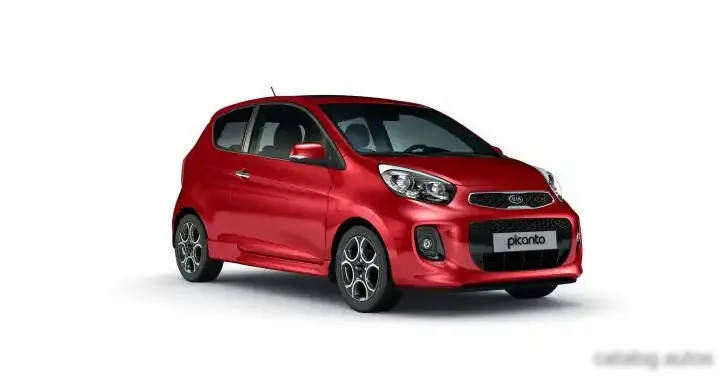
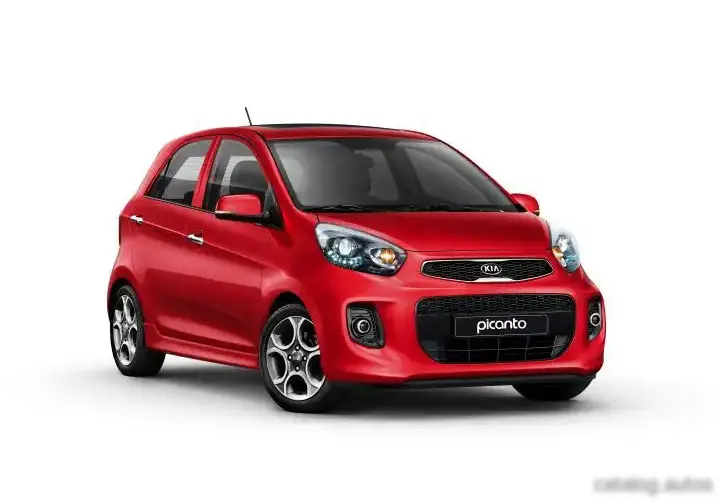
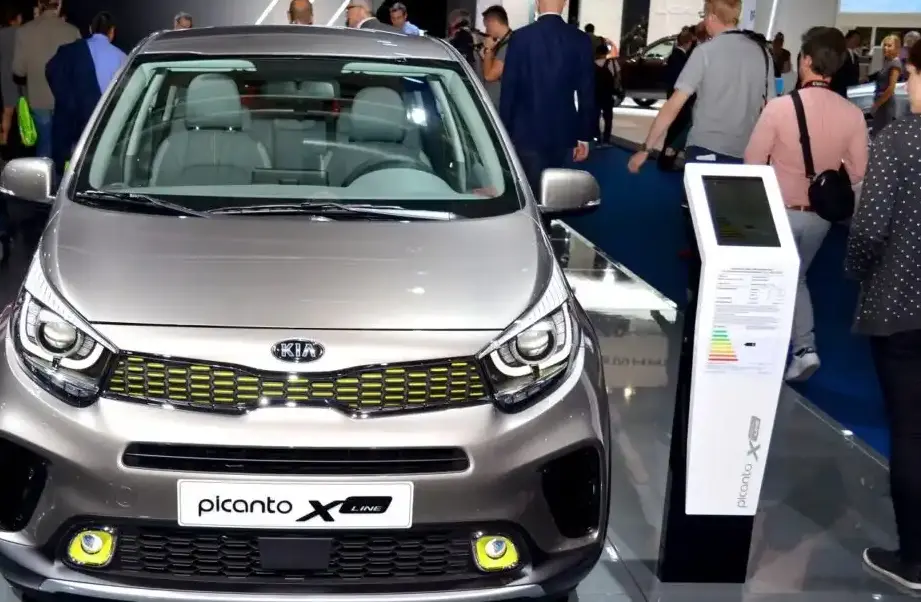
The Kia Picanto III 1.2 (84 hp) is a front-wheel-drive, five-door hatchback produced from April 2017 to June 2020. Positioned as the entry-level offering within the third-generation Picanto (TA) lineup, it was designed to be the most accessible powertrain option, appealing to budget-conscious buyers and those prioritizing fuel efficiency in urban environments. The Picanto III, built on the HA platform, represented a significant advancement in design and refinement compared to previous generations, aiming to compete with established city cars like the Fiat 500 and Volkswagen Up!. This particular variant, with its 1.2-liter engine and automatic transmission, was primarily sold in markets where smaller, economical vehicles are in high demand, including Europe and Asia.
Powertrain & Engine Architecture
The Kia Picanto III 1.2’s powertrain centers around the G4LA engine, a 1.248-liter (76.16 cubic inches) inline-four cylinder gasoline engine. This engine employs a multi-point fuel injection system and a dual overhead camshaft (DOHC) valvetrain with four valves per cylinder. The G4LA is a naturally aspirated engine, meaning it doesn’t utilize forced induction like turbocharging or supercharging. Its compression ratio of 10.5:1 strikes a balance between efficiency and performance. The engine generates 84 horsepower at 6000 rpm and 122 Nm (89.98 lb-ft) of torque at 4000 rpm. The engine is mounted transversely in the front of the vehicle. The accompanying 5-speed automatic transmission is a conventional torque converter type, selected for its smoothness and affordability. While not known for exceptionally quick shifts, it provides adequate performance for city driving.
Driving Characteristics
The combination of the 1.2-liter engine and the automatic transmission delivers modest performance. Acceleration from 0 to 60 mph takes approximately 11.4 seconds, and the top speed is around 107.5 mph. The automatic transmission prioritizes fuel economy over sporty driving, featuring relatively long gear ratios. This results in a comfortable, but not particularly engaging, driving experience. The engine feels somewhat strained during hard acceleration, especially when the vehicle is fully loaded. However, for typical urban commutes and short trips, the powertrain is perfectly suitable. The automatic transmission offers ‘Drive’ and ‘Low’ gear selections, with ‘Low’ providing increased engine braking and responsiveness for uphill climbs.
Equipment & Trim Levels
The 1.2-liter automatic Picanto typically came with a base level of standard equipment, focusing on essential features. Standard amenities included air conditioning, power steering, central locking, electric front windows, and a basic audio system with USB connectivity. Safety features such as ABS (Anti-lock Braking System) and airbags were also standard. Higher trim levels, such as the ‘2’ or ‘3’ variants, added features like alloy wheels, a touchscreen infotainment system, rear parking sensors, and a leather-wrapped steering wheel. Interior upholstery was typically cloth, with a simple and functional dashboard layout. Optional extras included a panoramic sunroof and a navigation system.
Chassis & Braking
The Picanto III utilizes a McPherson strut front suspension with a coil spring and anti-roll bar, providing a comfortable ride quality. The rear suspension is a semi-independent coil spring setup. The front brakes are ventilated discs, while the rear brakes are discs. The steering is an electric power steering system, offering light and easy maneuverability, ideal for navigating tight city streets. The relatively lightweight nature of the Picanto (939-1051 kg / 2070.14 – 2317.06 lbs) contributes to its nimble handling.
Market Reception & Comparison
The Kia Picanto III 1.2 automatic was generally well-received as an affordable and economical city car. Critics praised its fuel efficiency, compact size, and surprisingly spacious interior for its class. However, the powertrain was often criticized for its lack of power and the somewhat sluggish response of the automatic transmission. Compared to the manual transmission version, the automatic offered slightly lower fuel economy and slower acceleration. Against competitors like the Hyundai i10 and Volkswagen Up!, the Picanto offered a compelling value proposition, often undercutting them in price while providing a similar level of equipment.
Legacy
The G4LA engine, while not a groundbreaking design, has proven to be a relatively reliable unit when properly maintained. The automatic transmission, while not the most sophisticated, is generally durable. In the used car market, the Picanto III 1.2 automatic remains a popular choice for first-time car buyers, students, and those seeking a low-cost, fuel-efficient vehicle. Common issues reported include wear and tear on suspension components and occasional problems with the electric power steering. Overall, the Picanto III 1.2 automatic represents a practical and economical option in the city car segment, offering a blend of affordability, efficiency, and reliability.