Technical Specifications
| Brand | Kia |
| Model | Picanto |
| Generation | Picanto III |
| Type (Engine) | 1.2 (84 Hp) Automatic |
| Start of production | April, 2017 |
| End of production | June, 2020 |
| Powertrain Architecture | Internal Combustion engine |
| Body type | Hatchback |
| Seats | 5 |
| Doors | 5 |
| Fuel consumption (urban) | 7 l/100 km (33.6 US mpg, 40.4 UK mpg, 14.3 km/l) |
| Fuel consumption (extra urban) | 4.5 l/100 km (52.3 US mpg, 62.8 UK mpg, 22.2 km/l) |
| Fuel consumption (combined) | 5.4 l/100 km (43.6 US mpg, 52.3 UK mpg, 18.5 km/l) |
| CO2 emissions | 124 g/km |
| Fuel Type | Petrol (Gasoline) |
| Acceleration 0 – 100 km/h | 13.7 sec |
| Acceleration 0 – 62 mph | 13.7 sec |
| Acceleration 0 – 60 mph | 13 sec |
| Maximum speed | 161 km/h (100.04 mph) |
| Emission standard | Euro 6 |
| Weight-to-power ratio | 11.4 kg/Hp, 87.6 Hp/tonne |
| Weight-to-torque ratio | 7.9 kg/Nm, 127.2 Nm/tonne |
| Power | 84 Hp @ 6000 rpm |
| Power per litre | 67.3 Hp/l |
| Torque | 122 Nm @ 4000 rpm (89.98 lb.-ft. @ 4000 rpm) |
| Engine layout | Front, Transverse |
| Engine Model/Code | G4LA |
| Engine displacement | 1248 cm3 (76.16 cu. in.) |
| Number of cylinders | 4 |
| Engine configuration | Inline |
| Cylinder Bore | 71 mm (2.8 in.) |
| Piston Stroke | 78.8 mm (3.1 in.) |
| Compression ratio | 10.5:1 |
| Number of valves per cylinder | 4 |
| Fuel injection system | Multi-port manifold injection |
| Engine aspiration | Naturally aspirated engine |
| Valvetrain | DOHC |
| Engine oil capacity | 3.5 l (3.7 US qt | 3.08 UK qt) |
| Coolant | 5.5 l (5.81 US qt | 4.84 UK qt) |
| Kerb Weight | 959-1058 kg (2114.23 – 2332.49 lbs.) |
| Max. weight | 1400 kg (3086.47 lbs.) |
| Max load | 342-441 kg (753.98 – 972.24 lbs.) |
| Trunk (boot) space – minimum | 255 l (9.01 cu. ft.) |
| Trunk (boot) space – maximum | 1010 l (35.67 cu. ft.) |
| Fuel tank capacity | 35 l (9.25 US gal | 7.7 UK gal) |
| Length | 3595 mm (141.54 in.) |
| Width | 1595 mm (62.8 in.) |
| Width including mirrors | 1880 mm (74.02 in.) |
| Height | 1485 mm (58.46 in.) |
| Wheelbase | 2400 mm (94.49 in.) |
| Front track | 1394-1406 mm (54.88 – 55.35 in.) |
| Rear (Back) track | 1403-1415 mm (55.24 – 55.71 in.) |
| Front overhang | 675 mm (26.57 in.) |
| Rear overhang | 520 mm (20.47 in.) |
| Ride height (ground clearance) | 141 mm (5.55 in.) |
| Minimum turning circle | 9.4 m (30.84 ft.) |
| Drivetrain Architecture | The Internal combustion engine (ICE) drives the front wheels of the vehicle. |
| Drive wheel | Front wheel drive |
| Number of gears and type of gearbox | 4 gears, automatic transmission |
| Front suspension | Independent, type McPherson with coil spring and anti-roll bar |
| Rear suspension | Semi-independent, coil spring |
| Front brakes | Ventilated discs |
| Rear brakes | Disc |
| Assisting systems | ABS (Anti-lock braking system) |
| Steering type | Steering rack and pinion |
| Power steering | Electric Steering |
| Tires size | 175/65 R14; 185/55 R15; 195/45 R16 |
| Wheel rims size | 5.5J x 14; 6J x 15; 6.5J x 16 |
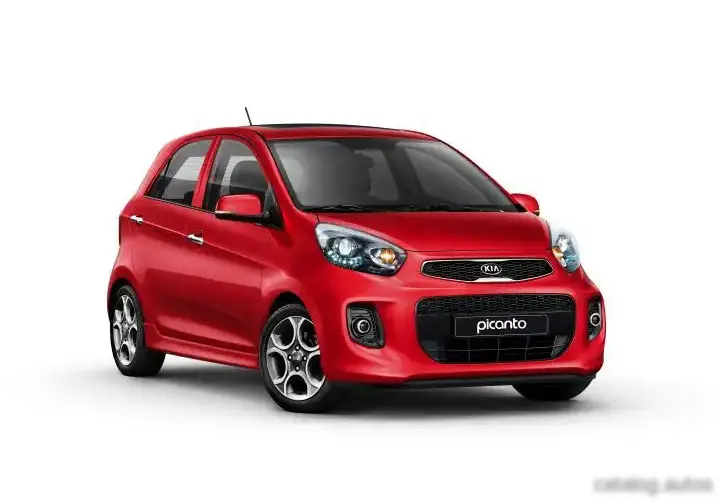
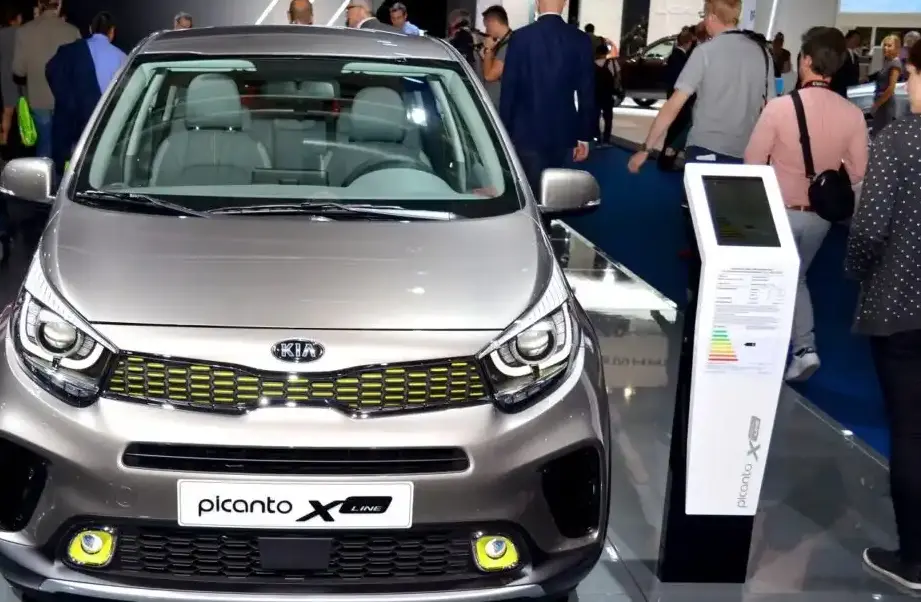
The Kia Picanto III 1.2 (84 hp) Automatic, produced between April 2017 and June 2020, represented an entry-level offering within the third generation of Kia’s city car. Positioned as a practical and affordable option, this variant aimed to provide ease of use with its automatic transmission, appealing to urban drivers and those seeking a simple, economical vehicle. It formed part of the TA platform series, sharing its underpinnings with the Hyundai i10. This particular configuration was a key part of Kia’s strategy to broaden the Picanto’s appeal beyond purely budget-conscious buyers, offering a degree of convenience not found in the base manual transmission models.
Powertrain & Engine Architecture
The Picanto III 1.2 Automatic utilizes the Kia G4LA engine, a 1.248-liter inline-four cylinder petrol engine. This engine is a naturally aspirated unit employing multi-point fuel injection. The G4LA features a double overhead camshaft (DOHC) valvetrain with four valves per cylinder, contributing to reasonable efficiency and a relatively smooth power delivery. The engine’s 10.5:1 compression ratio is typical for this class of engine, balancing performance and fuel economy. The four-speed automatic transmission, while providing convenience, is a relatively older design. It’s known for its simplicity and reliability, but lacks the efficiency and responsiveness of more modern transmissions with more gears. The transmission is electronically controlled, offering a ‘Drive’ and ‘Manual’ mode for some driver engagement.
Driving Characteristics
The 84 hp output and 122 Nm of torque translate to modest, but adequate, performance for city driving. Acceleration from 0-60 mph takes around 13 seconds, and top speed is around 100 mph. The four-speed automatic transmission contributes to a noticeable lack of urgency, particularly during overtaking maneuvers. The gear ratios are spaced to prioritize fuel economy over outright performance. Compared to the five-speed manual version of the same engine, the automatic suffers a slight performance penalty and reduced fuel efficiency. However, the automatic provides a smoother, more relaxed driving experience, especially in congested urban environments. The steering is light and easy, making parking and maneuvering in tight spaces effortless.
Equipment & Trim Levels
The 1.2 Automatic trim typically included air conditioning, central locking, electric front windows, and a basic audio system with USB connectivity. Safety features included ABS, airbags, and stability control. Higher trim levels, such as the ‘2’ or ‘3’ variants, added features like alloy wheels, a touchscreen infotainment system with Apple CarPlay and Android Auto, rear parking sensors, and a leather-wrapped steering wheel. Interior upholstery was generally cloth, with options for different color schemes. The dashboard layout was functional and straightforward, prioritizing ease of use over aesthetic flair.
Chassis & Braking
The Picanto III utilizes a McPherson strut front suspension and a semi-independent torsion beam rear suspension. This setup provides a comfortable ride quality, absorbing bumps and imperfections in the road surface effectively. The front brakes are ventilated discs, offering adequate stopping power, while the rear brakes are discs. The electric power steering provides light and precise steering feel. The relatively lightweight construction of the Picanto (around 959-1058 kg) helps to offset the modest engine output, contributing to acceptable handling characteristics.
Market Reception & Comparison
The Kia Picanto III 1.2 Automatic was generally well-received as a practical and affordable city car. Critics praised its value for money, comfortable ride, and ease of use. However, the four-speed automatic transmission was often criticized for its lack of responsiveness and efficiency. Compared to rivals like the Hyundai i10, Volkswagen Up!, and Toyota Aygo, the Picanto offered a competitive level of equipment and a longer warranty. Fuel economy was respectable, averaging around 43.6 US mpg in combined driving, but slightly lower than the manual transmission versions. Reliability was generally good, with few reported issues with the engine or transmission.
Legacy
The Kia Picanto III 1.2 Automatic has proven to be a reliable and durable vehicle, making it a popular choice in the used car market. The G4LA engine is known for its longevity, and the four-speed automatic transmission, while not the most sophisticated, is relatively robust. These vehicles represent a good value proposition for buyers seeking an affordable and economical city car. While not a performance standout, the Picanto III 1.2 Automatic provides a comfortable and convenient driving experience, making it a practical choice for urban commuters and first-time car owners.