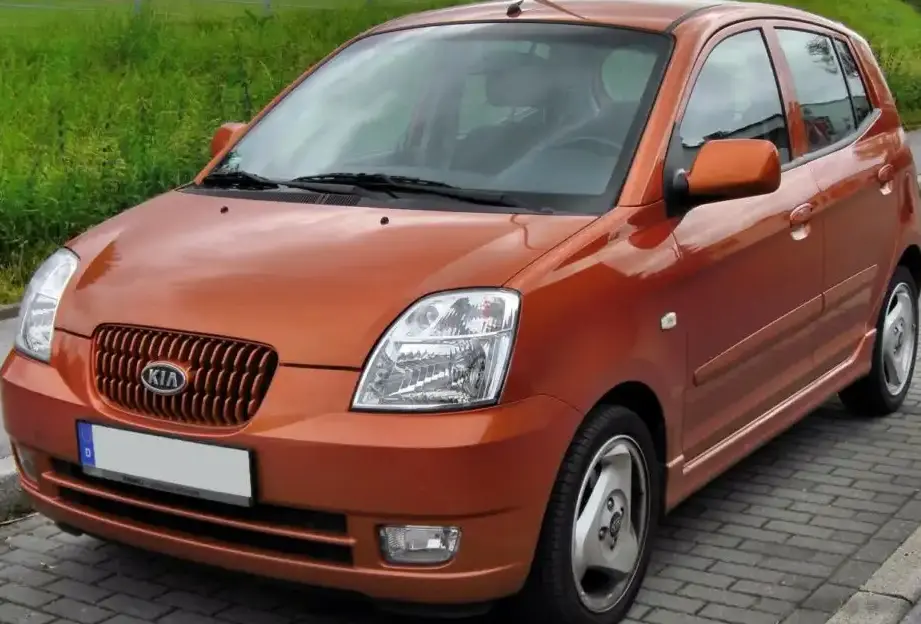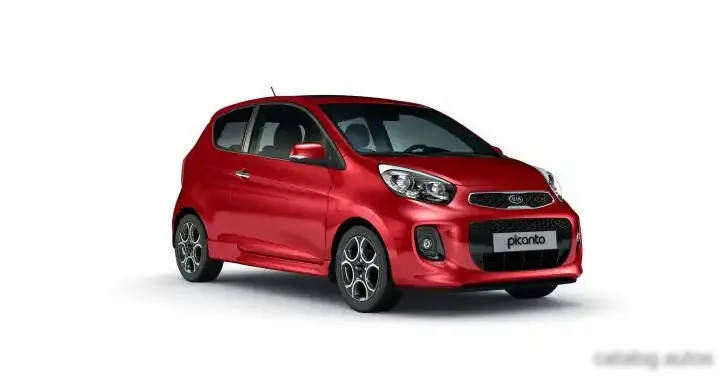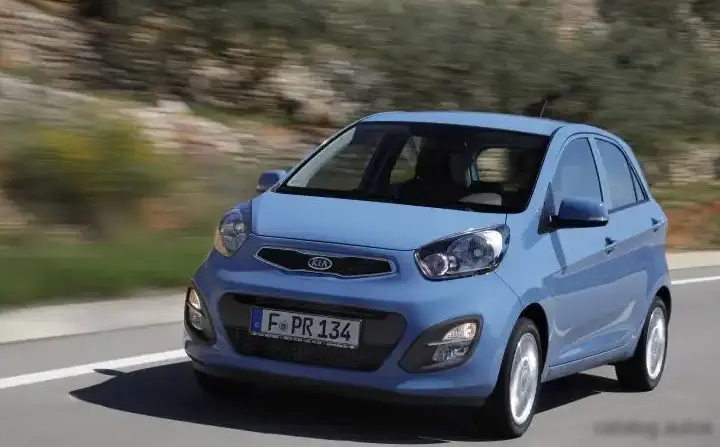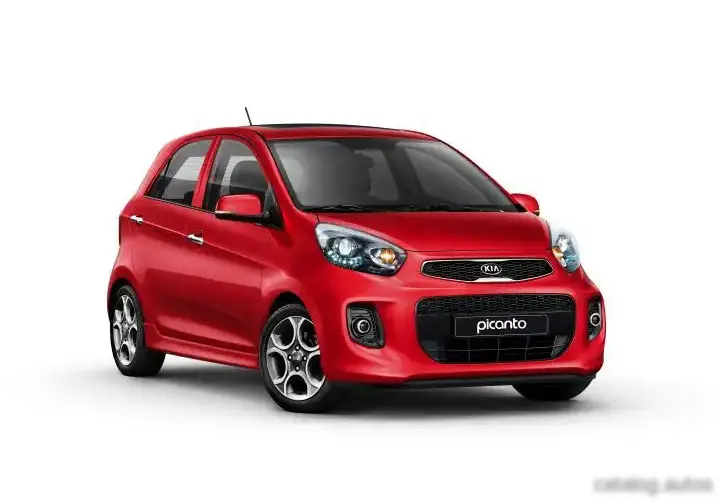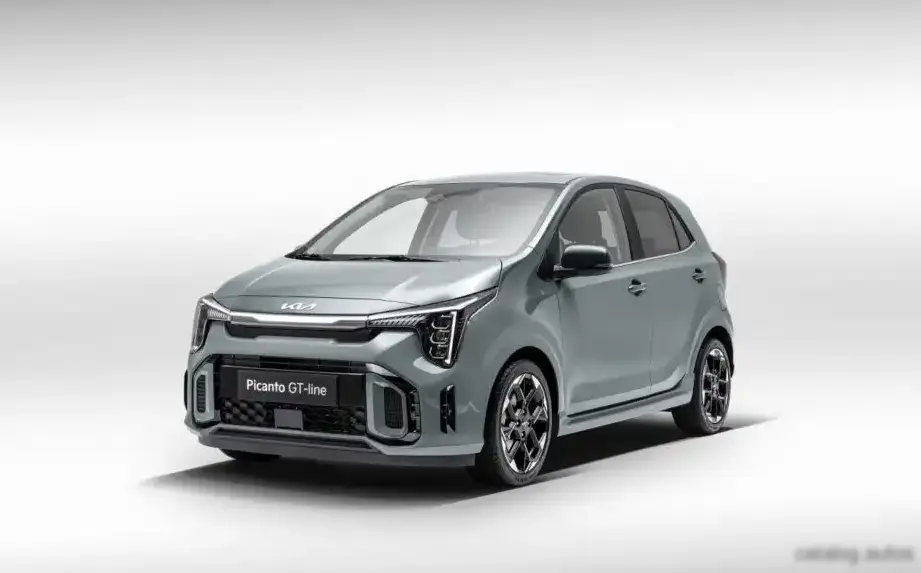
The Kia Picanto III (facelift, introduced in May 2024) 1.0-liter (63 horsepower) Automatic represents the entry-level powertrain option for Kia’s smallest model. Positioned as an affordable and efficient city car, this variant was primarily aimed at buyers prioritizing fuel economy and ease of use over outright performance. Production of this specific configuration ran through July 2025. It falls within the broader Picanto III generation (introduced in 2017 and facelifted in 2024), which utilizes the Kia/Hyundai HA platform, also underpinning models like the Hyundai i10 and Kia Rio. The facelift brought updated styling, improved safety features, and refinements to the interior, maintaining the Picanto’s reputation as a value-oriented vehicle.
Technical Specifications
| Brand | Kia |
| Model | Picanto |
| Generation | Picanto III (facelift 2023) |
| Type (Engine) | 1.0 (63 Hp) Automatic |
| Start of production | May, 2024 |
| End of production | July, 2025 |
| Powertrain Architecture | Internal Combustion engine |
| Body type | Hatchback |
| Seats | 5 |
| Doors | 5 |
| Fuel consumption at Low speed (WLTP) | 6.6 l/100 km (35.6 US mpg, 42.8 UK mpg, 15.2 km/l) |
| Fuel consumption at Medium speed (WLTP) | 5.1 l/100 km (46.1 US mpg, 55.4 UK mpg, 19.6 km/l) |
| Fuel consumption at high speed (WLTP) | 4.7 l/100 km (50 US mpg, 60.1 UK mpg, 21.3 km/l) |
| Fuel consumption at very high speed (WLTP) | 6.1 l/100 km (38.6 US mpg, 46.3 UK mpg, 16.4 km/l) |
| Combined fuel consumption (WLTP) | 5.5 l/100 km (42.8 US mpg, 51.4 UK mpg, 18.2 km/l) |
| CO2 emissions (WLTP) | 125 g/km |
| Fuel Type | Petrol (Gasoline) |
| Acceleration 0 – 100 km/h | 18.2 sec |
| Acceleration 0 – 62 mph | 18.2 sec |
| Acceleration 0 – 60 mph | 17.3 sec |
| Maximum speed | 145 km/h (90.1 mph) |
| Emission standard | Euro 6e |
| Weight-to-power ratio | 14.5 kg/Hp, 69 Hp/tonne |
| Weight-to-torque ratio | 9.8 kg/Nm, 101.9 Nm/tonne |
| Power | 63 Hp @ 5000 rpm |
| Torque | 93 Nm @ 3750 rpm (68.59 lb.-ft. @ 3750 rpm) |
| Engine layout | Front, Transverse |
| Engine Model/Code | G3LD |
| Engine displacement | 998 cm3 (60.9 cu. in.) |
| Number of cylinders | 3 |
| Engine configuration | Inline |
| Cylinder Bore | 71 mm (2.8 in.) |
| Piston Stroke | 84 mm (3.31 in.) |
| Compression ratio | 11:1 |
| Number of valves per cylinder | 4 |
| Fuel injection system | Multi-port manifold injection |
| Engine aspiration | Naturally aspirated engine |
| Engine oil capacity | 3.1 l (3.28 US qt | 2.73 UK qt) |
| Coolant | 5.2 l (5.49 US qt | 4.58 UK qt) |
| Kerb Weight | 913-1012 kg (2012.82 – 2231.08 lbs.) |
| Max. weight | 1405 kg (3097.49 lbs.) |
| Max load | 393-492 kg (866.42 – 1084.67 lbs.) |
| Trunk (boot) space – minimum | 255 l (9.01 cu. ft.) |
| Trunk (boot) space – maximum | 1010 l (35.67 cu. ft.) |
| Fuel tank capacity | 35 l (9.25 US gal | 7.7 UK gal) |
| Max. roof load | 60 kg (132.28 lbs.) |
| Length | 3605 mm (141.93 in.) |
| Width | 1595 mm (62.8 in.) |
| Height | 1485 mm (58.46 in.) |
| Wheelbase | 2400 mm (94.49 in.) |
| Front track | 1394-1414 mm (54.88 – 55.67 in.) |
| Rear (Back) track | 1402 mm (55.2 in.) |
| Front overhang | 685 mm (26.97 in.) |
| Rear overhang | 520 mm (20.47 in.) |
| Ride height (ground clearance) | 141 mm (5.55 in.) |
| Minimum turning circle (turning diameter) | 9.4 m (30.84 ft.) |
| Drivetrain Architecture | The Internal combustion engine (ICE) drives the front wheels of the vehicle. |
| Drive wheel | Front wheel drive |
| Number of gears and type of gearbox | 5 gears, automatic transmission |
| Front suspension | Independent type McPherson, Transverse stabilizer |
| Rear suspension | Coil spring, Elastic beam |
| Front brakes | Disc, 256 mm |
| Rear brakes | Drum, 203 mm |
| Assisting systems | ABS (Anti-lock braking system) |
| Steering type | Steering rack and pinion |
| Power steering | Electric Steering |
| Tires size | 175/65 R14 86T; 185/55 R15 86H; 195/45 R16 84V |
| Wheel rims size | 5.5J x 14 ET45; 6.0J x 15 ET51; 6.5J x 16 ET51 |
Powertrain & Engine Architecture
The Picanto 1.0 Automatic is powered by Kia’s G3LD engine, a 998cc inline-three cylinder gasoline engine. This engine utilizes a multi-point fuel injection system and a naturally aspirated design. The G3LD engine features four valves per cylinder and a compression ratio of 11:1. The engine is transversely mounted at the front of the vehicle. Paired with this engine is a 5-speed automatic transmission. This transmission is a conventional torque converter automatic, prioritizing smooth shifts and ease of use over sporty responsiveness. It’s designed for efficiency and reliability rather than performance. The engine also incorporates a Start & Stop System to further improve fuel economy in urban driving conditions.
Driving Characteristics
The 1.0-liter, 63 horsepower engine with the automatic transmission delivers modest performance. Acceleration is slow, with a 0-60 mph time of around 17.3 seconds. The automatic transmission is tuned for economy, meaning it upshifts quickly to maintain low engine speeds. This results in a relaxed driving experience in city traffic, but can feel strained when attempting to accelerate quickly or climb hills. The gear ratios are optimized for fuel efficiency, rather than maximizing performance. Compared to the more powerful engine options (if available in the market), this variant feels significantly less responsive. Manual transmission versions of the 1.0-liter engine offer slightly better acceleration and driver engagement, but the automatic prioritizes convenience.
Equipment & Trim Levels
The 1.0 Automatic Picanto typically came with a base level of equipment, focusing on essential features. Standard equipment generally included air conditioning, power steering, central locking, electric front windows, and a basic audio system with USB connectivity. Safety features included ABS brakes, airbags, and stability control. Higher trim levels, if selected, added features like alloy wheels, a touchscreen infotainment system with Apple CarPlay and Android Auto compatibility, and rear parking sensors. Interior upholstery was typically cloth, with a simple and durable design.
Chassis & Braking
The Picanto utilizes a front-wheel-drive layout with an independent McPherson strut suspension at the front and a torsion beam suspension at the rear. The front suspension incorporates a transverse stabilizer bar to reduce body roll. Braking is handled by disc brakes at the front and drum brakes at the rear. The drum brakes on the rear are a cost-saving measure typical of vehicles in this segment. The suspension is tuned for comfort, providing a relatively smooth ride on city streets, but it’s not particularly sporty. The steering is electrically assisted, providing light and easy steering feel.
Market Reception & Comparison
The Kia Picanto 1.0 Automatic was generally well-received as an affordable and practical city car. Critics praised its fuel efficiency, compact size, and ease of driving. However, the lack of power was a common criticism. Compared to other trims in the Picanto lineup, the 1.0 Automatic offered the lowest price point but also the least amount of performance. It competed with other city cars like the Hyundai i10, Fiat 500, and Toyota Aygo, often undercutting them on price while offering a comparable level of equipment.
Legacy
The G3LD engine, while not known for its high performance, has proven to be a relatively reliable unit. The 5-speed automatic transmission is also generally durable. In the used car market, the Picanto 1.0 Automatic represents a budget-friendly option for buyers seeking a small, economical car. Maintenance costs are typically low, and parts availability is good. However, potential buyers should be aware of the limited power output and the relatively basic level of equipment. The Picanto’s reputation for value and reliability has helped it maintain a strong presence in the used car market.