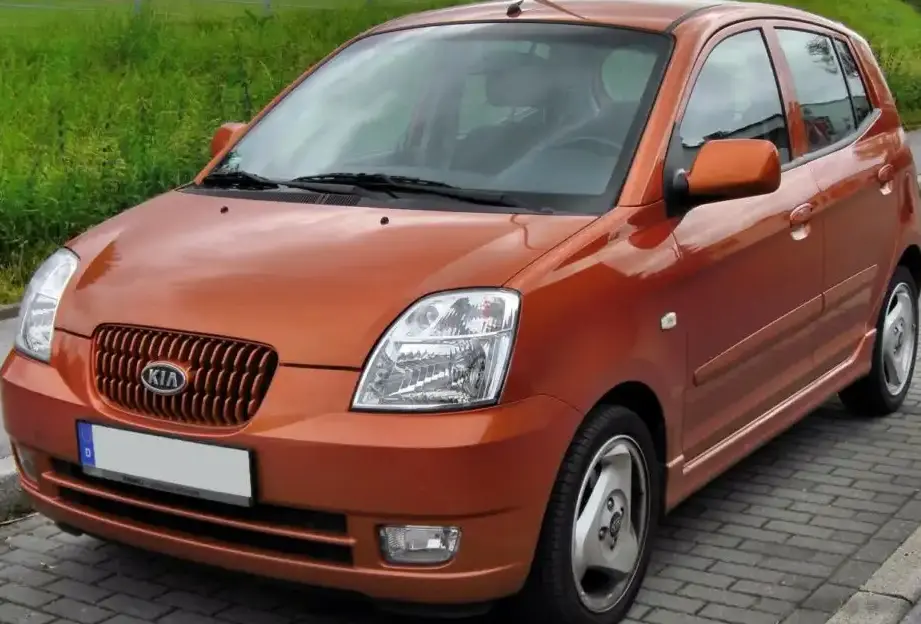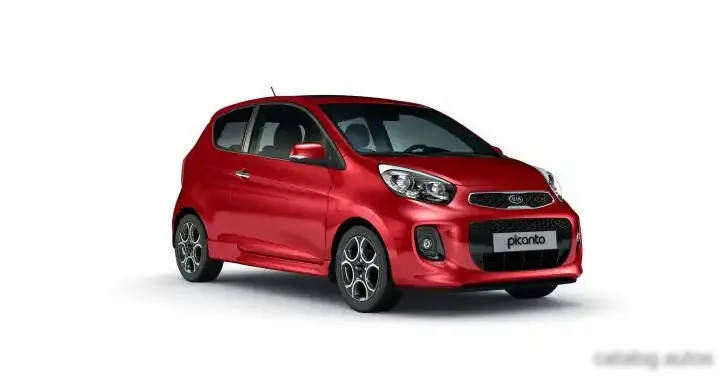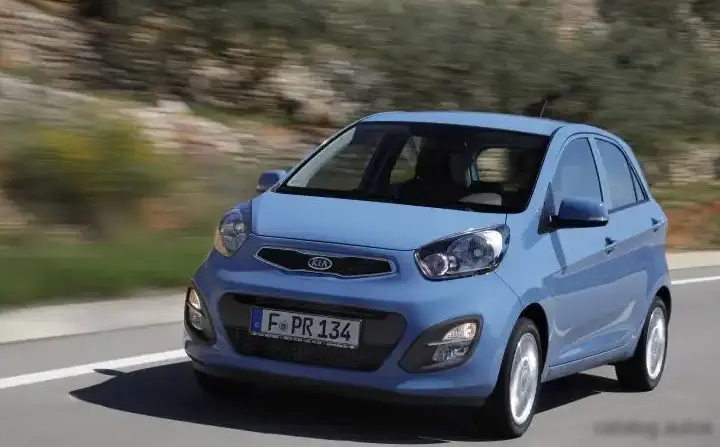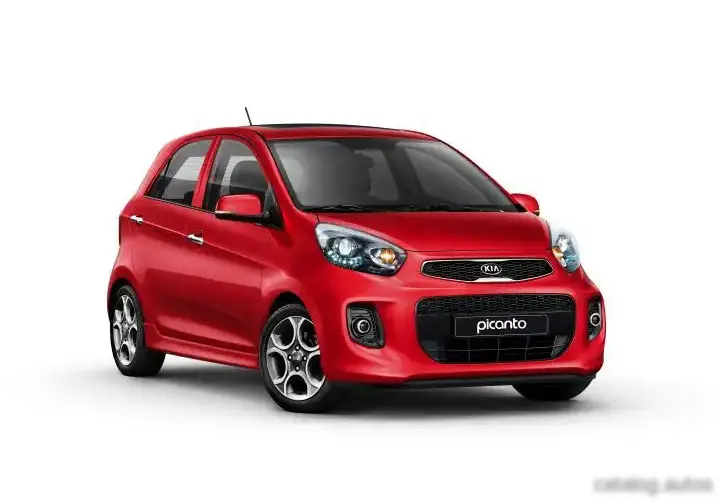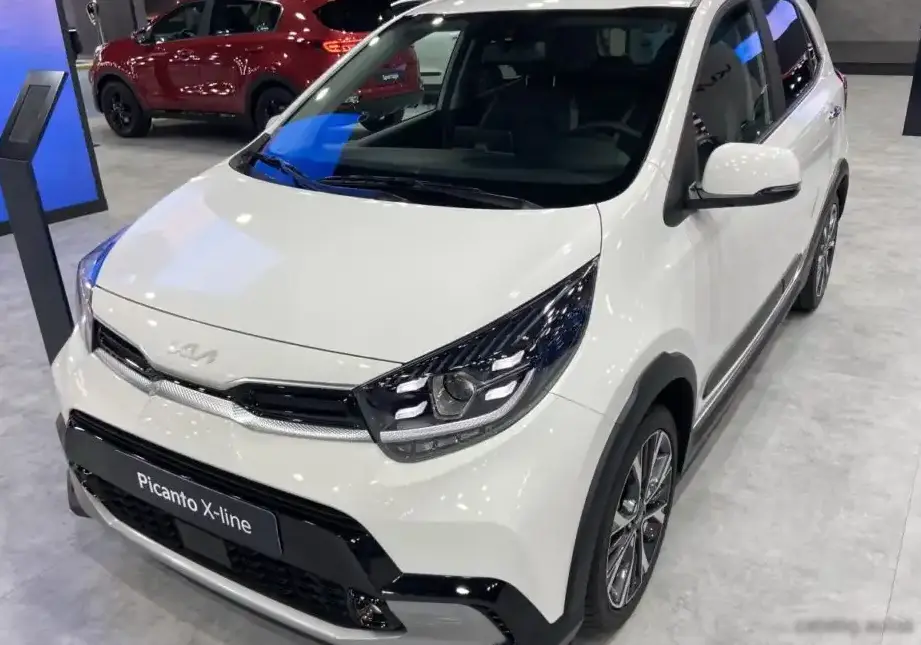
The Kia Picanto III (facelift, introduced in July 2020 and continuing through July 2023) represents a mid-cycle refresh of the third-generation Picanto, Kia’s city car offering. This variant, powered by the 1.0-liter three-cylinder engine producing 67 horsepower, served as the entry point into the Picanto lineup in many European and Asian markets. Positioned as an affordable and economical option, it targeted buyers prioritizing fuel efficiency and low running costs over outright performance. The facelift brought styling updates and minor technological enhancements to the existing Picanto platform (TA), aiming to maintain its competitiveness in the highly contested microcar segment.
Technical Specifications
| Brand | Kia |
| Model | Picanto |
| Generation | Picanto III (facelift 2020) |
| Type (Engine) | 1.0 (67 Hp) |
| Start of production | July, 2020 |
| End of production | July, 2023 |
| Powertrain Architecture | Internal Combustion engine |
| Body type | Hatchback |
| Seats | 4 |
| Doors | 5 |
| CO2 emissions (WLTP) | 121 g/km |
| Fuel consumption (urban) | 5.1-5.2 l/100 km (46.1 – 45.2 US mpg, 55.4 – 54.3 UK mpg, 19.6 – 19.2 km/l) |
| Fuel consumption (extra urban) | 3.8-4.1 l/100 km (61.9 – 57.4 US mpg, 74.3 – 68.9 UK mpg, 26.3 – 24.4 km/l) |
| Fuel consumption (combined) | 4.2-4.5 l/100 km (56 – 52.3 US mpg, 67.3 – 62.8 UK mpg, 23.8 – 22.2 km/l) |
| CO2 emissions (NEDC) | 96-101 g/km |
| Fuel Type | Petrol (Gasoline) |
| Acceleration 0 – 100 km/h | 14.6 sec |
| Acceleration 0 – 62 mph | 14.6 sec |
| Acceleration 0 – 60 mph | 13.9 sec |
| Maximum speed | 161 km/h (100.04 mph) |
| Emission standard | Euro 6d-ISC-FCM |
| Weight-to-power ratio | 13.4 kg/Hp, 74.5 Hp/tonne |
| Weight-to-torque ratio | 9.2 kg/Nm, 109 Nm/tonne |
| Power | 67 Hp @ 5500 rpm |
| Power per litre | 67.1 Hp/l |
| Torque | 98 Nm @ 3750 rpm (72.28 lb.-ft. @ 3750 rpm) |
| Engine layout | Front, Transverse |
| Engine Model/Code | G3LD |
| Engine displacement | 998 cm3 (60.9 cu. in.) |
| Number of cylinders | 3 |
| Engine configuration | Inline |
| Cylinder Bore | 71 mm (2.8 in.) |
| Piston Stroke | 84 mm (3.31 in.) |
| Compression ratio | 11:1 |
| Number of valves per cylinder | 4 |
| Fuel injection system | Multi-port manifold injection |
| Engine aspiration | Naturally aspirated engine |
| Engine oil capacity | 3.1 l (3.28 US qt | 2.73 UK qt) |
| Coolant capacity | 5.2 l (5.49 US qt | 4.58 UK qt) |
| Engine systems | Start & Stop System |
| Kerb Weight | 899-996 kg (1981.96 – 2195.8 lbs.) |
| Max. weight | 1320 kg (2910.1 lbs.) |
| Max load | 324-421 kg (714.3 – 928.15 lbs.) |
| Trunk (boot) space – minimum | 255 l (9.01 cu. ft.) |
| Trunk (boot) space – maximum | 1010 l (35.67 cu. ft.) |
| Fuel tank capacity | 35 l (9.25 US gal | 7.7 UK gal) |
| Permitted towbar download | 75 kg (165.35 lbs.) |
| Length | 3595 mm (141.54 in.) |
| Width | 1595 mm (62.8 in.) |
| Width including mirrors | 1880 mm (74.02 in.) |
| Height | 1485 mm (58.46 in.) |
| Wheelbase | 2400 mm (94.49 in.) |
| Front track | 1406 mm (55.35 in.) |
| Rear track | 1415 mm (55.71 in.) |
| Front overhang | 675 mm (26.57 in.) |
| Rear overhang | 520 mm (20.47 in.) |
| Minimum turning circle | 9.4 m (30.84 ft.) |
| Drivetrain Architecture | Front wheel drive |
| Drive wheel | Front wheel drive |
| Number of gears | 5 gears, manual transmission |
| Front suspension | Independent, type McPherson with coil spring and anti-roll bar |
| Rear suspension | Semi-independent, coil spring |
| Front brakes | Ventilated discs, 256 mm |
| Rear brakes | Drum, 203 mm |
| Assisting systems | ABS (Anti-lock braking system) |
| Steering type | Steering rack and pinion |
| Power steering | Electric Steering |
| Tires size | 175/65 R14 86T |
| Wheel rims size | 5.5J x 14 |
Powertrain & Engine Architecture
The heart of this Picanto variant is the Kia G3LD, a 998cc three-cylinder gasoline engine. This engine belongs to Kia’s Kappa family, known for its compact size and focus on efficiency. The G3LD utilizes a multi-point fuel injection system and a single overhead camshaft (SOHC) with four valves per cylinder. The engine’s relatively low compression ratio of 11:1 contributes to its ability to run on regular gasoline. The 67 horsepower and 72 lb-ft of torque are modest, but sufficient for urban driving. The engine is paired with a five-speed manual transmission, which was the standard offering for this trim level in many markets. The transmission is a conventional setup, prioritizing durability and simplicity over advanced features. A four-speed automatic transmission was available as an option, but it impacted fuel economy and performance.
Driving Characteristics
The 1.0-liter Picanto with the manual transmission delivers a driving experience geared towards practicality. Acceleration is leisurely, taking approximately 14.6 seconds to reach 62 mph. The engine feels strained at higher speeds, and highway overtaking requires careful planning. The five-speed gearbox is light and easy to use, but the short gear ratios emphasize fuel economy over spirited driving. The steering is light and precise, making it easy to maneuver in tight city streets. The suspension is tuned for comfort, absorbing bumps reasonably well, although it can feel a bit bouncy on uneven surfaces. Compared to higher-spec Picantos with larger engines, this variant feels significantly slower and less refined, but it offers a more economical and accessible entry point to Kia ownership.
Equipment & Trim Levels
The base 1.0-liter Picanto typically came equipped with essential features such as air conditioning, power steering, central locking, and an integrated audio system with USB connectivity. Safety features included dual airbags, ABS brakes, and Electronic Stability Control (ESC). Interior upholstery was typically cloth, with a simple and functional dashboard layout. Optional extras included alloy wheels, a touchscreen infotainment system with Apple CarPlay and Android Auto compatibility, and a rear-view camera. Higher trim levels added features like electric windows, heated seats, and a leather-wrapped steering wheel.
Chassis & Braking
The Picanto III utilizes a front-wheel-drive layout with a McPherson strut suspension at the front and a semi-independent torsion beam suspension at the rear. The front brakes are ventilated discs, providing adequate stopping power for the vehicle’s weight and performance. The rear brakes are drums, a cost-saving measure common in this segment. The steering is a rack-and-pinion system with electric power assistance, offering light and precise control. The chassis is designed to prioritize fuel efficiency and maneuverability, rather than sporty handling.
Market Reception & Comparison
The 1.0-liter Picanto was generally well-received as an affordable and economical city car. Critics praised its fuel efficiency, compact size, and ease of driving. However, the engine’s lack of power was a common criticism, particularly when fully loaded or driving on hilly terrain. Compared to other microcars in its class, such as the Hyundai i10 and the Fiat 500, the Picanto offered a competitive price point and a generous warranty. The automatic transmission version, while offering convenience, suffered from reduced fuel economy and sluggish performance compared to the manual.
Legacy
The Kia Picanto III 1.0-liter (67 Hp) has proven to be a reliable and durable vehicle, with relatively few reported mechanical issues. The G3LD engine is known for its longevity, and the simple mechanical design makes it relatively easy and inexpensive to maintain. On the used car market, these Picantos represent a good value proposition for buyers seeking an affordable and economical city car. While not a performance car, its fuel efficiency and low running costs continue to make it a popular choice for urban commuters and first-time car buyers.