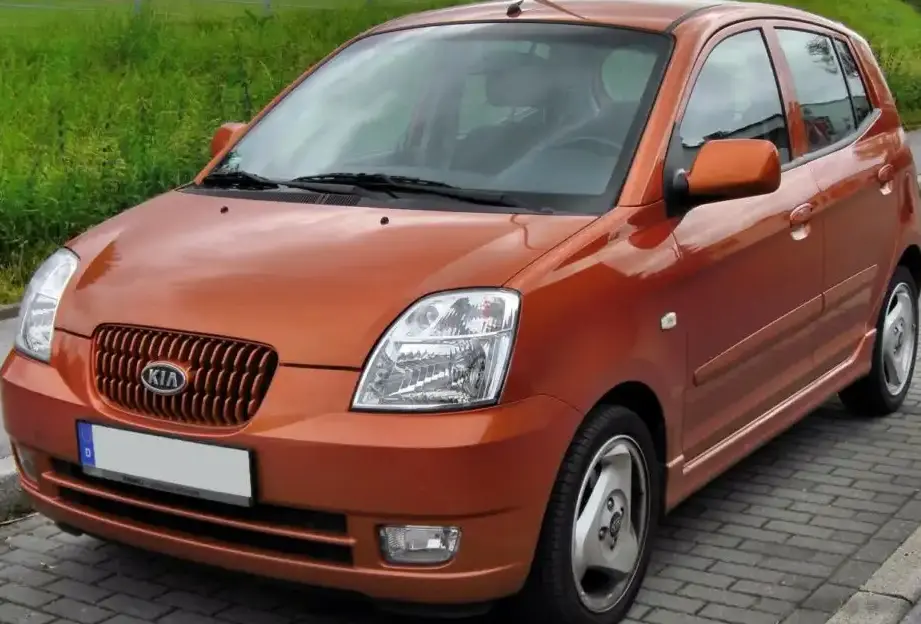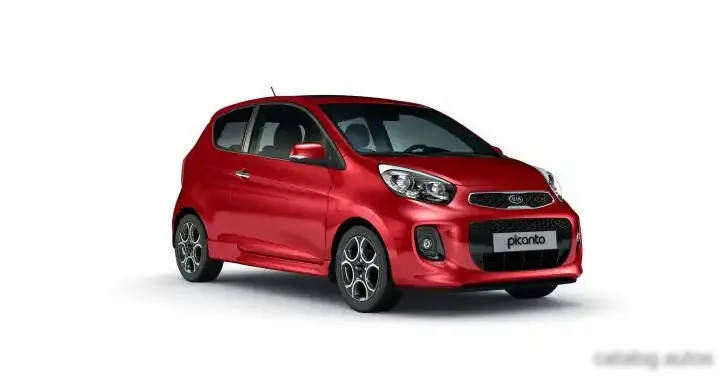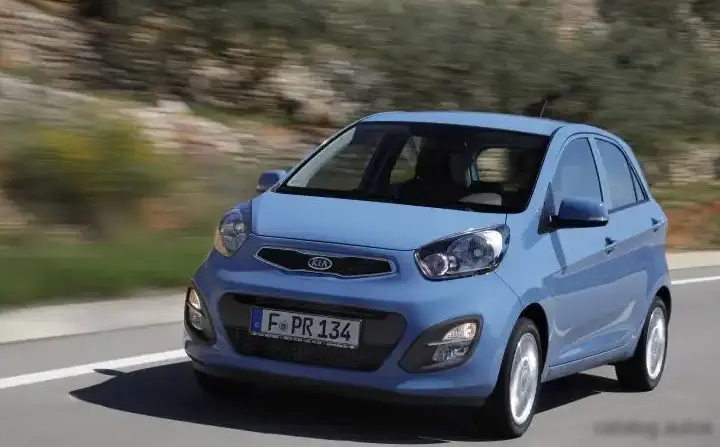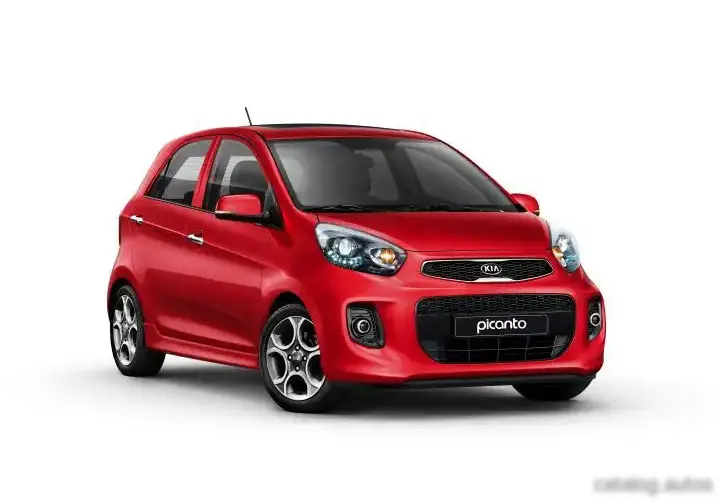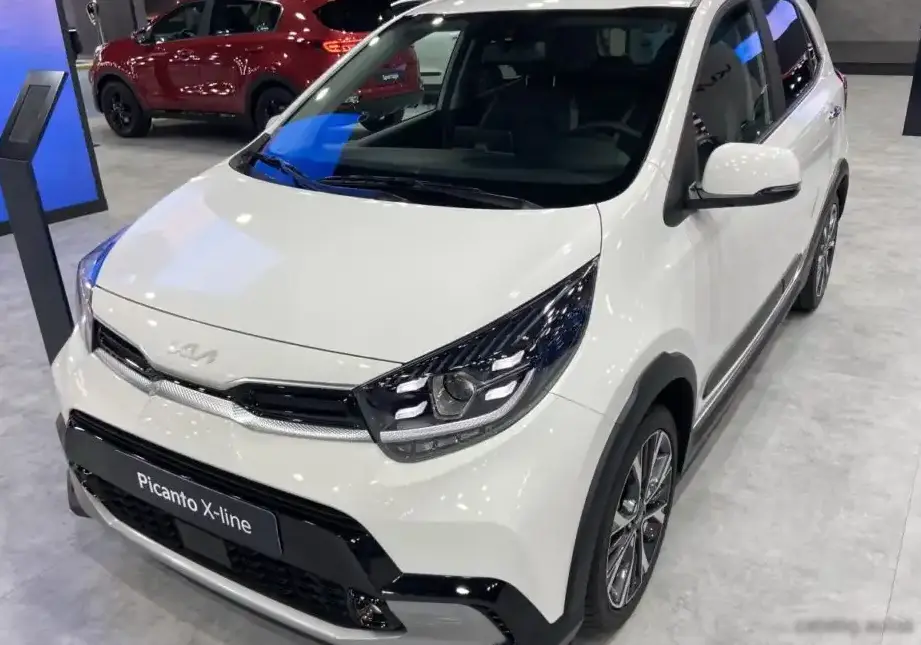
The Kia Picanto III (facelift, introduced in July 2020 and continuing through July 2023) represents a mid-cycle refresh of the third-generation Picanto, Kia’s city car offering. The 1.0-liter (67 horsepower) automatic variant occupied the entry-level position in the Picanto lineup, aimed at buyers prioritizing affordability and ease of use over outright performance. This version was primarily marketed in Europe and other regions where small, fuel-efficient vehicles are highly sought after. It served as a gateway into the Picanto range, offering a practical and economical transportation solution.
Technical Specifications
| Brand | Kia |
| Model | Picanto |
| Generation | Picanto III (facelift 2020) |
| Type (Engine) | 1.0 (67 Hp) Automatic |
| Start of production | July, 2020 |
| End of production | July, 2023 |
| Powertrain Architecture | Internal Combustion engine |
| Body type | Hatchback |
| Seats | 5 |
| Doors | 5 |
| CO2 emissions (WLTP) | 130 g/km |
| Fuel consumption (urban) | 5-5.3 l/100 km (47-44.4 US mpg, 56.5-53.3 UK mpg, 20-18.9 km/l) |
| Fuel consumption (extra urban) | 4.2-4.4 l/100 km (56-53.5 US mpg, 67.3-64.2 UK mpg, 23.8-22.7 km/l) |
| Fuel consumption (combined) | 4.5-4.7 l/100 km (52.3-50 US mpg, 62.8-60.1 UK mpg, 22.2-21.3 km/l) |
| CO2 emissions (NEDC, WLTP equivalent) | 101-106 g/km |
| Fuel Type | Petrol (Gasoline) |
| Acceleration 0 – 100 km/h | 17.2 sec |
| Acceleration 0 – 62 mph | 17.2 sec |
| Acceleration 0 – 60 mph | 16.3 sec |
| Maximum speed | 159 km/h (98.8 mph) |
| Emission standard | Euro 6d-ISC-FCM |
| Weight-to-power ratio | 13.5 kg/Hp, 74 Hp/tonne |
| Weight-to-torque ratio | 9.2 kg/Nm, 108.2 Nm/tonne |
| Power | 67 Hp @ 5500 rpm |
| Torque | 98 Nm @ 3750 rpm (72.28 lb.-ft. @ 3750 rpm) |
| Engine layout | Front, Transverse |
| Engine Model/Code | G3LD |
| Engine displacement | 998 cm3 (60.9 cu. in.) |
| Number of cylinders | 3 |
| Engine configuration | Inline |
| Cylinder Bore | 71 mm (2.8 in.) |
| Piston Stroke | 84 mm (3.31 in.) |
| Compression ratio | 11:1 |
| Number of valves per cylinder | 4 |
| Fuel injection system | Multi-port manifold injection |
| Engine aspiration | Naturally aspirated engine |
| Engine oil capacity | 3.1 l (3.28 US qt | 2.73 UK qt) |
| Coolant capacity | 5.2 l (5.49 US qt | 4.58 UK qt) |
| Kerb Weight | 906-1004 kg (1997.39 – 2213.44 lbs.) |
| Max. weight | 1405 kg (3097.49 lbs.) |
| Max load | 401-499 kg (884.05 – 1100.11 lbs.) |
| Trunk (boot) space – minimum | 255 l (9.01 cu. ft.) |
| Trunk (boot) space – maximum | 1010 l (35.67 cu. ft.) |
| Fuel tank capacity | 35 l (9.25 US gal | 7.7 UK gal) |
| Permitted towbar download | 75 kg (165.35 lbs.) |
| Length | 3595 mm (141.54 in.) |
| Width | 1595 mm (62.8 in.) |
| Width including mirrors | 1880 mm (74.02 in.) |
| Height | 1485 mm (58.46 in.) |
| Wheelbase | 2400 mm (94.49 in.) |
| Front track | 1406 mm (55.35 in.) |
| Rear track | 1415 mm (55.71 in.) |
| Front overhang | 675 mm (26.57 in.) |
| Rear overhang | 520 mm (20.47 in.) |
| Minimum turning circle | 9.4 m (30.84 ft.) |
| Drivetrain Architecture | Front wheel drive |
| Number of gears | 5 |
| Gearbox type | Automatic transmission |
| Front suspension | Independent, McPherson with coil spring and anti-roll bar |
| Rear suspension | Semi-independent, coil spring |
| Front brakes | Ventilated discs, 256 mm |
| Rear brakes | Disc, 244 mm |
| Assisting systems | ABS (Anti-lock braking system) |
| Steering type | Steering rack and pinion |
| Power steering | Electric |
| Tires size | 175/65 R14 86T |
| Wheel rims size | 5.5J x 14 |
INTRODUCTION
The Kia Picanto III, launched in 2017 and facelifted in 2020, is a five-door hatchback designed as an affordable and practical urban vehicle. The 1.0-liter automatic variant, powered by the G3LD engine, was a key component of the range, particularly in markets where manual transmissions are less popular. The facelift brought subtle styling updates, improved safety features, and enhancements to the infotainment system. This specific configuration was positioned as the entry point to the Picanto lineup, appealing to first-time car buyers, city dwellers, and those seeking a low-cost, easy-to-drive vehicle.
Powertrain & Engine Architecture
The heart of the Picanto 1.0 Automatic is the G3LD engine, a naturally aspirated 998cc inline-three cylinder petrol engine. This engine utilizes a multi-point fuel injection system, delivering fuel directly into the intake ports. The engine features four valves per cylinder (DOHC) and a compression ratio of 11:1. The G3LD engine is known for its simplicity and reliability, prioritizing fuel efficiency over outright power. Paired with this engine is a four-speed automatic transmission. This transmission, while not offering the latest in gear ratios or shift smoothness, provides convenient automatic operation, making it ideal for urban driving. The transmission is electronically controlled, adapting shift points based on throttle input and vehicle speed.
Driving Characteristics
The 67 horsepower and 98 Nm (72.28 lb-ft) of torque produced by the 1.0-liter engine and four-speed automatic results in leisurely, rather than brisk, acceleration. The 0-60 mph time of around 16.3 seconds and a top speed of 98.8 mph reflect this. The automatic transmission’s gear ratios are optimized for fuel economy, meaning the engine often operates at higher RPMs during acceleration. Compared to the more powerful 1.25-liter engine option, the 1.0-liter automatic feels noticeably slower, particularly when fully loaded or tackling inclines. However, the light steering and compact dimensions make it exceptionally easy to maneuver in tight city streets. The automatic transmission eliminates the need for clutch operation, making it a comfortable choice for drivers unfamiliar with manual gearboxes.
Equipment & Trim Levels
The 1.0-liter automatic Picanto typically came with a base level of equipment, focusing on essential features. Standard equipment generally included air conditioning, central locking, power steering, electric front windows, and a basic audio system with USB connectivity. Safety features such as ABS (Anti-lock Braking System) and airbags were also standard. Higher trim levels offered upgrades like alloy wheels, a touchscreen infotainment system with Apple CarPlay and Android Auto compatibility, rear parking sensors, and a leather-wrapped steering wheel. Interior upholstery was typically cloth, with a simple and durable design. Optional extras included metallic paint finishes and various accessory packages.
Chassis & Braking
The Picanto III utilizes a front-wheel-drive layout with an independent McPherson strut suspension at the front and a semi-independent torsion beam suspension at the rear. This suspension setup provides a comfortable ride quality, absorbing bumps and imperfections in the road surface effectively. The front brakes are ventilated discs, providing adequate stopping power, while the rear brakes are solid discs. The steering is electrically assisted, offering light and precise control. The relatively lightweight construction of the Picanto (906-1004 kg) contributes to its nimble handling characteristics. Stabilizer bars are fitted to both the front and rear axles to reduce body roll during cornering.
Market Reception & Comparison
The Kia Picanto 1.0 Automatic was generally well-received as an affordable and practical city car. Critics praised its fuel efficiency, ease of driving, and compact size. However, the engine’s lack of power and the transmission’s somewhat dated technology were common criticisms. Compared to other trims in the Picanto lineup, the 1.0-liter automatic offered the lowest price point but sacrificed performance. The 1.25-liter engine provided a noticeable improvement in acceleration and overall driving experience, while the manual transmission options offered better fuel economy. Competitors in the city car segment, such as the Hyundai i10, Volkswagen up!, and Fiat 500, offered similar levels of practicality and affordability.
Legacy
The Kia Picanto III 1.0 Automatic has proven to be a reliable and durable vehicle, with the G3LD engine known for its longevity. In the used car market, these models represent a cost-effective option for buyers seeking a small, fuel-efficient vehicle. Maintenance costs are generally low, and parts availability is good. While not a performance-oriented vehicle, the Picanto 1.0 Automatic continues to be a popular choice for urban commuters and those seeking a practical and economical mode of transportation. Its simplicity and reliability contribute to its enduring appeal.