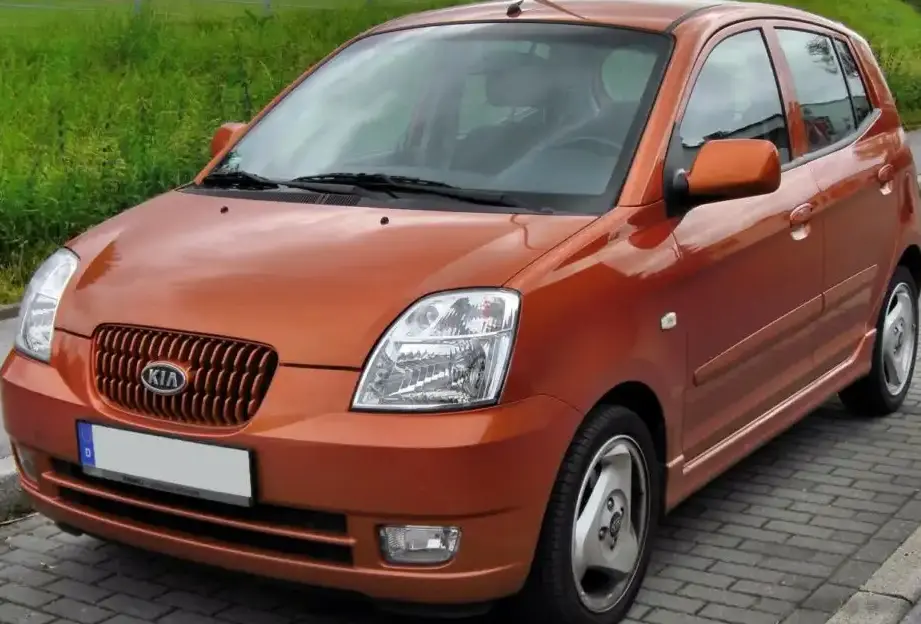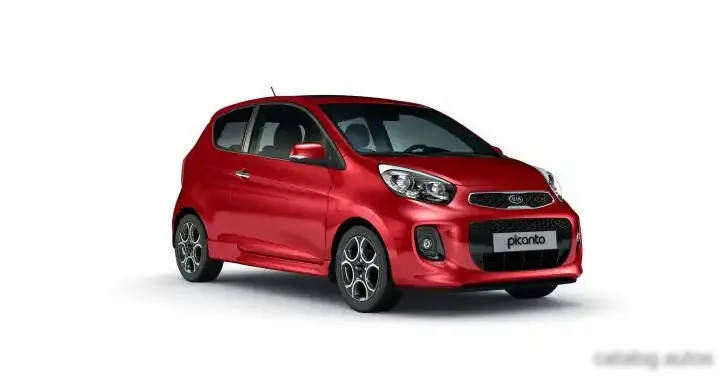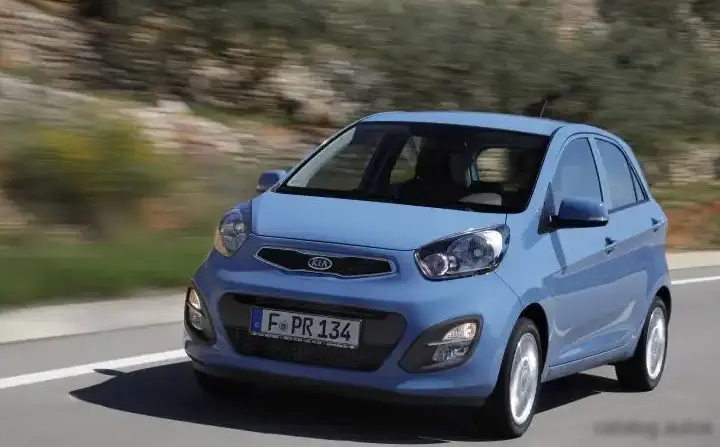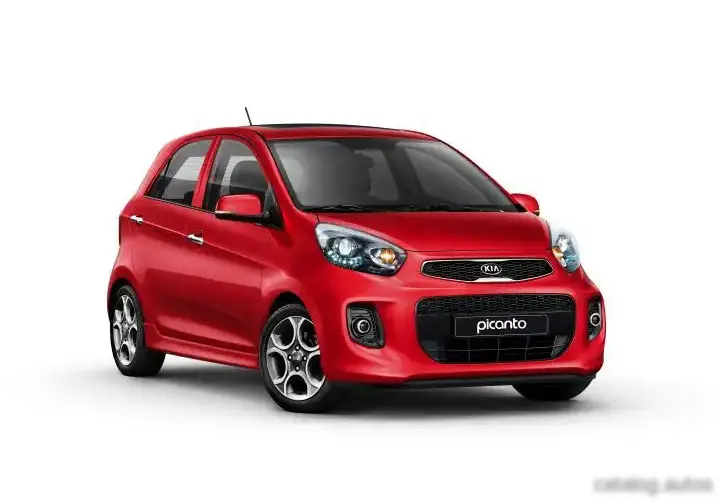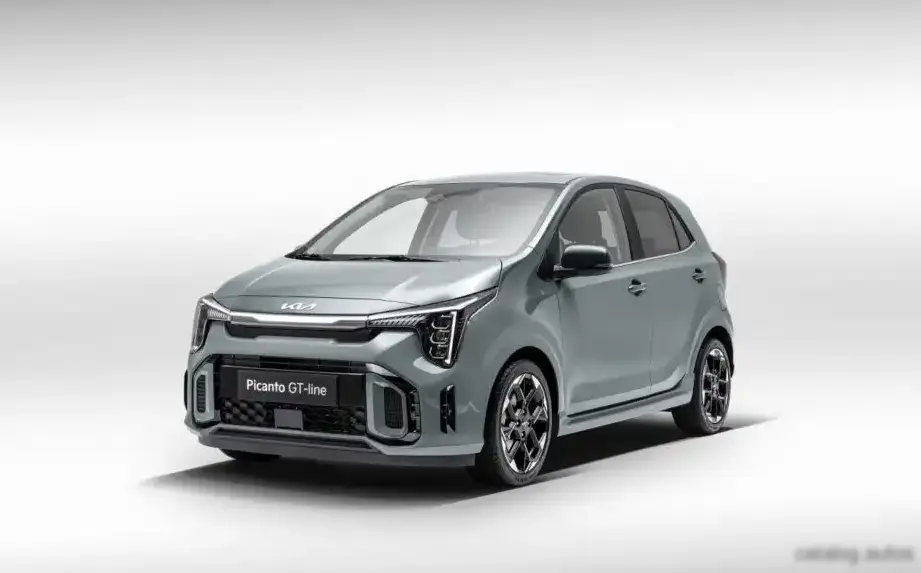
The Kia Picanto III (facelift, introduced in 2023) 1.0-liter (68 horsepower) Automatic represents an entry-level offering within the third generation of Kia’s city car. Production began in July 2025, and this variant is primarily targeted at drivers seeking an affordable, easy-to-drive vehicle for urban environments. Positioned as the base trim level, it provides a cost-effective gateway into the Picanto range, prioritizing fuel efficiency and ease of use over outright performance. The Picanto III, built on the Kia/Hyundai HA platform, aimed to offer a more sophisticated and spacious alternative to other micro-cars available in the European and Asian markets, with a growing presence in other regions as well.
Technical Specifications
| Brand | Kia |
| Model | Picanto |
| Generation | Picanto III (facelift 2023) |
| Type (Engine) | 1.0 (68 Hp) Automatic |
| Start of production | July, 2025 |
| Powertrain Architecture | Internal Combustion engine |
| Body type | Hatchback |
| Seats | 5 |
| Doors | 5 |
| Fuel consumption at Low speed (WLTP) | 7.1 l/100 km (33.1 US mpg, 39.8 UK mpg, 14.1 km/l) |
| Fuel consumption at Medium speed (WLTP) | 5.5 l/100 km (42.8 US mpg, 51.4 UK mpg, 18.2 km/l) |
| Fuel consumption at high speed (WLTP) | 5.1 l/100 km (46.1 US mpg, 55.4 UK mpg, 19.6 km/l) |
| Fuel consumption at very high speed (WLTP) | 6.6 l/100 km (35.6 US mpg, 42.8 UK mpg, 15.2 km/l) |
| Combined fuel consumption (WLTP) | 5.9 l/100 km (39.9 US mpg, 47.9 UK mpg, 16.9 km/l) |
| CO2 emissions (WLTP) | 135 g/km |
| Fuel Type | Petrol (Gasoline) |
| Acceleration 0 – 100 km/h | 17.2 sec |
| Acceleration 0 – 62 mph | 17.2 sec |
| Acceleration 0 – 60 mph | 16.3 sec |
| Maximum speed | 160 km/h (99.42 mph) |
| Emission standard | Euro 6e bis |
| Weight-to-power ratio | 14 kg/Hp, 71.6 Hp/tonne |
| Weight-to-torque ratio | 9.9 kg/Nm, 101.1 Nm/tonne |
| Power | 68 Hp @ 6000 rpm |
| Power per litre | 68.1 Hp/l |
| Torque | 96 Nm @ 4000 rpm (70.81 lb.-ft. @ 4000 rpm) |
| Engine layout | Front, Transverse |
| Engine Model/Code | G3LD |
| Engine displacement | 998 cm3 (60.9 cu. in.) |
| Number of cylinders | 3 |
| Engine configuration | Inline |
| Cylinder Bore | 71 mm (2.8 in.) |
| Piston Stroke | 84 mm (3.31 in.) |
| Compression ratio | 11:1 |
| Number of valves per cylinder | 4 |
| Fuel injection system | Direct injection |
| Engine aspiration | Naturally aspirated engine |
| Engine oil capacity | 3.1 l (3.28 US qt, 2.73 UK qt) |
| Coolant | 5.2 l (5.49 US qt, 4.58 UK qt) |
| Kerb Weight | 950-1056 kg (2094.39 – 2328.08 lbs.) |
| Max. weight | 1460 kg (3218.75 lbs.) |
| Max load | 404-510 kg (890.67 – 1124.36 lbs.) |
| Trunk (boot) space – minimum | 255 l (9.01 cu. ft.) |
| Trunk (boot) space – maximum | 1010 l (35.67 cu. ft.) |
| Fuel tank capacity | 35 l (9.25 US gal, 7.7 UK gal) |
| Max. roof load | 60 kg (132.28 lbs.) |
| Length | 3605 mm (141.93 in.) |
| Width | 1595 mm (62.8 in.) |
| Height | 1485 mm (58.46 in.) |
| Wheelbase | 2400 mm (94.49 in.) |
| Front track | 1394-1406 mm (54.88 – 55.35 in.) |
| Rear (Back) track | 1402-1414 mm (55.2 – 55.67 in.) |
| Front overhang | 685 mm (26.97 in.) |
| Rear overhang | 520 mm (20.47 in.) |
| Ride height (ground clearance) | 141 mm (5.55 in.) |
| Minimum turning circle | 9.4 m (30.84 ft.) |
| Drivetrain Architecture | The Internal combustion engine (ICE) drives the front wheels of the vehicle. |
| Drive wheel | Front wheel drive |
| Number of gears and type of gearbox | 5 gears, automatic transmission |
| Front suspension | Independent type McPherson, Transverse stabilizer |
| Rear suspension | Coil spring, Elastic beam |
| Front brakes | Disc, 256 mm |
| Rear brakes | Drum, 203 mm |
| Assisting systems | ABS (Anti-lock braking system) |
| Steering type | Steering rack and pinion |
| Power steering | Electric Steering |
| Tires size | 175/65 R14 86T; 185/55 R15 86H; 195/45 R16 84V |
| Wheel rims size | 5.5J x 14 ET45; 6.0J x 15 ET51; 6.5J x 16 ET51 |
Powertrain & Engine Architecture
The 2025 Kia Picanto 1.0 Automatic is powered by the G3LD engine, a 998cc inline-three cylinder petrol engine. This engine utilizes a direct injection system, contributing to improved fuel efficiency and reduced emissions. The G3LD engine features a single overhead camshaft (SOHC) with four valves per cylinder. The engine’s relatively simple design prioritizes reliability and affordability. The automatic transmission is a conventional 5-speed unit, chosen for its smooth operation and ease of use, particularly in congested urban traffic. While not offering the rapid shifts of a dual-clutch transmission, it provides a comfortable driving experience. The engine incorporates a Start & Stop System to further enhance fuel economy during city driving, and a particulate filter to reduce emissions, meeting Euro 6e bis standards.
Driving Characteristics
The 68 horsepower output and 96 Nm of torque translate to modest, but adequate, performance for city driving. Acceleration from 0-60 mph takes approximately 16.3 seconds, and the top speed is limited to 99.42 mph. The automatic transmission is tuned for fuel economy, resulting in relatively conservative gear ratios. This means that while the Picanto is perfectly capable of keeping up with traffic, it doesn’t offer particularly brisk acceleration. Compared to higher-output Picanto variants, such as those with larger engines, this version feels noticeably slower. However, the light weight of the vehicle (950-1056 kg) helps to mitigate the lack of power. The steering is light and precise, making it easy to maneuver in tight spaces. The suspension is tuned for comfort, absorbing bumps and imperfections in the road surface reasonably well.
Equipment & Trim Levels
The 1.0 Automatic trim typically includes standard features such as air conditioning, power windows, central locking, and a basic audio system with Bluetooth connectivity. Safety features include ABS, airbags, and stability control. Interior upholstery is typically cloth, and the dashboard features a simple, functional design. Optional extras, depending on the market, could include alloy wheels, a touchscreen infotainment system, and parking sensors. This base trim level focuses on providing essential features at an affordable price point.
Chassis & Braking
The Picanto utilizes a McPherson strut front suspension and a torsion beam rear suspension. This setup provides a good balance between ride comfort and handling. The front brakes are disc brakes, while the rear brakes are drum brakes – a cost-saving measure common in this segment. The steering is a rack and pinion system with electric power assistance. The relatively small tires (175/65 R14, 185/55 R15, or 195/45 R16 depending on the specific package) prioritize fuel efficiency over ultimate grip.
Market Reception & Comparison
The Kia Picanto 1.0 Automatic was generally well-received by critics as an affordable and practical city car. Its fuel economy was a major selling point, and its compact size made it easy to park and maneuver in urban environments. Compared to other Picanto trims, such as those with more powerful engines, this version offered a lower price point but sacrificed performance. Against competitors like the Hyundai i10, Mitsubishi Mirage, and Fiat 500, the Picanto offered a compelling combination of value, features, and warranty coverage. Reliability reports generally indicate good dependability for the G3LD engine and automatic transmission, although regular maintenance is crucial.
Legacy
The Kia Picanto III 1.0 Automatic has proven to be a reliable and economical choice for budget-conscious buyers. On the used car market, these models are generally affordable and offer good value for money. The G3LD engine, while not particularly powerful, is known for its durability and relatively low maintenance costs. The 5-speed automatic transmission is also generally reliable, provided it receives regular fluid changes. As a result, this variant remains a popular choice for first-time car buyers, city dwellers, and those seeking a practical and affordable mode of transportation.