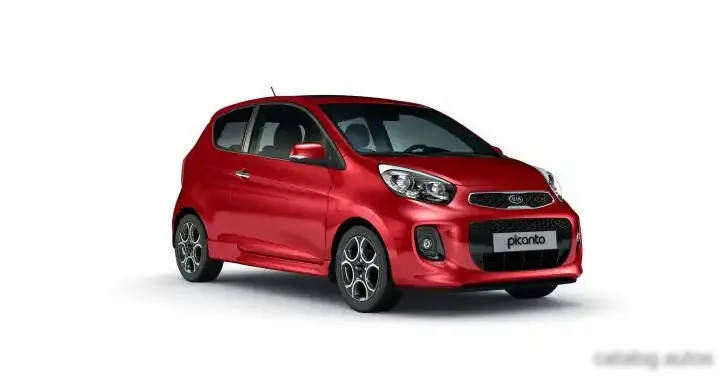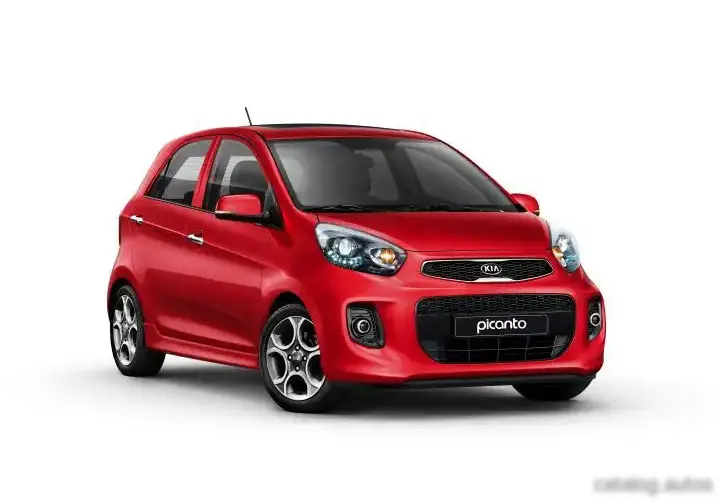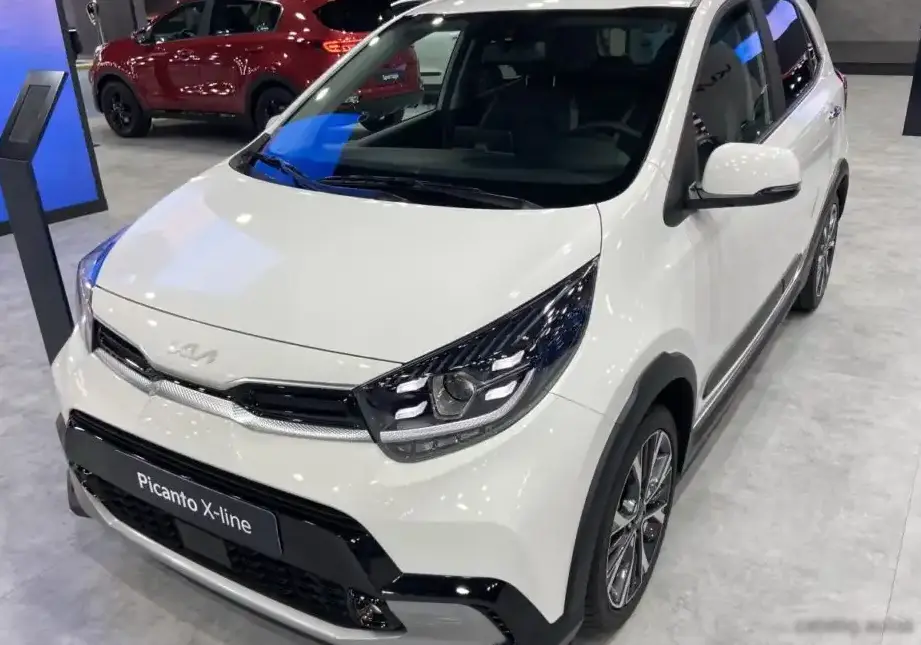
The Kia Picanto III (facelift, introduced in July 2020 and continuing through July 2023) represents a mid-cycle refresh of the third-generation Picanto, Kia’s city car offering. The 1.2-liter (84 horsepower) automatic variant occupied a key position in the lineup, serving as a balance between affordability and convenience. Positioned as an entry-level to mid-range trim, it aimed to provide accessible automatic transmission functionality within the Picanto range, appealing to drivers prioritizing ease of use over outright performance. This version was primarily marketed in Europe and other regions where small, fuel-efficient city cars are highly popular.
Technical Specifications
| Brand | Kia |
| Model | Picanto |
| Generation | Picanto III (facelift 2020) |
| Type (Engine) | 1.2 (84 Hp) Automatic |
| Start of production | July, 2020 |
| End of production | July, 2023 |
| Powertrain Architecture | Internal Combustion engine |
| Body type | Hatchback |
| Seats | 5 |
| Doors | 5 |
| CO2 emissions (WLTP) | 133 g/km |
| Fuel consumption (urban) | 5.5 l/100 km (42.8 US mpg, 51.4 UK mpg, 18.2 km/l) |
| Fuel consumption (extra urban) | 4.5 l/100 km (52.3 US mpg, 62.8 UK mpg, 22.2 km/l) |
| Fuel consumption (combined) | 4.8 l/100 km (49 US mpg, 58.9 UK mpg, 20.8 km/l) |
| CO2 emissions (NEDC) | 111 g/km |
| Fuel Type | Petrol (Gasoline) |
| Acceleration 0 – 100 km/h | 15.7 sec |
| Acceleration 0 – 62 mph | 15.7 sec |
| Acceleration 0 – 60 mph | 14.9 sec |
| Maximum speed | 172 km/h (106.88 mph) |
| Emission standard | Euro 6d-ISC-FCM |
| Weight-to-power ratio | 10.8 kg/Hp, 92.4 Hp/tonne |
| Weight-to-torque ratio | 7.6 kg/Nm, 132 Nm/tonne |
| Power | 84 Hp @ 6000 rpm |
| Power per litre | 70.2 Hp/l |
| Torque | 120 Nm @ 4200 rpm (88.51 lb.-ft. @ 4200 rpm) |
| Engine layout | Front, Transverse |
| Engine Model/Code | G4LF |
| Engine displacement | 1197 cm3 (73.05 cu. in.) |
| Number of cylinders | 4 |
| Engine configuration | Inline |
| Cylinder Bore | 71 mm (2.8 in.) |
| Piston Stroke | 75.6 mm (2.98 in.) |
| Compression ratio | 11:1 |
| Number of valves per cylinder | 4 |
| Fuel injection system | Multi-port manifold injection |
| Engine aspiration | Naturally aspirated engine |
| Engine oil capacity | 3.8 l (4.02 US qt | 3.34 UK qt) |
| Coolant capacity | 5.4 l (5.71 US qt | 4.75 UK qt) |
| Kerb Weight | 909-1019 kg (2004 – 2246.51 lbs.) |
| Max. weight | 1415 kg (3119.54 lbs.) |
| Max load | 396-506 kg (873.03 – 1115.54 lbs.) |
| Trunk (boot) space – minimum | 255 l (9.01 cu. ft.) |
| Trunk (boot) space – maximum | 1010 l (35.67 cu. ft.) |
| Fuel tank capacity | 35 l (9.25 US gal | 7.7 UK gal) |
| Permitted towbar download | 75 kg (165.35 lbs.) |
| Length | 3595-3670 mm (141.54 – 144.49 in.) |
| Width | 1595-1625 mm (62.8 – 63.98 in.) |
| Width including mirrors | 1880-1910 mm (74.02 – 75.2 in.) |
| Height | 1485-1500 mm (58.46 – 59.06 in.) |
| Wheelbase | 2400 mm (94.49 in.) |
| Front track | 1390-1394 mm (54.72 – 54.88 in.) |
| Rear track | 1402-1403 mm (55.2 – 55.24 in.) |
| Front overhang | 675-710 mm (26.57 – 27.95 in.) |
| Rear overhang | 520-560 mm (20.47 – 22.05 in.) |
| Minimum turning circle | 9.4 m (30.84 ft.) |
| Drivetrain Architecture | Front wheel drive |
| Number of gears | 5 |
| Gearbox type | Automatic transmission |
| Front suspension | Independent, McPherson with coil spring and anti-roll bar |
| Rear suspension | Semi-independent, coil spring |
| Front brakes | Ventilated discs, 256 mm |
| Rear brakes | Disc, 244 mm |
| Assisting systems | ABS (Anti-lock braking system) |
| Steering type | Steering rack and pinion |
| Power steering | Electric |
| Tires size | 185/55 R15 86H; 195/45 R16 84V |
| Wheel rims size | 6J x 15; 6.5J x 16 |
INTRODUCTION
The Kia Picanto III, launched in 2017 and facelifted in 2020, is a front-wheel-drive, five-door hatchback designed as an affordable and practical city car. The 1.2-liter engine with 84 horsepower coupled with a four-speed automatic transmission was a significant offering within the range, particularly for markets where manual transmissions are less popular. This combination aimed to provide a convenient and accessible entry point into the Picanto lineup, prioritizing ease of driving over sporty performance. The facelift brought updated styling, improved safety features, and enhanced infotainment options.
Powertrain & Engine Architecture
The heart of this Picanto variant is the Kia G4LF 1.2-liter inline-four cylinder gasoline engine. This engine utilizes a naturally aspirated configuration and multi-point fuel injection. The G4LF engine is known for its relatively simple design, contributing to its reliability and ease of maintenance. It features a single overhead camshaft (SOHC) valvetrain with four valves per cylinder. The engine’s 11:1 compression ratio helps to optimize efficiency. Paired with this engine is a four-speed automatic transmission. While not the most modern transmission in terms of gear count, it was chosen for its robustness and cost-effectiveness. The transmission is electronically controlled, offering smooth shifts under normal driving conditions. The automatic transmission is geared towards fuel efficiency and comfortable urban driving, rather than rapid acceleration.
Driving Characteristics
The 1.2-liter automatic Picanto delivers a driving experience focused on comfort and ease of use. Acceleration is modest, with a 0-60 mph time of around 14.9 seconds. The four-speed automatic transmission, while smooth, lacks the responsiveness of more modern transmissions with a greater number of gears. Gear ratios are optimized for city driving, providing adequate power for navigating urban streets and merging into traffic. On the highway, the engine can feel strained when accelerating or climbing hills. The steering is light and easy to maneuver, making it ideal for tight parking spaces. The suspension is tuned for comfort, absorbing bumps and imperfections in the road reasonably well. Compared to the manual transmission version of the 1.2L, the automatic sacrifices some responsiveness and fuel economy for the convenience of automatic gear changes.
Equipment & Trim Levels
The 1.2-liter automatic Picanto typically came equipped with a reasonable level of standard features. These included air conditioning, central locking, power windows, and a basic audio system with USB connectivity. Higher trim levels offered additional features such as alloy wheels, a touchscreen infotainment system with Apple CarPlay and Android Auto compatibility, a reversing camera, and parking sensors. Interior upholstery was typically cloth, with a simple and functional dashboard layout. Optional extras included a panoramic sunroof and upgraded sound system.
Chassis & Braking
The Picanto III utilizes a front McPherson strut suspension and a rear torsion beam suspension. This setup provides a good balance between ride comfort and handling. The front brakes are ventilated discs, while the rear brakes are solid discs. ABS (Anti-lock Braking System) is standard, enhancing safety during emergency braking situations. The steering system is an electric power steering (EPS) system, providing light and precise steering feel. The relatively lightweight nature of the Picanto contributes to its nimble handling characteristics.
Market Reception & Comparison
The 1.2-liter automatic Picanto was generally well-received by critics as a practical and affordable city car. It was praised for its fuel efficiency, ease of driving, and compact size. However, some reviewers noted its lack of outright performance and the somewhat dated four-speed automatic transmission. Compared to other trims in the Picanto lineup, such as the 1.0-liter manual, the 1.2-liter automatic offered more power and the convenience of automatic gear changes, but at a slightly higher price point and with slightly lower fuel economy. Against competitors like the Hyundai i10 and Volkswagen up!, the Picanto offered a competitive package with a generous warranty and a good level of standard equipment.
Legacy
The Kia Picanto III 1.2-liter automatic has proven to be a reliable and durable vehicle. The G4LF engine is known for its longevity, and the four-speed automatic transmission, while not sophisticated, is generally robust. On the used car market, these Picantos represent a good value proposition for buyers seeking an affordable and economical city car. Maintenance costs are relatively low, and parts availability is good. The Picanto’s compact size and fuel efficiency continue to make it a popular choice for urban commuters and first-time car buyers.