
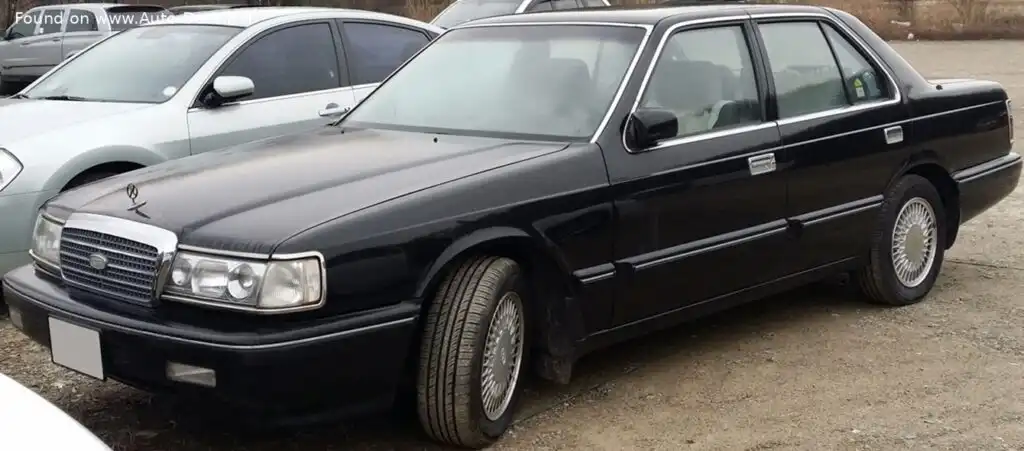
The Kia Potentia 2.0 i 16V, produced between 1997 and 2001, represented Kia’s entry into the mid-size sedan market, primarily aimed at European and Asian consumers. Positioned as a more upscale offering within Kia’s early lineup, the Potentia sought to establish the brand as a competitor to established Japanese and European automakers. This particular variant, equipped with the 2.0-liter inline-four engine and a four-speed automatic transmission, served as a comfortable and relatively affordable option for buyers prioritizing ease of use over outright performance. The Potentia was based on the Hyundai Sonata platform, reflecting the close relationship between the two companies at the time.
Technical Specifications
| Brand | Kia |
| Model | Potentia |
| Generation | Potentia |
| Type (Engine) | 2.0 i 16V (140 Hp) |
| Start of production | 1997 |
| End of production | 2001 |
| Powertrain Architecture | Internal Combustion engine |
| Body type | Sedan |
| Seats | 5 |
| Doors | 4 |
| Fuel consumption (urban) | 14 l/100 km (16.8 US mpg) |
| Fuel consumption (extra urban) | 8 l/100 km (29.4 US mpg) |
| Fuel Type | Petrol (Gasoline) |
| Maximum speed | 190 km/h (118.06 mph) |
| Weight-to-power ratio | 10.5 kg/Hp |
| Weight-to-torque ratio | 8.1 kg/Nm |
| Power | 140 Hp @ 6000 rpm |
| Power per litre | 70.1 Hp/l |
| Torque | 181 Nm @ 4000 rpm (133.5 lb.-ft. @ 4000 rpm) |
| Engine layout | Front, Longitudinal |
| Engine displacement | 1998 cm3 (121.93 cu. in.) |
| Number of cylinders | 4 |
| Engine configuration | Inline |
| Cylinder Bore | 86 mm (3.39 in.) |
| Piston Stroke | 86 mm (3.39 in.) |
| Compression ratio | 9.5:1 |
| Number of valves per cylinder | 4 |
| Fuel injection system | Multi-port manifold injection |
| Engine aspiration | Naturally aspirated engine |
| Valvetrain | DOHC |
| Kerb Weight | 1475 kg (3251.82 lbs.) |
| Fuel tank capacity | 70 l (18.49 US gal) |
| Length | 4955 mm (195.08 in.) |
| Width | 1725 mm (67.91 in.) |
| Height | 1430 mm (56.3 in.) |
| Wheelbase | 2710 mm (106.69 in.) |
| Front track | 1445 mm (56.89 in.) |
| Rear track | 1460 mm (57.48 in.) |
| Drivetrain Architecture | Rear wheel drive |
| Number of gears | 4 |
| Gearbox type | Automatic transmission |
| Front suspension | Spring Strut |
| Rear suspension | Spring Strut |
| Front brakes | Ventilated discs |
| Rear brakes | Disc |
| Assisting systems | ABS (Anti-lock braking system) |
| Steering type | Steering rack and pinion |
| Power steering | Hydraulic Steering |
| Tires size | 195/65 R15 |
Powertrain & Engine Architecture
The heart of the Potentia 2.0 i 16V is the Kia-engineered, but Hyundai-derived, 1998cc inline-four cylinder engine. This engine, often referred to by its internal code, utilized a multi-port fuel injection system to deliver fuel to the cylinders. The engine featured a double overhead camshaft (DOHC) valvetrain, operating 16 valves (four per cylinder) to optimize airflow and enhance volumetric efficiency. The 9.5:1 compression ratio was a typical value for naturally aspirated engines of the era, balancing performance and fuel economy. The four-speed automatic transmission was a conventional hydraulic unit, offering smooth but not particularly rapid shifts. It was designed for comfort and ease of driving rather than sporty performance. The engine is longitudinally mounted, driving the rear wheels.
Driving Characteristics
The 140 horsepower and 133.5 lb-ft of torque produced by the 2.0-liter engine provided adequate, but not exhilarating, performance. Acceleration from 0 to 60 mph was estimated to be around 10-11 seconds. The automatic transmission, while smooth, did detract from the engine’s responsiveness. Compared to the manual transmission versions of the Potentia, the automatic felt noticeably slower. The gear ratios were tuned for fuel efficiency and comfortable cruising, rather than aggressive acceleration. The rear-wheel-drive configuration offered a balanced feel, but the relatively soft suspension setup prioritized ride comfort over sharp handling. Overall, the driving experience was geared towards providing a relaxed and comfortable commute.
Equipment & Trim Levels
The Potentia 2.0 i 16V automatic typically came equipped with a reasonable level of standard features for its time. These included power windows, power steering, central locking, and an AM/FM radio. Air conditioning was often standard, but could be optional depending on the specific market. Interior upholstery was typically cloth, with options for upgraded materials available. The dashboard layout was functional and straightforward, with clearly labeled controls. Optional extras included a sunroof, alloy wheels, and a more advanced audio system. The trim level of the 2.0 i 16V automatic generally positioned it as a mid-range offering within the Potentia lineup, bridging the gap between the base models and the more luxurious trims.
Chassis & Braking
The Potentia’s chassis utilized a conventional spring strut suspension setup at both the front and rear. This provided a comfortable ride, but didn’t offer the same level of handling precision as more sophisticated suspension designs. The front brakes were ventilated discs, providing adequate stopping power, while the rear brakes were solid discs. An Anti-lock Braking System (ABS) was included as standard equipment, enhancing safety. The steering system was a rack and pinion setup with hydraulic power assistance, offering light and easy steering feel. The 195/65 R15 tires provided a good balance of ride comfort and grip.
Market Reception & Comparison
The Kia Potentia 2.0 i 16V automatic received mixed reviews from automotive critics. While praised for its comfortable ride and reasonable price, it was often criticized for its lack of performance and somewhat bland styling. Compared to its competitors, such as the Toyota Camry and Honda Accord, the Potentia offered a less refined driving experience. However, it often undercut those rivals in price. Fuel economy was average for the class, with the automatic transmission slightly reducing efficiency compared to the manual versions. Reliability was generally considered to be acceptable, but not exceptional.
Legacy
The Kia Potentia, while not a groundbreaking vehicle, played an important role in establishing Kia as a viable competitor in the global automotive market. The 2.0-liter engine and four-speed automatic transmission proved to be reasonably durable, and many examples remain on the road today. In the used car market, the Potentia 2.0 i 16V automatic is often sought after by buyers looking for an affordable and reliable classic sedan. Maintenance costs are generally low, and parts availability is still relatively good. While it may not offer the performance or prestige of some of its rivals, the Potentia remains a testament to Kia’s early efforts to build a reputation for quality and value.
