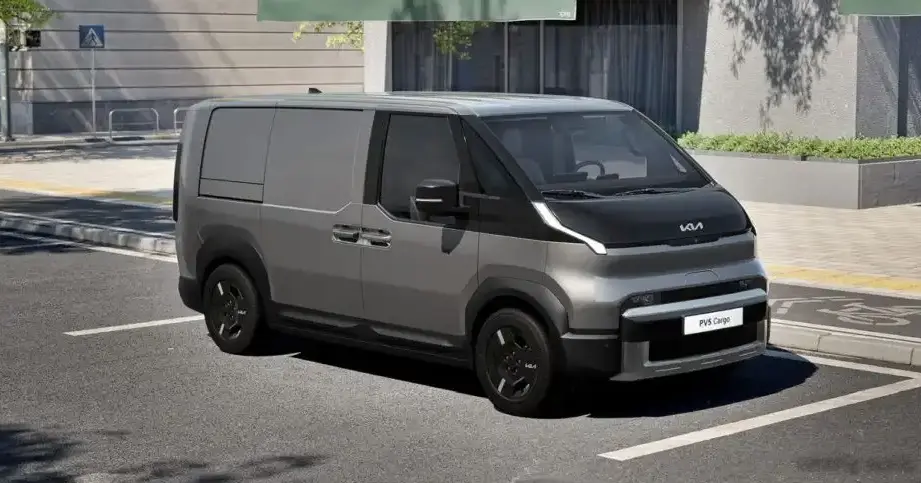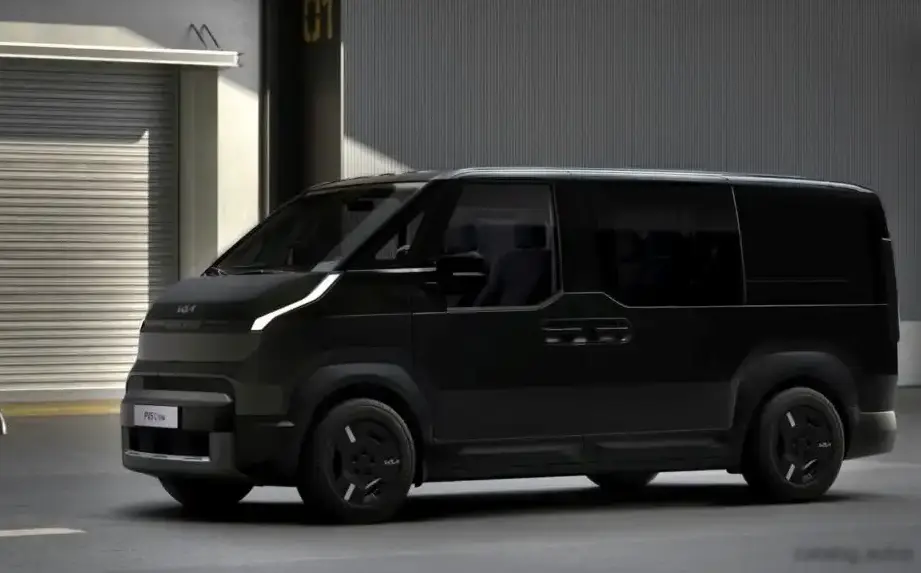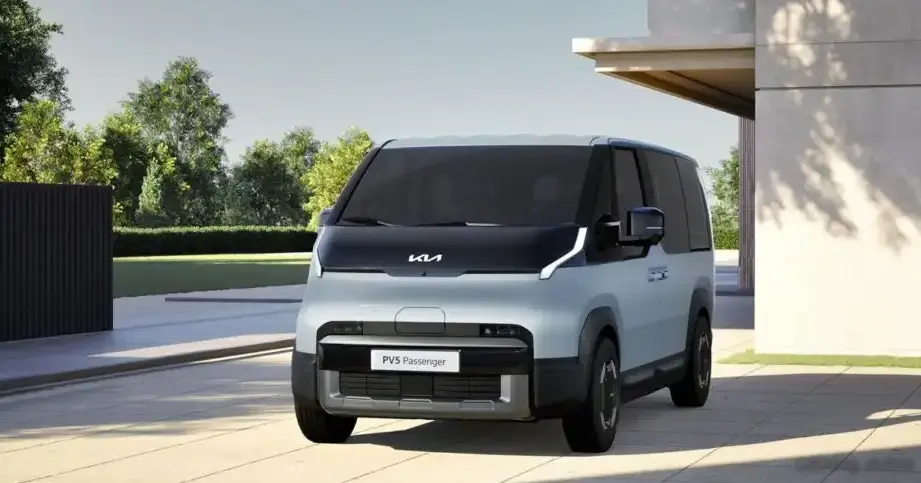
The Kia PV5 Passenger, equipped with a 71.2 kWh battery and a single electric motor producing 163 horsepower, represents Kia’s entry into the increasingly competitive electric minivan segment. Production commenced in May 2025, positioning the PV5 as a key model in Kia’s strategy to expand its electric vehicle (EV) offerings. This variant is designed to appeal to families and individuals seeking a practical, spacious, and environmentally conscious transportation solution. The PV5 Passenger falls within Kia’s broader EV lineup, offering a more accessible price point and range compared to potentially higher-performance or longer-range versions of the PV5.
Technical Specifications
| Brand | Kia |
| Model | PV5 |
| Generation | PV5 Passenger |
| Type (Engine) | 71.2 kWh (163 Hp) Long Range |
| Start of production | May, 2025 |
| Powertrain Architecture | BEV (Electric Vehicle) |
| Body type | Minivan |
| Seats | 5-6 |
| Doors | 5 |
| Fuel Type | Electricity |
| Acceleration 0 – 100 km/h | 10.7 sec |
| Acceleration 0 – 62 mph | 10.7 sec |
| Acceleration 0 – 60 mph | 10.2 sec |
| Maximum speed | 135 km/h (83.89 mph) |
| Gross battery capacity | 71.2 kWh |
| Battery voltage | 400 V |
| Battery technology | Lithium nickel manganese cobalt oxides (Li-NMC) |
| Battery location | Below the floor |
| All-electric range (WLTP) | 400.7 km (248.98 mi) |
| Electric motor power | 163 Hp |
| Electric motor Torque | 250 Nm (184.39 lb.-ft.) |
| Electric motor location | Front axle, Transverse |
| Electric motor type | Synchronous |
| System power | 163 Hp |
| System torque | 250 Nm (184.39 lb.-ft.) |
| Max. weight | 2600 kg (5732.02 lbs.) |
| Trunk (boot) space – minimum | 1320 l (46.62 cu. ft.) |
| Trunk (boot) space – maximum | 2315 l (81.75 cu. ft.) |
| Permitted trailer load with brakes (12%) | 750 kg (1653.47 lbs.) |
| Length | 4695 mm (184.84 in.) |
| Width | 1895 mm (74.61 in.) |
| Height | 1915 mm (75.39 in.) |
| Wheelbase | 2995 mm (117.91 in.) |
| Minimum turning circle | 10.8 m (35.43 ft.) |
| Drivetrain | Front wheel drive |
| Number of gears | 1 |
| Gearbox type | Automatic transmission |
| Front suspension | Double wishbone |
| Rear suspension | Torsion |
| Tire size | 215/65 R16 |
| Wheel rims size | 16 |
Powertrain & Engine Architecture
The Kia PV5 Passenger 71.2 kWh Long Range utilizes a fully Battery Electric Vehicle (BEV) powertrain. The heart of the system is a 71.2 kWh lithium-ion battery pack employing Lithium Nickel Manganese Cobalt Oxide (Li-NMC) chemistry, positioned under the vehicle floor to optimize space and lower the center of gravity. This battery powers a single synchronous electric motor mounted transversely on the front axle, delivering 163 horsepower and 250 Nm (184.39 lb.-ft.) of torque. The vehicle employs a single-speed automatic transmission, typical of most electric vehicles, simplifying the drivetrain and maximizing efficiency. The 400V architecture is a common choice for current EV designs, balancing cost and performance. The motor controller manages the power flow between the battery and the motor, optimizing efficiency and providing regenerative braking capabilities.
Driving Characteristics
The 163 hp output and front-wheel-drive configuration of the PV5 Passenger result in a driving experience geared towards practicality and efficiency rather than outright performance. Acceleration from 0-60 mph takes approximately 10.2 seconds, and the top speed is limited to 135 km/h (83.89 mph). While not particularly quick, the instant torque delivery characteristic of electric motors provides adequate responsiveness for everyday driving situations. The single-speed transmission offers seamless acceleration, and the regenerative braking system allows for one-pedal driving in certain conditions. Compared to potential higher-powered versions of the PV5, this variant prioritizes range and affordability over spirited driving. The front-wheel-drive setup provides predictable handling, but may exhibit some torque steer under hard acceleration.
Equipment & Trim Levels
The PV5 Passenger 71.2 kWh Long Range trim is positioned as a well-equipped, mid-range offering. Standard features typically include air conditioning, a touchscreen infotainment system with smartphone integration (Apple CarPlay and Android Auto), a suite of advanced driver-assistance systems (ADAS) such as automatic emergency braking, lane-keeping assist, and adaptive cruise control. Interior upholstery is likely to be a durable cloth or a lower-grade synthetic leather. Optional extras may include a larger touchscreen display, a premium audio system, heated and ventilated front seats, a panoramic sunroof, and upgraded interior trim materials. The 5-6 seat configuration provides flexibility for families, with options for different seating arrangements.
Chassis & Braking
The PV5 Passenger utilizes a front-wheel-drive chassis with a double wishbone suspension setup at the front and a torsion beam suspension at the rear. This configuration balances ride comfort and handling characteristics. The torsion beam rear suspension is a cost-effective solution commonly found in front-wheel-drive vehicles. The braking system features disc brakes at the front and drum brakes at the rear, a common setup for this class of vehicle to manage costs. Electric power steering provides light and precise steering feel. The vehicle is equipped with ABS (Anti-lock Braking System) as standard, enhancing safety during emergency braking situations. The 16-inch wheels are fitted with 215/65 R16 tires, providing a balance of comfort and grip.
Market Reception & Comparison
The Kia PV5 Passenger 71.2 kWh Long Range is expected to compete with other electric minivans and multi-purpose vehicles (MPVs) in the market. Critics are likely to assess its value proposition based on its range, price, and interior space. Compared to other trims in the PV5 lineup, this variant offers a balance between range and affordability. The 400.7 km (248.98 mi) WLTP range is competitive within its segment, but may be less than that of higher-priced, longer-range versions. Fuel economy, measured in miles per gallon equivalent (MPGe), is expected to be competitive with other EVs in its class. Reliability is anticipated to be good, given Kia’s recent track record for building durable vehicles.
Legacy
The long-term reliability of the PV5 Passenger’s powertrain remains to be seen, as it is a relatively new model. However, Kia’s electric vehicle technology has been steadily improving, and the Li-NMC battery chemistry is well-established. The 71.2 kWh battery pack is expected to provide years of reliable service, although battery degradation over time is a natural phenomenon. In the used car market, this variant is likely to be popular with buyers seeking an affordable and practical electric vehicle with ample space for passengers and cargo. Its position as an entry-level EV within the PV5 lineup should ensure strong demand in the years to come.