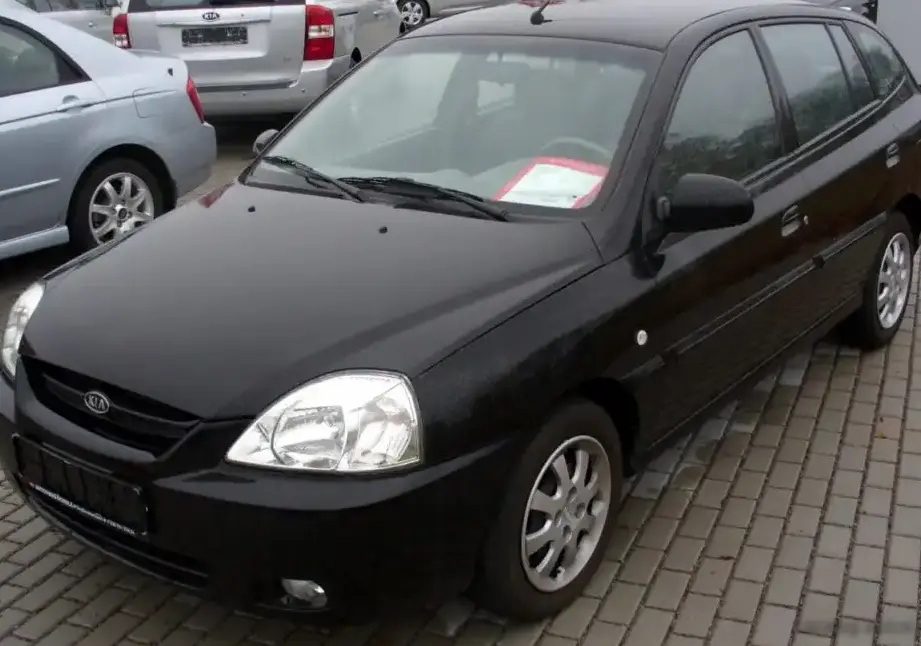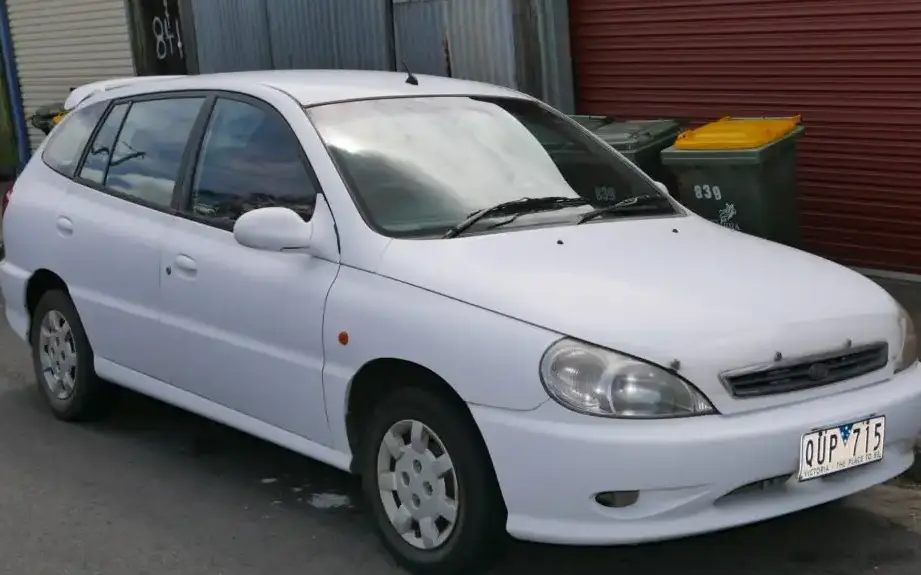
The Kia Rio DC, launched in 1999 and produced through 2002, represented Kia’s initial foray into the subcompact hatchback market, specifically aimed at European and Asian consumers. Positioned as an affordable and practical vehicle, the Rio DC offered a range of engine and transmission options. The 1.5i 16V variant, producing 98 horsepower, was a key offering, often serving as the entry-level engine choice paired with either a five-speed manual or a four-speed automatic transmission. This particular configuration aimed to balance fuel efficiency with acceptable performance for everyday driving. The Rio DC was built on Kia’s own platform, marking a step towards independent design and engineering for the Korean automaker.
Technical Specifications
| Brand | Kia |
| Model | Rio |
| Generation | Rio I Hatchback (DC) |
| Type (Engine) | 1.5i 16V (98 Hp) |
| Start of production | 1999 |
| End of production | 2002 |
| Powertrain Architecture | Internal Combustion engine |
| Body type | Hatchback |
| Seats | 5 |
| Doors | 5 |
| Fuel consumption (urban) | 9.3 l/100 km (25.3 US mpg) |
| Fuel consumption (extra urban) | 5.9 l/100 km (39.9 US mpg) |
| Fuel Type | Petrol (Gasoline) |
| Acceleration 0 – 100 km/h | 11.6 sec |
| Acceleration 0 – 62 mph | 11.6 sec |
| Acceleration 0 – 60 mph | 11 sec |
| Maximum speed | 175 km/h (108.74 mph) |
| Weight-to-power ratio | 10.9 kg/Hp |
| Weight-to-torque ratio | 7.8 kg/Nm |
| Power | 98 Hp @ 5800 rpm |
| Torque | 138 Nm @ 4500 rpm (101.78 lb.-ft. @ 4500 rpm) |
| Engine layout | Front, Transverse |
| Engine Model/Code | A5D |
| Engine displacement | 1493 cm3 (91.11 cu. in.) |
| Number of cylinders | 4 |
| Engine configuration | Inline |
| Cylinder Bore | 75.5 mm (2.97 in.) |
| Piston Stroke | 83.4 mm (3.28 in.) |
| Compression ratio | 9.5:1 |
| Number of valves per cylinder | 4 |
| Fuel injection system | Multi-port manifold injection |
| Engine aspiration | Naturally aspirated |
| Valvetrain | DOHC |
| Engine oil capacity | 3 l (3.17 US qt | 2.64 UK qt) |
| Coolant capacity | 6 l (6.34 US qt | 5.28 UK qt) |
| Kerb Weight | 1072 kg (2363.36 lbs.) |
| Max. weight | 1467 kg (3234.18 lbs.) |
| Max load | 395 kg (870.83 lbs.) |
| Trunk (boot) space – minimum | 405 l (14.3 cu. ft.) |
| Trunk (boot) space – maximum | 1252 l (44.21 cu. ft.) |
| Fuel tank capacity | 45 l (11.89 US gal | 9.9 UK gal) |
| Length | 4215 mm (165.94 in.) |
| Width | 1675 mm (65.94 in.) |
| Height | 1440 mm (56.69 in.) |
| Wheelbase | 2410 mm (94.88 in.) |
| Front track | 1430 mm (56.3 in.) |
| Rear track | 1435 mm (56.5 in.) |
| Drag coefficient (Cd) | 0.34 |
| Minimum turning circle | 9.5 m (31.17 ft.) |
| Drivetrain | Front wheel drive |
| Number of gears | 5 |
| Gearbox type | manual transmission |
| Front suspension | Spring Strut |
| Rear suspension | Coil spring |
| Front brakes | Ventilated discs |
| Rear brakes | Drum |
| Assisting systems | ABS (Anti-lock braking system) |
| Steering type | Steering rack and pinion |
| Power steering | Hydraulic |
| Tires size | 175/65 R14 |
| Wheel rims size | 14 |
Powertrain & Engine Architecture
The heart of the 1.5i Rio was the A5D engine, a naturally aspirated, inline-four cylinder gasoline engine displacing 1493cc. This engine featured a multi-port fuel injection system, providing a balance between fuel efficiency and power delivery. The engine utilized a double overhead camshaft (DOHC) valvetrain, operating 16 valves (four per cylinder) to enhance volumetric efficiency. The 98 horsepower output was achieved at 5800 rpm, while peak torque of 138 Nm (101.78 lb-ft) arrived at 4500 rpm. The four-speed automatic transmission, while providing convenience, was a relatively simple unit, prioritizing durability over outright performance. It featured standard torque converter technology and lacked the advanced electronic controls found in more modern automatic gearboxes.
Driving Characteristics
The 1.5L automatic Rio DC offered modest performance. Acceleration from 0-60 mph took approximately 11 seconds, and top speed was around 108 mph. The automatic transmission’s gear ratios were geared towards fuel economy rather than spirited driving. Compared to the five-speed manual version, the automatic suffered from noticeable power loss due to the torque converter. The manual transmission offered quicker acceleration and a more engaging driving experience. The automatic, however, was favored by drivers prioritizing ease of use, particularly in urban environments. The suspension was tuned for comfort, resulting in a relatively soft ride, but also some body roll during cornering.
Equipment & Trim Levels
The 1.5i automatic Rio DC typically came equipped with basic features such as power steering, central locking, and an AM/FM radio. Air conditioning was often an optional extra. Interior upholstery was typically cloth, with a simple, functional dashboard layout. Higher trim levels, if available in specific markets, might have included features like power windows, alloy wheels, and a more sophisticated audio system. Safety features were limited by the standards of the time, generally including only a driver’s airbag and ABS as optional equipment.
Chassis & Braking
The Rio DC utilized a front-wheel-drive layout with a MacPherson strut suspension in the front and a coil spring suspension in the rear. The front brakes were ventilated discs, providing adequate stopping power, while the rear brakes were drums, a cost-saving measure common in this class of vehicle. The chassis was relatively lightweight, contributing to the car’s fuel efficiency. Stabilizer bars were present, but were relatively thin, reflecting the car’s focus on comfort rather than sporty handling.
Market Reception & Comparison
The Kia Rio DC 1.5i automatic was generally well-received as an affordable and reliable subcompact. Critics noted its practicality and low running costs, but also pointed out its lack of refinement and modest performance. Compared to competitors like the Ford Fiesta, Volkswagen Polo, and Peugeot 206, the Rio offered a competitive price point but lacked the established brand reputation and sophisticated engineering of its European rivals. Fuel economy was a strong point, with the automatic transmission achieving around 39.9 US mpg on the extra-urban cycle. Reliability was generally good, although some owners reported minor issues with the automatic transmission over time.
Legacy
The Kia Rio DC 1.5i automatic, while not a groundbreaking vehicle, played a significant role in establishing Kia as a viable competitor in the European and Asian markets. The A5D engine proved to be reasonably durable, and many examples remain on the road today. In the used car market, these Rios are valued for their affordability and simplicity. However, potential buyers should be aware of the age-related issues common to vehicles of this era, such as corrosion and wear and tear on suspension components. The automatic transmission, while generally reliable, may require more frequent servicing than the manual counterpart. The Rio DC laid the foundation for Kia’s subsequent success in the subcompact segment, paving the way for more refined and technologically advanced models.