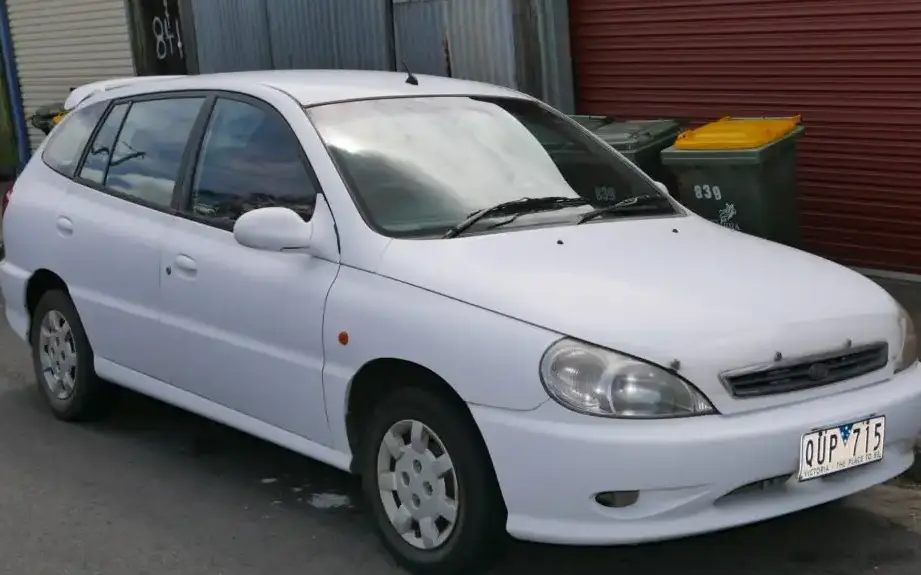
The Kia Rio III Hatchback (UB) 1.4 CRDi 16V, producing 90 horsepower, was a key variant in Kia’s European and global lineup from its introduction in June 2011 until 2015. Positioned as an entry-level diesel option, it aimed to provide fuel efficiency and practicality to budget-conscious buyers. This model represented Kia’s increasing focus on diesel technology and its ambition to compete more effectively in the compact hatchback segment. The UB generation Rio marked a significant step forward in design and build quality for the Korean automaker, and the 1.4 CRDi played a crucial role in establishing the Rio as a viable alternative to established European competitors.
Technical Specifications
| Brand | Kia |
| Model | Rio |
| Generation | Rio III Hatchback (UB) |
| Type (Engine) | 1.4 CRDi 16V (90 Hp) |
| Start of production | June, 2011 |
| End of production | 2015 |
| Powertrain Architecture | Internal Combustion engine |
| Body type | Hatchback |
| Seats | 5 |
| Doors | 5 |
| Fuel consumption (urban) | 5 l/100 km (47 US mpg, 56.5 UK mpg, 20 km/l) |
| Fuel consumption (extra urban) | 3.8 l/100 km (61.9 US mpg, 74.3 UK mpg, 26.3 km/l) |
| Fuel consumption (combined) | 4.3 l/100 km (54.7 US mpg, 65.7 UK mpg, 23.3 km/l) |
| Fuel Type | Diesel |
| Acceleration 0 – 100 km/h | 14.2 sec |
| Acceleration 0 – 62 mph | 14.2 sec |
| Acceleration 0 – 60 mph | 13.5 sec |
| Maximum speed | 172 km/h (106.88 mph) |
| Emission standard | Euro 5 |
| Weight-to-power ratio | 12.9 kg/Hp, 77.3 Hp/tonne |
| Weight-to-torque ratio | 5.3 kg/Nm, 189 Nm/tonne |
| Power | 90 Hp |
| Power per litre | 64.5 Hp/l |
| Torque | 220 Nm @ 1750 rpm (162.26 lb.-ft. @ 1750 rpm) |
| Engine layout | Front, Transverse |
| Engine Model/Code | D4FC |
| Engine displacement | 1396 cm3 (85.19 cu. in.) |
| Number of cylinders | 4 |
| Engine configuration | Inline |
| Number of valves per cylinder | 4 |
| Fuel injection system | Diesel Commonrail |
| Engine aspiration | Turbocharger, Intercooler |
| Valvetrain | DOHC |
| Engine oil capacity | 5.3 l (5.6 US qt | 4.66 UK qt) |
| Coolant capacity | 6.6 l (6.97 US qt | 5.81 UK qt) |
| Kerb Weight | 1164 kg (2566.18 lbs.) |
| Max. weight | 1690 kg (3725.81 lbs.) |
| Max load | 526 kg (1159.63 lbs.) |
| Trunk (boot) space – minimum | 224 l (7.91 cu. ft.) |
| Fuel tank capacity | 43 l (11.36 US gal | 9.46 UK gal) |
| Length | 4045 mm (159.25 in.) |
| Width | 1720 mm (67.72 in.) |
| Height | 1455 mm (57.28 in.) |
| Wheelbase | 2570 mm (101.18 in.) |
| Front track | 1521 mm (59.88 in.) |
| Rear (Back) track | 1525 mm (60.04 in.) |
| Minimum turning circle | 10.5 m (34.45 ft.) |
| Drivetrain Architecture | The Internal combustion engine (ICE) drives the front wheels of the vehicle. |
| Drive wheel | Front wheel drive |
| Number of gears | 6 gears, manual transmission |
| Assisting systems | ABS (Anti-lock braking system) |
| Steering type | Steering rack and pinion |
| Tires size | 185/65 R15; 195/55 R16; 205/45 R17 |
| Wheel rims size | 15; 16; 17 |
INTRODUCTION
The Kia Rio III Hatchback (UB) 1.4 CRDi 16V, launched in 2011, was a significant model for Kia, representing a move towards more sophisticated and fuel-efficient vehicles. Built on the UB platform, it offered a five-door hatchback body style and aimed to appeal to European buyers seeking a practical and economical city car. The 1.4 CRDi engine was a key component of this strategy, providing a balance between performance and fuel economy. This variant occupied the lower-mid range of the Rio III lineup, offering a diesel alternative to the petrol-powered models and serving as a stepping stone to the more powerful 1.6 CRDi.
Powertrain & Engine Architecture
The heart of this Rio variant is the D4FC 1.4-liter common rail diesel engine. This engine is a four-cylinder, inline configuration with a displacement of 1396 cc. It utilizes a turbocharger with an intercooler to boost power output to 90 horsepower and 220 Nm (162 lb-ft) of torque at 1750 rpm. The engine employs a double overhead camshaft (DOHC) valvetrain with four valves per cylinder, optimizing airflow for improved efficiency and power. The fuel injection system is a second-generation common rail diesel injection system, delivering precise fuel metering for cleaner combustion and enhanced performance. The engine is transversely mounted in the front of the vehicle. The 6-speed manual transmission was standard, chosen for its efficiency and driver engagement. While an automatic transmission was offered on other Rio models, it wasn’t available with the 1.4 CRDi engine in most markets.
Driving Characteristics
The 1.4 CRDi 90 hp engine, paired with the 6-speed manual transmission, provided adequate performance for urban and highway driving. Acceleration from 0-60 mph took around 13.5 seconds, and the top speed was approximately 107 mph. The engine’s torque peak at 1750 rpm meant that it felt responsive in everyday driving situations, offering sufficient pulling power for overtaking and climbing hills. Compared to the higher-output 1.6 CRDi, the 1.4 CRDi felt less powerful, particularly at higher speeds. However, the 1.4 CRDi’s gearing was optimized for fuel efficiency, resulting in a more relaxed driving experience on the highway. The manual transmission offered precise shifts, and the clutch was relatively light, making it easy to drive in stop-and-go traffic. The ride quality was generally comfortable, although the suspension could feel a little firm on rough roads.
Equipment & Trim Levels
The 1.4 CRDi Rio typically came with a reasonable level of standard equipment. Base models included air conditioning, power steering, electric front windows, and a basic audio system with USB connectivity. Safety features included ABS brakes, front airbags, and ISOFIX child seat anchors. Higher trim levels, such as the ‘2’ or ‘3’ trims, added features like alloy wheels, rear electric windows, a more advanced audio system with Bluetooth connectivity, and fog lights. Optional extras included a sunroof, parking sensors, and leather upholstery. Interior upholstery was typically cloth, with a dark color scheme. The dashboard layout was functional and straightforward, with easy-to-read instruments.
Chassis & Braking
The Rio III Hatchback utilized a front-wheel-drive chassis with a MacPherson strut front suspension and a torsion beam rear suspension. This setup provided a good balance between ride comfort and handling. The steering was a rack and pinion system, offering precise and responsive steering feel. Braking was typically accomplished with disc brakes on the front wheels and drum brakes on the rear wheels. ABS (Anti-lock Braking System) was standard, enhancing braking performance and stability. Stabilizer bars were fitted to both the front and rear axles to reduce body roll during cornering. The suspension was tuned to prioritize comfort over sporty handling, making it well-suited for everyday driving.
Market Reception & Comparison
The Kia Rio III 1.4 CRDi was generally well-received by automotive critics as a practical and economical city car. Its fuel efficiency was a major selling point, with combined fuel consumption figures of around 54.7 US mpg. Compared to its rivals, such as the Ford Fiesta, Volkswagen Polo, and Renault Clio, the Rio offered a competitive price point and a generous warranty. However, some critics noted that the interior materials were not as refined as those found in some of its competitors. The 1.4 CRDi engine was praised for its fuel economy and torque, but some reviewers found it to be a little underpowered compared to the 1.6 CRDi. In terms of reliability, the Rio III proved to be a relatively dependable vehicle, with few major issues reported.
Legacy
The Kia Rio III 1.4 CRDi 16V has established itself as a reliable and affordable used car option. The D4FC engine, while not known for being exceptionally powerful, is generally considered to be durable and long-lasting, provided it receives regular maintenance. Common issues include diesel particulate filter (DPF) problems, particularly on vehicles that have primarily been used for short journeys. However, these issues are relatively common to all modern diesel engines. Today, the Rio III 1.4 CRDi remains a popular choice for buyers seeking a fuel-efficient and practical hatchback, offering a good balance of value and reliability.