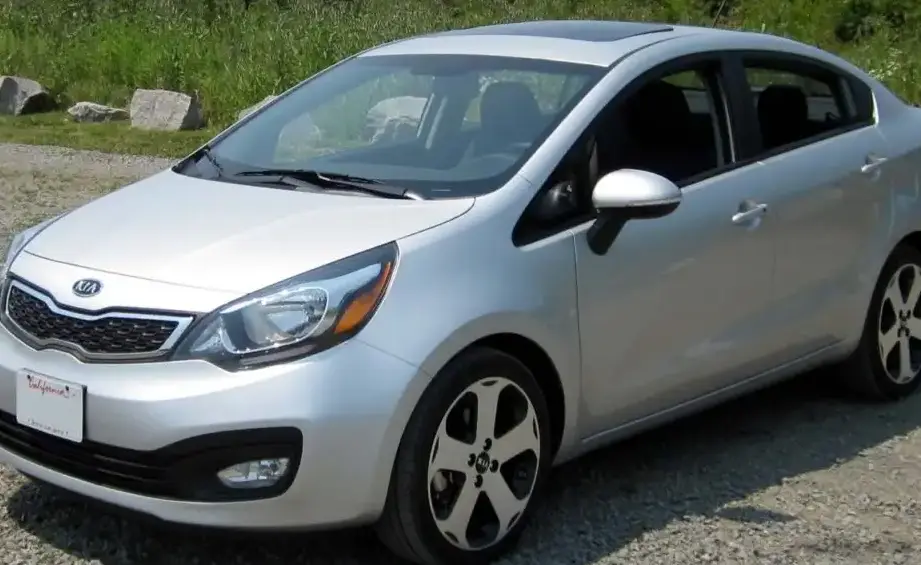
The Kia Rio III Sedan (UB) 1.1 CRDi 12V, producing 75 horsepower, was a key variant in Kia’s lineup from its introduction in June 2011 until 2015. Positioned as an entry-level offering within the third-generation Rio (UB) series, this model aimed to provide fuel-efficient and affordable transportation, particularly in European and Asian markets. The UB generation represented a significant step forward for Kia in terms of design and build quality, and the 1.1 CRDi variant played a crucial role in attracting budget-conscious buyers. It was built on the Kia UB platform, sharing components with other compact Kia and Hyundai models.
Technical Specifications
| Brand | Kia |
| Model | Rio |
| Generation | Rio III Sedan (UB) |
| Type (Engine) | 1.1 CRDi 12V (75 Hp) |
| Start of production | June, 2011 |
| End of production | 2015 |
| Powertrain Architecture | Internal Combustion engine |
| Body type | Sedan |
| Seats | 5 |
| Doors | 4 |
| Fuel Type | Diesel |
| Acceleration 0 – 100 km/h | 16.1 sec |
| Acceleration 0 – 62 mph | 16.1 sec |
| Acceleration 0 – 60 mph | 15.3 sec |
| Maximum speed | 160 km/h (99.42 mph) |
| Emission standard | Euro 5 |
| Weight-to-power ratio | 14.9 kg/Hp, 67.2 Hp/tonne |
| Weight-to-torque ratio | 6.6 kg/Nm, 152.3 Nm/tonne |
| Power | 75 Hp |
| Power per litre | 67 Hp/l |
| Torque | 170 Nm @ 1500 rpm (125.39 lb.-ft. @ 1500 rpm) |
| Engine layout | Front, Transverse |
| Engine Model/Code | D3FA |
| Engine displacement | 1120 cm3 (68.35 cu. in.) |
| Number of cylinders | 3 |
| Engine configuration | Inline |
| Number of valves per cylinder | 4 |
| Fuel injection system | Diesel Commonrail |
| Engine aspiration | Turbocharger, Intercooler |
| Valvetrain | DOHC |
| Engine oil capacity | 4.8 l (5.07 US qt | 4.22 UK qt) |
| Coolant | 6.4 l (6.76 US qt | 5.63 UK qt) |
| Kerb Weight | 1116 kg (2460.36 lbs.) |
| Max. weight | 1640 kg (3615.58 lbs.) |
| Max load | 524 kg (1155.22 lbs.) |
| Trunk (boot) space – minimum | 500 l (17.66 cu. ft.) |
| Fuel tank capacity | 43 l (11.36 US gal | 9.46 UK gal) |
| Length | 4370 mm (172.05 in.) |
| Width | 1700 mm (66.93 in.) |
| Height | 1470 mm (57.87 in.) |
| Wheelbase | 2570 mm (101.18 in.) |
| Front track | 1495 mm (58.86 in.) |
| Rear (Back) track | 1502 mm (59.13 in.) |
| Minimum turning circle | 10.5 m (34.45 ft.) |
| Drivetrain Architecture | The Internal combustion engine (ICE) drives the front wheels of the vehicle. |
| Drive wheel | Front wheel drive |
| Number of gears | 6 gears, manual transmission |
| Front suspension | Independent, type McPherson with coil spring and anti-roll bar |
| Rear suspension | Semi-independent, coil spring |
| Front brakes | Ventilated discs |
| Rear brakes | Disc |
| Assisting systems | ABS (Anti-lock braking system) |
| Steering type | Steering rack and pinion |
| Tires size | 185/65 R15; 195/55 R16; 205/45 R17 |
| Wheel rims size | 15; 16; 17 |
INTRODUCTION
The Kia Rio III Sedan (UB) 1.1 CRDi 12V, launched in 2011, represented Kia’s commitment to offering a competitive and fuel-efficient compact sedan. This variant was particularly important in markets where diesel engines were favored for their economy, such as Europe and parts of Asia. The UB Rio was a significant redesign from its predecessor, boasting a more modern exterior and a more refined interior. The 1.1 CRDi engine was specifically chosen for its low running costs and suitability for urban driving. It sat at the base of the Rio Sedan lineup, offering a more affordable entry point compared to the 1.4 and 1.6-liter gasoline options.
Powertrain & Engine Architecture
The heart of this Rio variant is the D3FA 1.1-liter three-cylinder diesel engine. This engine utilizes a common rail direct injection system, delivering fuel directly into the combustion chamber at extremely high pressure for improved efficiency and reduced emissions. The engine is turbocharged and intercooled, which helps to boost power output despite its small displacement. The 12-valve configuration (four valves per cylinder) contributes to efficient gas exchange. The engine’s architecture is a testament to downsizing trends in the automotive industry, aiming to provide adequate performance while minimizing fuel consumption. The engine is transversely mounted in the front of the vehicle. The 6-speed manual transmission was the only transmission option available with this engine, optimized for fuel economy and smooth gear changes.
Driving Characteristics
The 1.1 CRDi 12V Rio Sedan offered a driving experience focused on practicality and fuel efficiency rather than outright performance. With 75 horsepower and 170 Nm (125 lb-ft) of torque, acceleration was modest, taking approximately 16.1 seconds to reach 62 mph (100 km/h). However, the engine’s peak torque, available from 1500 rpm, provided sufficient power for everyday driving and overtaking maneuvers. The 6-speed manual transmission allowed drivers to keep the engine in its optimal power band. Compared to the 1.4 and 1.6-liter gasoline versions, the 1.1 CRDi offered significantly better fuel economy but lacked the responsiveness and higher top speed of its petrol counterparts. The gear ratios were tuned for maximizing fuel efficiency, resulting in a slightly less engaging driving experience than the higher-powered models.
Equipment & Trim Levels
The 1.1 CRDi Rio Sedan typically came with a base level of equipment, focusing on essential features. Standard amenities included air conditioning, power steering, central locking, and an audio system with USB connectivity. Safety features such as ABS (Anti-lock Braking System) and front airbags were also standard. Interior upholstery was typically cloth, and the dashboard featured a functional, if somewhat basic, design. Optional extras included alloy wheels, electric windows, and a more advanced audio system. Higher trim levels, available with the larger engines, offered features like automatic climate control, leather upholstery, and parking sensors, which were not typically available on the base 1.1 CRDi model.
Chassis & Braking
The Rio III Sedan utilized a McPherson strut front suspension and a semi-independent coil spring rear suspension. This setup provided a comfortable ride quality suitable for everyday driving conditions. The front brakes were ventilated discs, offering good stopping power, while the rear brakes were solid discs. The suspension was tuned for comfort rather than sporty handling. The chassis was designed to balance affordability with structural integrity. Stabilizer bars were included to reduce body roll during cornering, but the overall handling characteristics were geared towards ease of use and stability rather than dynamic performance.
Market Reception & Comparison
The Kia Rio III Sedan 1.1 CRDi 12V was generally well-received by critics as an affordable and economical option in the compact sedan segment. Its fuel efficiency was a major selling point, particularly in Europe where diesel fuel was often cheaper than gasoline. However, some reviewers noted the engine’s lack of power and the somewhat basic interior. Compared to competitors like the Volkswagen Polo, Ford Fiesta, and Renault Clio, the Rio offered a compelling value proposition, often undercutting them in price while providing a similar level of equipment. The 1.4 and 1.6-liter gasoline versions of the Rio offered more performance but at the cost of increased fuel consumption. The 1.1 CRDi was targeted towards buyers prioritizing economy and practicality over driving excitement.
Legacy
The Kia Rio III Sedan 1.1 CRDi 12V has proven to be a relatively reliable vehicle in the used car market. The D3FA engine, while not known for its blistering performance, is generally durable and capable of high mileage with proper maintenance. Common issues include wear and tear on the turbocharger and potential problems with the diesel particulate filter (DPF), particularly on vehicles that have primarily been used for short trips. Today, these Rios represent an affordable and economical option for those seeking a reliable and fuel-efficient compact sedan. Their low running costs and relatively simple mechanical design make them attractive to budget-conscious buyers and those looking for a dependable daily driver.