Technical Specifications
| Brand | Kia |
| Model | Rio |
| Generation | Rio IV Hatchback (YB) |
| Type (Engine) | 1.4 CRDi (77 Hp) |
| Start of production | February, 2017 |
| End of production | May, 2018 |
| Powertrain Architecture | Internal Combustion engine |
| Body type | Hatchback |
| Seats | 5 |
| Doors | 5 |
| Fuel consumption (combined) | 3.4-3.5 l/100 km (69.2 – 67.2 US mpg, 83.1 – 80.7 UK mpg, 29.4 – 28.6 km/l) |
| CO2 emissions | 88-92 g/km |
| Fuel Type | Diesel |
| Acceleration 0 – 100 km/h | 14 sec |
| Acceleration 0 – 62 mph | 14 sec |
| Acceleration 0 – 60 mph | 13.3 sec |
| Maximum speed | 165 km/h (102.53 mph) |
| Emission standard | Euro 6 b |
| Weight-to-power ratio | 16 kg/Hp, 62.6 Hp/tonne |
| Weight-to-torque ratio | 5.1 kg/Nm, 195.1 Nm/tonne |
| Power | 77 Hp @ 4000 rpm |
| Power per litre | 55.2 Hp/l |
| Torque | 240 Nm @ 1500-2000 rpm (177.01 lb.-ft. @ 1500-2000 rpm) |
| Engine layout | Front, Transverse |
| Engine Model/Code | D4FC |
| Engine displacement | 1396 cm3 (85.19 cu. in.) |
| Number of cylinders | 4 |
| Engine configuration | Inline |
| Cylinder Bore | 75 mm (2.95 in.) |
| Piston Stroke | 79 mm (3.11 in.) |
| Compression ratio | 16:1 |
| Number of valves per cylinder | 4 |
| Fuel injection system | Diesel Commonrail |
| Engine aspiration | Turbocharger, Intercooler |
| Engine oil capacity | 5.3 l (5.6 US qt | 4.66 UK qt) |
| Coolant | 6.4 l (6.76 US qt | 5.63 UK qt) |
| Kerb Weight | 1230 kg (2711.69 lbs.) |
| Max. weight | 1680 kg (3703.77 lbs.) |
| Max load | 450 kg (992.08 lbs.) |
| Trunk (boot) space – minimum | 325 l (11.48 cu. ft.) |
| Trunk (boot) space – maximum | 980 l (34.61 cu. ft.) |
| Fuel tank capacity | 45 l (11.89 US gal | 9.9 UK gal) |
| Permitted trailer load with brakes (12%) | 1110 kg (2447.13 lbs.) |
| Permitted trailer load without brakes | 450 kg (992.08 lbs.) |
| Length | 4065 mm (160.04 in.) |
| Width | 1725 mm (67.91 in.) |
| Height | 1450 mm (57.09 in.) |
| Wheelbase | 2580 mm (101.57 in.) |
| Front track | 1518 mm (59.76 in.) |
| Rear (Back) track | 1524 mm (60 in.) |
| Front overhang | 830 mm (32.68 in.) |
| Rear overhang | 655 mm (25.79 in.) |
| Ride height (ground clearance) | 135 mm (5.31 in.) |
| Minimum turning circle (turning diameter) | 10.2 m (33.46 ft.) |
| Drivetrain Architecture | The Internal combustion engine (ICE) drives the front wheels of the vehicle. |
| Drive wheel | Front wheel drive |
| Number of gears and type of gearbox | 6 gears, manual transmission |
| Front suspension | Independent, type McPherson with coil spring and anti-roll bar |
| Rear suspension | Semi-independent, coil spring, Elastic beam |
| Front brakes | Ventilated discs |
| Rear brakes | Drum |
| Assisting systems | ABS (Anti-lock braking system) |
| Steering type | Steering rack and pinion |
| Power steering | Electric Steering |
| Tires size | 185/65 R15; 195/55 R16; 205/45 R17 |
| Wheel rims size | 15; 16; 17 |
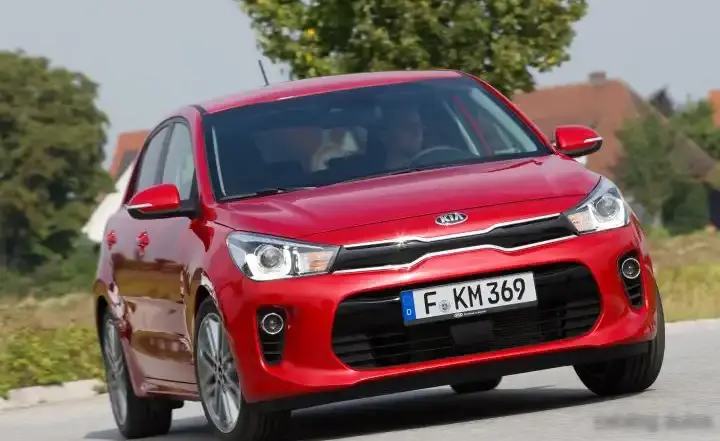
The Kia Rio IV Hatchback (YB) 1.4 CRDi, producing 77 horsepower, was a significant variant in Kia’s European and global lineup from February 2017 to May 2018. Positioned as an entry-level diesel option, it aimed to provide fuel efficiency and reasonable performance for urban commuters and budget-conscious buyers. This model represented Kia’s continued push into the subcompact segment, offering a compelling alternative to established European and Japanese competitors. The YB Rio was the fourth generation of the Rio, built on the platform shared with the Hyundai i20, and represented a substantial improvement in terms of design, quality, and technology compared to its predecessors.
Powertrain & Engine Architecture
The heart of this Rio variant was the Kia-developed D4FC 1.4-liter inline-four cylinder diesel engine. This engine utilized a second-generation common-rail direct injection system, delivering fuel at extremely high pressure for optimized combustion. The D4FC featured a variable geometry turbocharger (VGT) with an intercooler, enhancing low-end torque and overall responsiveness. The engine’s head incorporated four valves per cylinder, contributing to improved breathing and efficiency. The 77 horsepower output was achieved at 4,000 rpm, while the peak torque of 240 Nm (177 lb-ft) was available between 1,500 and 2,000 rpm. This broad torque curve was a key characteristic of the engine, making it well-suited for everyday driving. The engine was paired with a six-speed manual transmission, chosen for its efficiency and driver engagement. While an automatic transmission was offered on other Rio trims, it wasn’t available with this specific 1.4 CRDi engine.
Driving Characteristics
The 1.4 CRDi 77 hp Rio offered a practical and economical driving experience. Acceleration was modest, taking around 14 seconds to reach 62 mph. However, the engine’s strong low-end torque made it feel more responsive in urban environments and during overtaking maneuvers at lower speeds. The six-speed manual transmission allowed drivers to keep the engine in its optimal power band. Compared to the more powerful 1.0 T-GDi gasoline engine or higher-output diesel variants, the 1.4 CRDi prioritized fuel economy over outright performance. The gear ratios were tuned for efficiency, resulting in a relaxed cruising experience on the highway. The suspension setup, while comfortable, wasn’t particularly sporty, focusing on absorbing bumps and providing a stable ride.
Equipment & Trim Levels
The 1.4 CRDi 77 hp Rio typically came with a base level of equipment, focusing on essential features. Standard amenities included air conditioning, power windows, central locking, and a basic audio system with USB connectivity. Safety features such as ABS, Electronic Stability Control (ESC), and multiple airbags were also standard. Higher trim levels, such as ‘2’ or ‘3’, added features like alloy wheels, a touchscreen infotainment system with Apple CarPlay and Android Auto, a rear-view camera, and cruise control. Interior upholstery was typically cloth, with a functional and durable design. Optional extras included parking sensors, a panoramic sunroof, and heated seats.
Chassis & Braking
The Rio IV utilized a front-wheel-drive chassis with a McPherson strut suspension setup at the front and a semi-independent torsion beam suspension at the rear. This configuration provided a good balance between ride comfort and handling. The front brakes were ventilated discs, offering adequate stopping power, while the rear brakes were drums, a cost-saving measure for the entry-level trim. Electric power steering provided light and easy steering feel, making it ideal for city driving. The chassis was designed to be lightweight, contributing to the car’s fuel efficiency.
Market Reception & Comparison
The Kia Rio 1.4 CRDi 77 hp was generally well-received as a value-for-money option in the subcompact diesel segment. Critics praised its fuel efficiency and low running costs, but noted its modest performance. Compared to the 1.0 T-GDi gasoline version, the diesel offered better fuel economy but less power. The higher-output diesel variants provided significantly more performance but came at a higher price point. The Rio competed with models like the Volkswagen Polo, Ford Fiesta, and Renault Clio, offering a longer warranty and a competitive price. Reliability reports generally indicated good dependability, although some owners reported minor issues with the diesel particulate filter (DPF) system.
Legacy
The Kia Rio IV 1.4 CRDi 77 hp remains a relatively common sight on the used car market. The D4FC engine, while not known for being particularly exciting, has proven to be reasonably durable with proper maintenance. The biggest potential issue for owners is the diesel particulate filter (DPF), which can become clogged if the vehicle is primarily used for short trips. Regular servicing and the use of quality diesel fuel are essential for maintaining the engine’s longevity. The Rio IV, in general, helped to elevate Kia’s reputation for quality and reliability, paving the way for the brand’s continued success in the European and global markets.