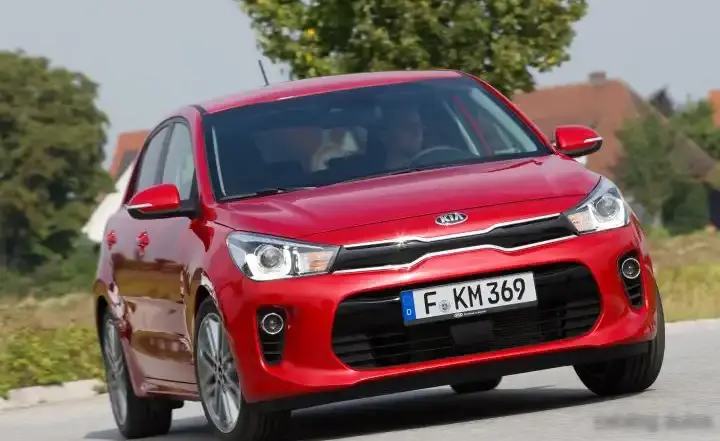
The Kia Rio IV Hatchback (YB) 1.4 CRDi, producing 90 horsepower, was a key variant in Kia’s European and global lineup from its introduction in February 2017 until its discontinuation in May 2018. Positioned as an entry-level diesel option, it aimed to provide fuel efficiency and reasonable performance for urban and long-distance commuting. This model formed part of the fourth generation Rio (YB), built on the Kia’s B-segment platform, and represented a significant step forward in terms of design, technology, and overall refinement compared to its predecessors. The 1.4 CRDi 90 hp model was particularly important in markets where diesel fuel was favored due to taxation and fuel economy benefits.
Technical Specifications
| Brand | Kia |
| Model | Rio |
| Generation | Rio IV Hatchback (YB) |
| Type (Engine) | 1.4 CRDi (90 Hp) |
| Start of production | February, 2017 |
| End of production | May, 2018 |
| Powertrain Architecture | Internal Combustion engine |
| Body type | Hatchback |
| Seats | 5 |
| Doors | 5 |
| Fuel consumption (combined) | 3.7-3.8 l/100 km (63.6 – 61.9 US mpg, 76.3 – 74.3 UK mpg, 27 – 26.3 km/l) |
| CO2 emissions | 96-98 g/km |
| Fuel Type | Diesel |
| Acceleration 0 – 100 km/h | 12 sec |
| Acceleration 0 – 62 mph | 12 sec |
| Acceleration 0 – 60 mph | 11.4 sec |
| Maximum speed | 175 km/h (108.74 mph) |
| Emission standard | Euro 6 b |
| Weight-to-power ratio | 13.7 kg/Hp, 72.9 Hp/tonne |
| Weight-to-torque ratio | 5.1 kg/Nm, 194.3 Nm/tonne |
| Power | 90 Hp @ 4000 rpm |
| Power per litre | 64.5 Hp/l |
| Torque | 240 Nm @ 1500-2500 rpm (177.01 lb.-ft. @ 1500-2500 rpm) |
| Engine layout | Front, Transverse |
| Engine Model/Code | D4FC |
| Engine displacement | 1396 cm3 (85.19 cu. in.) |
| Number of cylinders | 4 |
| Engine configuration | Inline |
| Cylinder Bore | 75 mm (2.95 in.) |
| Piston Stroke | 79 mm (3.11 in.) |
| Compression ratio | 16:1 |
| Number of valves per cylinder | 4 |
| Fuel injection system | Diesel Commonrail |
| Engine aspiration | Turbocharger, Intercooler |
| Engine oil capacity | 5.3 l (5.6 US qt | 4.66 UK qt) |
| Coolant | 6.4 l (6.76 US qt | 5.63 UK qt) |
| Kerb Weight | 1235 kg (2722.71 lbs.) |
| Max. weight | 1680 kg (3703.77 lbs.) |
| Max load | 445 kg (981.06 lbs.) |
| Trunk (boot) space – minimum | 325 l (11.48 cu. ft.) |
| Trunk (boot) space – maximum | 980 l (34.61 cu. ft.) |
| Fuel tank capacity | 45 l (11.89 US gal | 9.9 UK gal) |
| Permitted trailer load with brakes (12%) | 1110 kg (2447.13 lbs.) |
| Permitted trailer load without brakes | 450 kg (992.08 lbs.) |
| Length | 4065 mm (160.04 in.) |
| Width | 1725 mm (67.91 in.) |
| Height | 1450 mm (57.09 in.) |
| Wheelbase | 2580 mm (101.57 in.) |
| Front track | 1518 mm (59.76 in.) |
| Rear (Back) track | 1524 mm (60 in.) |
| Front overhang | 830 mm (32.68 in.) |
| Rear overhang | 655 mm (25.79 in.) |
| Ride height (ground clearance) | 135 mm (5.31 in.) |
| Minimum turning circle (turning diameter) | 10.2 m (33.46 ft.) |
| Drivetrain Architecture | The Internal combustion engine (ICE) drives the front wheels of the vehicle. |
| Drive wheel | Front wheel drive |
| Number of gears and type of gearbox | 6 gears, manual transmission |
| Front suspension | Independent, type McPherson with coil spring and anti-roll bar |
| Rear suspension | Semi-independent, coil spring, Elastic beam |
| Front brakes | Ventilated discs |
| Rear brakes | Drum |
| Assisting systems | ABS (Anti-lock braking system) |
| Steering type | Steering rack and pinion |
| Power steering | Electric Steering |
| Tires size | 185/65 R15; 195/55 R16; 205/45 R17 |
| Wheel rims size | 15; 16; 17 |
INTRODUCTION
The Kia Rio IV YB 1.4 CRDi 90 hp represented a significant offering in the subcompact hatchback segment. Introduced in 2017, it was designed to appeal to buyers seeking a fuel-efficient and affordable vehicle. The YB generation Rio marked a departure from previous models, boasting a more mature and sophisticated design, improved interior quality, and a wider range of available technology. This particular variant, with its 1.4-liter diesel engine and 90 horsepower output, was positioned as the entry point into the Rio diesel range, offering a balance between economy and usability. It competed directly with similar offerings from brands like Volkswagen, Ford, and Renault.
Powertrain & Engine Architecture
At the heart of the Rio 1.4 CRDi 90 hp lies the Kia D4FC engine, a 1.4-liter inline-four cylinder diesel engine. This engine utilizes a second-generation common-rail direct injection system, delivering fuel at extremely high pressure for optimized combustion. The D4FC engine features a turbocharger with an intercooler, enhancing power and torque output. The engine’s architecture includes four valves per cylinder (DOHC) and a variable geometry turbocharger (VGT) to improve responsiveness across the rev range. The 90 hp version of the D4FC was specifically tuned for fuel efficiency and lower emissions, prioritizing torque delivery over outright horsepower. The engine paired with a 6-speed manual transmission, delivering power to the front wheels. The transmission was chosen for its efficiency and relatively low cost, aligning with the vehicle’s entry-level positioning.
Driving Characteristics
The 1.4 CRDi 90 hp Rio offered a practical and economical driving experience. While not particularly sporty, the engine provided sufficient torque for everyday driving situations, including overtaking and navigating urban traffic. The 240 Nm of torque, available from 1500-2500 rpm, meant that the engine felt responsive at lower speeds, reducing the need for frequent gear changes. Acceleration from 0-60 mph took around 11.4 seconds, and top speed was limited to 175 km/h (108.74 mph). Compared to higher-output diesel variants or gasoline-powered Rios, the 1.4 CRDi 90 hp felt less eager to rev, but its fuel economy advantage was significant. The 6-speed manual transmission was well-matched to the engine’s characteristics, offering smooth and precise shifts.
Equipment & Trim Levels
The Rio 1.4 CRDi 90 hp typically came equipped with a reasonable level of standard features, though specific equipment levels varied depending on the market. Standard features generally included air conditioning, electric front windows, a basic audio system with USB connectivity, and ABS brakes. Higher trim levels, often denoted as ‘2’ or ‘3’ in Kia’s naming scheme, added features such as alloy wheels, a touchscreen infotainment system with Apple CarPlay and Android Auto compatibility, rear parking sensors, and cruise control. Interior upholstery was typically cloth, with a focus on durability rather than luxury. Optional extras included a panoramic sunroof, automatic climate control, and a navigation system.
Chassis & Braking
The Rio IV YB utilized a front-wheel-drive chassis with a McPherson strut suspension setup at the front and a semi-independent torsion beam suspension at the rear. This configuration provided a good balance between ride comfort and handling. The front brakes were ventilated discs, offering adequate stopping power, while the rear brakes were drums, a cost-saving measure common in this segment. The steering was electrically assisted, providing light and easy steering feel. Stabilizer bars were fitted to both the front and rear axles to reduce body roll during cornering. The suspension tuning was geared towards comfort, prioritizing a smooth ride over sporty handling.
Market Reception & Comparison
The Kia Rio 1.4 CRDi 90 hp was generally well-received by automotive critics as a practical and economical choice. It was praised for its fuel efficiency, comfortable ride, and competitive pricing. However, some reviewers noted that the engine lacked outright power and refinement compared to some of its rivals. Compared to the 1.0-liter gasoline engine option, the 1.4 CRDi offered significantly better fuel economy and torque, making it a more suitable choice for drivers who frequently cover long distances. Against competitors like the Volkswagen Polo, Ford Fiesta, and Renault Clio, the Rio offered a compelling value proposition, often undercutting them on price while providing a similar level of equipment.
Legacy
The Kia Rio IV 1.4 CRDi 90 hp has proven to be a relatively reliable vehicle in the used car market. The D4FC engine, while not without its potential issues (such as diesel particulate filter clogging), is generally considered durable and long-lasting when properly maintained. Regular servicing, including oil changes and filter replacements, is crucial for ensuring the longevity of the engine and its components. Today, these Rios represent an affordable and fuel-efficient option for budget-conscious buyers. Their relatively low running costs and practical nature continue to make them a popular choice in the used car market, particularly for those seeking a dependable and economical city car.